Imaginary interview with Friedrich Nietzsche
by Charactorium · Friedrich Nietzsche (1844 — 1900) · Philosophy · 6 min read
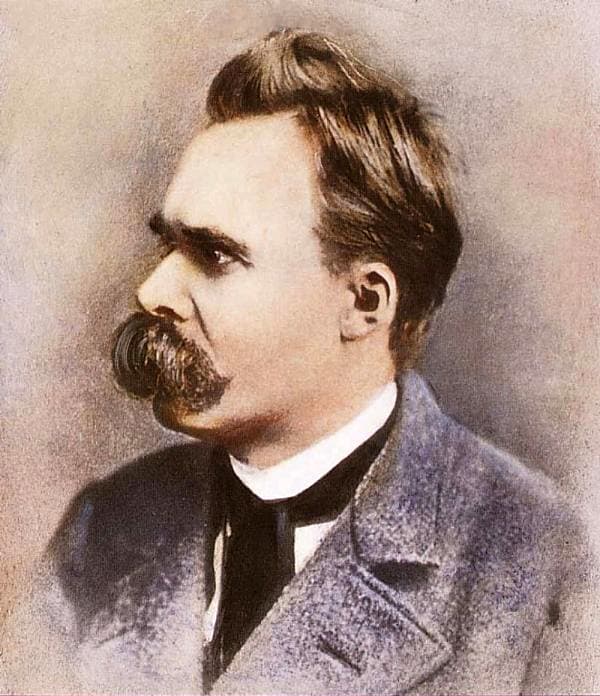
Turin, winter 1888. On the fourth floor of a building on Via Carlo Alberto, in a bare room furnished with a bed, a table, and stacks of books, a man with thick glasses and an imposing mustache receives us, still lucid, a few weeks from the abyss. He speaks quickly, in bursts, as one jots an aphorism at the edge of a lake.
—You were appointed professor in Basel at twenty-four, without even having defended a thesis. How does one live such an honor so young?
1869. I was placed in a chair of classical philology at Basel before I could defend anything — as if I had been handed a gown too large. My students found me, it seems, excessively courteous, almost shy; they did not suspect the dynamite I was to become. I spent my days deciphering Greek texts, and my evenings with Jacob Burckhardt, that old sage who looked at the Renaissance as one watches a magnificent fire. Philology taught me the patience of the ear: to hear, beneath a dead word, the blood that once beat. Everything I later wrote against the philosophers I owe to that discipline of a slave bent over manuscripts.
I was handed a gown too large, and my students did not suspect the dynamite I was to become.
—Richard Wagner was long your intimate. What broke between you?
I loved Wagner as one loves a father one has chosen for oneself — his music seemed to me Dionysian ecstasy made sound. And then came Parsifal. I saw a man who knelt before the cross, who flattered Bismarck's new Germany, who traded artistic Decadence for the incense of churches. In 1878, with Human, All Too Human, I cut: that book was my knife. One does not part from a god without bleeding. I reproached him for his nationalism, that Kulturkampf of sentiment that turned art into a flag. It took me years to understand that I was not fighting him, but the Wagnerian in myself.
One does not part from a god without bleeding.
—You often speak of the Engadin. What were you seeking in those summers at Sils-Maria?
The air of Sils-Maria, six thousand feet above men and time. Seven summers I rented a narrow room at the Durisch family's, and each afternoon I walked for hours, a notebook in my pocket. It was there, one day in August, walking along Lake Silvaplana, near a rock standing like a pyramid, that the idea struck me like lightning: the Ewige Wiederkehr, the eternal return. Imagine that a demon whispered to you that you would live this life infinitely, down to the smallest sigh, down to that spider in the moonlight. Would it crush you, or would you be able to answer: encore? That is the heaviest weight I ever placed on a human conscience.
You will live this life infinitely, down to the smallest sigh — would it crush you, or would you say: encore?
—The eternal return sounds like a curse. Why do you make it a liberation?
Because there is no weighing except by the measure of amor fati — love of fate. To love what was, what is, what will be, even suffering, even the migraines that blind me and throw me into bed by eight o'clock. The nihilist weeps that God is dead and that nothing has value anymore; Nihilism is for me only a threshold, never a dwelling. If everything returns, then nothing is insignificant, and every moment demands to be lived as if it must be engraved for eternity. In The Gay Science, I wrote that "what does not kill me makes me stronger" — it was not bravado, it was my dietetics of the soul.
If everything returns, then nothing is insignificant: every moment demands to be engraved for eternity.
—Your eyes betrayed you to the point of near blindness. How did you write despite it all?
My eyes, my intimate enemies. Some days I could no longer make out the lines, and light pierced me like needles — hence this wide hat and ridiculous umbrella I dragged through the South. In 1882, I had a Malling-Hansen typewriter sent, a Danish sphere bristling with keys; I fumbled on it like a blind man at an organ keyboard. I even noticed that this instrument changed my thinking, made it briefer, more hammered. My best hours remained the morning, at five, before my skull caught fire. The rest I entrusted to my notebooks, while walking. It has never been sufficiently said how much philosophy is done with the legs as much as with the head.
Philosophy is done with the legs as much as with the head.

—You mention your morning work. What was a day like in your wandering lodgings?
A monk's life without a monastery. Up at five, a frugal breakfast, then writing as long as the light held — those were my fruitful hours. The afternoon belonged to long walks, in the Swiss mountains or along the coast at Nice, where I spent several winters nursing my carcass. I ate soberly, no alcohol or coffee, fruits and bread, for my stomach persecuted me as much as my eyes. In the evening, exhausted, I reread my notes or sat at the piano when the migraine allowed — for I have always held music to be the supreme art. A trunk, a few books, a furnished room: I lived ten years like that, a nomad between Switzerland, Italy, and France.
—Before Zarathustra, there was that first book that caused a scandal. What did you want to prove in it?
The Birth of Tragedy, in 1872. My philologist colleagues cried out: a Basel professor mixing Schopenhauer, Wagner, and the Greeks instead of wisely counting metrical feet! I opposed two gods: Apollo, order, form, dream; and Dionysus, ecstasy, chaos, life overflowing — the Apollonian and the Dionysian. I maintained that Greece had not been that marble serenity taught in schools, but a people who had looked the horror of existence in the face and saved it through beauty. I already wrote then that the world is justified only as an aesthetic phenomenon. That book cost me my academic career; it gave me my voice.
Greece was not that marble serenity taught in schools, but a people who looked horror in the face.
—How is a work like Zarathustra born? In pain or in exaltation?
In trance. The first part of Thus Spoke Zarathustra I threw onto paper in ten days, at Rapallo, in February 1883, as if dictated by a force beyond me. I sent the sheets to my publisher in bundles, like emergencies. It is there that my prophet descends from the mountain to announce the Übermensch, the overman — not a tyrant, understand me, but one who, having traversed the death of God, dares to create his own values instead of begging for the old ones. I put into it all that the Wille zur Macht, the will to power, had taught me: that to live is to want to grow, overcome, surpass oneself. I never wrote with such a feeling of altitude.
My prophet descends from the mountain not to command, but to teach men to create their own values.
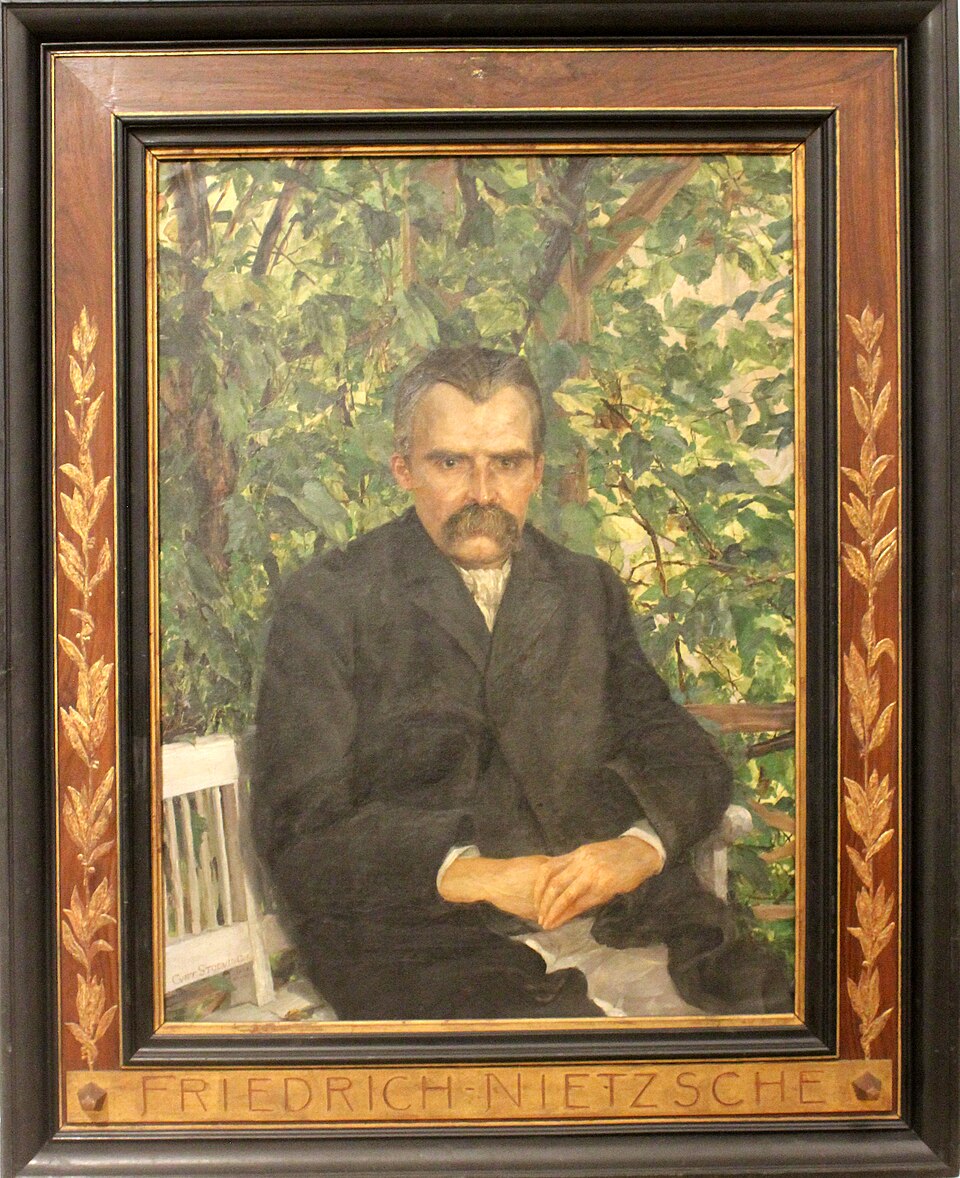
—You wrote Ecce Homo shortly before the end. Why this need to tell your own story?
Because I felt something coming, and I wanted not to be mistaken for a saint or a madman — the two misunderstandings that awaited me. In Ecce Homo, in 1888, I revisited each of my books, without false modesty, I admit. I wrote: "I am not a man, I am dynamite." People thought it was hubris; it was a cold prophecy. I knew I would not be read in my lifetime, that my contemporaries were deaf, still drunk on the Empire proclaimed at Versailles. I wrote for readers who were not yet born. A posthumous philosopher, that is what I was condemned to be.
I wrote for readers who were not yet born.
—You finish Twilight of the Idols here, in Turin. What does this city represent for you?
Turin is the last light before evening. I live in a simple room on Via Carlo Alberto, and never has my mind raced so fast: I finished Twilight of the Idols in one go, in a few weeks, philosophizing with a hammer, making the old idols ring to hear that they are hollow, from Socrates to our moderns. The streets under the arcades, the golden light of the squares, the fruits of the market — everything seems of an unbearable perfection. I walk, I greet passersby, I sometimes think the whole city smiles at me. There is in this felicity something too intense, like a string stretched to breaking. But I dare not think of it.
I philosophize with a hammer, I make the old idols ring to hear that they are hollow.
—You say you fear a string stretched to breaking. What do you mean by that?
I cannot say clearly, and that frightens me. It happens, these last few days, that I weep for no reason before the beauty of a harnessed horse, that I want to embrace strangers. My mother is perhaps already waiting for me in Weimar; my sister watches over me. My migraines leave me a suspicious respite, like the sea withdrawing before the wave. I have lived too long alone, on the icy heights of my thoughts, where the air is so pure it burns the lungs. "He who looks long into an abyss, the abyss also looks into him" — I wrote that in Beyond Good and Evil, not knowing then how much I was describing my own fate. Forgive me, I think I must walk a little.
I have lived too long on the icy heights, where the air is so pure it burns the lungs.
This imaginary interview was generated by artificial intelligence from sources documented in Friedrich Nietzsche's profile. It dramatises what the figure might have said based on what we know about them, but does not constitute attested historical testimony. For primary sources and factual documentation, refer to the full profile.