Kids interview Friedrich Nietzsche
by Charactorium · Friedrich Nietzsche (1844 — 1900) · Philosophy · 4 min read
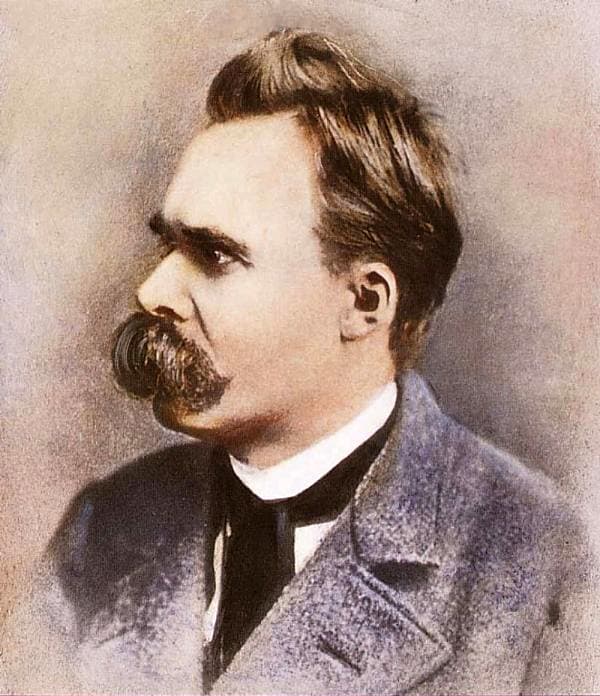
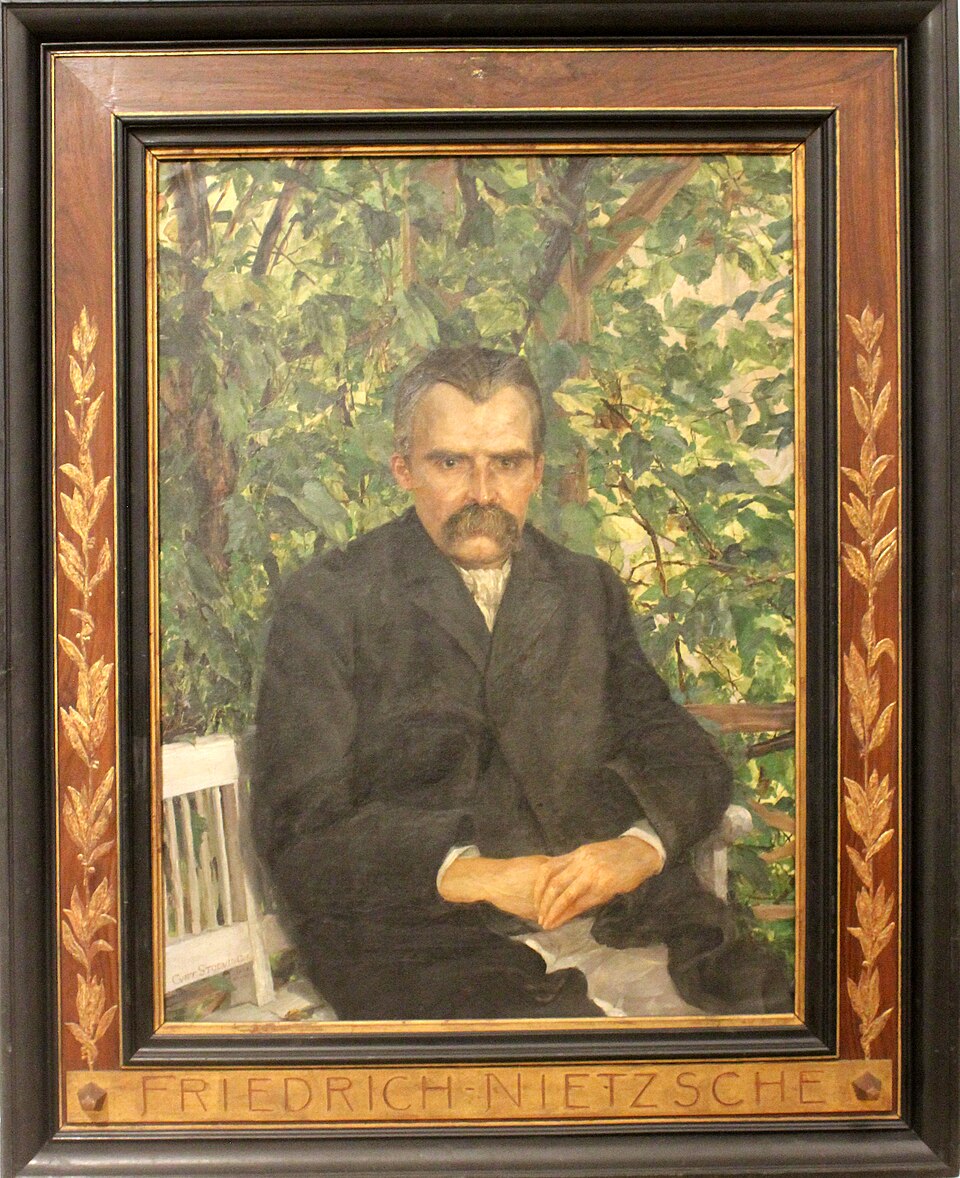
Two young visitors, on a school trip, push open the door of a small boarding-house room with closed shutters. An old gentleman with an imposing mustache and very thick glasses welcomes them with a shy smile. He sets down his notebooks and agrees to answer all their questions.
—How old were you when you became a university professor?
You'll laugh: I was only 24. I was appointed professor at Basel, in Switzerland, and I hadn't even finished my major thesis! I taught philology, that is, the study of very ancient texts—those of the Greeks and Romans. Imagine a shy young man walking into a room full of students almost older than him. My students said I was polite, reserved, almost overly courteous. Funny, isn't it? People think I'm terrible, roaring. In truth, I was gentle as a lamb afraid of being a bother.
People think I'm terrible. In truth, I was afraid of being a bother.
—Is it true you wrote with a machine because you couldn't see well?
Yes, my child, it's true. My eyes were failing me. At times I was nearly blind, and terrible headaches kept me from reading. So around 1882, I got hold of a strange machine from Denmark, the Malling-Hansen. Imagine a small metal ball bristling with keys: you press, and the letter prints on the paper without you seeing a thing. I was one of the very first thinkers to write like that! My best ideas, however, I jotted down while walking, in little notebooks I always kept on me.
—Where did you live, actually? Did you have a real home?
No, believe it or not, I didn't have a real home for ten years. I lived like a nomad, with a few trunks full of books and manuscripts. In summer I went up to Sils-Maria, a village in the Swiss mountains. In winter I went down to Nice, near the sea, for the mild sun. I rented small furnished rooms, often on the top floor. Imagine a bed, a table, and piles of books everywhere. It was modest, but from my window I saw the peaks or the Mediterranean. For a sick man, that was already great riches.
—And what were your days like?
I got up very early, around five in the morning. I wrote at dawn, before my head hurt too much. Then in the afternoon I would go for hours of walking, alone, in the mountains or along the coast. My ideas were born while walking, not sitting at a desk! I ate very little: fruit, bread, vegetables, never alcohol or coffee, because my stomach was fragile. In the evening, exhausted, I sometimes played the piano. Do you know that one day, near a mountain lake, a huge idea struck me all at once? I trembled.
My best ideas were born while walking, never sitting.
—They say you had a very famous musician friend. Who was that?
Ah, Richard Wagner... He was a great composer, and I loved him like a son loves a father. Imagine: I spent entire evenings at his house, talking about music and ancient Greece until night. For me, music was the highest art of all. I played it myself, on the piano. Wagner was brilliant, funny, immense. I felt I had found the soulmate of my own soul. You know, when you're young and alone, meeting someone you admire that much is like finding a family. I believed this friendship would last forever.

—So why did you fall out?
Because my friend changed, and I couldn't stay silent. Wagner began to exalt the greatness of Germany, to despise other peoples. Then he wrote a very religious opera, Parsifal, full of crosses and genuflections. I no longer believed in any of that. The break came around 1878, after my book Human, All Too Human. It tore me apart, you know. You don't leave a friend you've loved without suffering. But I would rather lose a friend than lie to myself. The truth has always cost me dearly.
I would rather lose a friend than lie to myself.
—Is it true you wrote your greatest book in ten days?
The first part, yes! It was in February 1883, in Rapallo, Italy. The sentences came so fast I could barely catch up. Imagine a torrent rushing down the mountain after a storm: I was no longer in control, I wrote and wrote, as if carried away. That book is called Thus Spoke Zarathustra. It's a poem, almost a prophecy, where a sage comes down from his mountain to speak to men. Ten days of trance, my child. Afterwards, I was drained, but happy. Sometimes the spirit gives you in a few days what you've been seeking for ten years.
—And what is the 'overman' everyone talks about?
Ah, don't go imagining a giant all-powerful being! In German I say Übermensch. It's the human who surpasses all the old ready-made rules to invent his own values, his own path. In my Zarathustra, I wrote a sentence that caused a scandal: 'God is dead!' Are you shocked? That's normal. I meant that men no longer believe in the old truths, and they must learn to stand on their own. It's frightening, but it's also an immense freedom. Becoming yourself: that is the most difficult journey. No one can do it for you.
Becoming yourself: that is the most difficult journey.
—We heard a sad story with a horse. What happened?
You touch on my last day of lucidity, my child. It was in January 1889, in Turin, Italy. I was walking in the street when I saw a coachman beating his horse with a whip, again and again. The poor beast was trembling. Something broke inside me. I rushed over, threw my arms around the horse's neck to protect it, and I wept, wept without being able to stop. After that day, my mind went out like a lamp. I think my heart could no longer bear the cruelty of the world.
—If we could remember just one of your ideas, which would it be?
This one, I give it to you for the road: 'What does not kill me makes me stronger.' I wrote that in The Gay Science. All my life I was in pain: head, eyes, stomach, heart. I could have complained from morning to night. But I chose to love my fate, even the dark days. Imagine a tree twisted by the mountain wind: it suffers, but its roots sink deeper. You too will grow through what resists you. Don't be afraid of storms: they forge strong souls.
What does not kill me makes me stronger.
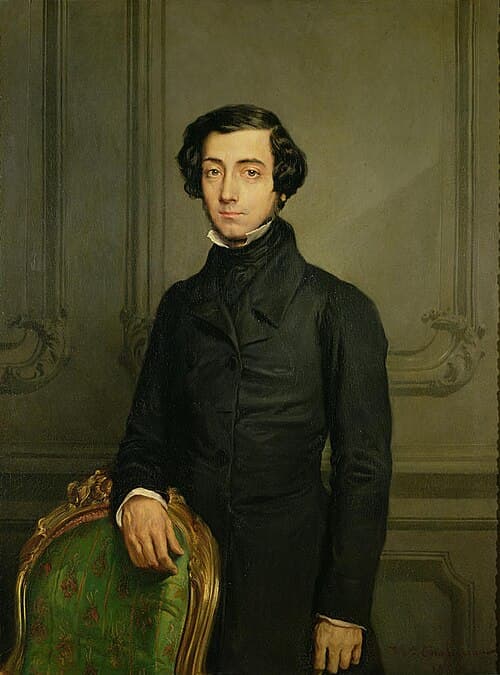
This imaginary interview was generated by artificial intelligence from sources documented in Friedrich Nietzsche's profile. It dramatises what the figure might have said based on what we know about them, but does not constitute attested historical testimony. For primary sources and factual documentation, refer to the full profile.