Imaginary dialogue between Lou Andreas-Salomé and Friedrich Nietzsche
by Charactorium · Friedrich Nietzsche (1844 — 1900) · Philosophy · 6 min read
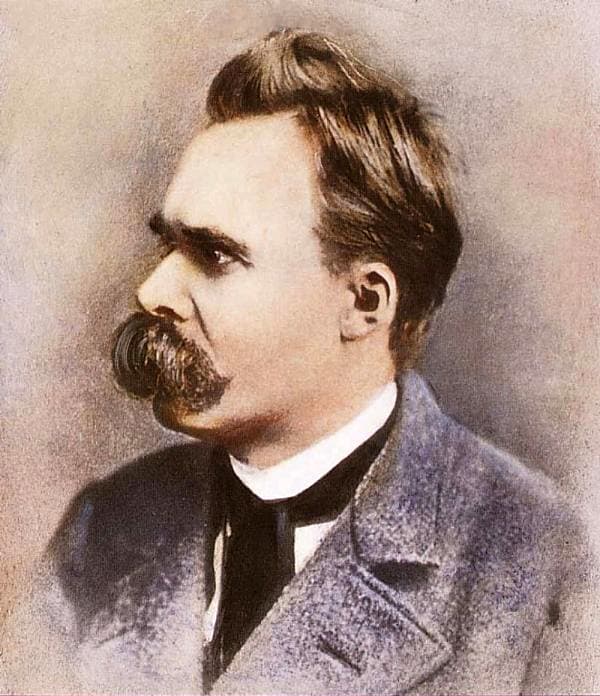
It is in a room on the fourth floor of Via Carlo Alberto, in Turin, that Lou finds Friedrich at the end of the year 1888. The winter light falls on a table cluttered with sheets of paper, a silent typewriter in a corner, piles of books against the wall. They have not really spoken since the summer in the Engadin, in 1882, since that refusal that drove them apart. She comes without resentment, intrigued by this man who writes to her that he feels at the peak of his life.
—Friedrich, I find you in Turin in a fever I did not know in you in 1882. Where does this exaltation come from?
You have a keen eye, Lou, you always did. This city suits me like no other: the air is dry, the light clear, and I walk under its arcades like a man finally reconciled with his body. I have just finished Ecce Homo, where I revisit each of my books. Never have I written with such clarity, such lightness. I feel I have become a force, almost an inflammable substance — something that must burst. You who saw me so ill, so withdrawn in the Engadin, you measure the contrast. I sometimes fear this lightness as much as I love it: one never knows, when burning like this, what will remain of oneself the next morning.
I have just finished Ecce Homo with a clarity that frightens me as much as it intoxicates me.
—You uttered that terrible phrase, that God is dead. What do you expect from a world whose foundation you thus tear away?
That formula is not a cry of joy, Lou, do not be mistaken. When I write God is dead! God remains dead! And we have killed him!, I describe an event already occurred, which most men have not yet heard. The supreme values — God, truth, morality — have lost their ground. That is what I call nihilism. Most will see an abyss in it, and they will be right to shudder. But I do not write so that one drowns in it. Nihilism is a passage, not a dwelling. One must cross it entirely in order to, on the other side, create new values instead of inheriting them. That is my whole labor, and you know how solitary it is.
God is dead is not an end: it is a threshold that must be crossed entirely.
—Let us talk about Wagner. You loved him so much, then you left him violently. How does one go from such fervor to such a rupture?
Wagner was for me a father, a brother, almost a second homeland. I admired him as one admires a god of music, and for a time I believed he would carry the rebirth of German culture. Then I saw him bow: his blustering nationalism, and above all that Christian turn with Parsifal, that genuflection before the cross. I saw in it a betrayal of everything that had inflamed me in him. With Human, All Too Human, in 1878, I took leave of romanticism and of him in one gesture. It was a tearing, not a deliverance — one does not tear an idol from one's heart without bleeding. But I prefer this wound to the tepidness of comfortable loyalties.
One does not tear an idol from one's heart without bleeding.
—I remember our walks in the Engadin. It is near Lake Silvaplana that your greatest thought came to you, you told me?
Yes, Lou, and that memory is as dear to me as that place. Sils-Maria became my true home; I spent seven summers there, in a rented room at the Durischs'. It was while walking by Lake Silvaplana, near a large pyramidal rock, that the idea of eternal return struck me like lightning — the Ewige Wiederkehr. Imagine: everything you live will return, infinitely, in the smallest detail, unchanged. The question is not whether it is true, but whether you could will it. Would you want to relive this moment, and your whole life with it, eternally? That is the most terrible weight I know. I never think better than when walking; seated thoughts are worthless.
Would you want to relive your entire life, identically, eternally?
—That machine, in your corner, surprises me. You, the man of the open air, now write mechanically?
Do not laugh, Lou — it is a necessity, not an affectation. My eyes have betrayed me for years; at times I am nearly blind, and bright light pierces my skull. Around 1882, I procured this Danish machine, a Malling-Hansen, to write without bending my back over paper. It is capricious, it creaks, but it gives me words when my eyes refuse them. I confess to you: our tools shape our thoughts. Under its keys, my style becomes briefer, sharper, as if struck. I work at dawn, from five o'clock, in the rare hours when migraine leaves me in peace. Afterward, the pain returns, and I belong only to it.
Our tools shape our thoughts: under these keys, my style becomes sharper.

—If you take God away from men, what do you offer them in exchange? That overman you speak of in Zarathustra?
The Übermensch, yes, but understand it well: it is not a tyrant nor a monster, as some will no doubt want to disfigure it. It is the man capable of overcoming himself, of creating his own values instead of receiving them on his knees. When the sky empties, two paths open: let oneself fall into nothingness, or learn to stand on one's own. Thus Spoke Zarathustra is my book for those who choose the second. I put a prophetic tone in it because I speak not to the crowd of today, but to a few, perhaps not yet born. The overman is the meaning the earth will give itself when it stops begging for meaning from heaven.
The overman is the meaning the earth will give itself when it stops begging for it from heaven.
—You are called a radical thinker, almost brutal. Yet I have known you to be extremely courteous. These two Friederichs, how do they coexist?
You touch on something there, Lou, and few have seen it as you have. Yes, I am shy, polite to the point of embarrassment; in Basel, my students found me of an almost excessive gentleness — I was appointed professor there at twenty-four, without even having defended a thesis. The violence is in my books, not in my manners. One must write with blood when one lives with so much caution. When I strike at Socrates, Christianity, herd morality, I strike at what has tempted me myself, what I must fight against. He who fights monsters must see to it that he does not become a monster himself. I know this danger well: I wrote it for myself before writing it for others.
The violence is in my books, not in my manners; one must write with blood.
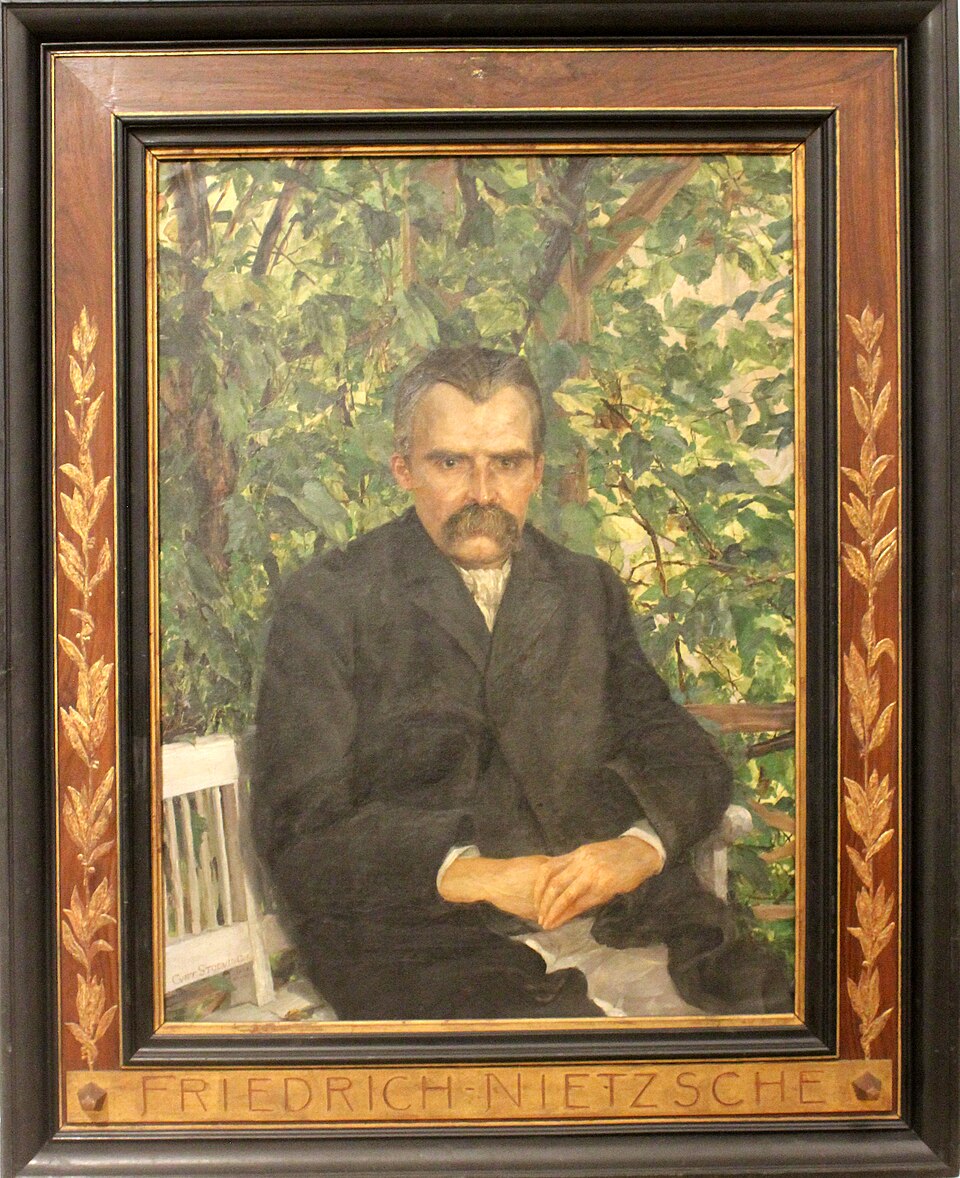
—You walk for hours, alone, your notebooks in hand. This solitude of the paths, is it a choice or a burden?
Both, always both. Since I left Basel in 1879, I have lived as a nomad, from boarding house to boarding house, between Switzerland, Italy and Nice. My afternoons are for walking: for hours, in the mountains or along the sea, with my notebooks that I fill along the way. Many aphorisms were born thus, standing, to the rhythm of steps. Solitude weighs on me, I will not hide it — especially since the Engadin, since you. But it is the price of my freedom. I have learned to say yes to all of this: fragile health, wandering, isolation. Amor fati — to love one's fate, to want nothing other than what is, neither forward nor backward. That is my daily discipline.
Amor fati: to want nothing other than what is, neither forward nor backward.
—Your health has always tormented you. How do you sustain such work with a body that constantly betrays you?
My body is my adversary and my master, Lou. Migraines keep me bedridden for whole days, my stomach tolerates almost nothing: neither wine, nor coffee, nor heavy dishes. I live on fruits, vegetables, a little bread, following the strict diets prescribed to me. I rise at dawn and go to bed with the daylight, for night is forbidden to me. You might think it a curse; I see a school. It is my illness that made me a philosopher: it forced me to reevaluate everything, to take nothing for granted. Someone wrote this phrase somewhere — what does not kill me makes me stronger. I first verified it on my own flesh, day after day, before daring to write it.
It is my illness that made me a philosopher: it forced me to reevaluate everything.
—You write to me that your name will one day carry the memory of something immense. Is that not a heavy certainty to bear, Fritz?
Heavy, yes, and I know what is frightening about it. I am not a man, I am dynamite. I feel that one day my name will be attached to something formidable, a crisis such as the history of the spirit has never known. But understand me: it is not vanity, it is almost a fright. When one carries such a burden, one fears breaking before the time. Here, in Turin, I am lucid as never before, and yet I feel on the edge of something I cannot name. You who saw me fragile in the Engadin, keep of me this image of a man who burned too brightly — not that of a tranquil prophet. The rest no longer belongs to me.
I fear breaking before the time: one carries such a formidable burden poorly.
This imaginary interview was generated by artificial intelligence from sources documented in Friedrich Nietzsche's profile. It dramatises what the figure might have said based on what we know about them, but does not constitute attested historical testimony. For primary sources and factual documentation, refer to the full profile.