Imaginary interview with Frigg
by Charactorium · Frigg · Mythology · 5 min read
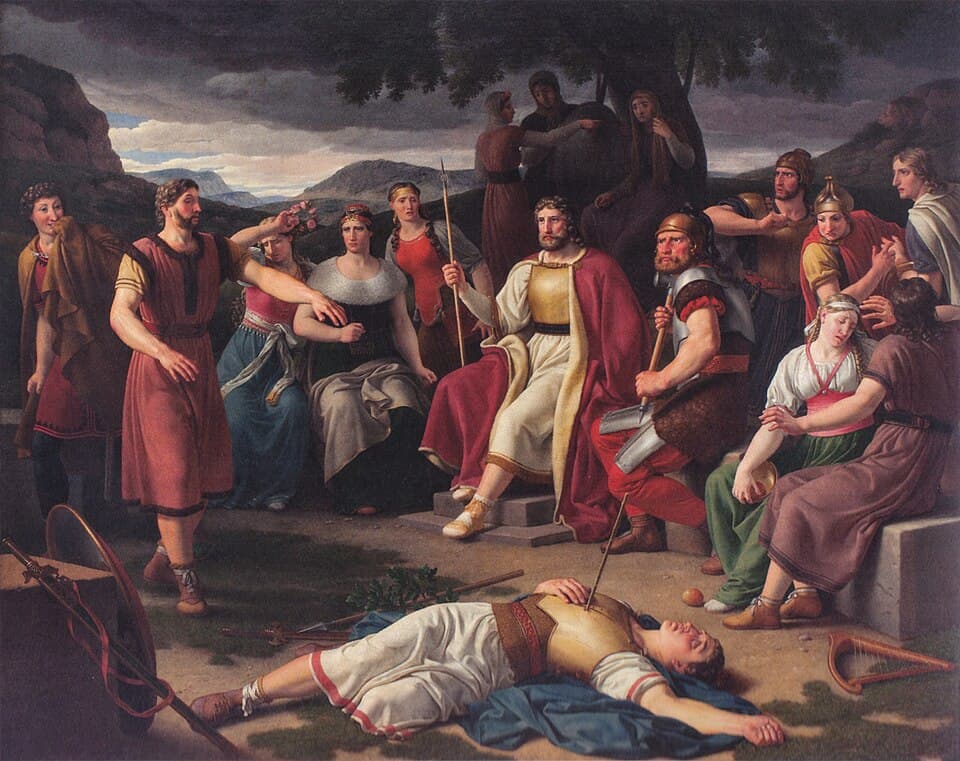
On the borders of Asgard, in the low mists of Fensalir, the queen of the Æsir spins a pale thread between her fingers. She does not look up right away. Then, in a voice that carries both authority and an unending grief, Frigg agrees to speak.
—They say you traveled through the nine worlds to protect your son Baldr. How did you go about it?
I walked, I begged, I demanded. From fire to water, from iron to stone, from every beast and every plant, I received the oath never to harm Baldr. A mother does not ask; a mother wrings out the promise. Believe me, when my son laughed as the Æsir hurled javelins that fell at his feet, for a moment I thought I had conquered death itself. But there is a shoot, near Valhöll, that I deemed too tender, too young to bear an oath: the mistletoe. I passed by without stopping. All the wisdom of the nine worlds was not enough to make me see that fragility itself can kill.
A mother does not ask; a mother wrings out the promise.
—What remains in you of that arrow carved from mistletoe?
The silence of Fensalir when the news came. I still weep in my Halls of the Marsh, and the Seeress herself says that Frigg sobs for the misfortune of Valhöll. After his death, I raised my voice among the Æsir to ask who would have the courage to ride to the kingdom of the dead and ransom my child; it was Hermóðr who offered himself, on Odin's horse. I learned there a thing that no throne had taught me: that one can foresee everything and still lose. The mistletoe branch, so slender, has become for me the reminder that no protection is complete, not even that of a goddess.
One can foresee everything and still lose.
—Snorri writes that you know all fates but reveal none. Why this silence?
Because to tell the future is not to give it, but to impose it. I see the threads, yes — I see them as one sees the warp on the loom before the shuttle passes. Snorri noted it well in his Gylfaginning: wise is she, but she never reveals her prophecies. It is not ignorance, it is restraint. The Norns weave; I keep silent. If I revealed to every man the hour of his fall, he would cease to live and only await his death. Prescience is a burden, not an ornament: I wear it like my gold torque, close to the neck, never on display.
To tell the future is not to give it, but to impose it.
—What do you actually do with this gift of seeing destinies?
I spin. In the afternoon, in Fensalir, my distaff turns and the spindle descends, and under my fingers pass the fates of men and gods. Around me, my confidante Fulla, and Hlin who protects those I designate. They think me idle, sitting spinning clouds; in truth I untangle lives. It is women's work, they say, and I make it a queen's work. They rightly compare me to the Norns, those three who braid fate at the foot of the tree: we share knowledge, but they cut the thread and I keep it. Spinning is my way of reigning without raising my voice.
They think me idle spinning clouds; in truth I untangle lives.
—Do you ever oppose Odin himself?
We have wagered, he and I, on our protégés among mortals — it is told in the Grímnismál. Odin thought he held victory, sure of his favorite; I used cunning and made his fall into his own trap, so that my protégé prevailed. They see me as the silent wife, the seated queen. But in the game of fates, I am not an ornament at the side of the throne: I play, and often I win. A queen's intelligence is not measured by the noise she makes, but by how she bends a god's pride to her will without him noticing.
I am not an ornament at the side of the throne: I play, and often I win.
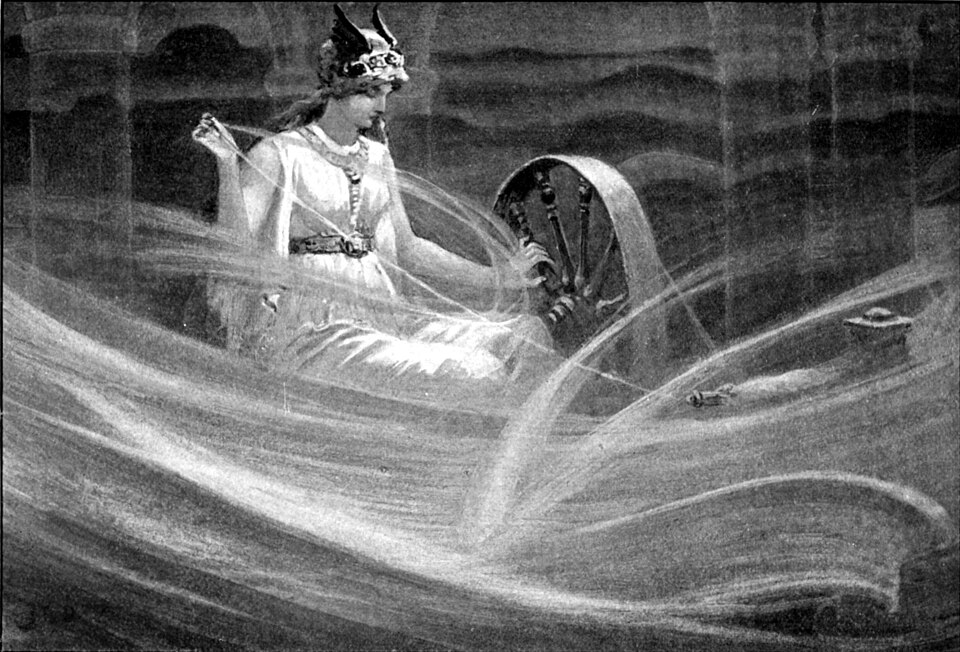
—It is told among the southern peoples that you gave victory to the Lombards against Odin's wish. What happened?
The southern men call me Frea, and the story is true in its heart. Odin had sworn to grant victory to the first people his eyes would see at daybreak, and he intended to favor the other side. I turned his bed toward the east and advised the women of the Lombards to loosen their hair over their faces like beards, to present themselves to his gaze at dawn. Odin wakes, sees them, wonders — “who are these long-beards?” — and, bound by his word, he gives them victory and even their name. A god keeps his word; a queen knows which morning to make him keep it.
A god keeps his word; a queen knows which morning to make him keep it.
—You share with Odin the throne Hliðskjálf. What does one see from up there?
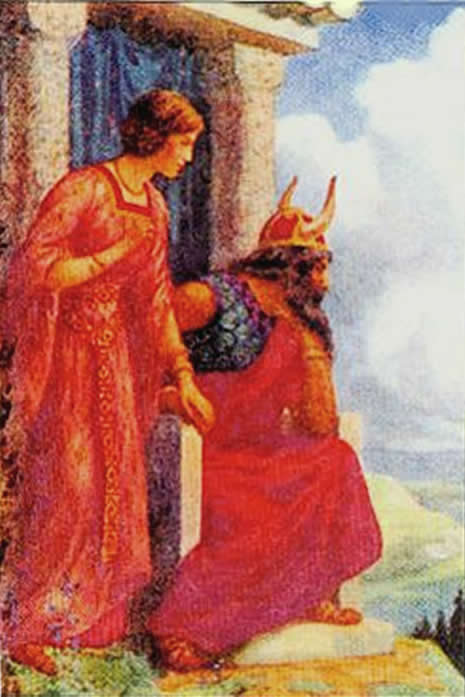
Everything. Hliðskjálf is the seat from which the gaze embraces the nine worlds in a single sweep, and no one has the right to sit there except Odin and I. In the morning, I settle there and receive the day's news: a war brewing on the borders of Midgard, a broken oath, a birth. Consider — of all the Æsir, only one goddess sits at that height. It is not a privilege of the heart, it is a mark of rank: I am queen of the Æsir, my husband's equal on that throne. To see the nine worlds is not curiosity, it is duty: one does not sit there for distraction, but to watch.
To see the nine worlds is not curiosity, it is duty.
—Loki insulted you in the middle of the banquet. How does a queen respond to such provocation?
With calm, which is the only response a provocateur cannot handle. Loki, in his quarrel — what you call the Lokasenna — hurled venomous words at the Æsir, and accused me of having known Odin's brothers. I did not shout. I said that if I had a son like Baldr by my side, he would not leave that hall alive. That is my reply: neither tears nor fury, but the reminder of what I bear. A queen does not defend herself like an accused; she lets her words fall like a judgment. Loki's venom slides off one who remains sovereign.
A queen does not defend herself like an accused; she lets her words fall like a judgment.
—Your name survives in the day of Friday. What does this trace left among men evoke for you?
They tell me that among the Germanic peoples, a day of the week bears my name — Frigg's day — where the Romans honored their Venus. That touches me more than temples. Wooden altars will burn, rites will fall silent, but a name slipped into the mouths of the living, repeated without even thinking, crosses the ages like a thread that does not break. At Uppsala, they still honor the husband whose queen I am; elsewhere, other gods already rise. No matter: as long as a man names his day after me, something of Frigg will remain alive, even when no one knows who I was.
A name slipped into the mouths of the living crosses the ages like a thread that does not break.
—Do you feel threatened by the new cult spreading across the northern lands?
I see the assembly of free men — the Althing of that island of ice and fire they call Iceland — deliberating, and one day choosing another god. The threads I spin show me sanctuaries going dark, drinking horns no longer raised in our honor. But I am not one to weep twice. It is Icelanders, carrying their tales across the seas, who will preserve my memory when they no longer pray to me: their skalds and sages will set down my myths in writing in their Eddas. I will be driven from the realm of rites and enter the realm of stories. A goddess whom they stop worshipping but continue to tell is not quite dead.
A goddess whom they stop worshipping but continue to tell is not quite dead.
Read further
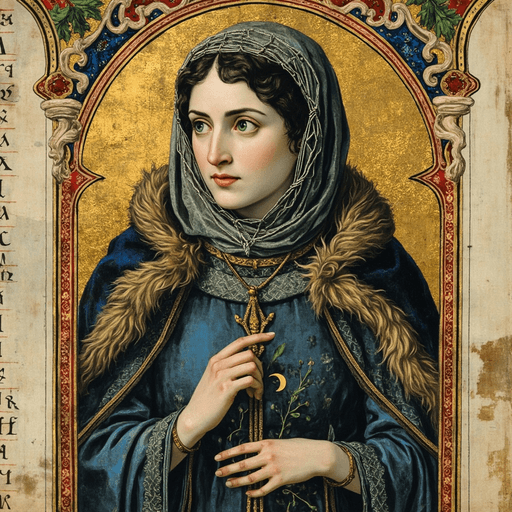
This imaginary interview was generated by artificial intelligence from sources documented in Frigg's profile. It dramatises what the figure might have said based on what we know about them, but does not constitute attested historical testimony. For primary sources and factual documentation, refer to the full profile.