Imaginary dialogue between Piotr Ilitch Tchaïkovski and Georges Bizet
by Charactorium · Georges Bizet (1838 — 1875) · Music · 6 min read
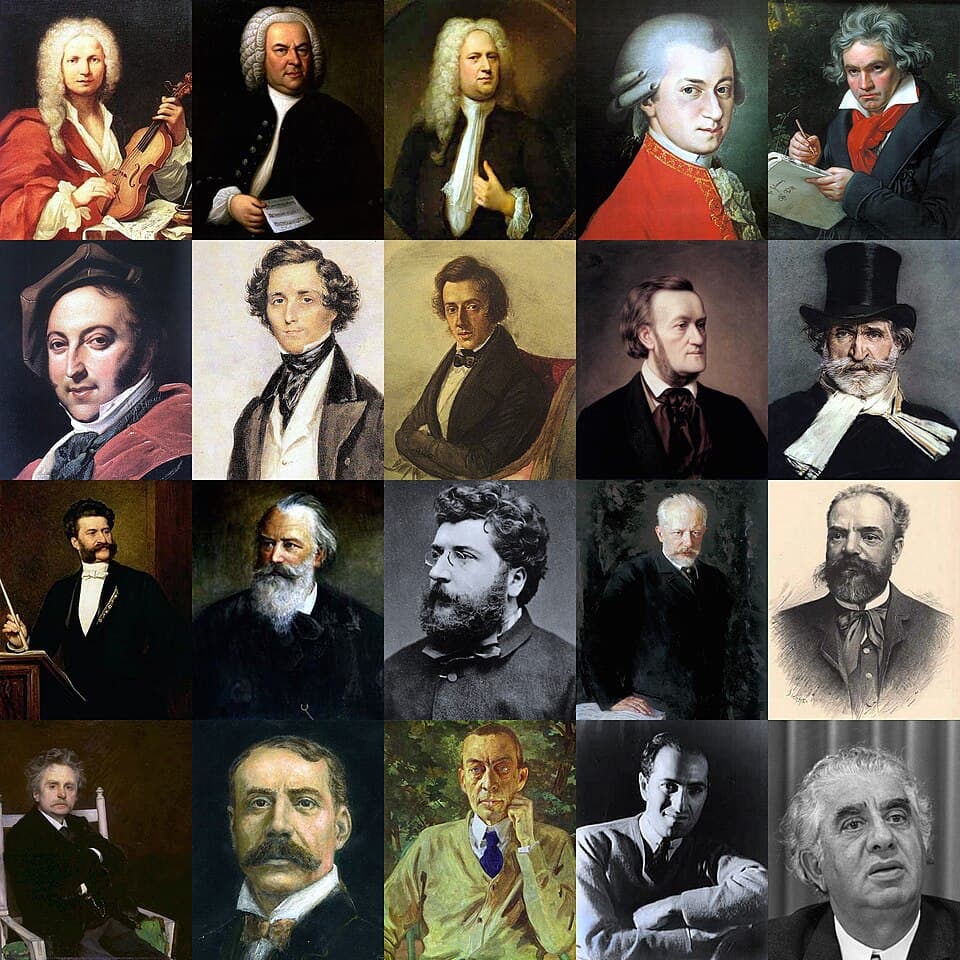
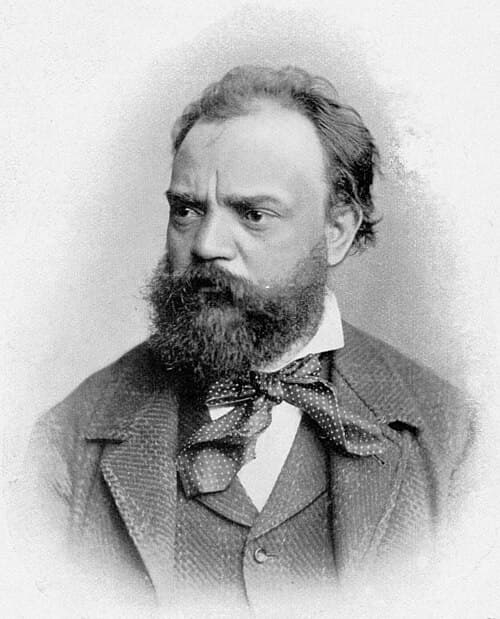
It is in the apartment on rue de Douai, in the heart of the Nouvelle-Athènes, that Pyotr Ilyich Tchaikovsky, passing through Paris in March 1875, meets Georges Bizet a few days after the premiere of Carmen. The smoke of a cigar floats above the upright piano, where annotated scores still lie about. The two men have never met in person, but Tchaikovsky has worn out his eyes on the pages of The Pearl Fishers received in Moscow, and he comes as a fervent peer, troubled by what is already being said about the scandal at the Opéra-Comique. In the gray afternoon light, he sits near the keyboard and lets Bizet speak.
—Dear Bizet, I have heard in Moscow a whiff of scandal surrounding your Carmen. What did you see, from the pit, on March 3?
I saw an audience stiffen. You understand, they entrusted me with the Opéra-Comique, that theater where families come for a quiet evening, and I brought them a cigar-factory worker, smugglers, a knife planted on stage in the last act. The first act, they applauded me. Then, act by act, the silence grew heavy, almost hostile. My friends came to shake my hand in the corridors with that look you wear at funerals. I regret nothing, believe me: I gave those people the truth of a free woman, and truth always disturbs those who pay for their seat to be lulled. They hissed Carmen as they hiss what they have not yet learned to hear.
They hissed Carmen as they hiss what they have not yet learned to hear.
—The Parisian papers did not spare you. Auguste Vitu accuses you in Le Figaro of despising the public. Does that wound you?
Vitu writes that I have a cult of the ear and a disdain for the heart. That is the exact opposite of what I am! All I have sought is the heart, the blood, the warmth of a being who loves and dies. But these critics perceive refinement where there is passion, because they confuse drama with noise. I confess to you, who also wield a pen: those lines haunt me at night. A man gives himself entirely to a work, and they answer that he is cold. Yet I hold firm. Time will sort out those who listened from those who merely judged. I am not old enough to have patience, but I believe in mine.
—Last year you wrote to Galabert that you are a man of the theater. What does that mean, exactly, for the composer I revere?
It means I am incapable of writing a note in a void. Give me a page of pure music, a sonata without a face, and my hand freezes. I need a drama before me, passions, living characters who breathe and demand their melody. When I write for the stage, I do not compose: I listen to beings who already exist somewhere, and I note what they sing. Carmen, I did not invent her, I surprised her. You, my friend, have the gift of the symphony that is self-sufficient, that abstract architecture that eludes me. I need a curtain to rise. Without the theater, I am merely a pianist bored at his keyboard.
Carmen, I did not invent her, I surprised her.
—When I imagine you at work, in the morning, in this study, how does it really happen? Describe your workshop to me.
The morning belongs to me. I get up early, I sit at this upright piano you see there, worn, out of tune in places, and I light my first cigar. Then the second, then the third — my wife claims they will find me one day buried under smoke. I need this silence and this haze around me to orchestrate. Each instrumental part, I write with a pen, I annotate it, I scratch it out, I start again. Orchestration is not a varnish applied at the end: it is the very flesh of the idea. A melody without its orchestral color is a woman without her face. I work like this until noon, alone with my characters, and it is there, in that smoky concentration, that I am happiest to be alive.
—They say you entered the Conservatoire at nine, almost a babe in arms. Was it your father who first guessed?
My father was a singing teacher, and he saw something in me before I even knew what it was. At nine, they opened the doors of that institution where one usually enters much later. Imagine a child among young men, sight-reading fugues that had not yet been taught to him. I had Halévy, Marmontel, Gounod as masters — Gounod especially, whose melodic tenderness shaped me more than I can say. Music was never a decision for me: it was there before my memory, like the language one speaks without having chosen it. I have sometimes envied ordinary childhoods, the games of others. But would I have traded? No. One does not renounce what has constituted oneself.
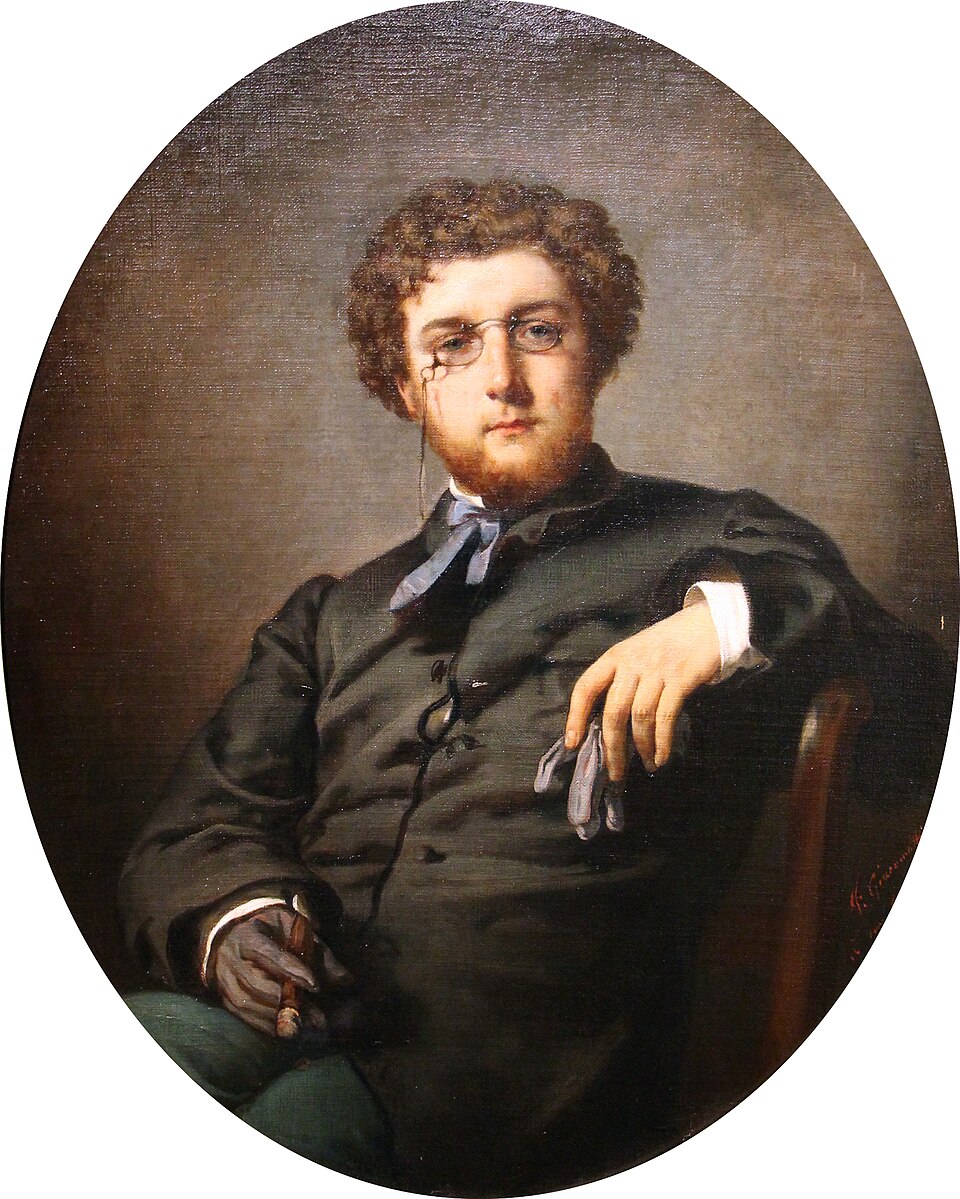
—Then came the Prix de Rome, at eighteen, and the Villa Medici. You wrote to your mother that Italy gave you ideas. Which ones?
Rome untied me. In France, I was the diligent student, the child of the Conservatoire seeking the approval of masters. There, under that light, before those ruins and churches bathed in gold, I felt for the first time that music could be sensual without shame. I confided to my mother that Italy gave me ideas that France would never have inspired — and it was true. Italian melody, its abandon, its warmth in the voice, all of that blended with my rigorous training. I spent three years working hard and being happy, which does not happen to me so often. That stay colored all my orchestration. When you hear the South sing in Carmen, it is also the sun of the Villa Medici speaking, twenty years later.
Italian melody blended with my rigorous training, and the sun of Rome never left my music.
—You lived through the war, the siege, the Commune. You are said to have served in the National Guard in 1870. How does a musician experience that?
Badly, I admit. When the Prussians encircled Paris, I took up the National Guard rifle like so many others. You, who come from a great country at peace, can hardly imagine a starving, frozen capital, where one heard cannons instead of concerts. Music fell silent. What use to orchestrate when you are listening for the sound of shells? Then came the Commune, Parisians killing each other, the city in flames. For a moment I thought my world, that of theaters and salons, was swept away forever. But the need to compose returned, stronger, like a revenge against all that blood. L'Arlésienne, Carmen — these are works born after the disaster. One never creates as violently as when one has seen the old world die.
One never creates as violently as when one has seen the old world die.
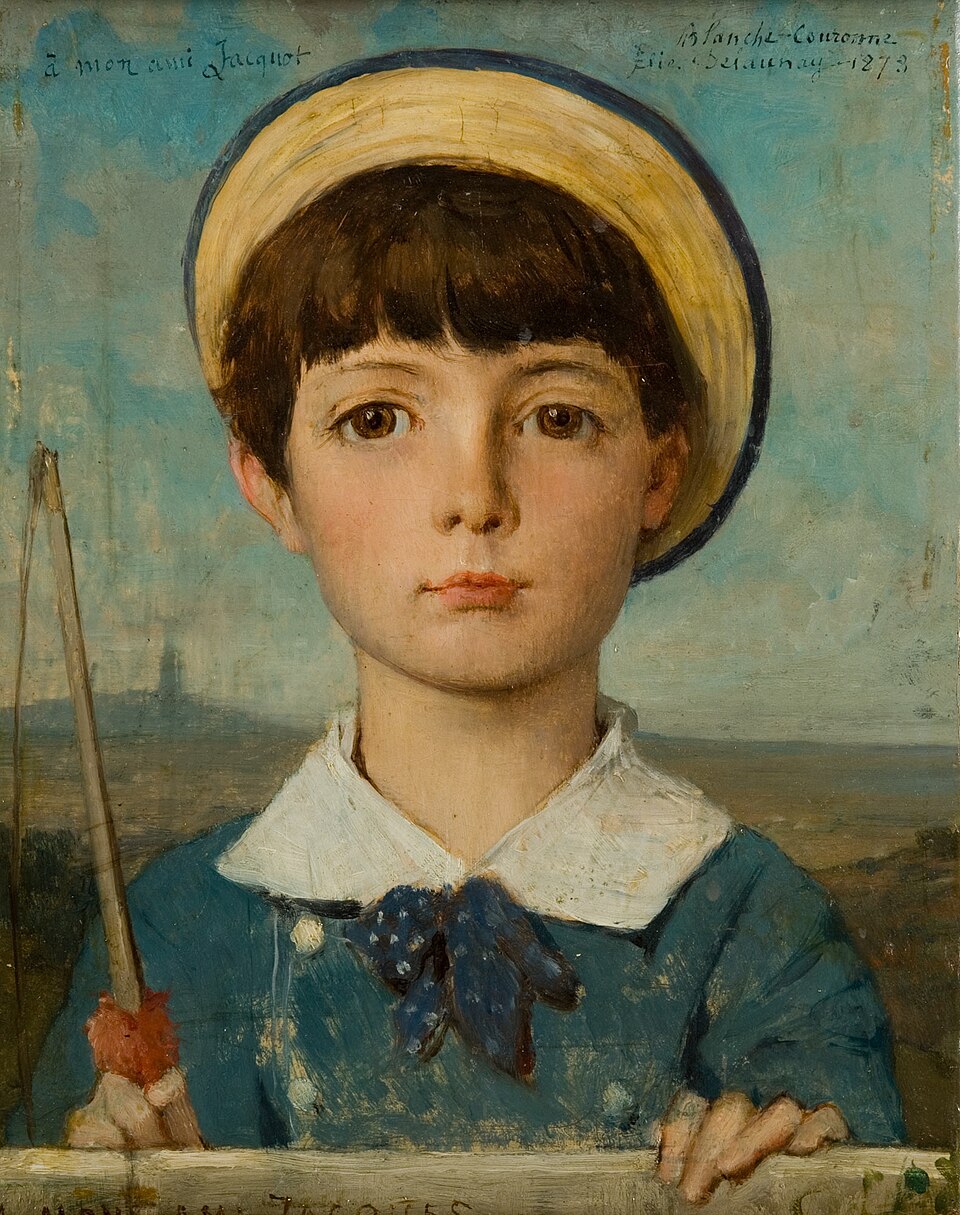
—In the midst of these storms, you married Geneviève Halévy in 1869, your master's daughter. Was it a refuge?
Geneviève is the daughter of Fromental Halévy, my composition teacher, the one who taught me the stage. Marrying his daughter was, in a way, entering the very house of French music. Our union has not been a long quiet river — it is fragile, tormented, and the artist's life does not help. But in the dark years you mention, having near you a being who understands what a score costs serves as a rampart. I am not an easy man: I doubt, I lose my temper, I lock myself in my study for hours. It takes a certain courage to love a composer. Marriage did not give me peace — I do not believe peace is made for me — but it gave me a witness to my struggles.
—One last curiosity, almost envious: they say that Liszt ranked you among the three best pianists in Europe. Is that a legend?
Liszt had placed before me one of his pages, formidable, bristling with difficulties he thought unplayable at sight. I sight-read it. He had, I believe, a moment of surprise, and he said kindly that he barely knew two or three men capable of doing the same. You know what the compliments of the great are worth: you receive them blushing and dare not believe them. The piano is as natural to me as speech. But do not be mistaken: I take no virtuoso vanity from it. Finger agility is only a tool. What matters is what the fingers serve — the idea, the drama, the melody. A keyboard acrobat who has nothing to say bores me as much as an empty book.
—Then why, Georges, did you refuse the concert career, the easy glory of the stage, for those lessons you give in the afternoon?
Because the glory of the concert performer is a glory of one evening, evaporating with the applause. I never wanted to be the man who forever re-plays the works of others, even the most beautiful. I had things to say, myself, characters full in my head demanding their music. So yes, in the afternoon, I give lessons to wealthy students, I run to publishers, I haggle for my bread — that is the price of my freedom as a creator. I would have earned more by parading from salon to salon. But I would have died without writing Carmen. Between living comfortably on what others have composed and living meagerly on what I have invented, I never hesitated. You understand me, you who choose the same fruitful solitude.
Between living on what others have composed and living on what I have invented, I never hesitated.
This imaginary interview was generated by artificial intelligence from sources documented in Georges Bizet's profile. It dramatises what the figure might have said based on what we know about them, but does not constitute attested historical testimony. For primary sources and factual documentation, refer to the full profile.