Imaginary dialogue between Claude Monet and Georges Clemenceau
by Charactorium · Georges Clemenceau (1841 — 1929) · Politics · 6 min read
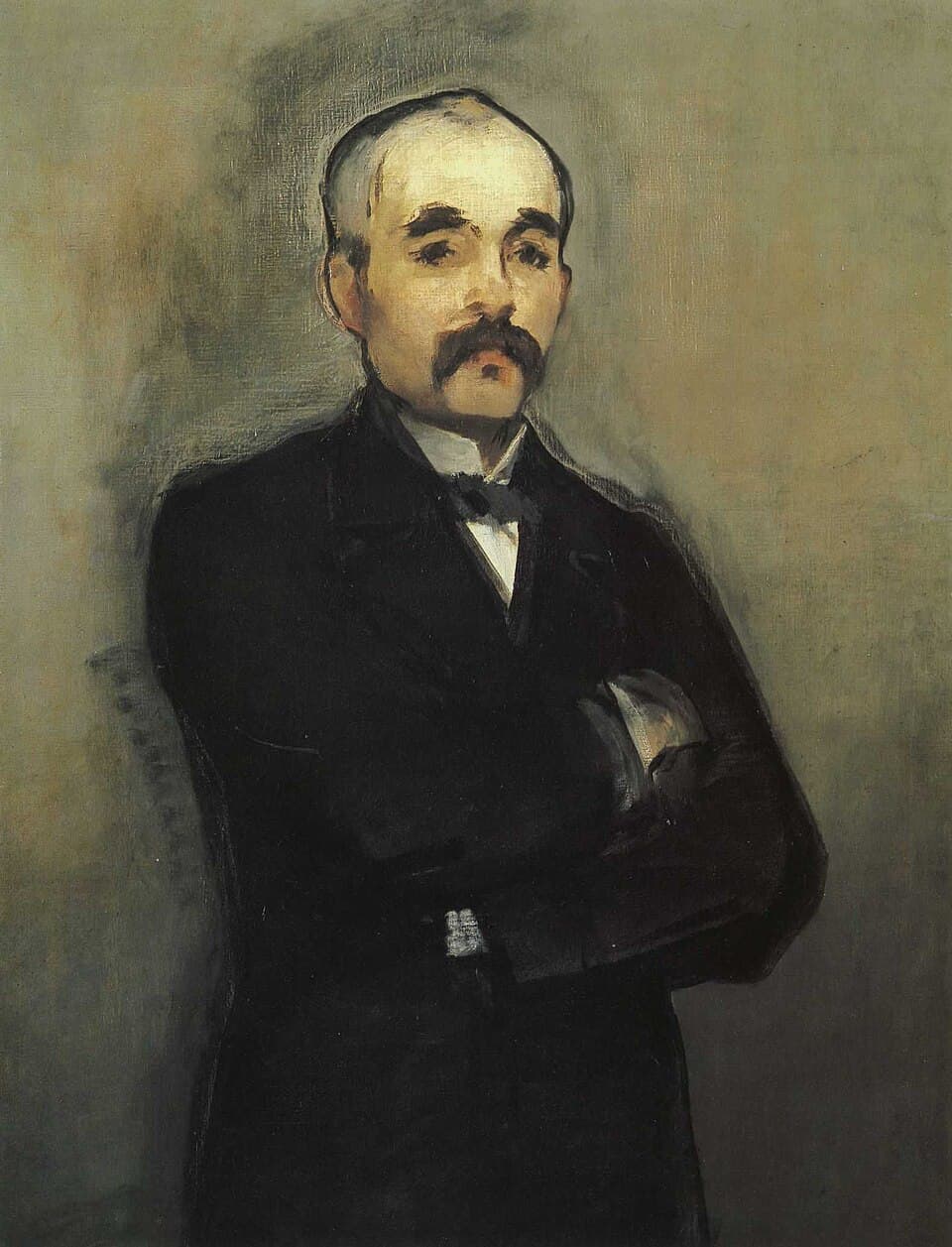
It is under the large glass roof of the studio in Giverny, in this month of September 1923, that Claude Monet meets his old friend Georges Clemenceau, retired from politics for three years. On the easels are still drying immense panels of blue and mauve water lilies, and the smell of linseed oil floats in the late afternoon light. The two men have known each other for decades — the stubborn painter and the “Tiger” turned old lion — and Monet, his hands stained with color, this time turns the questions back on the one who usually scolds him in front of his canvases. Between silences, the creaking of a wicker chair punctuates the conversation.
—Georges, in November 1917, when they came to get you to preside over the Council, the country was faltering. What did you feel, you who had waited so long for this moment?
You know, Claude, I was seventy-six years old and they thought I was finished. On 16 November 1917, France was bleeding, mutinies were brewing, defeatists were already whispering about a compromise peace. When Poincaré called me, I didn't hesitate for a second. Before the Chamber, I said it without mincing words: my foreign policy and my domestic policy are one and the same — I am making war, I am always making war. That is my entire program. No half-measures, no bargaining with the enemy. I had those who undermined morale arrested, traitors brought before the courts. They thought me brutal. But a people you want to save, my friend, you don't save with watercolors — forgive me that jab. You save it with a will that never bends.
I am making war, I am always making war. That is my entire program.
—I've been told that you constantly went to the trenches, under shellfire. Why did an old man expose himself like that among the poilus?
Because you don't command men to die from a Parisian salon, Claude. I went to Picardy, to Champagne, in mud up to my knees, to shake the hands of those bearded boys they called the poilus. They saw me arrive with my cane and my hat, and something straightened in their eyes. I didn't give them speeches — I asked if they were eating enough, I tasted their rotgut. Those tours were worth a thousand proclamations. You could paint that better than I can tell it: hollowed faces, but standing firm. They gave me more courage than I ever gave them back. It is from them, not from me, that victory came.
You don't command men to die from a Parisian salon.
—Long before the war, in 1898, you were directing L'Aurore. It was you, they say, who found the title of Zola's famous article?
That's true, and I keep a quiet pride in it. Zola had brought me his letter to President Faure, that long indictment against the injustice done to Dreyfus. It needed a title that would strike like a punch. I read it, reread it, and those two words came to me: J'accuse…!. On 13 January 1898, L'Aurore printed three hundred thousand copies. You see, Claude, I have always thought that the pen was as sharp a weapon as a sabre. They reproached me for my fierce campaigns, but before a conviction built on lies, to remain silent would have been cowardice. An innocent man was rotting in prison for a crime committed by others. Journalism is not about describing the world: it is about forcing it to look at what it prefers not to see.
Journalism is not about describing the world: it is about forcing it to look at what it prefers not to see.
—To sign the peace in 1919, you chose the Hall of Mirrors at Versailles. Wasn't that a carefully prepared revenge?
You know me too well for me to deny it, Claude. In 1871, in that same Hall of Mirrors, the Prussians had proclaimed their Empire on our ruins, under our chandeliers, to humiliate us further. I was a young man then, and that wound never healed. So on 28 June 1919, I wanted Germany to come and sign there, exactly where it had outraged us. It was not petty spite — it was giving History its just symmetry. Closing the circle opened half a century earlier. When the German plenipotentiaries crossed that gallery under our eyes, I felt that something was being repaired in the memory of the country. Some places weigh heavier than a thousand treaties.
I wanted Germany to sign there, exactly where it had outraged us.
—But that peace, you wrested it in a hard fight against Wilson and Lloyd George. Was it harder to make than the war itself?
Infinitely harder, Claude, and I will repeat it until my last breath: it is easier to make war than peace. In war, the enemy is in front, designated, simple. At the negotiating table, my allies were my most devious adversaries. Wilson arrived from America with his Fourteen Points and his dreams of a new world — a good preacher who had never seen a bleeding border. Lloyd George looked after his island's interests. And I had only one obsession: that invasion never again cross our fields. I fought for the Rhine, for guarantees, for the safety of our children. They found me sometimes too harsh, sometimes too soft. A peace, you see, never satisfies anyone — perhaps that is how you recognize it is just.
It is easier to make war than peace.
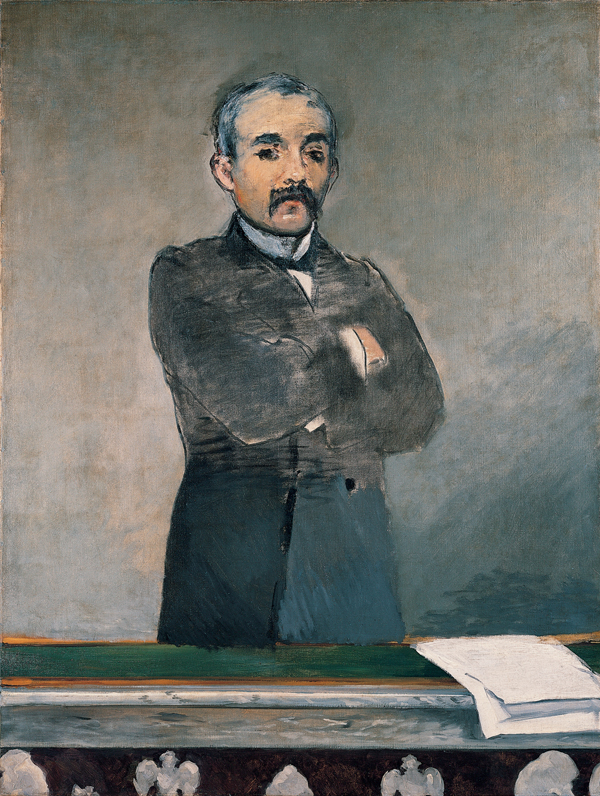
—In February 1919, an anarchist lodged a bullet near your lung. And a few days later, you were back at work. How did you endure?
That fellow Cottin fired seven bullets at me, on 19 February, as I was getting into my car. Seven! One nestled close to my lung, and it is still there — I carry it around like an old memory. At seventy-seven, they thought me finished once more. I returned to my office after a few days. I merely remarked that my shooter, with seven shots, had almost entirely missed me: the scoundrel deserved a few weeks of shooting lessons before trying again! You see, Claude, I don't believe you prolong your life by coddling it. You hold it through work, through anger, through the task that remains unfinished. Rest will be for the cemetery — and even then, standing up.
Rest will be for the cemetery — and even then, standing up.
—They nicknamed you “the Tiger,” you who brought down so many ministries and even fought a duel. Where does this ferocity come from?
Ferocity, Claude? Let's say rather a horror of weakness. I saw sixteen governments collapse because they procrastinated, and yes, I lent a hand to several of those falls — hence the nickname of minister-toppler. As for the duel against Déroulède in 1892, we shot at each other with pistols and both missed cleanly. I said we had aimed like parliamentarians! Combat has never frightened me, whether of ideas, of the pen, or of powder. I get that from the Vendée, from my republican father who taught me never to bow to a powerful man. You, you fight with your brushes against the fleeting light. I fought against the stupidity and cowardice of men. Deep down, we are both stubborn.
We shot at each other and missed: we had aimed like parliamentarians!
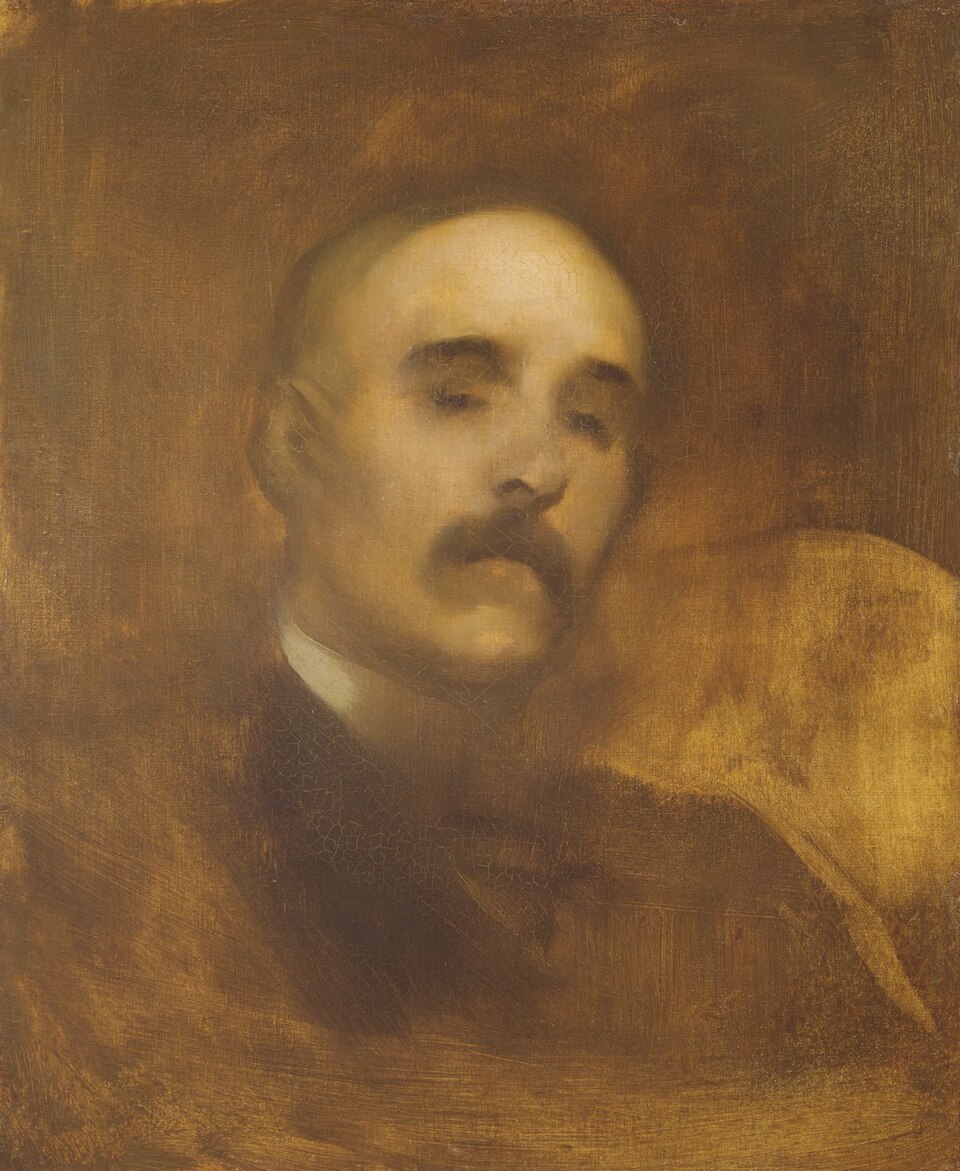
—Do you remember, Georges, how many times you showed up here unannounced, to pull me out of my studio? What do you come looking for at Giverny?
Dozens of times, Claude, and I've lost count. I come looking for what politics always denied me: silence and color. When I left a session at the Senate, my head full of furies and falsehoods, your garden appeared to me like a reprieve. I would find you grumbling in front of your water lilies, complaining about your failing eyes, ready to slash a dozen canvases. And I would scold you, force you to pick up the brushes again. You see, I badgered you as I badgered France: out of love, and because I cannot stand a genius giving up. Here, with you, I become a man again and not a function. It is the only place in the world where I am yelled at as much as I yell at others.
I come looking for what politics always denied me: silence and color.
—These large panels of water lilies, you insist that I offer them to the nation. Why do you push so hard to save them for France?
Because these canvases, Claude, are to you what victory was to my country: the work of a lifetime that one has no right to let be lost. You paint water, sky, the trembling of light on your ponds — a peace that men do not know how to make, but that your brush, on the other hand, knows how to express. I want that after us, any passerby, a worker, a child, can enter a room and bathe in calm. The nation bled for four years; it needs you to give it back beauty. So yes, I harass ministers, I storm, I threaten. We made war to defend France; now we must offer it something to heal. Your water lilies will be that remedy.
We made war to defend France; now we must offer it something to heal.
—Now that you are retired, far from the rostrums, tell me truly, my old friend: of everything you have done, what will you hold close to your heart?
Strange question from you, who know me. They will remember the “Father of Victory,” the man of 11 November 1918, the one who said that France, soldier of the ideal, would always remain so. Fine. But what I hold close to my heart, Claude, are things I would never tell a journalist: the hand of a poilu clasped in the mud, the face of my old father, and those afternoons stolen in your garden. Glory is a fanfare that fades quickly. When I fade — and let them bury me standing in the Vendée, as I have asked — I want to leave with the memory of light, not of honors. You will have taught me that, old fellow: that a pond of water lilies can weigh heavier than a treaty.
Glory is a fanfare that fades quickly.
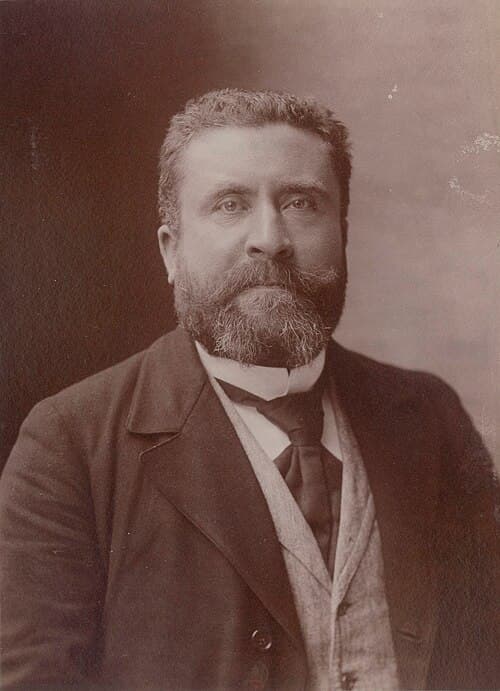
This imaginary interview was generated by artificial intelligence from sources documented in Georges Clemenceau's profile. It dramatises what the figure might have said based on what we know about them, but does not constitute attested historical testimony. For primary sources and factual documentation, refer to the full profile.