Imaginary dialogue between Charles Dickens and Hans Christian Andersen
by Charactorium · Hans Christian Andersen (1805 — 1875) · Literature · 5 min read
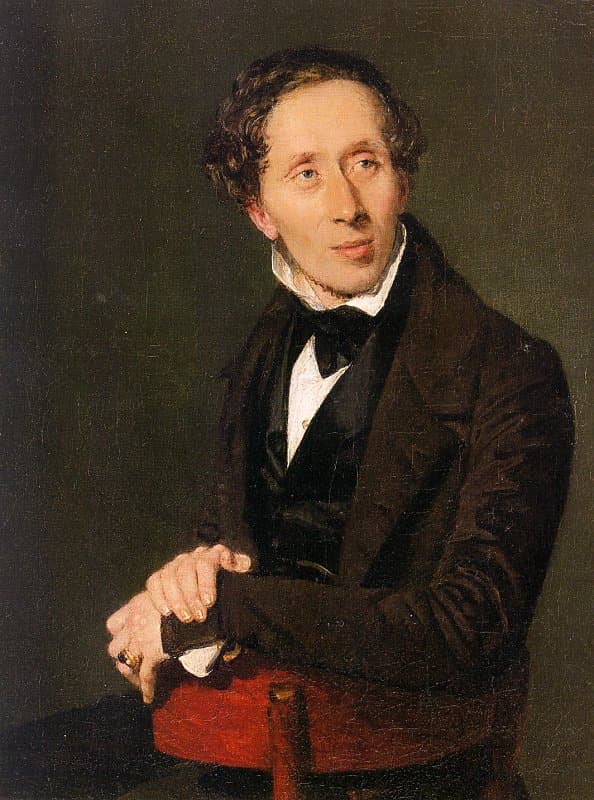
It is in the cluttered drawing room of Gad's Hill Place, near Rochester, that Charles Dickens meets his Danish guest this summer of 1857. English rain hammers the windows, and on the table lies a sheet of black paper that Andersen cut out the night before to amuse the children. The two men have admired each other for years through letters, but five weeks of shared life have strained the thread of their friendship. Dickens, half affectionate, half annoyed, finally asks the questions he dared not write.
—My dear Hans, you are celebrated all over Europe, and yet I always sense you on the defensive. Where does this shadow come from?
You who have watched me for five weeks under your own roof must have guessed it, Charles. I was born in Odense, the son of a shoemaker, in a room that barely held a bed and a workbench. As a child, they mocked my height, my nose, my big feet. When I wrote The Ugly Duckling in 1843, I invented nothing: I told the story of the gray chick that the whole barnyard rejected, and that one morning discovers it is a swan. But you see, even when you become a swan, you keep in the back of your throat the memory of the pecks. Glory does not heal childhood; it gilds it, that's all.
Even when you become a swan, you keep in the back of your throat the memory of the pecks.
—You titled your life a fairy tale. Isn't that a bit of coquetry, you who suffered so much?
Not coquetry, Charles, but gratitude. In The Story of My Life, in 1855, I wrote that if a kindly fairy had met me as a poor, unsupported child, my destiny could not have been happier. Think of the path: a boy from Odense who leaves his town at fourteen for Copenhagen, dreaming of singing or acting, and ends up received at royal courts. That does resemble a tale, doesn't it? Only, in real tales, there is always a price to pay. The little mermaid loses her voice. I kept mine, but I paid in solitude.
In real tales, there is always a price to pay.
—Just last night, you brought out your scissors in front of my children. This cut paper, is it just a game or something else?
Your little ones laughed, and that is my whole secret. When I cut a silhouette from black paper — a castle, a swan, a dancer — I am already telling the story before it is written. My hands speak at the same time as my mouth. In the salons of Copenhagen, I read my tales aloud, miming the old toad and the proud princess, and meanwhile my scissors worked. The tale is not a library object, Charles: it is a voice, a gesture, an evening by the fire. You write for thousands of silent readers; I always need to see a face light up in front of me.
The tale is not a library object: it is a voice, a gesture, an evening by the fire.
—You read your stories aloud where others are content to print them. Isn't that the failed actor reappearing?
You put your finger on my old wound. At fourteen, I went to Copenhagen to become an actor or singer, and I was refused everywhere: my voice was breaking, my body was awkward, I made people laugh at the wrong moment. The theater closed its door to me. So I made every salon my stage, every dinner a performance. When I read The Snow Queen, I am in turn Gerda, the reindeer, and the witch. The failed actor is not dead, Charles: he merely exchanged the boards for a sheet of paper and a circle of listeners. You never quite kill the child who wanted to go on stage.
I made every salon my stage, every dinner a performance.
—It is whispered that your Nightingale hides a woman. You can tell me, who lodges you.
To you, yes, I will say it in half-words. There was a voice, Charles, the purest I have ever heard: that of the Swedish soprano Jenny Lind, nicknamed the Nightingale of the North. I loved her as one loves a star, without hope of ever touching it. She considered me a brother, a dear friend, nothing more. My Nightingale, in 1843, contrasts the living bird with the mechanical bird encrusted with jewels: it is true art versus artifice. But it is also a man who knows that the most beautiful song cannot be possessed, that it always flies away to another window than his own.
I loved her as one loves a star, without hope of ever touching it.
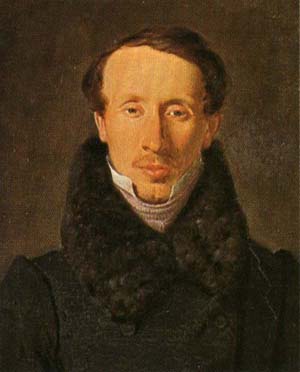
—You write about love with such pain. Has Andersen's heart remained entirely unconsoled?
Unconsoled, that is the word, and I would only confide it to a friend under his own roof. I have loved women who saw me as a brother, and I have felt for certain friends a tenderness so intense that it frightened even me — there is in it, I once wrote to Edvard Collin, something feminine in its gentleness. The world wants simple hearts; mine never was. That is why my tales so often end in snow or sea: The Little Match Girl dies of cold dreaming of warmth. I put into those frozen children everything I could never warm in myself.
I put into those frozen children everything I could never warm in myself.
—Hans, let us be frank between us: this stay at my home, at Gad's Hill, is dragging on. Do you feel, as I do, that a thread is stretching?
I feel it, Charles, and you do not know how much it grieves me. I came with such joy, admiring you as no other English writer. But I see clearly that my clumsy tongue, my strange habits, my embarrassed silences weigh on your household, which already buzzes with so much life. I noted in my diary that I sometimes feel like a guest too many. It is my eternal ailment: I attach too strongly, I stay too long, I cannot guess the moment to leave. Forgive the gray duck who, having finally found a warm roof, no longer dared to take flight.
I attach too strongly, I stay too long, I cannot guess the moment to leave.
—You have shaken hands with Victor Hugo, the Grimm brothers, so many great men. Yet these friendships elude you. Why?
Because I want them too much, Charles, that is the truth I would admit to no one else. I arrive with an open heart, I give my full trust, and this very fervor frightens those I approach. The Grimms received me politely without quite knowing who I was; Hugo greeted me from afar. I cross Europe in search of brothers, and I often leave with the feeling of having asked too much. A man accustomed from childhood to rejection never doses his tenderness well: he offers himself entirely or he falls silent. That is doubtless why I get along better with children — they do not calculate the measure of affection.
A man accustomed from childhood to rejection never doses his tenderness well.
—That leather trunk cluttering my hallway for five weeks — it says everything about you, doesn't it, eternal traveler?
It says everything, indeed, and I laugh that you noticed it. I never owned a real house, Charles: I lived in hotels, at my protectors', in rented rooms, my trunk always ready, tied with a rope because I tremble at losing my luggage. In 1833, a Danish royal scholarship allowed me to leave for Rome; that journey transformed me, it nourished my novel The Improvisatore and all my imagination since. Travel is my true home. The roads of Europe gave me what no roof ever offered: the feeling, every morning, that the world begins anew and that a new tale awaits me at the next posting station.
I never owned a real house: travel is my true home.
—Before we part, tell me: what are you really seeking on all these roads, notebook in hand?
I seek, Charles, the fresh gaze of the child who discovers. My notebook never leaves me: I note a face glimpsed in an inn, the light on the hills of Funen, a peasant's word. All of this becomes a tale one day or another. Deep down, I think I travel so as not to stop marveling, for the day I cease to be astonished, I will cease to write. The little shoemaker from Odense is still on the road, his trunk tied, his scissors in his pocket, hoping that around the next bend a story awaits him that he has not yet told. There, my friend, is the only home I know.
The day I cease to be astonished, I will cease to write.
This imaginary interview was generated by artificial intelligence from sources documented in Hans Christian Andersen's profile. It dramatises what the figure might have said based on what we know about them, but does not constitute attested historical testimony. For primary sources and factual documentation, refer to the full profile.