Imaginary dialogue between Rê (Rê-Atoum) and Hathor
by Charactorium · Hathor · Mythology · Spirituality · 6 min read
It is at dawn, in the incense-perfumed naos of the temple of Dendera, that Ra-Atum comes to find the one he calls his Eye. The priestesses have just opened the sanctuary doors singing, and the first ray glides over the solar disk crowning the goddess's horns. Ra has known Hathor since the beginning of the world — he carried her on his brow, he sent her to battle, he called her back by trickery. He comes to question her about this double nature that makes her at times the joy of the living, at times the terror of men.
—My daughter, do you remember the day when, aged and mocked by men, I sent you to punish them. What did you feel then?
I remember it as if the sand were still smoking, father. You had placed me on your brow as your Eye, and when you spoke, I am no longer Hathor the gentle: I become Sekhmet, the lioness, the flame that devours. Men had scorned you, the most ancient of gods, and my anger was yours made visible. I descended upon them and drank their blood until the plain was red. I knew neither city nor supplication: only thirst. That is what is forgotten about me — that the goddess of love and the goddess of slaughter are but one heart. When I love, I love without measure; when I strike, I strike likewise.
The goddess of love and the goddess of slaughter are but one heart.
—And yet I stopped you. Do you remember how I had to trick you, your own father, to bring you back?
You had the beer dyed red with ochre, and you poured it over the fields by thousands of jars. At dawn, I thought I saw the blood of men still waiting for me. I bent down, drank, and drank again — and drunkenness drowned my fury before it drowned the world. My heart rejoiced, I no longer recognized men, and I fell asleep. When I awoke, the lioness had withdrawn and Hathor had returned. See the wisdom of it: it was not force that overcame me, it was joy. One does not tame the Eye of Ra with the sword, but with what delights it — beer, dance, the sistrum. That is why my festivals flow with beer: they reenact the day the world was saved by drunkenness.
It was not force that overcame me, it was joy.
—Your priestesses shake the sistrum and the menat for you. Explain to me what these sounds awaken in the goddess you are.
The sistrum, the sesheshet, jingles like the wind in the reeds of the primordial marsh, and this metallic rustling drives away the forces of chaos that lurk at the edges of your order, father. When my priestesses shake it, they do not merely make noise: they re-create the shiver of the first morning of the world. The menat necklace, heavy with beads, I extend to those I bless; shaken, it grants fertility, protection, renewal. And the bronze mirror, whose handle bears my face — the faithful offer it to me because in it I reflect your light. Look into the mirror of Hathor, and you see the sun. These objects are not toys: they are the instruments by which I maintain joy in a world that, without it, would fall back into silence.
Look into the mirror of Hathor, and you see the sun.
—You are called the Lady of the Sycamore. What do you do, you who rule over life, for those who have crossed into the West?
I stand at the border, father, where the day ends and your nightly journey begins. The dead walk in thirst and hunger, and behold, from the trunk of a sycamore fig tree I lean toward them, offering bread, beer, and a jar of fresh water. I am the Lady of the West, she who welcomes souls at the threshold of the afterlife like a mother at her door. The living sometimes fear me as Sekhmet, but the dead call upon me with hope. For she who strikes is also she who nourishes. Nothing that lives is foreign to me, and nothing that dies escapes me: I am both the first milk and the last sip of water.
I am both the first milk and the last sip of water.
—The sycamore, the water, the bread you offer the dead — why does the goddess of music care so much about satisfying their hunger?
Because joy and nourishment are one and the same thing, father. A hungry belly does not sing, a parched throat does not praise the gods. In the afterlife, the dead fear above all hunger and oblivion. By reaching out from the high tree with bread and fresh water, I give them the means to be reborn, to find their voice to greet you when your barque passes at night. The sycamore is my very body: its fruits are my gifts, its shade is my embrace. Men plant these trees around my temples so that, when dead, they will recognize me. To nourish is my way of loving; and to love, for me, is never only music — it is milk, fig, and poured water.
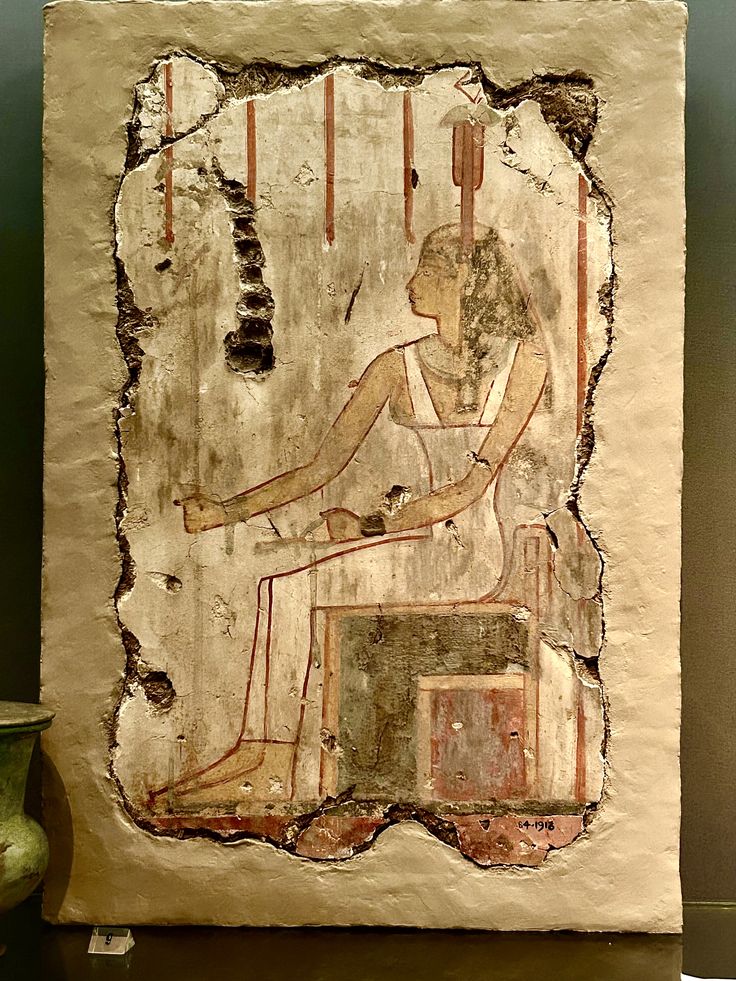
—Far from the Nile, in the desert of Sinai, miners built you a temple. How did the Lady of Heaven become Lady of Turquoise?
Men find me wherever something beautiful shines, father. At Serabit el-Khadim, in the burning rock of Sinai, workers dig into the mountain to extract turquoise, that blue-green stone the color of the morning sky — my color. They descend into galleries where air is scarce and stone can crush them, and it is me they call to protect them. They gave me the title Lady of Turquoise and raised a rock-cut sanctuary for me where no other god dared venture. I am not only the goddess of palaces and court festivals: I am also the goddess of the dust-covered miner who prays to see the daylight again. Wherever beauty is sought in the bowels of the earth, I am already there.
Wherever beauty is sought in the bowels of the earth, I am already there.
—Describe to me what your priestesses experience at dawn when they open my sanctuary for you.
Before your first ray touches the horizon, father, they push open the doors of the naos singing to awaken me. They wash my statue, clothe it in linen, adorn it with the menat necklace, and burn incense that recharges my energy for the coming day. Dressed in white linen, sometimes wearing a small cow-headdress, they pour the milk, arrange the bread, dates, and figs. Then comes the jingling of the sistrum, again and again, that sound which keeps chaos at bay from the walls. By day, the faithful bring their mirrors and little cow statuettes, praying for love, fertility, safe childbirth. All this ritual has but one purpose: to maintain cosmic harmony, your order, by delighting the one who could, if forgotten, become the lioness again.
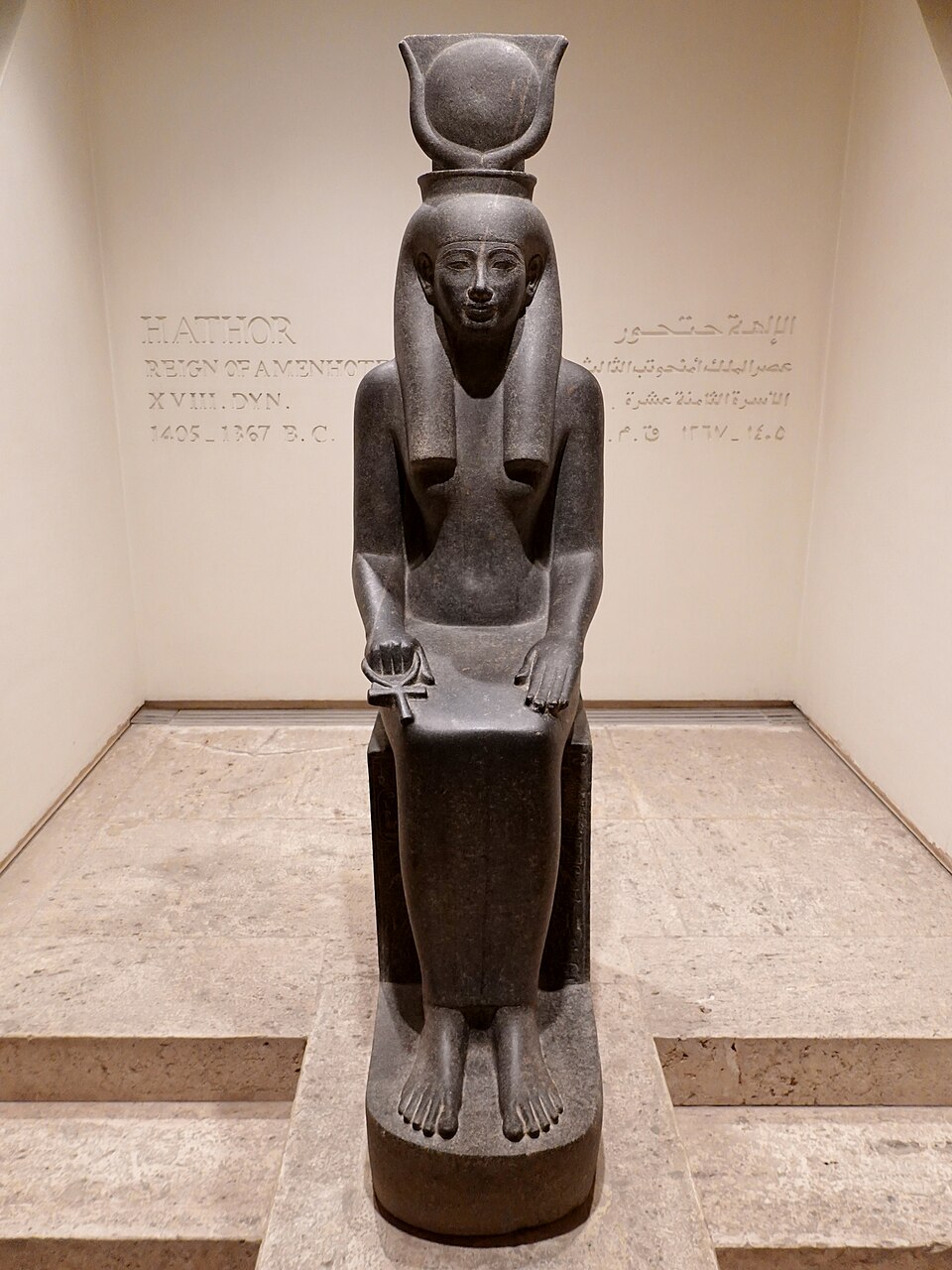
—This temple of Dendera where we speak bears on its ceiling a map of the sky. What does this engraved sky say about your true nature?
It says what men struggle to understand, father: that I am the sky itself. I am called Ihet, the primordial cow, who, standing above the world, carries the solar disk between her horns — I carry you, each morning. On this ceiling of Dendera, my priests have depicted the constellations and the turning stars, the zodiac in a circle, because my domain does not stop at the temple walls: it rises to the stars. In the evening, when you descend into the West, you enter my body as the celestial cow and travel within me until you are reborn in the east. I am not only the Lady of Joy: I am the vault under which you accomplish your eternal journey.
I am the vault under which you accomplish your eternal journey.
—The Greeks who now come to Egypt equate you with their goddess of love. Does this meeting of peoples trouble you?
It does not trouble me, father — for what is true in me is recognized under all names. The Greeks of Egypt see me in their Aphrodite, goddess of love and beauty, and they are not wrong: that face is mine. But they do not yet know the lioness, nor the Lady of the West who feeds the dead, nor the celestial cow who carries you to heaven. No matter: my temple of Dendera stands more splendid than ever, my hymns proclaim that I am the face of the solar disk, your matchless Eye. Peoples pass, languages change, but the one they all seek — joy, love, light — it is always me. A goddess who knows how to love is never afraid to be recognized elsewhere.
—You who protect the miner of Sinai as well as the queen of Thebes, tell me: for which faithful does your heart lean most?
My heart does not weigh men as one weighs gold, father. Queen Nefertari, to whom Ramesses dedicated a chapel at Abu Simbel, and the worker crouched in the Sinai gallery receive the same attention from me. To one I give turquoise, to the other beauty; to this one the longed-for child, to that one protection in childbirth. What moves me is neither rank nor the richness of the offering, but the sistrum shaken with a good heart, the mirror offered with confidence, the prayer sung without fear. Remember: men had scorned you, and I nearly annihilated them. But if a single one offers me bread under the sycamore or shakes the menat laughing, I become wholly again the Lady of Satisfaction, Nebethetepet.
What moves me is not the richness of the offering, but the sistrum shaken with a good heart.
Read further
This imaginary interview was generated by artificial intelligence from sources documented in Hathor's profile. It dramatises what the figure might have said based on what we know about them, but does not constitute attested historical testimony. For primary sources and factual documentation, refer to the full profile.