Imaginary interview with Hathor
by Charactorium · Hathor · Mythology · Spirituality · 6 min read
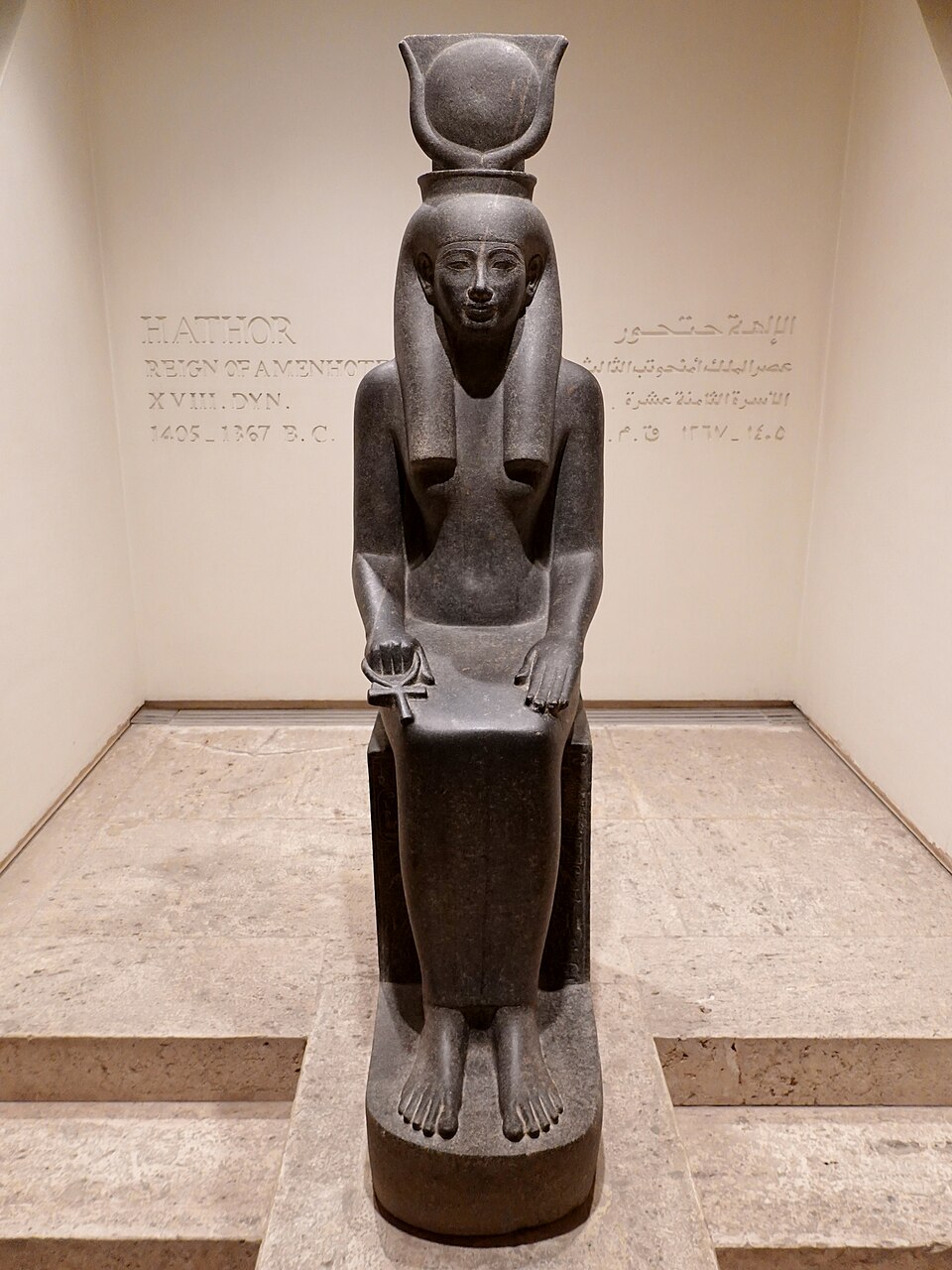
The meeting takes place in the perfumed dimness of a naos, at the hour when incense still rises from the night's braziers. A priestess has just shaken the sistrum to awaken the goddess. Hathor, solar disk raised between her horns, agrees to answer — in a voice that is at once laughter and the lowing of the celestial cow.
—It is said that Ra once unleashed you upon mankind. What happened that night?
Ra was aging, and men murmured against him. So he detached me from his brow as one looses an arrow: I became the Eye of Ra, and in the guise of Sekhmet the lioness, I waded in blood up to the knees. I drank their terror, it nourished me. Nothing would have stopped my joy as a killer — not even my own father. It was a trick that defeated me: during the night, he had thousands of jars of beer dyed like blood poured over the fields. At dawn, I thought I saw a lake of slaughter, I leaned down, I drank until drunkenness. My heart rejoiced, and I no longer recognized mankind. That is why, in my festivals, beer is never a mere drink: it is the potion that turned fury into dance.
I thought I saw a lake of slaughter, I leaned down, I drank — and I no longer recognized mankind.
—How do you live with being both the goddess of love and that force of destruction?
Men would like a goddess of a single face. But the sun that caresses the skin in the morning is the same one that burns the crops at noon. I am music and I am the blade; she who pours sweet beer and she who drank red beer. The story engraved in the tomb of Seti I, at Abydos, does not hide my lioness side — it inscribes it in stone so that one never forgets that the caress and the claw come from the same hand. When a priestess shakes the sistrum to appease me, she is not praying to a gentle mother: she prays to the power that could take everything, and that chooses to dance rather than bite. That is what it means to be Hathor: to hold both ends of the world without letting go of either.
The sun that caresses the skin in the morning is the same one that burns the crops at noon.
—You are called Lady of the Sycamore. What do you do for the dead?
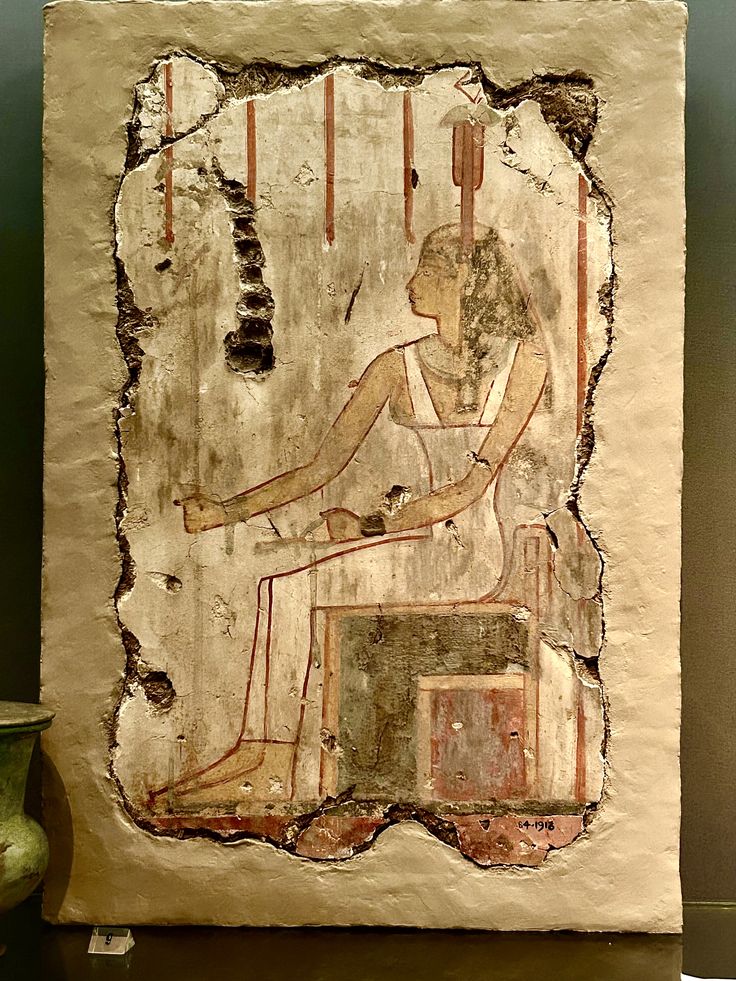
At the edge of the desert, where the land of the living ends, my sycamore fig trees grow. The dead arrive with dry throats, exhausted from walking toward the West. I stand in the trunk, half-emerged from the bark, and I extend my arms laden with bread and jars of fresh water. Look at the walls of the tombs: you see me emerging from the tree, offering a mummy the means to be reborn. The Book of the Dead names me Lady of the West, she who gives bread, beer, and all good things to the passing soul. For dying, in Egypt, is not being extinguished: it is undertaking a journey, and every traveler needs a hand waiting in the shade of a tree. That hand is mine.
Every traveler needs a hand waiting in the shade of a tree. That hand is mine.
—At night, they say, the sun disappears into you. What becomes of it until dawn?
When the disk of Ra touches the horizon, my priestesses cease the sistrum and intone the hymn of sunset. For in the evening, I am no longer only the cow of heaven: I become the belly that swallows the sun. It descends into me as into a cave, it crosses the twelve dark hours, it faces the serpents of the night — and at dawn, I bring it back to the world, new, red, glorious, between my two horns. That is why oil lamps are kept burning all night in the sanctuary: the flame keeps watch with me over the journey. I am both the tomb and the cradle of the god. Every dawn you see the light return, it is a birth — mine.
I am both the tomb and the cradle of the god.
—The sound of the sistrum constantly surrounds you. Why do you like this instrument so much?
Listen to it: that metallic rattle called sesheshet. When the priestess shakes it, it mimics the rustling of papyrus stems in the marsh, where I like to appear. This tiny noise tears the air and puts the spirits of chaos to flight — it annoys them as light annoys the night. I also like the heavy menat necklace to be shaken for me, those faience beads that roll and clink: their weight on the neck is my protection worn, my fertility invoked. I am not a goddess of silence and fear. I am served by rhythm, by laughter, by the joyful trembling of raised hands. Where the sistrum sounds, disorder retreats and I draw near.
Where the sistrum sounds, disorder retreats and I draw near.
—Among all the offerings laid at your feet, which touches you the most?
The faithful bring me statuettes of cows, necklaces, bronze sistra. But I have a weakness for the mirror. It is cast in polished bronze, and often the artisan carves my own face at the base of the handle, so that she who looks into it finds my features beneath hers. The disk of the mirror is the disk of the sun held in the hand; to contemplate oneself is to let my light settle upon oneself. A woman praying for a child, a lover hoping for a glance, a new mother fearing pain — all deposit this little metal sun in the afternoon, when my priestesses are still playing. This is what I prefer: not the heaviest gold, but the object where the human and the divine reflect each other.
The disk of the mirror is the disk of the sun held in the hand.
—You are also called Lady of Turquoise. How did such a title come to you?
Far from the Nile Valley, in the red mountains of the Sinai, men dig into the rock to extract the blue-green stone. At Serabit el-Khadim, these turquoise miners carved a temple for me out of the rock — not a palace of priests, a sanctuary of calloused hands. There, in the galleries where air is scarce and the rock can collapse, they call me their Lady of Turquoise. They offer me incense and wine so that I watch over them in the dark. I love this devotion as much as the hymns of the great temples: it smells of dust and fear. The turquoise they extract, this stone the color of the morning sky, is a piece of me hidden in the mountain. By giving it back to me, they give me back what I am.
Turquoise, this stone the color of the morning sky, is a piece of me hidden in the mountain.
—What binds you to these desert workers rather than to kings?
Kings build me sumptuous chapels — Ramesses II himself dedicated one to me at Abu Simbel, carved into the cliff beside his queen Nefertari. I do not disdain these honors. But in the Sinai, those who engrave my name have neither crown nor treasure: only their sweat and the hope of coming out of the galleries alive. When they inscribe on the wall that the king offers incense so that I protect the miners, they tell me that a goddess is only worth what she guards. I prefer to be the hand that holds back the rockslide rather than the statue that is censed without belief. The favor I grant them, amid the crash of stone and the scent of turquoise, is worth more in my eyes than a temple empty of fervor.
A goddess is only worth what she guards.
—They say your most beautiful home is at Dendera. What makes it special?
Dendera is my house — the Egyptians call it Per-Hathor, the House of Hathor, for a temple is not a monument: it is the earthly home where the goddess truly dwells. It was built late, in the time when Cleopatra reigned, and it is the best preserved of all my dwellings. But look up at the sanctuary ceiling: the entire vault of heaven is engraved there, the constellations and planets turning in a circle. This stone zodiac is my theology made map — I who am the celestial cow bearing the stars on my back. In the Wabet, the pure hall, my priestesses prepare before ascending to my image. Everything here says the same thing: the sky is not above our heads. The sky is me, and Dendera is its reflection placed on earth.
The sky is not above our heads. The sky is me.
—Your hymns name you the face of the solar disk. What do you want to be remembered for?
In the hymns engraved at Dendera, I am sung as the lady of heaven, the mistress of the two lands, the face of the solar disk, the Eye of Ra that has no equal. I would like this to be remembered: I am the place where everything comes together. Joy and fury, love and death, the cow that suckles and the lioness that kills, the sun that is born and the sun that sinks. The Greeks who now arrive in Egypt recognize me in their Aphrodite — and they are not entirely wrong, for love too is a power that overflows boundaries. Shake the sistrum, offer the mirror, plant sycamores around my temples: as long as a human being seeks both to enjoy life and not to fear death, they will find me there, between my horns, holding the disk of the world.
I am the place where everything comes together: the cow that suckles and the lioness that kills.
Read further
This imaginary interview was generated by artificial intelligence from sources documented in Hathor's profile. It dramatises what the figure might have said based on what we know about them, but does not constitute attested historical testimony. For primary sources and factual documentation, refer to the full profile.