Imaginary dialogue between W.E.B. Du Bois and Ida B. Wells
by Charactorium · Ida B. Wells (1862 — 1931) · Society · Politics · Literature · 5 min read
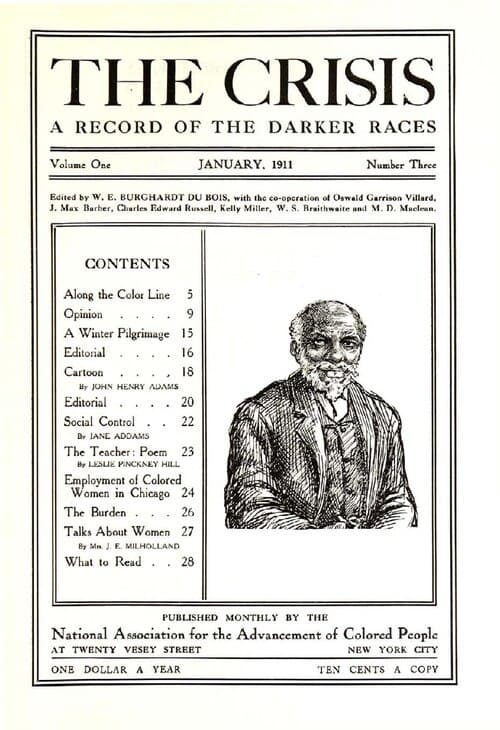
It is in the living room of her house in Bronzeville, Chicago, that Ida B. Wells receives W.E.B. Du Bois in the winter of 1927. On the coffee table, the pages of her memoirs in progress sit alongside a pile of newspaper clippings annotated in tight handwriting. The two activists have known each other since the founding of the NAACP, allies in the same struggle but often opposed by temperament. Du Bois, having come to listen rather than contradict her, turns his cup between his fingers and lets the silence invite her to begin.
—Ida, before our common battles, there was Memphis and your friend Thomas Moss. Can you tell me what this murder broke in you?
You know, Will, that nothing in my life mattered more. In March 1892, they took Thomas from his cell and shot him like an animal, him, the honest grocer whose only crime was to succeed better than the whites in the neighborhood. That day I understood that the alleged rape was only a convenient lie, a screen to eliminate those who prospered. I wrote in the Free Speech what no one dared to write. They destroyed my press, promised to hang me if I returned. I could never go back to the South. But that shed blood gave me my task for life.
That shed blood gave me my task for life.
—After this flight, you published Southern Horrors. Writing from exile, far from your own, what weight did that have for you?
Exile was a wound as much as a freedom, Will. From New York, then Chicago, I no longer had the fear in my gut that in the South you breathed on every street corner. But I had lost my home, my newspaper, my neighbors. Southern Horrors was born from that cold rage: gathering the facts, the dates, the names, and throwing them in the face of those who preferred to look away. I learned that a woman alone, armed with a pen and evidence, could make entire cities tremble. They called me a liar; I answered with numbers. Exile cost me a home, but it made me free to tell the whole truth.
—You always criticized our orators for talking too much and counting too little. Your Red Record, how did you build it, piece by piece?
Patiently, Will, like building a wall. For The Red Record, in 1895, I went through the white newspapers themselves, for no one could accuse me of bias by citing their own columns. I drew up my tables by hand: by state, by year, by alleged motive. Over two thousand five hundred lynchings in ten years, each with its name, date, and pretext. Fine speeches they brushed aside with a wave of the hand; before columns of figures, they fell silent. My investigator's notebook was worth more than ten sermons. That is what I always wanted to make you understand: our cause does not need more eloquence, it needs more evidence.
Our cause does not need more eloquence, it needs more evidence.
—This work of enumeration was new, almost scandalous for a black woman of your time. Did you realize its audacity while doing it?
I was not thinking about audacity, Will, I was thinking about the dead who were being erased. No one counted them, no one remembered their names — they were buried twice, in the earth and in oblivion. So I became their clerk. They told me that such an investigation was the business of men, scholars, societies. I answered that it was the business of whoever had the courage to do it. I kept my records like an accountant keeps his books, without a word too many. And when the authorities swore that lynching was just a news item, my tables showed them a method, a system, a policy of terror.
—There is one point where you and I never quite thought alike: weapons. They say you never go out without your revolver?
It's true, and I don't hide it. When they destroyed my press and promised to kill me, I understood that waiting for police protection was waiting for death. So yes, I carried a weapon, and I advised my people to do the same. I wrote it bluntly: a Winchester in every black home would do more to settle the lynching question than all the conferences in the world. This is not a call to violence, Will, it is the simple right to defend your life when the law has denied it to you. A mob backs down before a man who can fight back. That is a truth our fine minds do not like to hear, but every black person in the South knows it in their bones.
A mob backs down before a man who can fight back.
—This conviction earned you many reproaches, even among our friends. Did you ever doubt this right to self-defense?
Never, Will, not once. I saw too many pleading families delivered to the mob to still believe in the virtues of patience alone. They told me I was harming the cause, that I scared well-meaning whites. But I do not have to make terror comfortable for those who tolerate it. Defending oneself is not provoking: it is refusing to die on one's knees. I respect those who preach petition and court — I myself devoted my pen to them. But when night falls and the rope approaches, no petition ever saved a man. A gun, sometimes, does.
—Let's talk about Washington, in 1913, at that march for suffrage. Women of color were asked to march at the back. What did you feel?
Anger, then a very calm resolve. Those white ladies wanted my support, but not at their side — I had to march behind, out of sight, as if our right to vote was of a different kind than theirs. I refused. I stepped back onto the sidewalk, without a fuss, and waited for the Illinois delegation to pass. Then I emerged and took my place in the middle of my people. No one dared to throw me out. Women's suffrage is worth nothing if it is built on the exclusion of black women. I am a suffragist only on condition of being a full citizen — otherwise it is just another privilege reserved for white women.
Women's suffrage is worth nothing if it is built on the exclusion of black women.
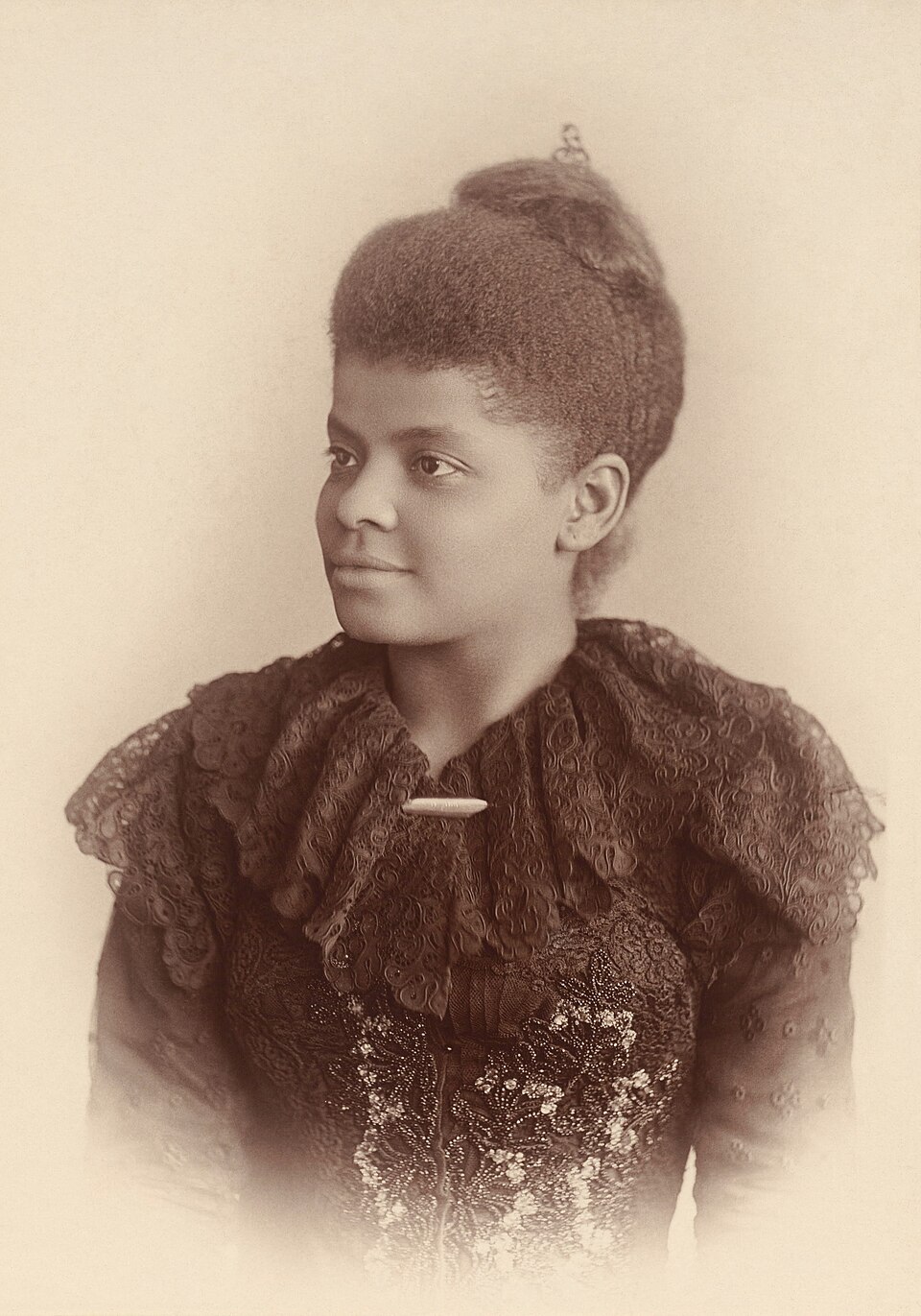
—So you carried two battles at once, that of race and that of sex. Did that not expose you to being betrayed by both sides?
Betrayed, yes, and often, Will. White feminists found me inconvenient; some of our men thought women's suffrage was not our urgency. But I never knew how to cut my person into slices. I am black and I am woman in the same life, in the same body; I am denied the ballot for both reasons. In Chicago, I founded a club of women of color to get our people onto the voter rolls, for no one else would do it for us. Waiting your turn is accepting to be served last. I prefer to disturb both camps than to lie to myself.
—There is a strategy that has long intrigued me: your two trips to England. Why carry our American shame before foreigners?
Because America only listened when it was made to blush before the world, Will. In 1893 and 1894, I traveled across England, speaking in churches and packed halls, distributing my pamphlets. The English did not know that in the land of liberty men were burned without trial. When they learned it, their press was stirred, and then American newspapers, so quick to ignore me at home, began to respond, to justify themselves, to finally cover the subject. I had forced the door from the outside. A nation that scoffs at its own conscience still fears the gaze of its peers. I turned that pride against itself.
America only listened when it was made to blush before the world.
—In the evening, you sometimes received me at your table, right here, with a few others. How did you experience those lecture tours from the inside?
Like an exhausting and exhilarating mission, Will — you who have sat at this table, you know how I come home each evening with a hoarse voice and a mind on fire. On the platform, I yielded nothing to pathos: I read facts, dates, testimonies, and let the horror speak for itself. Afterwards, the audience surrounded me, incredulous, shaken, wanting to act. Those conversations were worth all the triumphs. I then wrote down my impressions in the evening, with the same rigor as my investigations, for one day I would have to tell all this. That is the material you see piling up there, on my table: the pages of my life, which I am finally putting into writing while I still have time.

This imaginary interview was generated by artificial intelligence from sources documented in Ida B. Wells's profile. It dramatises what the figure might have said based on what we know about them, but does not constitute attested historical testimony. For primary sources and factual documentation, refer to the full profile.