Imaginary interview with Ignatius of Loyola
by Charactorium · Ignatius of Loyola (1491 — 1556) · Spirituality · 6 min read
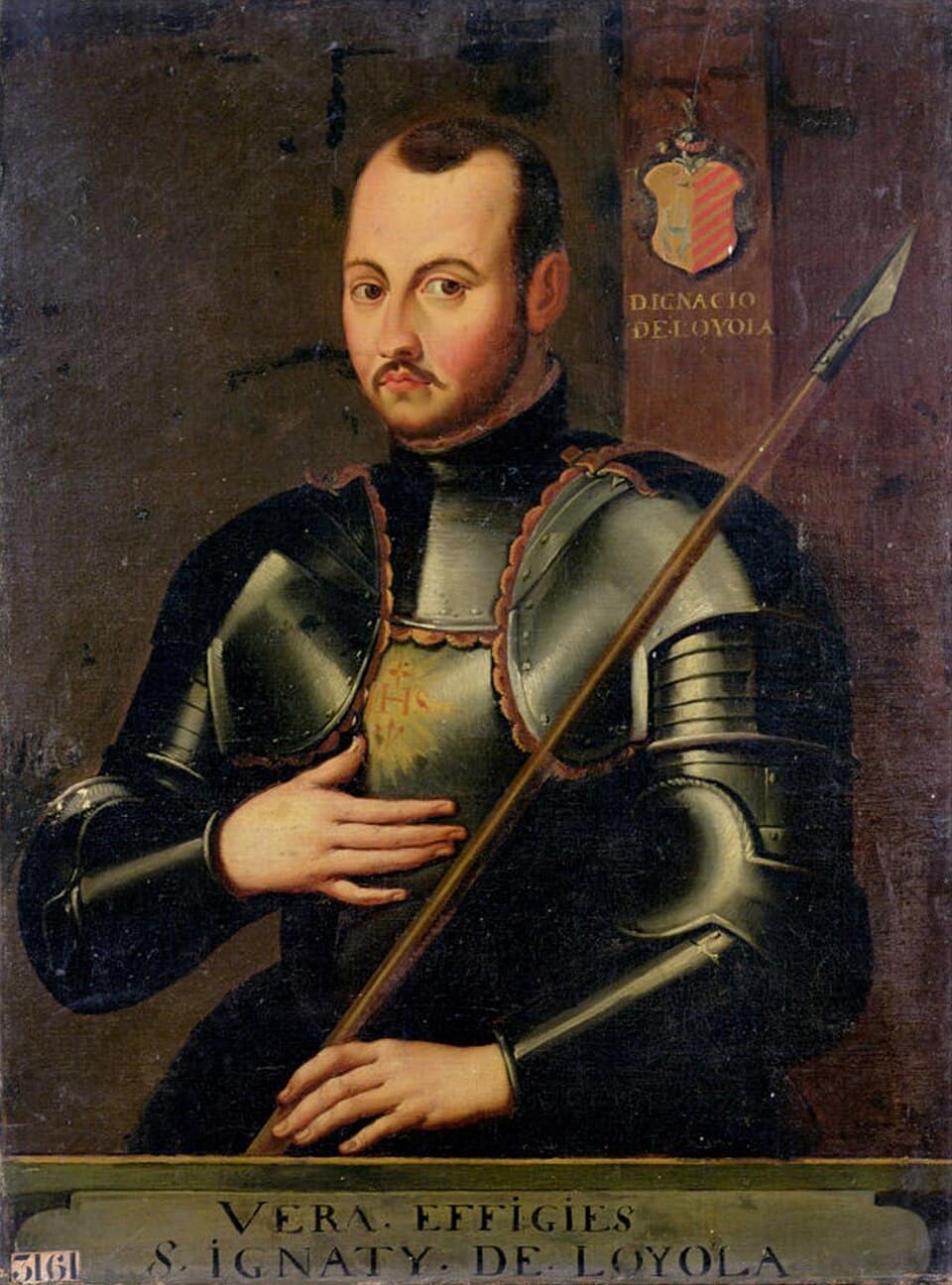
Rome, summer 1556. In a narrow cell adjacent to the church of Santa Maria della Strada, an old man with a worn complexion receives his visitor between two bundles of letters from the Indies. His stiff leg still betrays the cannonball of Pamplona; his voice, however, retains the quiet authority of one who governs an order by the pen.
—How did a soldier hungry for glory become the man you are today?
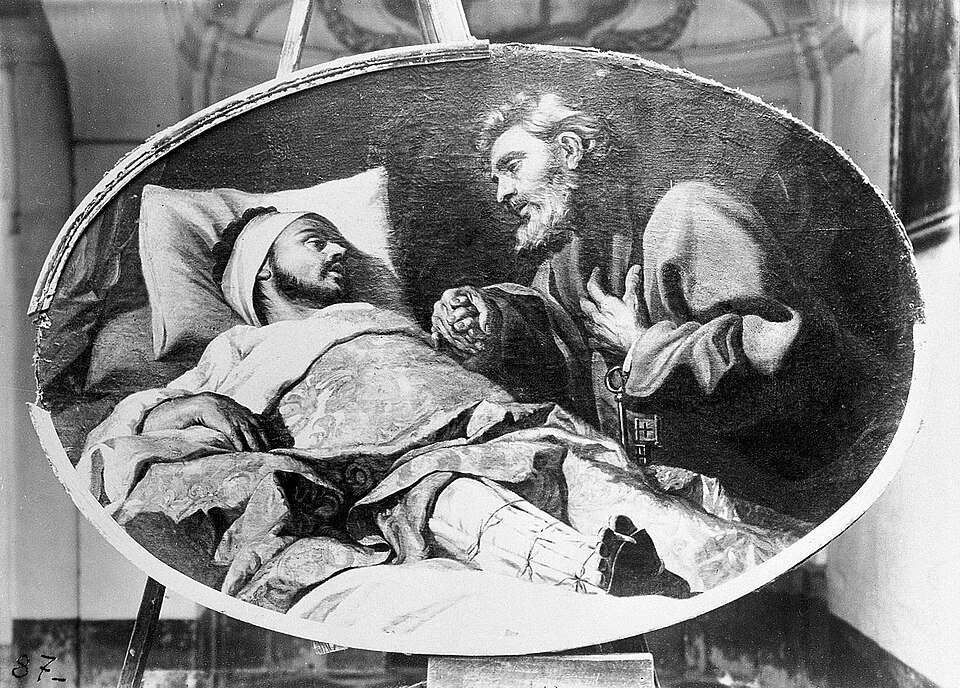
By a cannonball, in May 1521, beneath the walls of Pamplona. My leg shattered, I was carried back to the castle of Loyola, where I spent months bedridden. I asked for chivalric romances to pass the time; they found me only a Life of Christ and lives of the saints. For lack of better, I read. And I noticed something strange: dreaming of martial exploits left me, afterward, dry and sad, while thinking of imitating Saint Francis or Saint Dominic left me a peace that lingered. This difference of inner tastes, I pondered for a long time. It was the first thread of everything I have built since. God uses a cannonball when a man will not listen otherwise.
God uses a cannonball when a man will not listen otherwise.
—What happened to you in that cave at Manresa that everyone talks about?
In 1522, I stopped at Manresa, in Catalonia, thinking I would stay only a few days. I remained there nearly a year, living as a beggar near the Cardener, praying for hours on end. There, insights were given to me about divine things, not as a science learned from books, but as a light received. From those months came the first notebooks of my Spiritual Exercises. I noted what I observed in myself: how the enemy disguises his thoughts under appearances of good, how the good spirit consoles. I called this the discernment of spirits. It was not a theory: it was first an experience that I recorded, so that another might make the journey again.
A light received, not as a science learned from books.
—What is this little manual of the Exercises for, concretely, for the one who undertakes them?
It serves to order the soul, as one tidies a disordered house. I built four weeks: the first to consider one's sins and mercy; the following to contemplate the life, passion, and resurrection of Christ. The retreatant does not read my book as a treatise — he does it. I write only brief indications, leaving it to the guide to measure the soul's progress. At the foundation lies this principle I placed at the beginning: man is created to praise, reverence, and serve God, and to save his soul; all else is given to him for this end. When a man truly holds this, he chooses freely, without being a slave to his appetites.
—Do you remember that pilgrimage to Jerusalem you dreamed of never leaving?
How could I forget it? In 1523, I left Spain begging my bread, boarded a merchant ship, my heart entirely turned toward the Holy Places. I trod the earth where Christ walked, and I wanted to stay there forever, perhaps convert the Muslims. But the Franciscans, guardians of those places, strictly forbade it: they feared for my life, and their superior had the power to excommunicate me if I persisted. I had to leave, my pilgrim's staff in hand and a heavy heart. On the journey back, a certainty came: to serve souls, I first had to study. A man of thirty who goes back to school with children — that is what this failure made of me.
A man of thirty who goes back to school with children.
—Why does this figure of the pilgrim matter so much in how you tell your story?
Because I have never stopped walking. From Loyola to Montserrat, where I laid my sword and dagger at the feet of the Virgin; from Montserrat to Manresa; from Spain to Jerusalem; then to Paris to study. When I dictated the account of my life to my secretary in recent years, I did not want to speak of myself in the first person — I asked to be called the Pilgrim. For that is how I see myself: not a founder settled in his glory, but a man on the road, seeking God's will step by step. The holy house in Rome where I receive you is but another stop.
Not a founder settled in his glory, but a man on the road.
—How did your first companions gather around you?
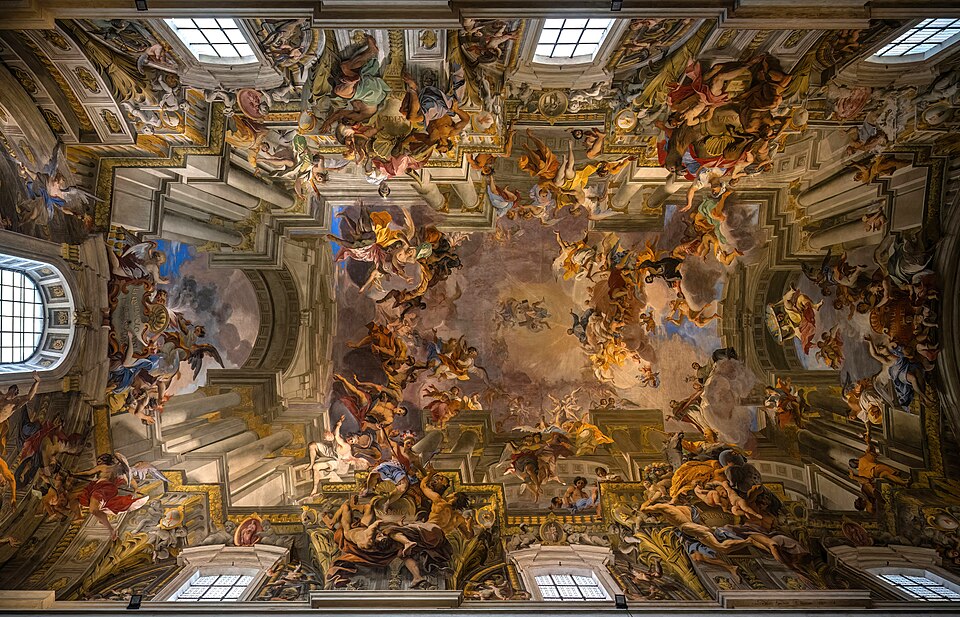
At Paris, where I studied from 1528, I shared a room on Rue Saint-Jacques with two young men: Francis Xavier, a Navarrese proud as a spur, and Peter Faber, gentle as bread. I did not convert them with speeches — I gradually gave them the Exercises, and the soul did the rest. Others joined us. On August 15, 1534, in a chapel at Montmartre, we pronounced our first vows together: poverty, chastity, and the plan to go to Jerusalem or, failing that, to put ourselves at the pope's disposal. We were only seven, penniless students. None of us imagined founding an order. We only wanted to serve.
I did not convert them with speeches — the soul did the rest.
—Why did you give your order such a military name and character?
Because I was a soldier, and the words of the soldier's trade have stayed with me. I wanted a Company of Jesus — a company, like a troop under a captain, and that captain is none other than Christ. When Pope Paul III approved us in 1540 by the bull Regimini militantis Ecclesiae, the very title spoke of the Church militant. But let no one be mistaken: our arms are obedience, study, and prayer. We have no fixed choir hours or grand monastic habit, for we must be ready to go anywhere, at any hour. I even added a fourth vow of obedience to the pope regarding missions: that we be always available to be sent.
—What are your days like, you who govern so many men scattered across the world?
My mornings begin before dawn, with an hour of prayer and Mass. Then reports arrived by courier are brought to me — from Portugal, Spain, and even from the Indies where Francis continues his course. My afternoons I spend dictating to my secretaries: sometimes about twenty letters in a single day, from this small room. My health is poor; these stones have gnawed at my belly for years, but a pen weighs nothing. This is how I govern: not by traveling the roads as before, but seated, guiding from afar men I will never see again. In the evening, the community makes the examen of conscience, and I sometimes prolong my prayer watching the stars from the terrace.
I govern seated, guiding from afar men I will never see again.
—What would you say about this vast correspondence that occupies you so much?
That it is my true battlefield. I have written or dictated several thousand letters — to my scattered sons, but also to princes, cardinals, popes. A well-considered letter is worth more than a long journey: it consoles a discouraged companion in Japan, it corrects another who is too hasty, it obtains from a great lord the foundation of a college. I weigh every word, for governing souls from afar requires more prudence than seeing them face to face. I teach my men this measure: that they work as if everything depended on them, and pray as if everything depended on God. My letter register is, after the Exercises, the instrument God has most often placed in my hand.
A well-considered letter is worth more than a long journey.
—In hindsight, do you regret the man of arms you were, or do you owe him something?
I do not deny him; I converted him. Until my twenty-sixth year, I was a man given over to the vanities of the world, especially enamored of the exercise of arms and a great desire for glory. That man knew discipline, obedience to the captain, the value of a cause for which one risks one's skin. I threw none of that away: I turned it toward God. My breastplate and sword, I left at Montserrat; but the soldier's spirit I kept and offered to the only King worth dying for. Perhaps my whole life is contained in this gesture: not to kill the old man, but to give him a better lord to serve.
Not to kill the old man, but to give him a better lord to serve.
—What would you want people to remember, after you, of this method of discernment?
That it is not reserved for cloisters. Every man, in the business of the world, feels contrary movements within him: impulses that draw him toward good, others that flatter and end up drying him out. Learning to name them, to recognize their flavor, not to decide in desolation what one has not weighed in peace — this is an art that serves the merchant as much as the religious. I wanted the Spiritual Exercises to be like an instrument that anyone could take in hand, as one takes a ruler to draw straight. If I am forgotten but this is remembered — to seek in all things the greater glory of God, ad maiorem Dei gloriam — then I will not have written in vain.
Not to decide in desolation what one has not weighed in peace.

This imaginary interview was generated by artificial intelligence from sources documented in Ignatius of Loyola's profile. It dramatises what the figure might have said based on what we know about them, but does not constitute attested historical testimony. For primary sources and factual documentation, refer to the full profile.