Imaginary dialogue between François Xavier and Ignatius of Loyola
by Charactorium · Ignatius of Loyola (1491 — 1556) · Spirituality · 5 min read
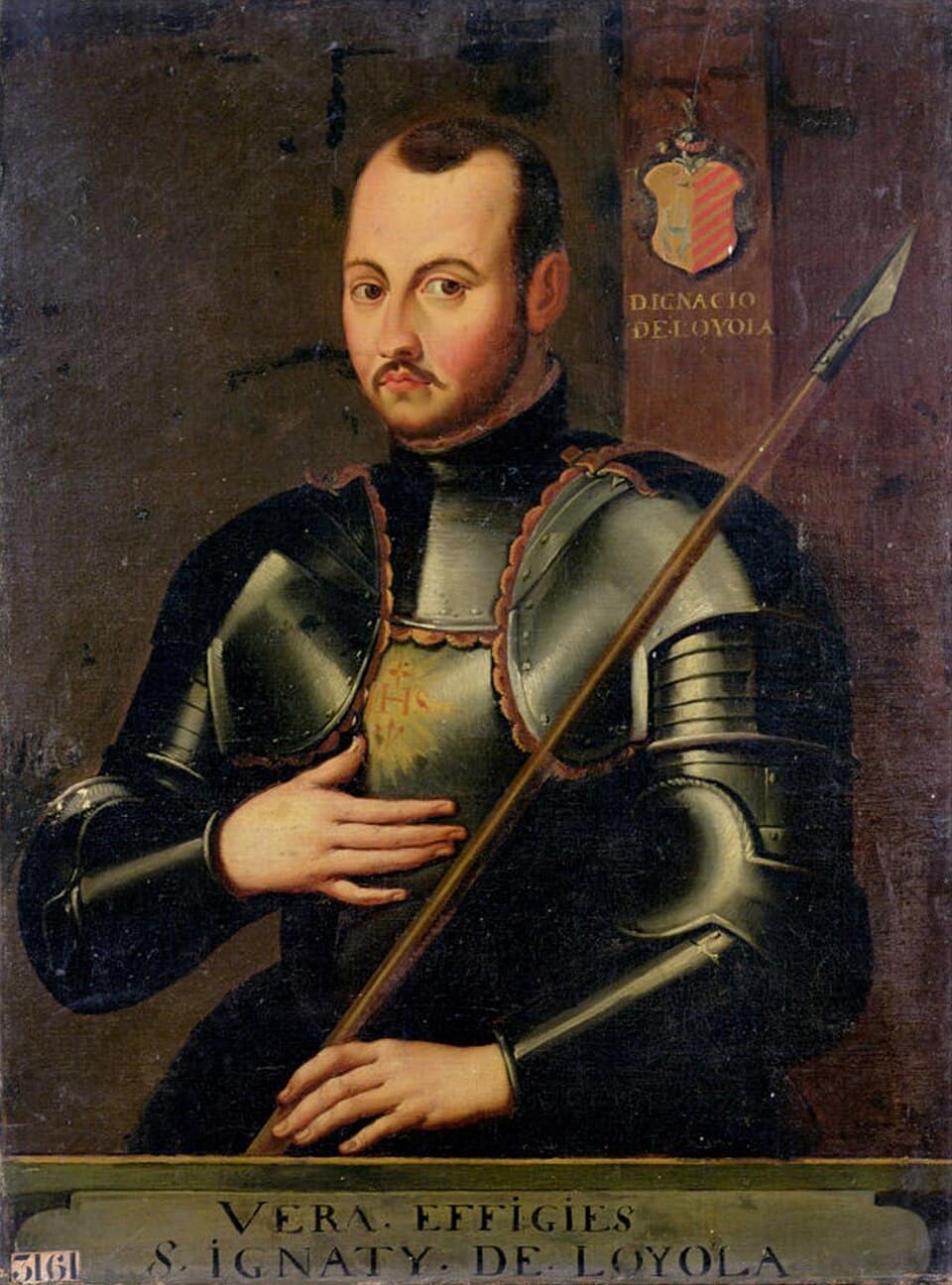
It is in the modest house of Santa Maria della Strada, in Rome, on a winter night in 1540, that Francis Xavier comes to take leave of Ignatius of Loyola. Tomorrow he will set sail for the Indies, likely never to return. A candle lights the letter chest and the already packed knapsack; the smell of ink still lingers in the small room. They have known each other since Paris, since that room on Rue Saint-Jacques where the master slowly won over the most stubborn of his companions; tonight, the disciple wants to hear, one last time, where it all came from.
—Íñigo, I never knew you as a soldier. That cannonball at Pamplona, in 1521 — how did it break the man you were?
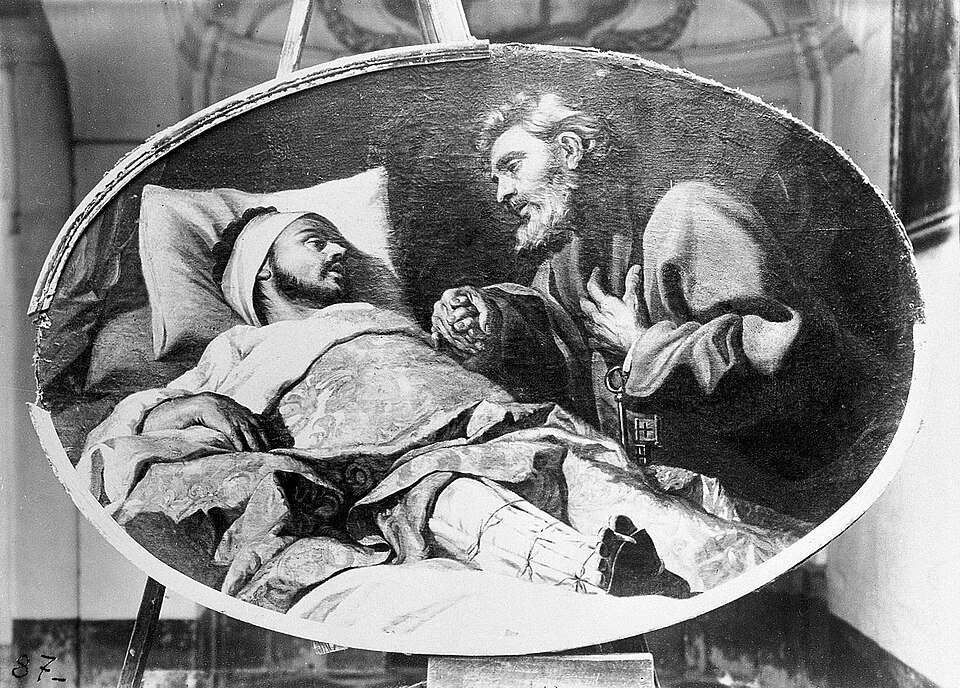
You speak true, my friend: before that wound I was but a gentleman enamored of glory and arms. At Pamplona, in 1521, the cannonball shattered my leg and I was thought lost. Bedridden for months at the castle of Loyola, I asked for chivalric romances to while away the boredom; they found me only a life of Christ and lives of the saints. I read them out of spite, then with hunger. And here is the strange thing: dreaming of warlike exploits left me dry and sad, while imagining imitating St. Francis or St. Dominic filled me with a peace that lasted. That bed of suffering was my true barracks; it was there that the soldier of kings died, so that another soldier could be born.
That bed of suffering was my true barracks; it was there that the soldier of kings died.
—You once told me about that cave at Manresa, by the Cardener River. What did you receive there that nourishes your Spiritual Exercises?
Yes, I have told you many times. When I was forbidden to remain in Jerusalem, I understood that I must first purify myself and learn. At Manresa, for nearly a year, I lived as a beggar and a hermit, praying for hours in a cave by the Cardener. God treated me there as a schoolmaster treats a child: through sudden illuminations, he opened my understanding of divine things. I recorded everything on sheets — what I felt, what lifted me, what lowered me. These notes, reworked and ordered, gradually became my Spiritual Exercises. It was not a book conceived in a library, but an experience written on my knees, so that others might retrace the path I had stumbled to discover.
—And what you call the discernment of spirits — where did you get this way of reading the movements of the soul?
That came to me on my sickbed, even before Manresa, almost without my noticing. I observed that certain thoughts left me, afterward, light-hearted and at peace, while others, initially pleasant, left me empty and troubled. I understood that these movements were not all from me: one drew me toward God, the other drew me away under a fair appearance. Learning to recognize them, to weigh their flavor and trace — that is the discernment of spirits. It is not a matter for scholars, Francis — it is an attention of the heart that the simplest of men can exercise. All my method lies in this: not blindly following what shines, but seeing where each thought leads us.
—Do you remember our room on Rue Saint-Jacques, which I shared with you and Peter Faber? What were you looking for in me?
How could I forget? You were the most stubborn of all, Francis. Faber gave himself quickly; but you, brilliant, ambitious, dreaming of honors and chairs, kept me at a distance. I had little money and much patience: I helped you in your studies, I sometimes paid for your bread, I waited. I was looking in you for what I had sought in myself on my bed at Loyola — that ill-used ardor which, turned toward God, would work wonders. One day I only asked you what does it profit a man to gain the whole world if he loses his soul? You were never the same. Our room on Rue Saint-Jacques was the first college of the Company, before it even had a name.
—At Montmartre, on August 15, 1534, we pronounced our first vows together. What did that oath mean to you that day?
That August 15, 1534, in the chapel of Montmartre, we were only seven, and Faber alone was a priest. We vowed poverty and chastity, and to leave for Jerusalem to serve souls; and if that proved impossible, to place ourselves at the feet of the pope for him to dispose of us. Do you remember the cold of the crypt, the bread and wine shared after the oath? For me, that day, scattered companions became one body. We had no rule, no house, no name — nothing but a friendship sealed before God. And yet I knew, that morning, that the foundation stone was laid.
—Why did you want to name our order Company, like a troop? Does that soldier's word still inhabit you, Íñigo?
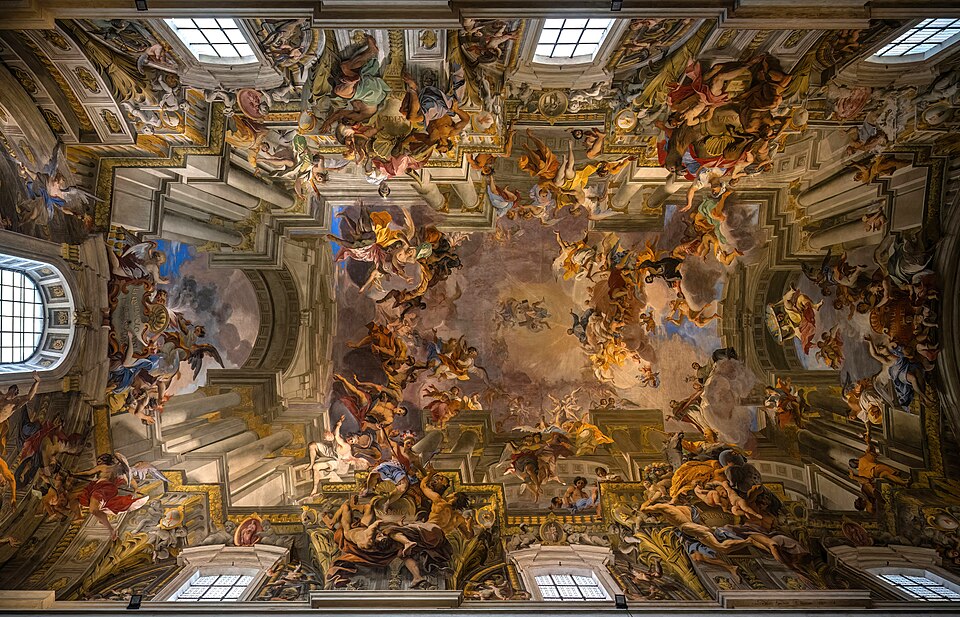
The word is no accident, you guess. I served under human banners; I know what a disciplined troop is, ready to march where the captain orders. I wanted for Christ such a company: not cloistered monks behind walls, but light men, ready to run where they are needed. Our captain is Christ, and under him the pope. The soldier of Pamplona did not die in me; he only changed King. Everything among us must serve ad maiorem Dei gloriam — for the greater glory of God, not our own. An army that sought itself would already have betrayed its banner.
The soldier of Pamplona did not die in me; he only changed King.
—And that special vow to go wherever the pope sends us — why bind ourselves like that, more than any other order?
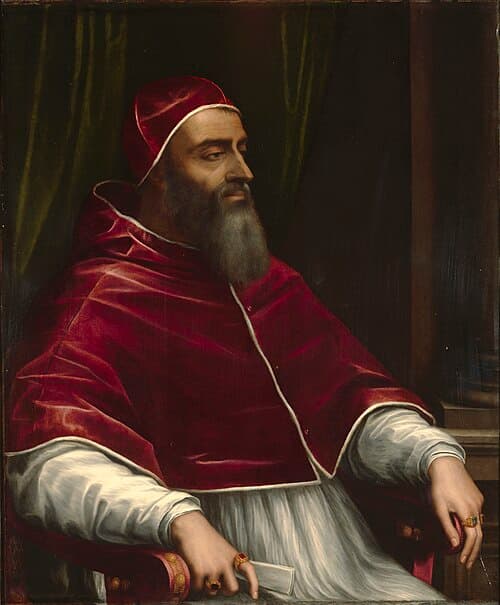
Because time is short, Francis. Since Brother Luther set Christendom against Rome, the Church is like a besieged city, and souls are being lost by the thousands. Other orders pray and remain; we want to be mobile, available, without ties that hold us back. By this vow, we entrust to the pope the care of sending us where the danger is greatest — to the Indies, among heretics, among pagans. It is not servitude, it is freedom: that of having no other homeland than the mission. You who leave tomorrow for the other end of the world will be its first living proof.
—Tomorrow I leave for the Indies, without hope of return. How will you keep united men scattered to the four corners of the world?
By ink and paper, my friend. When you are all dispersed, letters will hold you united to this center and to one another. I will write, I will dictate tirelessly — your news from the Indies, I will await them as a father watches for those of a son, and I will answer you by the same route. Each one must tell me what he does, what he finds, what resists; thus the whole body will feel what each of its members feels. Remember this rule I repeat to you: work as if everything depended on you, and pray as if everything depended on God. The pen will be my pilgrim's staff from now on, and Rome my only road.
The pen will be my pilgrim's staff from now on, and Rome my only road.
—You are known to be racked with pain, those gallstones that gnaw at you. How do you govern such a world from this poor cell?
You have seen my room: a bed, a table, a letter chest, nothing more. The pains hardly leave me — these stones that gnaw my belly have often thrown me to bed, and my doctors scold me for still fasting. But one governs better on one's knees than on horseback. I begin before dawn with prayer, then come Mass, the novices, the couriers from Spain and Portugal. In the afternoon, I dictate so many letters that my secretaries have blackened fingers. Twice a day, I make the examination of conscience, as I ask of everyone. This immense world, you see, fits in a poor cell, because it first fits in prayer.
—Before I take the road, tell me, my Father: for what glory have we left everything? What do you want to leave behind?
For nothing that is ours, Francis. We have left everything not to build a name, nor even an order, but for the greater glory of God and the salvation of souls — our own and our neighbor's. If the Company should one day seek itself, its honors, its power, I would prefer to see it dissolved. I leave neither gold nor monument: only sent men, touched souls, and this little book of exercises so that others may find the way. Go now. May your journey serve that glory, and we will meet again, if not in Rome, at least in the Father's house. Go in peace, my son; I bless you.

This imaginary interview was generated by artificial intelligence from sources documented in Ignatius of Loyola's profile. It dramatises what the figure might have said based on what we know about them, but does not constitute attested historical testimony. For primary sources and factual documentation, refer to the full profile.