Imaginary interview with Isabella Bird
by Charactorium · Isabella Bird (1831 — 1904) · Exploration · Literature · 6 min read
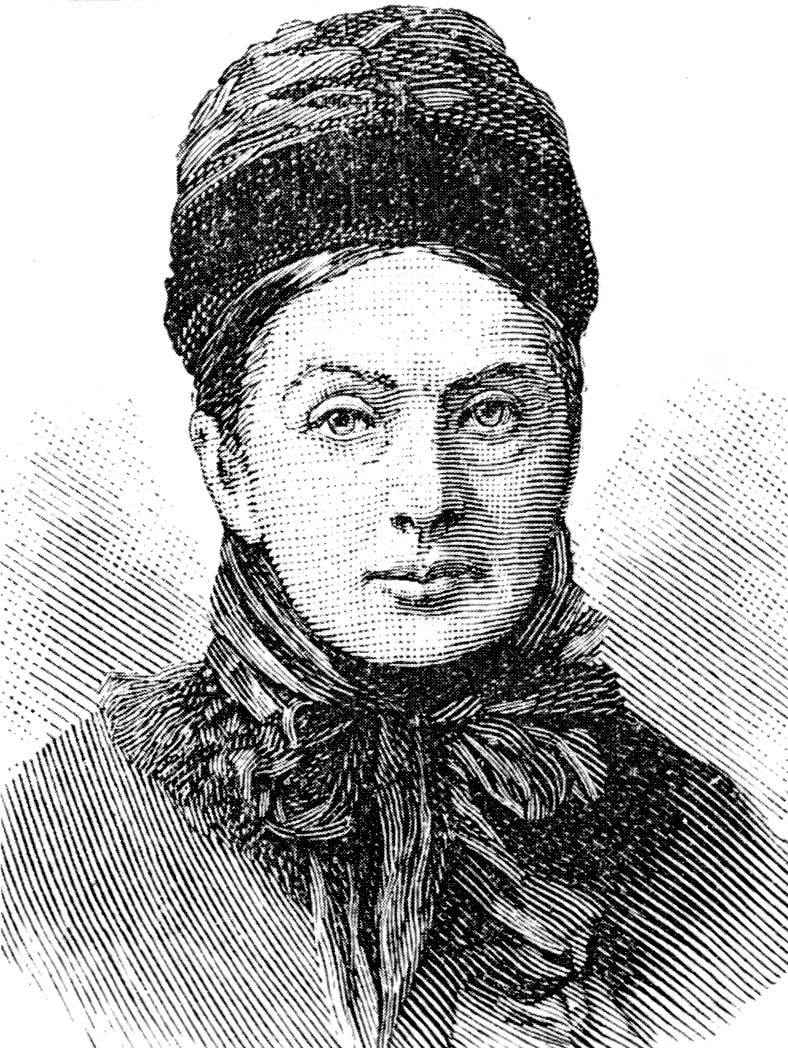
Edinburgh, a misty afternoon, somewhere around the turn of the century. Isabella Bird receives us in her Scottish drawing room, a crate of photographic plates still closed near the door, as if a new departure could happen at any moment. She speaks softly, but every sentence already seems bound for somewhere else.
—They say your first travels were prescribed by a doctor. How did it begin?
In 1854, I was twenty-three years old and had a back that gave me no respite — chronic pains, insomnia, those nervous attacks that the medicine of my country treated with rest and darkness. My doctor, out of ideas, ordered me a journey to Canada and the United States, as one would prescribe a remedy. He did not know what demon he unleashed. The moment I set foot on a ship's deck, the illness receded. I finally understood something no London practitioner had been able to articulate: as long as I travel, I am never ill. The corset and the armchair were killing me slowly; the open sea gave me back to myself. My health was not fragile — it was simply poorly housed.
As long as I travel, I am never ill.
—What did you confide to your sister Henrietta in those letters from the Rockies?
Henrietta was my anchor and my mirror; it was to her that I wrote, in the evening, by candlelight, in a log cabin at Estes Park. I told her the unvarnished truth: “I am in better health here than anywhere in England. The fresh air, the danger, the solitude — all of this cures me of what medicine could never heal.” Those letters were not reports, but a thread stretched between two lives: hers, sedentary and pious in Edinburgh, mine, on horseback in Colorado in 1873. Without knowing it, she received the raw material of my books — for what I wrote for a single pair of eyes later became the fabric of my narratives.
What I wrote for a single pair of eyes became the fabric of my narratives.
—Do you remember meeting the trapper called Mountain Jim?
One does not meet a man like “Mountain Jim” Nugent — one runs into him, as one runs into a rock around a bend in the trail. He was one-eyed, his face scarred by a grizzly's claws, a reputation as a drunkard and brawler that preceded him in every valley. And yet, when he escorted me to the summit of Longs Peak, over four thousand meters, hoisting me over icy passages as one carries a child, I saw in him the finest specimen of the American West. Polite society would have cried scandal: an English lady, alone, guided by a desperado. But up there, in that air as sharp as crystal, the conventions of London had no currency. There was the mountain, the vertigo, and a man whose soul was worth more than his legend.
One does not meet a man like Mountain Jim — one runs into him, like a rock around a bend in the trail.
—What did you feel when you reached the summit of Longs Peak?
The ascent was a gentle madness. I was not equipped for it — a woman, a saddle, skirts — and yet I climbed. At the summit, what I saw remains etched in me: “The air was as sharp as crystal, the sky an intense blue, and every snowy peak shone in the sun as if set with diamonds. I had never seen anything like it in Europe.” It was from those six months in the Rockies that A Lady's Life in the Rocky Mountains was born, my most beloved book. Readers look for adventure in it; I, for my part, placed in it an almost religious wonder — that of a woman discovering, past forty, that the world was infinitely vaster than the drawing room in which they tried to confine her.
—In 1878, you crossed northern Japan alone. Why venture where no Westerner went?
Because beaten paths have never taught me anything. The Japan of open ports, of merchants and consuls, had already been described a hundred times. It was Tōhoku, then Hokkaidō, that I wanted to see — those northern provinces where almost no foreign woman had ever set foot. I traveled on horseback or by jinrikisha, that little two-wheeled vehicle pulled by a man running barefoot, and I slept in traditional inns, the ryokan, on their tatami mats, despite the fleas and discomfort. There I observed the Ainu, that indigenous people whom the Meiji Japan was already beginning to erase. The peasants watched me pass with courteous astonishment; they offered me tea and flowers. From those notebooks came Unbeaten Tracks in Japan.
Beaten paths have never taught me anything.
—What did you discover in those villages where no one expected you?
A hospitality that no letter of recommendation could have bought me. In those hamlets of northern Japan, I was an apparition — a woman alone, on horseback, from a country whose name they did not even know. And yet they opened their doors. I noted everything: the way of transplanting rice, the architecture of roofs, the thermal baths where the whole village gathered, the place of women, the superstitions. I did not merely observe — I measured, I recorded, I soon photographed. That, I believe, is what distinguished my accounts from mere tourist impressions: I wanted Unbeaten Tracks in Japan to serve, later, for anyone seeking to understand this world before it changed. For it was changing before my eyes, at a frightening speed.
—In 1892, you were admitted to the Royal Geographical Society. What did that admission represent?
A consecration — and a scandal, which, in the end, often came to the same thing in my day. The Royal Geographical Society, founded in 1830, was the temple of British exploration; to be admitted was to see one's work recognized as science, not as a lady's pastime. We were a handful, sixteen women, who crossed that threshold in 1892. I had earned my place with maps drawn by my own hand, with readings from the aneroid barometer brought back from Persia and the Rockies. But the conservative gentlemen could not bear it: the very next year, the Society closed its doors to women, for another twenty years. I was sixty-one. I did not protest — I left again. The best argument I know against those who judge you unworthy is to keep going.
The best argument against those who judge you unworthy is to keep going.
—Why did you insist on being called an “explorer” rather than a simple traveler?
The word explorer made people smile — or grimace. They were willing to let a woman travel, as long as she brought back watercolors and delicate impressions. But to explore, to map unknown regions, to submit scientific data to the Royal Geographical Society — that, they thought, belonged to male genius alone. I never claimed that title out of vanity, but out of accuracy. When I crossed passes over three thousand meters in Kurdistan, when I charted a river no European had ever ascended, I was doing the work of a geographer, not a stroller. To reduce my work to a lady's whim in need of fresh air was to deny the labor, the danger, and the method it contained. I wanted the facts to speak for me; they did.
—Your travel outfit caused much ink to flow. Why did this costume earn you so much criticism?
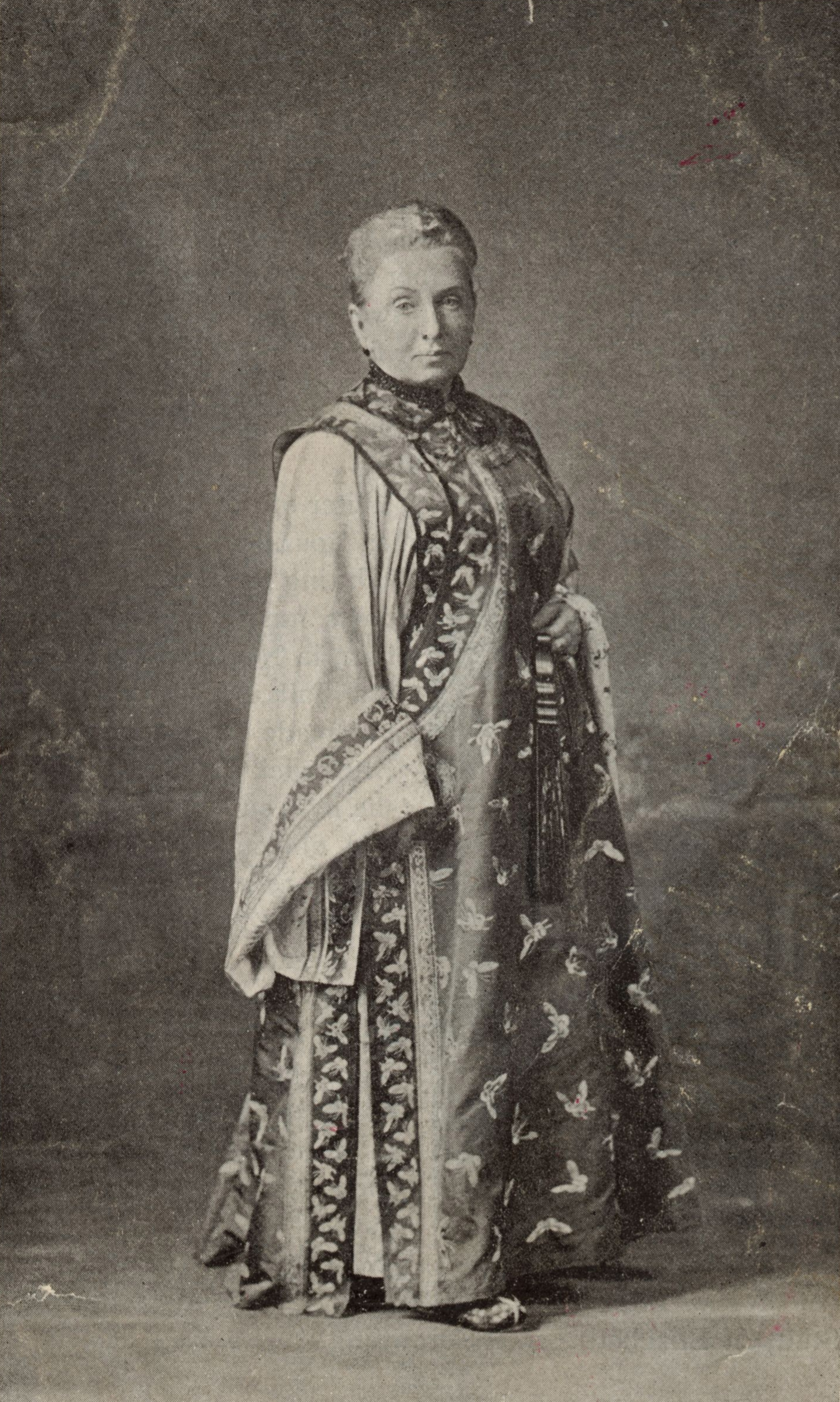
Because a woman without a corset was, for the London press, almost a woman without virtue. I had designed my outfit myself: a full skirt that could be hitched up for climbing, worn over sturdy riding breeches, leather boots, a waterproof hooded jacket. Nothing indecent — all practical. But that an explorer sometimes rode astride rather than sidesaddle, that she abandoned the compressed bust of the drawing room, was enough to set tongues wagging. Newspapers accused me of cross-dressing. I answered with silence and with the road. How could one climb a four-thousand-meter peak trussed up as for a ball? The body has its demands that Victorian fashion preferred to ignore. I chose to walk rather than to please.
A woman without a corset was, for the London press, almost a woman without virtue.
—What did you reply to those who judged your freedom unbecoming for a lady?
I replied little, because conventions are hard to argue with — they are circumvented. In Edinburgh, between journeys, I became again the proper woman society expected, dressed according to the rules, receiving in my drawing room. But my modified riding habit waited in its trunk, and with it another Isabella, the one who slept under canvas, shared the peasants' rice and the tribes' naan. Victorian high society wanted my body disciplined; the trails of Persia and Japan gave it back to me free. I think people never fully measure how much a skirt can be a prison. When I loosened those ties, it was not only my breath that returned — it was a whole continent of possibilities that opened before me.
People never fully measure how much a skirt can be a prison.
—Over seventy, you were still leaving. Where did you find that obstinacy?
In the certainty that stopping, for me, was dying before my time. In 1901, I traveled a thousand miles on horseback across Morocco, crossed the Atlas with two Berber guides, photographed the souks and kasbahs with my glass-plate camera. I was seventy years old. They thought me unreasonable; I thought myself simply faithful. Every journey had taught me that the body bends to the will much further than one believes, and that fear of danger kills more than danger itself. I returned to Edinburgh with my photographs, my mind already turned toward China, that old dream. Death caught me in the midst of preparations — that, I believe, is the only way I could consent to leave.
Fear of danger kills more than danger itself.
This imaginary interview was generated by artificial intelligence from sources documented in Isabella Bird's profile. It dramatises what the figure might have said based on what we know about them, but does not constitute attested historical testimony. For primary sources and factual documentation, refer to the full profile.