Imaginary dialogue between Henrietta Bird and Isabella Bird
by Charactorium · Isabella Bird (1831 — 1904) · Exploration · Literature · 6 min read
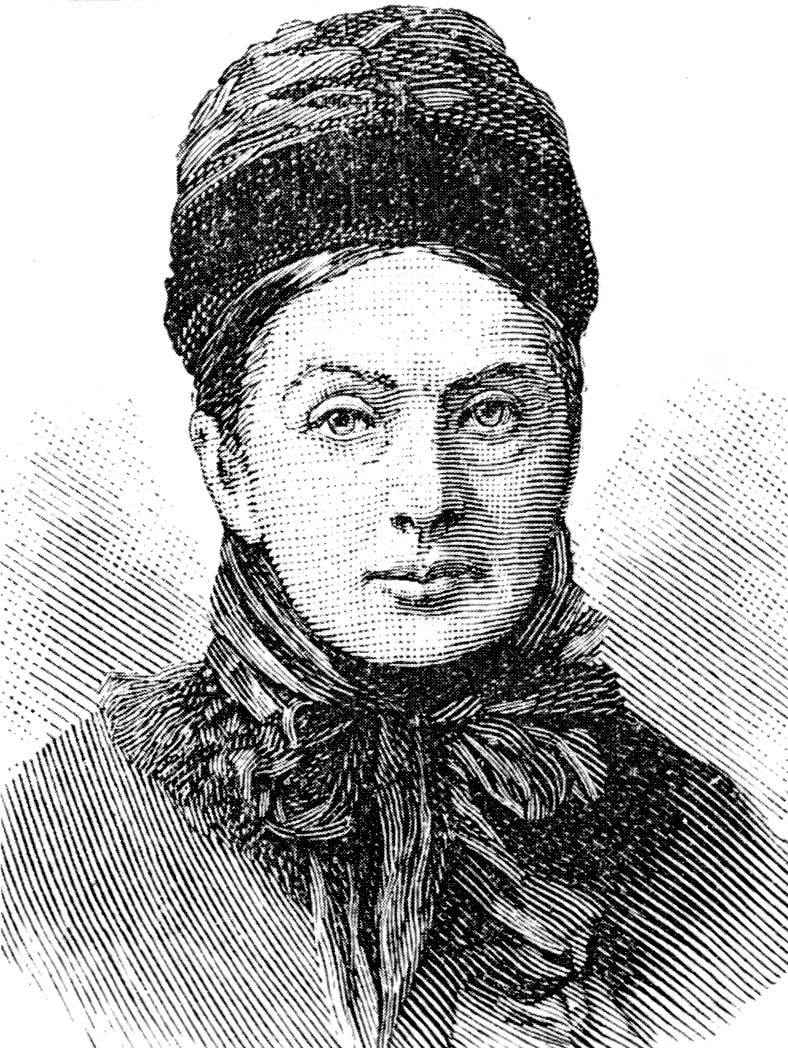
It is in the small drawing room of Edinburgh, a gray winter afternoon in 1893, that Henrietta meets her elder sister between two departures. On the table are piles of letters Isabella has sent her from the Rockies, Japan, and Persia, next to a cooling teapot. The two women know each other better than anyone: one has traveled the world, the other has read every page of those travels by the fireside. Henrietta has come not to admire the explorer, but to draw out the fragile sister that only she knows.
—Isabella, do you remember those winters when I watched over you, your back broken, sleepless nights? How did the saddle do what no doctor could?
How could I forget, my dear Henrietta — it was you who applied the compresses and listened to my complaints until dawn. In England, I was a suffering body, an invalid to be pitied. The doctor, at his wit's end, prescribed travel as others prescribe spa water. And the miracle, you know better than anyone: as soon as I was in the saddle in Colorado, in 1873, the back pain, the insomnia, the nervous crises vanished like mist in the morning. I wrote to you from the Rockies: I have never been so healthy as in the midst of danger and solitude. The open air cured me of what medicine had never been able to treat. It was not my body that was ill, you see — it was the drawing room that was ill.
It was not my body that was ill — it was the drawing room that was ill.
—In your letters from Colorado, you kept talking about Mountain Jim. Tell me truly who that man with the scarred face was.
Ah, Jim Nugent. You must have thought me very imprudent to write so many lines about a one-eyed trapper, his face torn by a grizzly's claws, whose rages all Estes Park feared. And yet, my sister, he was the finest specimen of the American West I ever met. He escorted me to the summit of Longs Peak, over four thousand meters, hauling me over the rocks when my strength gave out. Up there, the air was keen as crystal, every snowy peak glittering as if studded with diamonds — Europe had never shown me such a thing. Beneath the brute lay a cultured, melancholy man who recited verses by the fire. I never told you everything about him in my letters, Henrietta; some pages I kept for myself.
He was the finest specimen of the West, and beneath the brute lay a man who recited verses.
—In 1878, you terrified me: leaving alone for northern Japan, where no Western woman had set foot. What were you looking for?
I know, your reply letters betrayed your worry, and I wrote to reassure you as much as to record everything. Tōhoku, then Hokkaidō: roads no foreigner traveled, where I rode on horseback or was pulled in a jinrikisha by a man trotting for hours. I slept in people's homes, on tatami mats, despite the fleas and heat. What was I looking for? The truth of a people, far from the ports where Westerners gather. I saw the Ainu, that ancient northern people, their villages, their rites. The peasants watched me pass with a mixture of astonishment and courtesy; never had a foreign woman crossed these hamlets. They offered me tea, flowers, smiles that were worth all the letters of introduction in the world. It was from those notebooks that Unbeaten Tracks in Japan was born.
They offered me tea, flowers, smiles that were worth all the letters of introduction in the world.
—Last year, in London, you were received at the Royal Geographical Society. Then word spreads that they already want to exclude women. How do you feel about it?
With a lucidity that, I admit, almost amuses me, my dear Henrietta. In 1892, a handful of us women were admitted among those gentlemen — I, who for years had submitted to the Society my hand-drawn maps and aneroid barometer readings taken on mountain slopes. And now the scandal is brewing among conservatives, talk of turning back and closing the door to us for twenty years. What does it matter! I am sixty-one, I have crossed Persian passes at three thousand meters, slept under the tents of Kurdish chieftains. It is not a vote of London gentlemen that will decide whether I am a geographer. The field admitted me long before their Society; it cannot exclude me.
The field admitted me long before their Society; it cannot exclude me.
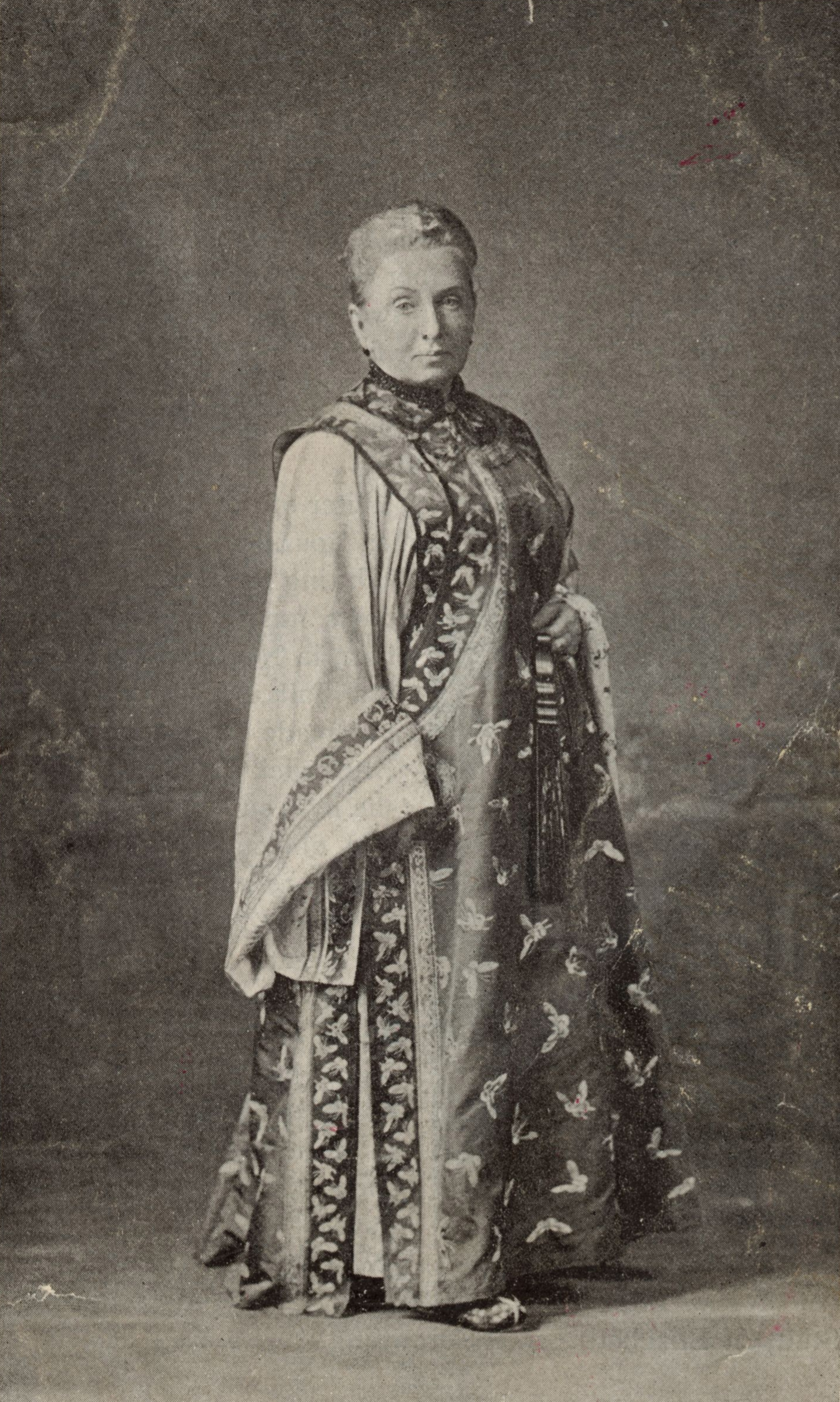
—The press mocked your outfit — that skirt over riding breeches. You who were raised like me, how did you dare to defy conventions so?
You laugh, but you know how many sarcasms it cost me! I designed that outfit myself: a full skirt that could be hitched up for climbing, worn over sturdy riding breeches, leather boots, and a hooded jacket. Above all, I abandoned the corset while traveling — and that, more than anything, scandalized the London papers, which depicted me as an indecent horsewoman. What would you have me do? One does not cross a Rocky Mountain torrent strapped in whalebone. I rode sidesaddle when necessary, but I adopted the cross-saddle as soon as the terrain demanded it, to the great dismay of the righteous. Decency, my sister, is not dying corseted at the bottom of a ravine; it is returning alive and bringing back what you have seen. The rest is just drawing-room embroidery.
Decency is not dying corseted at the bottom of a ravine; it is returning alive.
—When you come back here, to Edinburgh, between two journeys, do you find the tired woman I know, or do you keep something of the trails?
You pose, Henrietta, the question I dare not ask aloud. Yes: as soon as I set foot on our Scottish cobblestones, the old ailments prowl again. My back stiffens, sleep flees me, the shadow of the drawing room returns. Our house is the exact opposite of my trails — I love it for you, for our readings by the fire, for these letters you have kept all. But I feel that I do not heal here; I wait. What I bring back from the roads is not only notebooks and photographic plates: it is a health that exists only in motion. That is why I always leave again, even when you beg me to stay. As long as I travel, I am never ill — and that, no one but you can understand.
I wait, I do not heal: my health exists only in motion.
—In those Japanese inns, those ryokan, you described very rough nights. How did you, so delicate, endure such a life?
Rough they were, and I hid nothing from you about the fleas or mosquitoes that devoured me under the mosquito net! But see the paradox, my sister: that delicate woman you watched over in England endured there what would have made many robust men flee. I ate the rice they offered, drank the strong tea at dawn, slept on tatami mats, refusing European provisions — for sharing the locals' food opened more doors than any recommendations. I learned to enjoy the hot baths of the ryokan, that relaxation unknown at home. In the evening, by candlelight, I wrote you ten pages before collapsing. The delicacy you speak of was a matter of drawing rooms; on the road, only a stubborn will and an insatiable curiosity remained.
Delicacy was a matter of drawing rooms; on the road, only a stubborn will remained.
—Those maps you draw yourself, that barometer you take into the mountains — tell me, do you feel as much a scholar as a writer?
That is a question only a sister would dare ask without flattery. I never considered myself a scholar in the manner of those armchair geographers who draw borders without having felt the wind of a pass. The Kurdish tribes, I wrote you, knew their terrain better than any of them. But yes: I carry my aneroid barometer, I note altitudes, I draw maps of regions no European has charted, and I submit them to the Society. That is not literature; it is patient measurement, done on horseback in the rain. I write to move, I measure to prove. The two answer each other: without the narrative, my numbers would sleep in a drawer; without the numbers, my tales would be mere novels. I believe I have been, in my modest way, a little of both.
I write to move, I measure to prove; without the narrative, my numbers would sleep in a drawer.
—Longs Peak, you described it to me as the summit of your life. What did you feel up there that your letters could not convey?
My letters, talkative as they were, fell short, you are right. Up there, at four thousand three hundred forty-six meters, the whole world seemed laid at my feet. The sky was an intense blue, the air so pure it hurt to breathe, and every snowy peak glittered as if studded with diamonds. Jim had hauled me over the last rocks, silent, almost solemn, as if he sensed this moment would not come again. I wept, Henrietta — from fatigue, from vertigo, and from something else I cannot name. A woman whom London deemed an invalid stood atop an American mountain, sole mistress of all she saw. What I could not write to you is that I understood there, in that crystal silence, that I could never again be content with an armchair by the fire.
In that crystal silence, I understood that I could never again be content with an armchair.
This imaginary interview was generated by artificial intelligence from sources documented in Isabella Bird's profile. It dramatises what the figure might have said based on what we know about them, but does not constitute attested historical testimony. For primary sources and factual documentation, refer to the full profile.