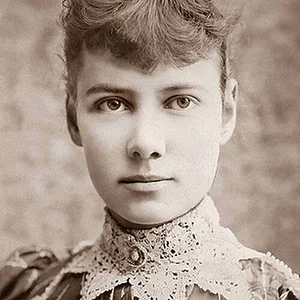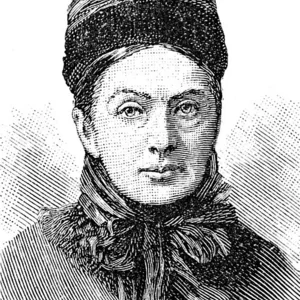

A nineteenth-century British explorer and writer, Isabella Bird was one of the first women to travel alone in Japan, China, India, Persia, and the American Rockies. She published numerous travel accounts that earned her international recognition and admission to the Royal Geographical Society.
Isabella Bird(1831 — 1904)
Isabella Bird
Royaume-Uni de Grande-Bretagne et d'Irlande
9 min read
Frequently asked questions
Famous Quotes
« I have only one formidable rival, and that is the mountains.»
« I am not going to give you any more descriptions of Hawaiian scenery; it speaks for itself.»
Key Facts
- 1831: Born in Boroughbridge, Yorkshire, England
- 1873: Journey through the American Rockies, recounted in 'A Lady's Life in the Rocky Mountains' (1879)
- 1878: First journey to Japan, recounted in 'Unbeaten Tracks in Japan' (1880)
- 1892: First woman admitted as a Fellow of the Royal Geographical Society
- 1904: Died in Edinburgh at the age of 72
Works & Achievements
Isabella Bird's first major travel narrative, born of her stay in the Hawaiian Islands in 1873. The book describes the volcanism, local society, and high-altitude hikes she encountered, and met with immediate success in Britain.
Her most popular work, recounting six months spent in the Colorado Rockies in 1873. Blending adventure, human portraits, and precise geographical descriptions, the book remains a classic of travel literature.
An account of her travels through rural Japan, far from well-trodden routes. Regarded as a major ethnographic document on Meiji-era Japan, it was translated into several languages.
A detailed record of her explorations in Persia and the Kurdish mountains in 1890. The work was presented to the Royal Geographical Society and contributed to her scientific recognition.
A geopolitical analysis and travel journal covering Korea at the time of the First Sino-Japanese War. Isabella lucidly described the tensions between the Russian, Japanese, and Chinese empires over control of the peninsula.
An account of her exploration of inland China, travelling up the Yangtze in 1896–1897. Isabella documents Christian missions, anti-foreign riots, and the previously unseen landscapes of the river gorges.
Anecdotes
Isabella Bird suffered from fragile health in England — chronic back pain, insomnia, nervous episodes — to the point that her doctor prescribed travel as a cure. Paradoxically, as soon as she found herself in the saddle in the Rockies or on Japanese trails, all her ailments vanished. She wrote herself: “As long as I travel, I am never ill.”
In 1873, while traveling alone through the mountains of Colorado, Isabella Bird encountered a legendary trapper nicknamed “Mountain Jim” Nugent — one-eyed, his face scarred by a grizzly bear. This man, with his fearsome reputation, escorted her to the summit of Longs Peak (4,346 m). She described him in her letters as “the finest specimen of the American West,” and this episode became one of the most celebrated passages in her account.
In 1878, Isabella Bird traveled alone through the most remote regions of northern Japan, known as Tōhoku, at a time when almost no Westerner — let alone a woman — had ventured along those roads. She traveled on horseback or by *jinrikisha*, stayed with local families, and meticulously recorded her observations on peasants, hot springs, and temples. Her notebooks gave rise to *Unbeaten Tracks in Japan*, hailed as a landmark work of ethnographic writing.
In 1892, Isabella Bird became one of the very first women admitted to the Royal Geographical Society in London, alongside fifteen other women explorers. The event caused a scandal in conservative circles: as early as 1893, the society reversed its decision and excluded women for another twenty years. Isabella, already 61 years old, continued to travel without a second thought.
Past the age of 70, in 1901, Isabella Bird undertook her last great journey: 1,600 kilometers on horseback through Morocco, accompanied by two Berber guides. She crossed the Atlas Mountains, photographed souks and kasbahs, and returned to Edinburgh with never-before-seen photographs. She died three years later, in 1904, while preparing a new journey to China.
Primary Sources
"The air was as crisp as crystal, the sky an intense blue, and every snow-capped summit shone in the sun as though encrusted with diamonds. I had never seen anything comparable in Europe."
"The peasants watched me pass with astonishment mingled with courtesy. Never had a foreign woman crossed through these villages. I was offered tea, flowers, and smiles worth more than all the letters of recommendation in the world."
"The Kurdish tribes bore no resemblance to any account I had read of them. Their hospitality was absolute, their pride complete, and their knowledge of the terrain far surpassed that of any armchair geographer."
"Seoul struck me as a city suspended between two ages: ancient walls stood alongside the first telegraph lines, and the palanquins of noblemen crossed paths with the first bicycles imported from the West."
"I am in better health here than anywhere in England. The open air, the danger, the solitude — all of this heals me of what medicine has never been able to cure."
Key Places
Birthplace of Isabella Bird, born on 15 October 1831. Her father, an Anglican clergyman, gave her a careful education, but her fragile health quickly compelled her to seek new horizons.
A Rocky Mountain valley where Isabella Bird stayed in 1873, using it as a base for her high-altitude expeditions. It was here that she met Mountain Jim Nugent and climbed Longs Peak — an experience at the heart of her most celebrated book.
The remote, mountainous regions of northern Japan that Isabella travelled through alone in 1878. She observed the Ainu people (an indigenous group), hot-spring towns, and isolated villages far off the tourist routes of the day.
Isabella Bird's main place of residence as an adult — where she married, lived between her travels, and died in 1904. Her Scottish home stood in stark contrast to her adventures across every continent.
Isabella travelled through Persia and the mountains of Kurdistan in 1890, crossing passes above 3,000 metres, staying with tribal chiefs, and documenting societies almost entirely unknown to Europeans.
Isabella visited Korea in 1894 during the First Sino-Japanese War, then travelled up the Yangtze River in 1896, reaching regions of inland China that no Western traveller had yet described.
Typical Objects

Isabella Bird wore a practical outfit of her own design: a full skirt that could be shortened for climbing, worn over riding breeches. She refused to wear a tight corset while travelling, scandalising polite Victorian society.

From the 1880s onward, Isabella carried a cumbersome camera using gelatin silver glass plates. Her photographs of Kurdish, Korean, and Japanese peoples are now considered invaluable ethnographic archives.

Isabella kept a daily journal written in the form of long letters to her sister Henrietta. These notebooks, often written by candlelight in makeshift inns, formed the raw material for her published books.

After her marriage to a physician and her own nursing training, Isabella never set out without a case containing medicines, basic surgical instruments, and bandages. She treated local populations she encountered along the way.

The horse was Isabella's primary means of transport, particularly in the Rockies and Central Asia. She rode side-saddle but sometimes adopted the flat saddle — a manner considered indecent for a woman in the Victorian era.

In unexplored regions, Isabella drew her own maps, which she would later submit to the Royal Geographical Society. Her compass was as much a survival tool as a scientific instrument.
School Curriculum
Vocabulary & Tags
Key Vocabulary
Tags
Daily Life
Morning
When traveling, Isabella rose before dawn to make the most of the cool morning air. She would inspect her horse, check her saddlebags — packed with notebooks, medicines, and photographic plates — then eat a frugal breakfast: strong tea, bread, or a local flatbread, often shared with guides or innkeepers.
Afternoon
Afternoons were devoted to the road: several hours in the saddle under often extreme conditions — heat, rain, or snow. Isabella stopped frequently to jot down observations, measure altitudes with her pocket barometer, or photograph a village, a temple, or a face.
Evening
In the evenings, settled in an inn, a yurt, or a missionary's home, Isabella wrote her long daily letters to her sister Henrietta. These meticulous accounts, which formed the backbone of her future books, could run to more than ten handwritten pages. She also read the Bible and kept up her correspondence with the Royal Geographical Society.
Food
On the road, Isabella ate whatever the local people offered: rice in Japan, naan in Persia, kimchi in Korea, dried meat in the Rockies. She struggled with altitude and questionable water, but refused to set herself apart from the inhabitants by relying on provisions imported from Europe, convinced that sharing local food made it easier to connect with people.
Clothing
Isabella wore an outfit she had designed herself to combine Victorian propriety with practicality: a full skirt that could be hitched up, worn over sturdy riding breeches, leather boots, and a waterproof hooded jacket. She dispensed with her corset while traveling, which earned her sharp criticism in the London press.
Housing
Depending on the region, Isabella slept in roadside inns, Buddhist temples, missionary houses, tents, or under the open sky. In the Rockies, she sometimes shared a log cabin with settlers. In Japan, she came to appreciate traditional inns (*ryokan*), their tatami mats and hot baths — fleas and mosquitoes notwithstanding.
Historical Timeline
Period Vocabulary
Liens externes & ressources
Références
Œuvres
The Hawaiian Archipelago
1875
A Lady's Life in the Rocky Mountains
1879
Unbeaten Tracks in Japan
1880
Journeys in Persia and Kurdistan
1891
Korea and Her Neighbours
1898
The Yangtze Valley and Beyond
1899