Kids interview Jacques Cartier
by Charactorium · Jacques Cartier (1492 — 1557) · Exploration · 5 min read
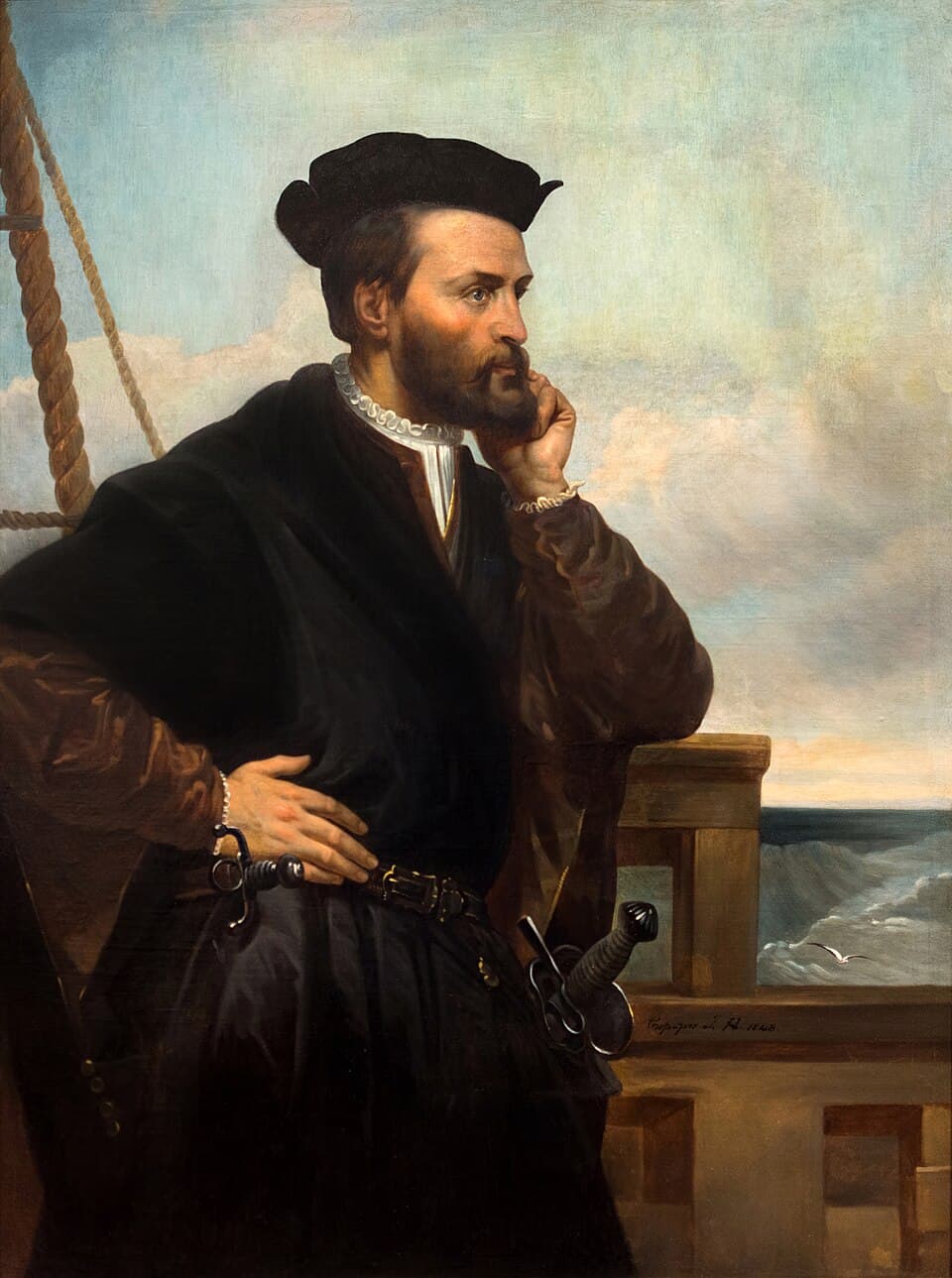
Two young visitors, on a school trip to Saint-Malo, pushed open the door of an old stone manor. There, near a yellowed nautical chart, an old man with sailor's hands was waiting. It was Jacques Cartier, and he had promised to tell them everything.
—What exactly was your job? A regular captain?
Not exactly, my child. I was a captain for the king. That means the sovereign himself, Francis I, had given me a handwritten letter ordering me to sea. Imagine: a parchment signed by the king, telling you 'go discover lands in my name.' That was no small thing. I set out from Saint-Malo, my home port, with armed ships and dozens of men under my command. The king trusted me, but he expected results: lands, riches, maps. You wear that title like a heavy coat. Proud, yes. But every wave reminds you that you answer for everything before the king.
A captain for the king leaves with a letter but returns with a debt of honor.
—What was a normal day like on your ship?
You know, I got up before dawn. The first thing I did was open my logbook. It's a big notebook where I wrote everything: wind, sea, distances, lands sighted. Then I took my astrolabe, a brass instrument that measures the sun's height to know where we are. Imagine a graduated disk you raise to the sky, one eye closed. In the afternoon, I watched the coasts and held council with my officers. At night, by candlelight, I updated my charts. No landmarks, no known routes: everything depended on these patient gestures, repeated each day.
—Is it true you planted a giant cross somewhere?
Yes! In 1534, at Gaspé. An immense wooden cross, almost ten meters. Imagine a tree erected on the point, visible from far away. We had carved a sign on it: Vive le Roy de France. That was our way of saying: this land now belongs to the king. We called it a taking of possession. But the Iroquois chief, Donnacona, wasn't fooled. He protested, and loudly. So I had to be cunning: I made him understand that this cross was only a marker for my ships. It wasn't entirely honest, my child. The truth is, we were planting our king on his land.
We said 'navigational marker'; in truth, we were planting our king on his land.
—And after the cross, what happened with the chief?
That's where my story becomes heavy to bear. To show these lands to the king, I took Donnacona's two sons to France. The father finally agreed, half by force. Imagine for a moment: they take your brothers, put them on a great ship, and they sail across the ocean to a country you know nothing about. Those young men learned our language, they told the king about their country. But many of the Iroquois taken died far from home, in France. When I think back, my child, I know that my curiosity and ambition cost dearly to those who had first welcomed me.
—How far did you go on that great river?
Far, my child, farther than any European before me! On my second voyage, in 1535, I ascended the St. Lawrence for more than a thousand miles. Imagine a river so wide it looks like the sea, plunging into vast and unknown lands. I was seeking the famous Northwest Passage, a water route dreamed of to reach Asia by the north. I arrived at the great Iroquois village of Hochelaga, where Montreal stands today. Fifteen hundred inhabitants, cornfields, wooden houses. It was a whole world, alive, organized, that had not waited for my ships to exist.
I thought I was discovering an empty path; I found a world already full of life.
—Did you name Montreal's mountain?
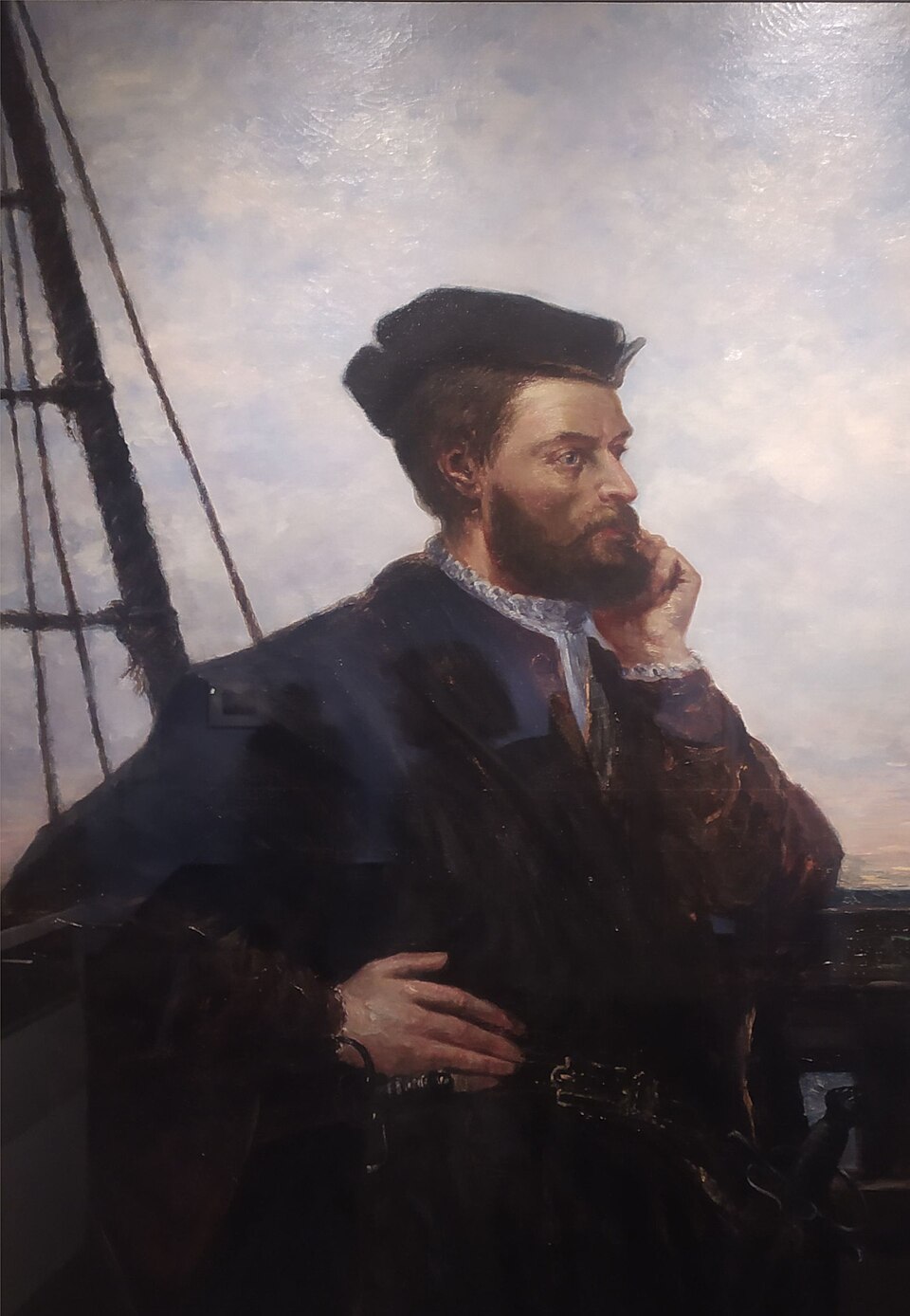
Yes, and I remember it clearly. At Hochelaga, I climbed the hill overlooking the village. From the summit, the landscape opened endlessly. I named that height Mont-Royal — and that is where, later, the name Montreal comes from. But up there, I also saw something that gripped my heart: furious rapids, white and boiling water, blocking the river to the west. Impossible to pass with a ship. Imagine: you dream of a route to Asia, you climb to finally see it, and you discover a wall of water. My hope of reaching the Orient died on that mountain.
—Is it true it got so cold that sailors died?
Alas, yes. The winter of 1535–1536, near Stadacona, my ships were trapped in ice. And a terrible disease fell upon us: scurvy. It's an illness that comes when you lack fresh fruits and vegetables for months. Gums bleed, teeth fall out, legs swell, and you die. Imagine watching your companions die one by one, unable to do anything. More than twenty-five of my men died that way. The cold bit, the ice didn't melt, and every morning we dug graves in the snow. It is the darkest memory of all my voyages.
—And how did you cure it, then?
By those same people we thought 'savages,' my child. At the darkest point of that winter, an Iroquois revealed a remedy to me: a decoction of annedda, a tea made from the bark and leaves of a local tree. We boiled the bark, and the sick drank. Within just a few days, men I thought lost got back on their feet! It was like a miracle. Remember this well: we had come as masters, convinced we knew everything. And it was their knowledge that saved my entire expedition. The greatest explorer is nothing without those who already know the land where he lands.
We had come as masters; it was their knowledge that saved us.
—They say you brought back gold, but it was fake?
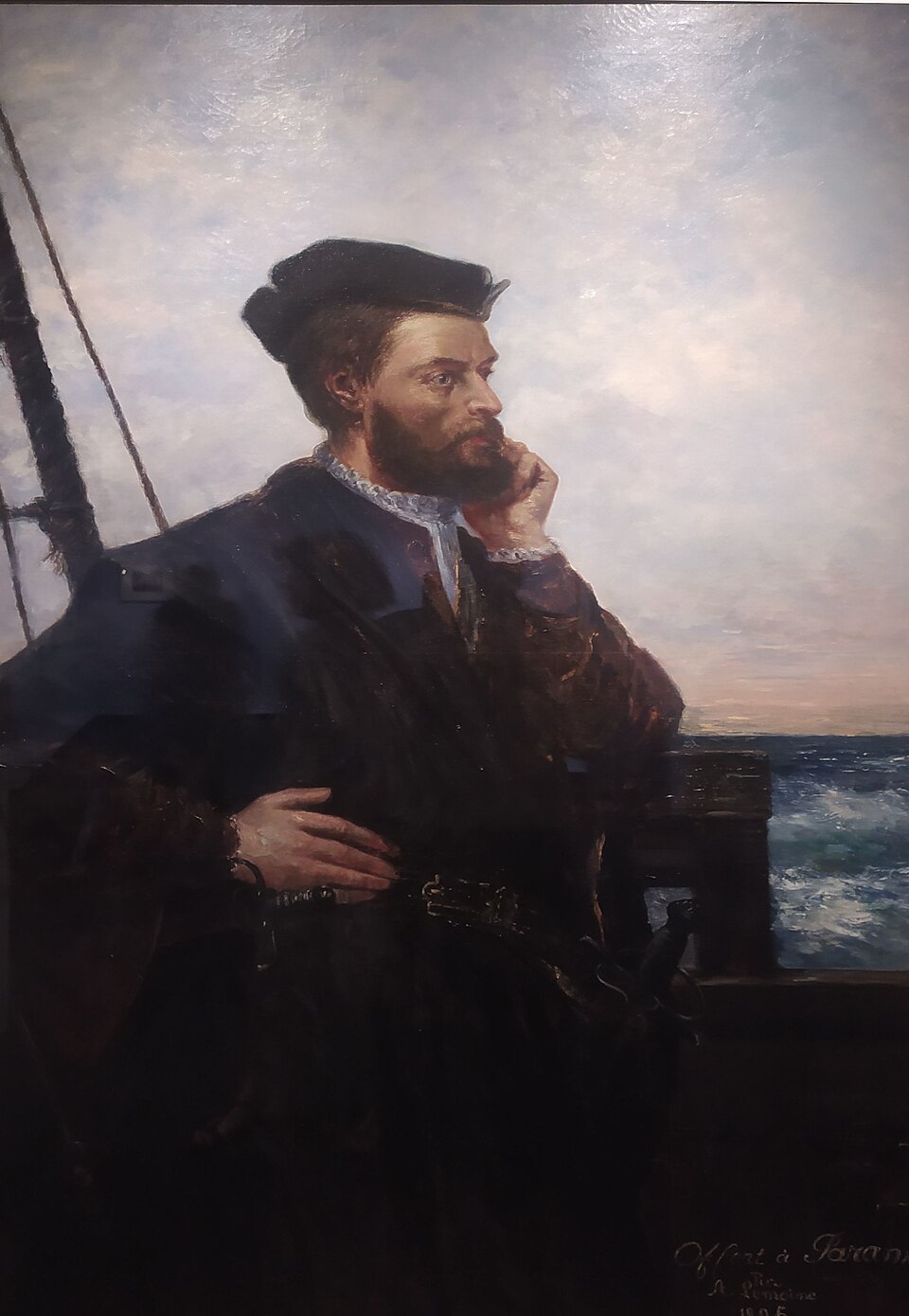
Ah, my great shame! The king had sent me to fetch 'great quantity of gold' — it was written black on white in my commission. So at Cape Diamond, when I saw glittering stones and yellow flecks, my heart leaped. I filled whole barrels and returned triumphantly to France in 1542. Imagine my pride on the dock... Then scholars examined my treasure. The gold was only pyrite, a worthless rock. The diamonds? Simple quartz crystals. They even coined a saying: 'false as Canadian diamonds.' All my glory crumbled in an instant.
False as Canadian diamonds: that's what they said of my treasure.
—How did it feel to be wrong before the king?
Very bad, my child. Imagine: you return from the other side of the world, convinced you have succeeded, and you learn that you have brought back stones. In my time, such a thing was not easily forgiven for a captain. I had founded Charlesbourg-Royal, the first French settlement in Canada, but it was abandoned the very next year for lack of support. I returned to my manor of Limoëlou, near Saint-Malo, and never again put to sea for the king. I did not receive the honors or titles I had hoped for. My mistakes are remembered, sometimes. But that's how it is: one learns also by being wrong.
—If you are remembered today, what would it be for?
For my maps, I think, and for having opened a path. Through my three voyages, I drew the first accurate portrait of the Gulf and the St. Lawrence River. Imagine: before me, this immense gateway to North America was a blank on maps. After me, navigators had a route to follow. It was in my footsteps that, much later, New France was born. I did not find gold or Asia, my child. But I connected two worlds with a line of ink. And if you remember one thing from me: always listen to those who know the land before you. They know what your maps ignore.
I did not find gold, but I connected two worlds with a line of ink.
Read further
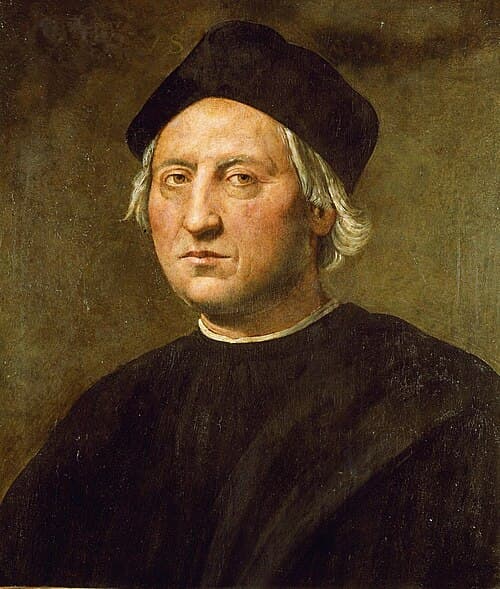
This imaginary interview was generated by artificial intelligence from sources documented in Jacques Cartier's profile. It dramatises what the figure might have said based on what we know about them, but does not constitute attested historical testimony. For primary sources and factual documentation, refer to the full profile.