Imaginary dialogue between François Ier and Jacques Cartier
by Charactorium · Jacques Cartier (1492 — 1557) · Exploration · 5 min read
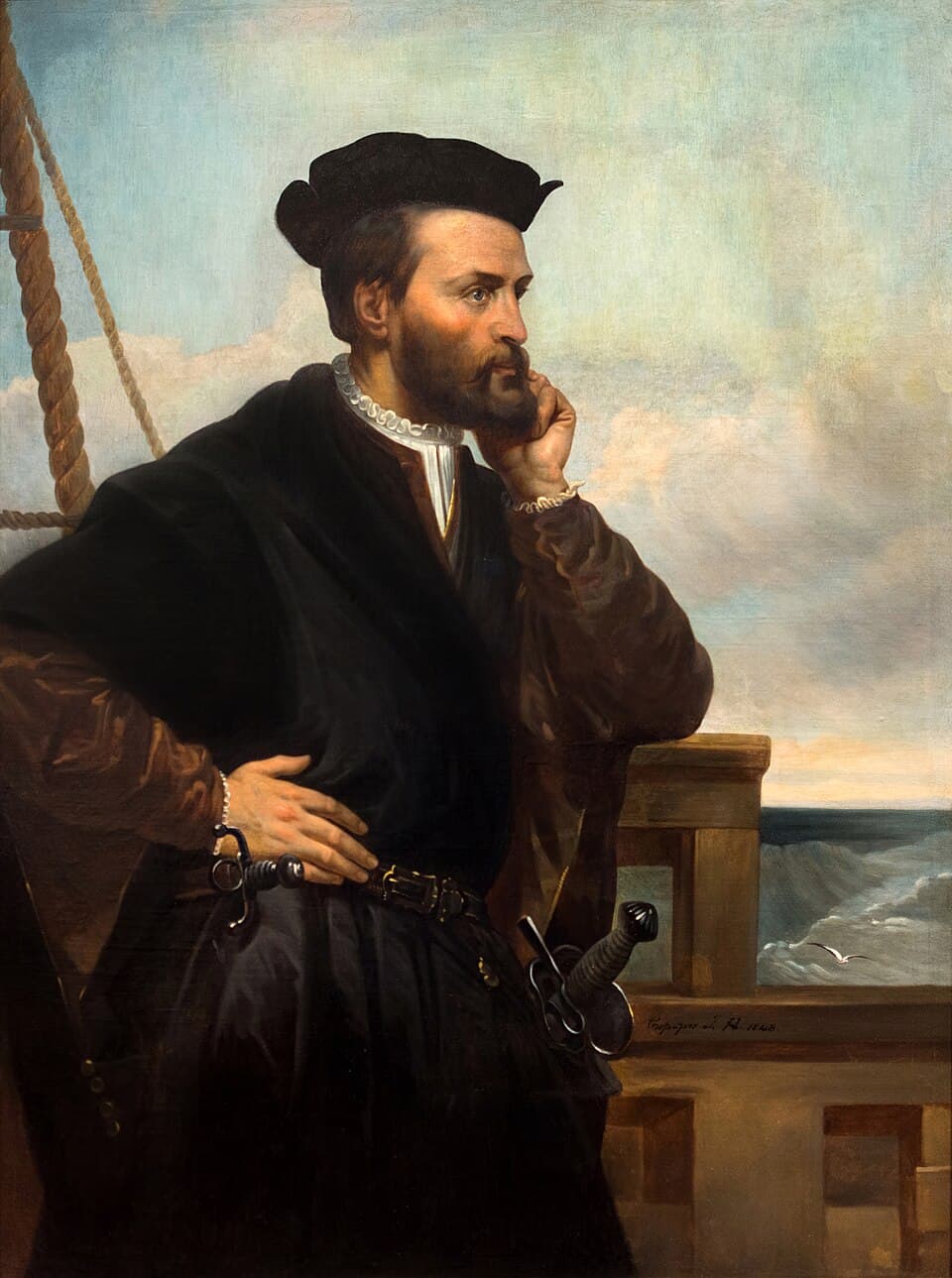
It is in the gallery of the Château de Fontainebleau, on an autumn morning in 1542, that Francis I summons Jacques Cartier, just returned from his third crossing. On an oak table, the king has arranged some of the stones the mariner brought back from Cap Diamant — they glint faintly in the light from the tall windows. The sovereign and the captain from Saint-Malo have known each other for nearly ten years, ever since the crown outfitted the first ships for the Terre Neuve. The king comes with a curiosity tinged with reproach, for the court is already murmuring about the gold that was not gold.
—Master Cartier, it was I who signed your commission in 1534, to snatch from the Spaniards and Portuguese their share of the New World. Do you remember what I asked of you then?
How could I forget, Sire? Your letter commissioned me to go to Terre Neuve to discover certain islands and lands where it was said there should be great quantities of gold and other rich things. Charles V and the King of Portugal were dividing the world between them like two brothers sharing an inheritance, leaving us not a crumb. I left Saint-Malo not as a merchant, but as your captain for the king, mandated by your hand alone. My astrolabe and my logbook, I kept them for you. Every latitude I recorded, every coast I charted, was so much land I planted under your crown before another prince could seize it.
I left not as a merchant, but as your captain for the king, mandated by your hand alone.
—I have been told that at Gaspé, on that first voyage, you erected a cross in my name. Did the natives of the country suffer it gladly?
Gladly, no, Sire. We made a cross thirty feet high, and carved into the wood an inscription reading Long live the King of France, which we planted on the point before them. The chief Donnacona came to us in his canoe, greatly angered, showing us the land all around as if to say it was his and that no one should plant anything there without his leave. I made him understand by signs that this wood was only a marker to guide our ships, nothing more. Then, I confess it to you alone, I took his two sons aboard to carry them to France. That was, I know today, a foundational misunderstanding between our peoples.
I made him understand that this wood was only a marker for our ships — the truth, I was already carrying it in my hold.
—You once spoke to me of a mountain from which you could see the whole country. Tell me of that ascent of the great river, during your second voyage.
It was, Sire, the greatest feat of my life as a sailor. I ascended the St. Lawrence for more than sixteen hundred leagues, farther than any Christian had ever entered those lands. At the end, I found Hochelaga, a great village surrounded by palisades, where some fifteen hundred souls lived. I was led to the summit of the nearby mountain, and from there I saw the country stretch as far as the eye could see; I named it Mount Royal, in your honor. But at its foot flowed rapids so furious that no boat could pass them. I had thought I held the path to Asia; I had only a blocked river. Joy and disappointment came to me in the same instant.
From the summit I named the mountain Mount Royal; at its feet, the rapids robbed me of the path to Asia.
—They say the winter there is a slow death. How did your men endure it, when the ice held you prisoner?
Sire, I have never told you everything about that winter, for it still grips my heart. Trapped in the ice near Stadacona, we were struck by scurvy — the disease that makes the gums bleed, loosens the teeth, and swells the limbs until a man fades away. I lost more than twenty-five men, and I dug their graves in the hardened snow. We would all have lain down there if a native had not revealed the remedy to me: a decoction of bark and leaves from a tree they call annedda. Within days, my sick men rose again. Think of it, Sire: these people we called savages saved your sailors, when all our Christian science was powerless.
These people we called savages saved your sailors, when all our science was powerless.
—You speak of the hunger and cold of those winters. What does a crew live on, there, when the sea gives nothing more?
On little, Sire, and poorly. At sea, we subsisted on hardtack, salt pork, beans, and dried fish — fare that fills the belly but drains the blood, and it is that, I believe, that invites scurvy. In Canada, trade with the people of Stadacona brought us corn, squash, game, in exchange for a few knives, axes, and glass bead necklaces I had brought for barter. But once winter came, everything froze, and scarcity tightened around us. I saw robust men, who left Saint-Malo full of strength, reduced to skin and bones. At your court, you do not measure what a single league gained on those lands costs.
At your court, you do not measure what a single league gained on those lands costs.
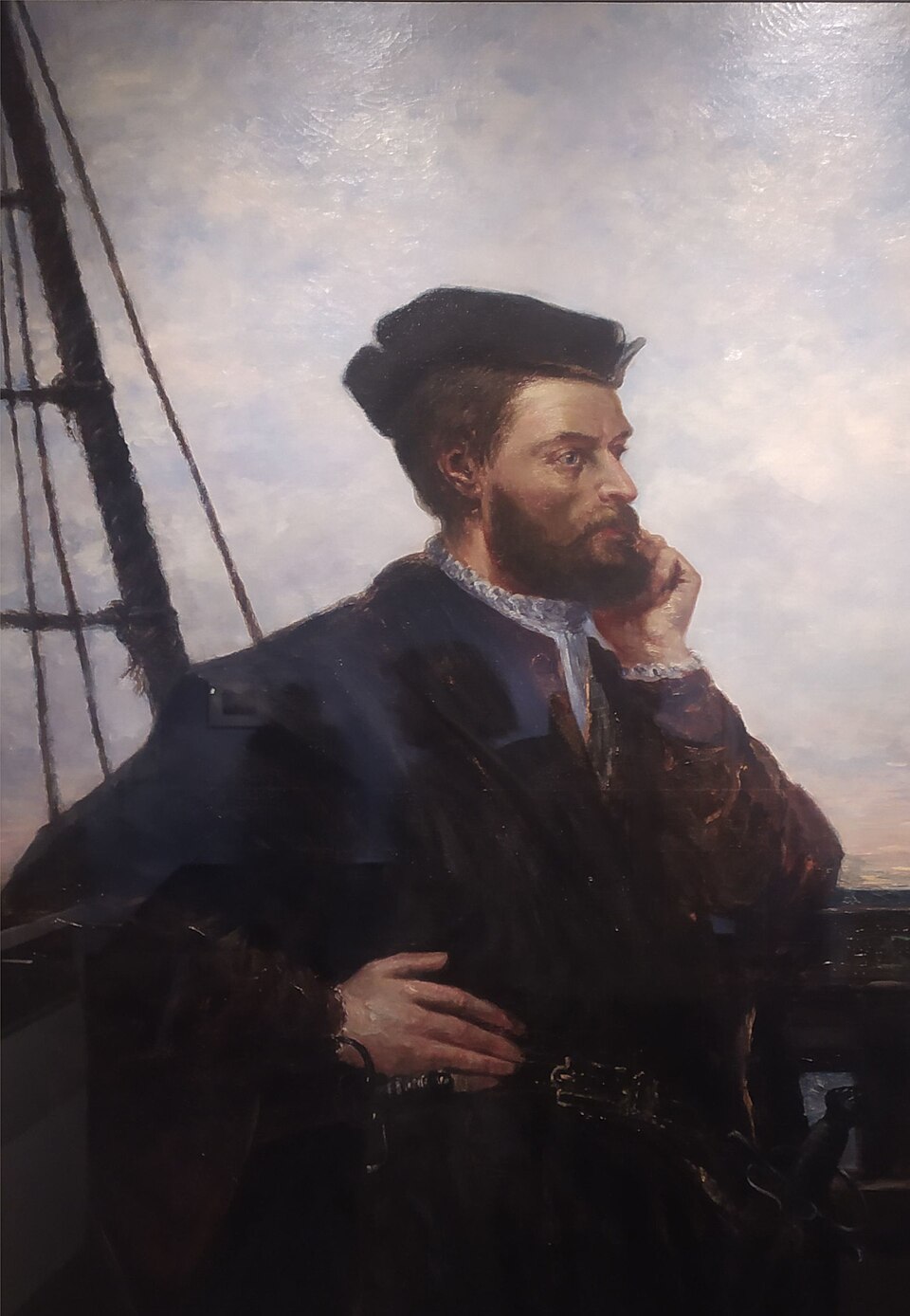
—You brought me Donnacona and nine of his people, whom I received at my court. Why did you tear that chief from his country?
I wanted, Sire, for you to hear from their mouths what my words could not paint: that kingdom of Saguenay that Donnacona spoke of, full of gold, rubies, and men who flew. I hoped these tales would loosen purses and persuade you to outfit a new expedition. They entertained you, I know, and you had them baptized. But none ever saw his river again — they all died in France, far from their own. When I had to return there and tell the people of Stadacona that their chief would not come back, I had only lies to offer them. That debt, Sire, I still carry.
None ever saw his river again; that debt, I still carry.
—And these stones, Master Cartier — those that shine there, on my table. You brought them to me as a treasure. What are they really worth?
Sire... I cannot lie to you before these stones. At Cap Diamant, near Charlesbourg-Royal, my men found mines of what they thought was gold and silver, with stones we took for diamonds. I loaded my ships with them, and I returned in 1542 with a high heart, believing I was bringing you the wealth of Spain. But your goldsmiths have judged: the gold is only pyrite, fool's marcasite, and the diamonds are only quartz crystals, hard and cold. Already they laugh in Saint-Malo at these false as diamonds of Canada. I crossed the ocean twice to lay at your feet a harvest of pebbles. No storm ever humiliated me so much.
I crossed the ocean twice to lay at your feet a harvest of pebbles.
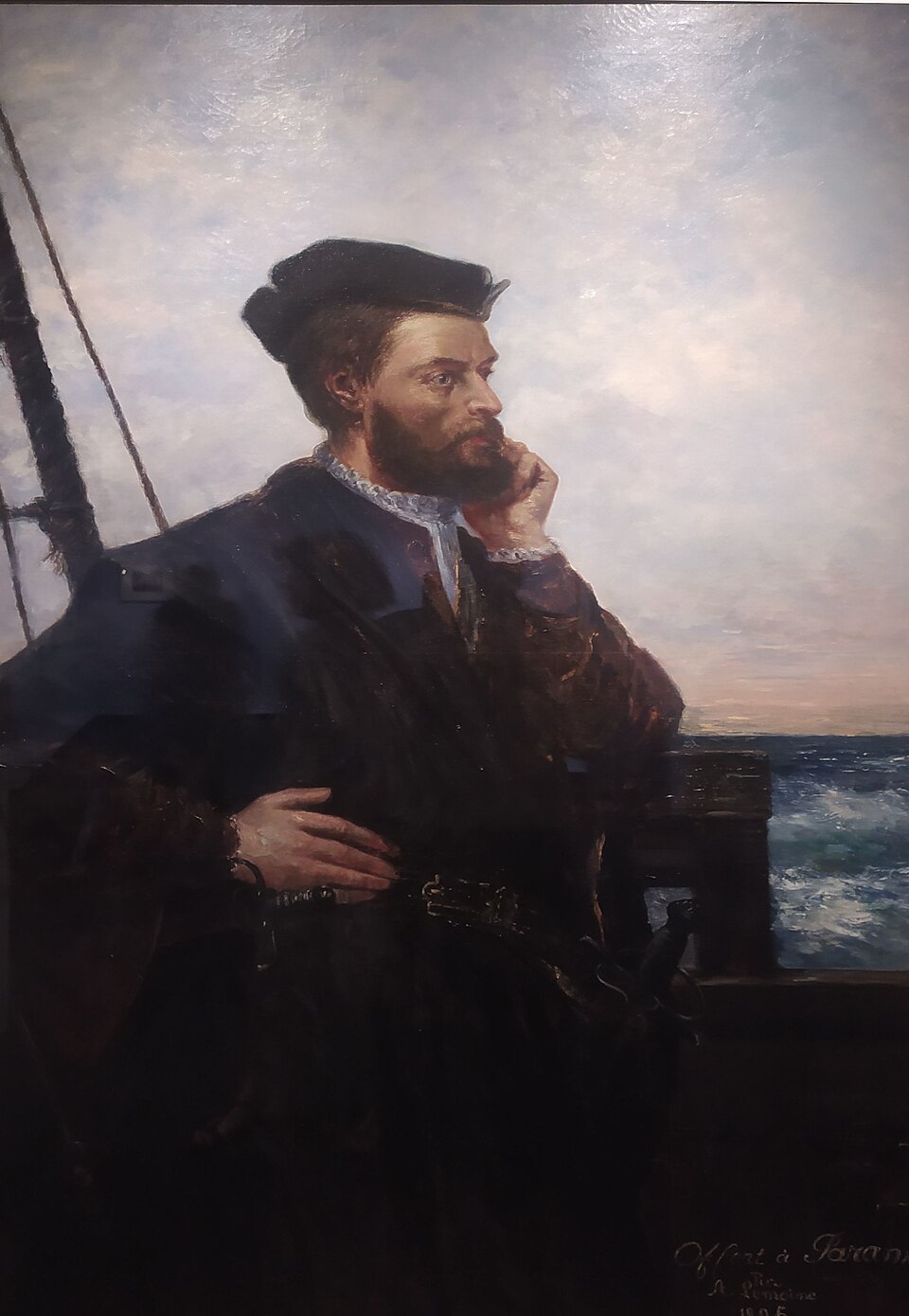
—Charlesbourg-Royal, which you had built to last, you abandoned. Was it truly necessary to give up my colony?
It was necessary, Sire, to my great regret. I had founded there, in 1541, the first settlement of your crown in that land — palisades, a wooden fort, gardens. But the cold was terrible, scurvy still lurked, and the people of Stadacona, whom we had deceived about Donnacona, were no longer our friends: they harried our men. Roberval, whom you had placed above me, was slow to come. I was not going to let my people perish for pride. I set sail for France. A colony does not hold by the will of a captain alone, Sire — it needs the constant arm of the kingdom behind it, and that arm failed us.
A colony does not hold by the will of a captain alone; it needs the constant arm of the kingdom.
—You sought for me the passage to the Indies by the west. After three voyages, do you still believe it exists?
I believed it, Sire, with all my soul. Verrazzano before me had shown you that an entire continent stood between us and Asia; I hoped that the St. Lawrence would be the breach, the Northwest Passage that all Christendom covets. As long as I ascended the river, my heart beat: here is the door to Cathay! Then came the rapids of Hochelaga, and the water turned fresh, a sign that no sea would open there. The kingdom of Saguenay, perhaps, still holds wonders — but the path to Asia, I did not find it. I opened a river, not a route. Let others, after me, go farther than my rapids.
I opened a river, not a route; let others go farther than my rapids.
—One last thing, my captain. Of all these perils undertaken in my name, what, in the evening, remains in your memory?
It is neither the false gold nor the missed honors, Sire. It is the first time I entered that great gulf, on the tenth of August, the feast day of Saint Lawrence, and I gave it the name of the saint of the day. It is the smell of immense forests, the silence of rivers as wide as seas, the faces of those peoples who fed me and healed me. I was the first of your subjects to chart these lands that you now call New France. Perhaps one day they will say I brought you only pebbles; I, I know that I brought you a world. And that, no goldsmith will ever weigh.
They will say I brought you only pebbles; I, I know that I brought you a world.
Read further
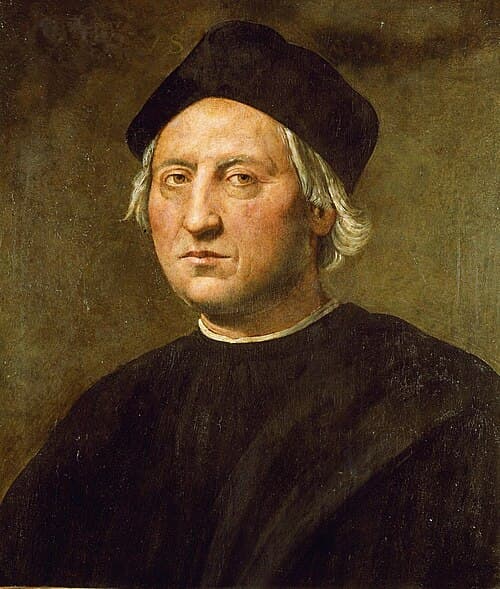
This imaginary interview was generated by artificial intelligence from sources documented in Jacques Cartier's profile. It dramatises what the figure might have said based on what we know about them, but does not constitute attested historical testimony. For primary sources and factual documentation, refer to the full profile.