Imaginary interview with Jacques Cartier
by Charactorium · Jacques Cartier (1492 — 1557) · Exploration · 6 min read
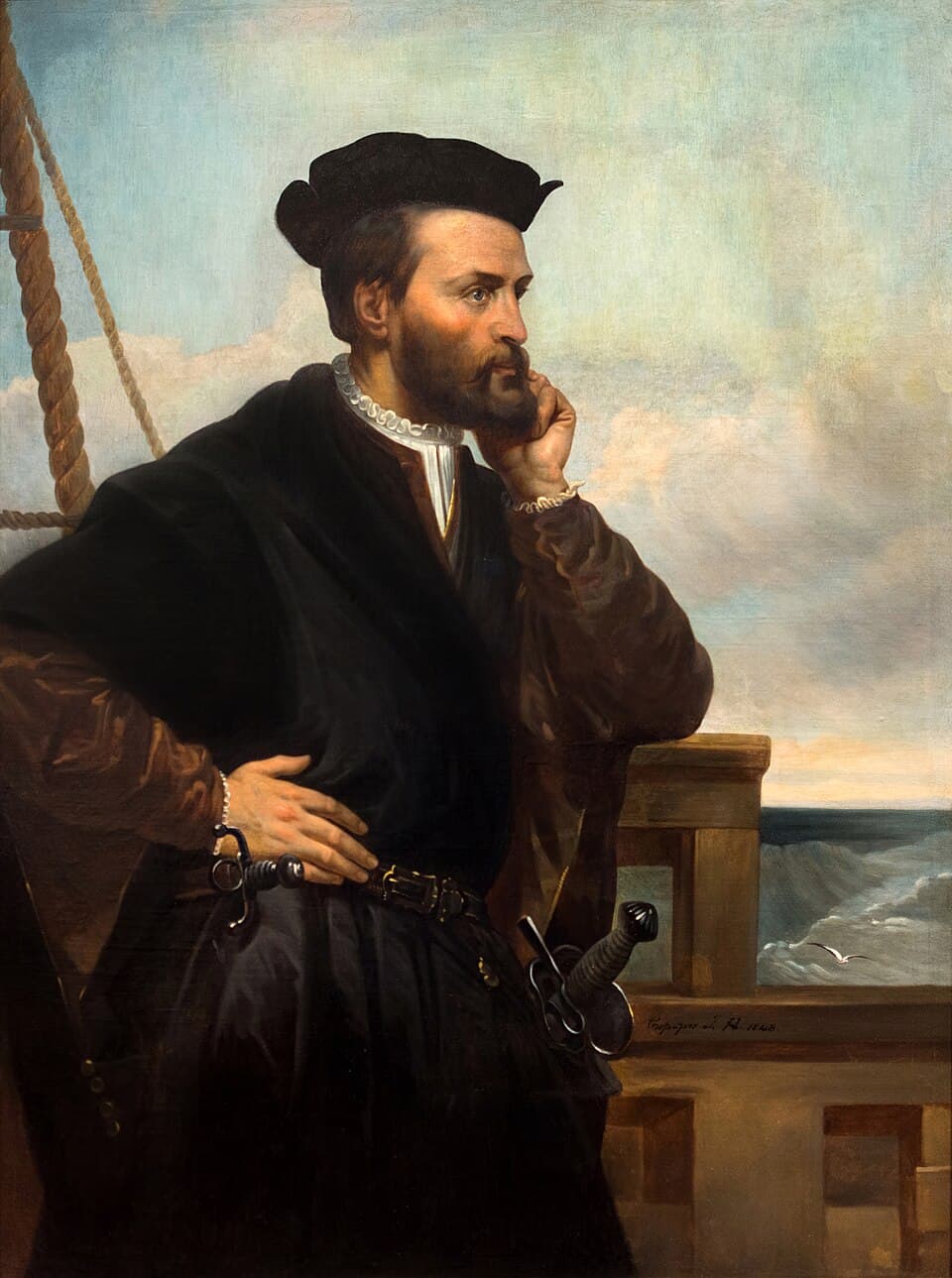
Saint-Malo, a winter evening around 1550. The wind from the sea rattles the shutters of the Manoir de Limoëlou, and a wood fire lights the weathered face of the captain. On the table: rolled-up nautical charts, a brass astrolabe, and the still-vivid memory of three Atlantic crossings.
—How does one become the captain the King of France sends to the ends of the earth?
You are born in a port, that's how. In Saint-Malo, a child breathes tar and dried fish before he can even walk, and Breton fishermen already spoke of those cod coasts they called Terre Neuve long before I was sent to map them. François I gave me a written commission, in due form: I was ordered to make the voyage to discover certain islands and lands where it was said there was a great quantity of gold and other riches. Can you imagine the effect of such words on a seaman? I fitted out my ships, chose my crews, and set sail with my astrolabe and compass as my only judges. A captain for the king is neither merchant nor soldier: he is the eye of the crown gazing upon lands no Frenchman has seen.
A captain for the king is neither merchant nor soldier: he is the eye of the crown gazing upon lands no Frenchman has seen.
—What is a day like on board, when there is nothing but water to the horizon?
The sea does not forgive idleness. At dawn I would reread my logbook, where I recorded each day the distances, the courses steered, the weather, and the color of the water. In the afternoon I would raise my brass astrolabe toward the sun to calculate our latitude, and I would chart any coastline sighted. The Grande Hermine, my flagship on the second voyage, displaced about one hundred twenty tons: a fine beast of wood and canvas, sturdy under the storms of the North Atlantic. In the evening, by candlelight, I would hold council with my officers to decide the next day. We ate ship's biscuit, salt pork, dried beans—nothing to delight the palate, but enough to keep a man on his feet. Sailing, you see, is patiently writing what no one has yet written.
Sailing is patiently writing what no one has yet written.
—Do you remember the day you planted that cross at Gaspé?
July 1534. We erected on the point a cross thirty feet high, with a wooden sign engraved: Vive le Roy de France. I planted it before them, pointing to the sky to show that through it came our redemption. But Chief Donnacona was not fooled: he came forward in a boat with his people and made me understand through grand gestures that this land was his, not mine. I had to be cunning, make them believe it was only a landmark to find the harbor again. Then I took his two sons to France—partly hostages, partly interpreters for the next voyage. Only later did I grasp the weight of that act: you do not plant a cross on another's land without them remembering.
You do not plant a cross on another's land without them remembering.
—How did you regard those men you called, in the manner of your time, Savages?
The word of my era was that one, Sauvages, and I used it without the hatred perhaps attributed to it today—it only meant they lived outside our towns and churches. But I was not blind. At Stadaconé, Donnacona ruled his people with an authority I would have recognized in any Breton lord. To speak with these people, I brought small knives, axes, hats, and glass bead necklaces: we exchanged iron for corn, squash, and above all for information about the lands to the west. These alliances lasted the length of a trade, then mistrust returned. I took Donnacona and nine of his people to France; none ever saw his river again. That, I confess, still weighs on me.
I took Donnacona and nine of his people to France; none ever saw his river again.
—What did you feel as you sailed up that great river farther than any European before you?
A thrill, I won't lie. On August 10, Saint Lawrence's Day, we entered the gulf, and I gave that great bay the name of the saint of the day. Then we sailed up the river more than a thousand miles, ever farther inland, where no Christian ship had ever cut fresh water. At every bend, I thought I held the Northwest Passage, that route to Asia all Europe was seeking. Imagine: a captain from Saint-Malo perhaps opening the door to spices and silk! The river was as wide as an arm of the sea, bordered by endless forests. I noted everything, convinced the king held there more than a country—a way to the other side of the world.
At every bend, I thought I held the Northwest Passage, that route to Asia all Europe was seeking.
—And at the top of that mountain you named, what did you discover?
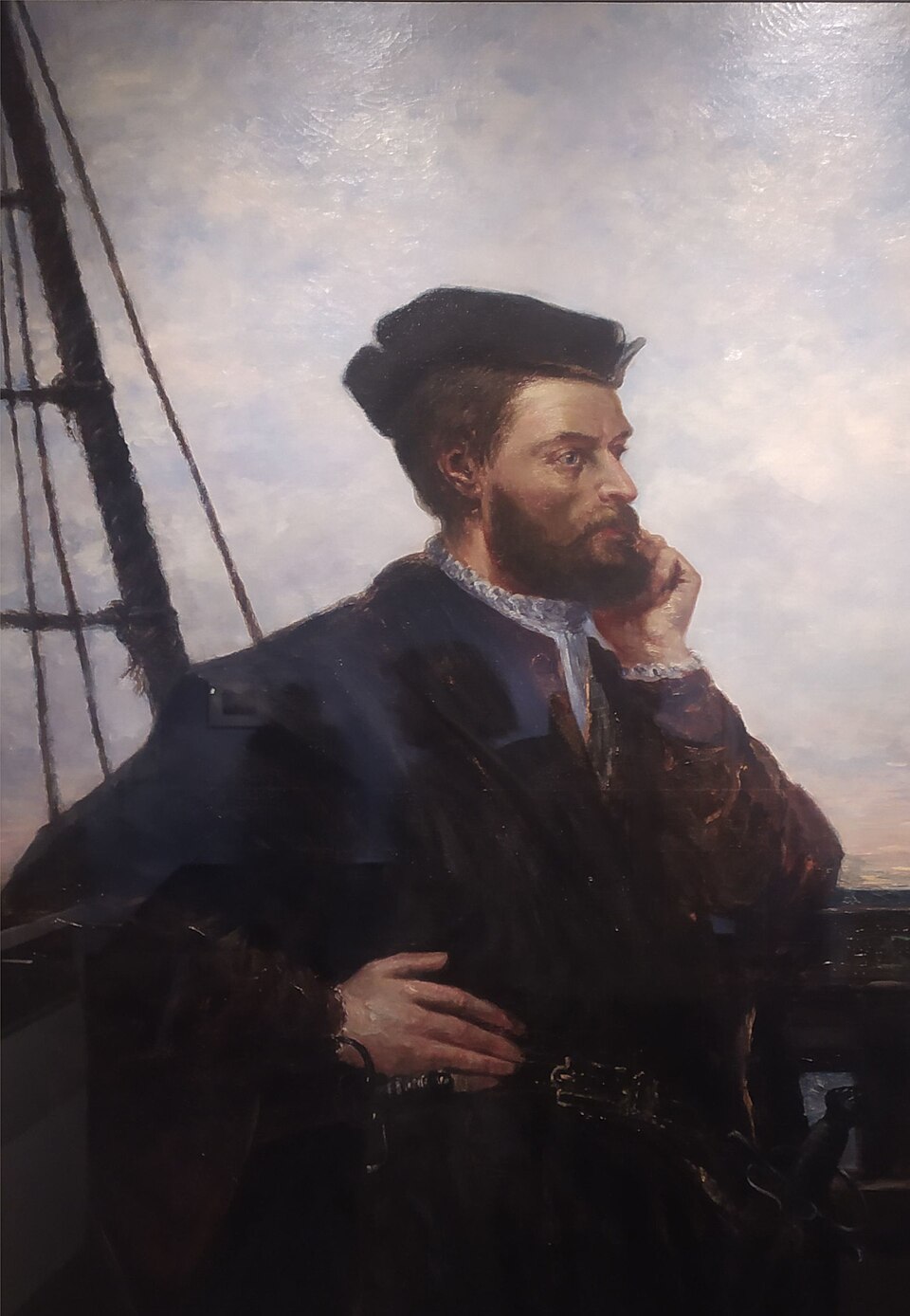
Hochelaga, October 1535. A large Iroquois village of perhaps fifteen hundred souls, encircled by palisades, at the foot of a beautiful mountain. I was led to it and climbed to its summit: from up there, the view stretched for leagues over the river and forests. I baptized it Mount Royal, and it is that name, I believe, that will remain. But below, the river broke into furious rapids, impassable for my boats. There my dream stopped: impossible to push farther west. I understood, with a heavy heart, that this water would not lead me to China. The beauty of the place and the disappointment seized me at once, at the same moment. Such is the explorer's fate: to find a marvel, and a wall just behind it.
Such is the explorer's fate: to find a marvel, and a wall just behind it.
—Does the winter of 1535 remain the most terrible of your life?
Without hesitation. Trapped in the ice near Stadaconé, my ships immobilized like wooden coffins, we saw coming a sickness I did not know. Gums rotted, teeth fell out, legs became covered with black spots and swelled: scurvy. More than twenty-five of my men died that way, and I dug graves in ground as hard as stone, fearing the Iroquois would see us so weak. It was one of them who saved me. He showed me how to make a decoction from the bark and leaves of a tree they called annedda. I hardly believed it—and yet, within days, my sick men were on their feet again. All the king's gold could not have bought that remedy. The survival of my entire expedition, I owed to a tree and the knowledge of a people I despised.
All the king's gold could not have bought that remedy.
—What would you say of the lesson that winter taught you?
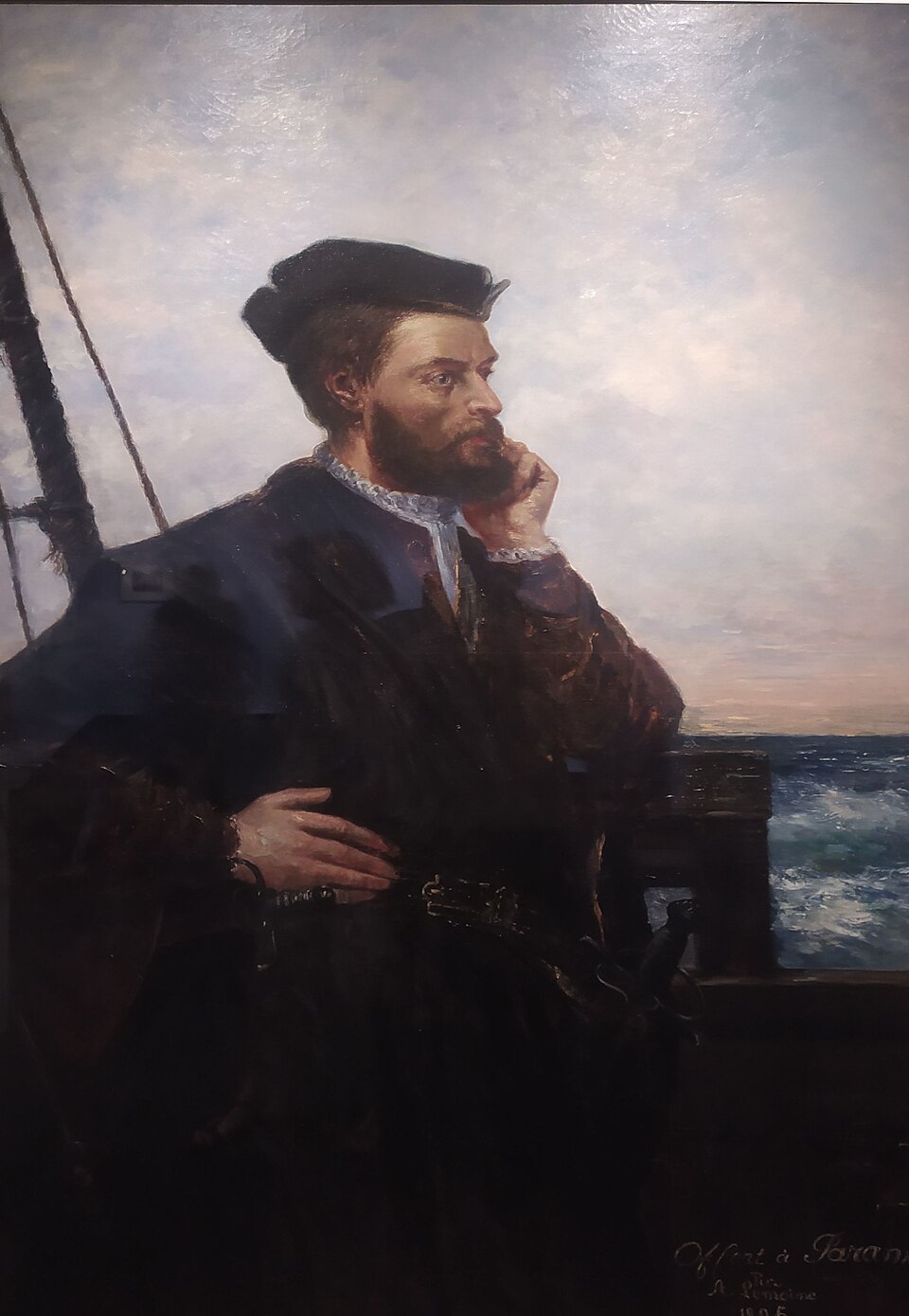
That a captain may know the astrolabe, the compass, and all the charts in the world, and still remain an ignorant child before a new land. At sea, my sailors lived on hardtack and salt pork, and it was precisely that lack—I did not know it then—that opened the door to scurvy. In Canada, it was squash, corn, and above all that annedda tea that kept us alive. I had come to take: gold, lands, souls for the king. And I had to receive, humbly, the knowledge of those I thought savages. A proud man would have died in that ice. The cold taught me that you conquer nothing without first learning, and that an unknown forest holds secrets worth more than all of François I's coffers.
The cold taught me that you conquer nothing without first learning.
—Let us speak of that final return, in 1542, with your ships laden with treasures. What happened?
Ah, my shame and my glory mingled. At Charlesbourg-Royal, near Cap Diamant, my men and I found mines of what we believed to be gold and silver, with stones we took for diamonds. I had whole barrels loaded, and I returned to France with a swollen heart, believing I brought back enough to dazzle the court. Then the king's goldsmiths delivered their verdict: my gold was only iron pyrite, and my diamonds mere quartz crystals. A cruel proverb was made of it—false as Canadian diamonds. Thirty years at sea, three voyages, men dead in the ice, only to return with stones. But believe me: what I truly brought back were the charts, and those did not lie.
My gold was only pyrite, my diamonds quartz—false as Canadian diamonds.
—At the end of your life, do you judge your voyages a success or a failure?
A young man's question, that one. My colony of Charlesbourg-Royal was abandoned the very next year; the cold, disease, and the Iroquois' distrust got the better of us, and Roberval fared little better after me. I received neither the promised gold nor the titles I hoped for, and I grow old in my manor at Limoëlou with the bitter taste of broken promises. And yet. I gave a river the name of Saint Lawrence, I named Mount Royal, I drew the first charts of that immense gulf. If I could imagine that I would be read in a century or two, I believe others would take up my route and build where I failed. A man does not always measure what he sows. I opened a door; it is for others to cross the threshold.
A man does not always measure what he sows. I opened a door; it is for others to cross the threshold.
Read further
This imaginary interview was generated by artificial intelligence from sources documented in Jacques Cartier's profile. It dramatises what the figure might have said based on what we know about them, but does not constitute attested historical testimony. For primary sources and factual documentation, refer to the full profile.