Kids interview Jason
by Charactorium · Jason · Mythology · 5 min read
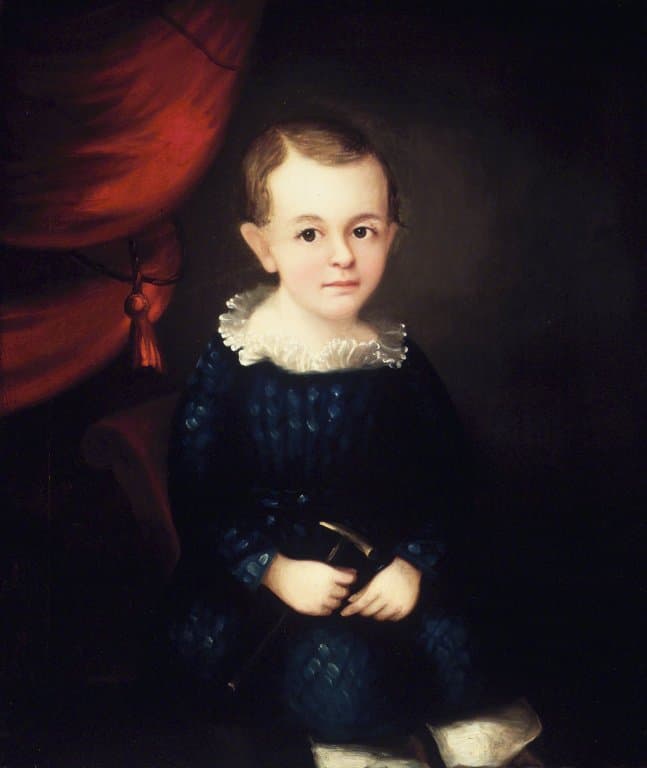
Two middle school students, on a class trip, had a strange dream. They stand on a beach in ancient Greece, before a large wooden ship with huge oars. A man with a warm voice sits down on the sand, smiles at them, and agrees to tell them everything.
—Is it true you were raised by a horse-man?
You know, my child, it is quite true. My uncle Pelias had stolen the throne of Iolcos, the city where I was born. To protect me, my parents entrusted me to a strange being: Chiron, half man, half horse. We call that a centaur. Imagine a teacher who gallops while you walk! He lived in a cave on Mount Pelion, a forest-covered mountain. Up there, far from men, he taught me to hunt, to heal wounds, to recognize plants. He was making me a warrior, but also a sage. I grew up hidden, without even knowing I was a prince.
—What was it like to discover you were a real prince?
When I came down from the mountain, my heart was pounding. I walked to Iolcos to claim my father's throne. But Pelias, my uncle, was cunning. He didn't say no. He smiled and gave me a challenge: go fetch the Golden Fleece at the end of the world, and the throne would be mine. Do you see the trap? He thought I would never come back alive. I was young and proud, so I accepted. Sometimes, my child, you say yes to an adventure without knowing what it will cost you.
—What was your boat like? Was it big?
Ah, the Argo! It was my greatest treasure, even before departure. A man named Argos built it for us, and that's how the ship got its name. Imagine a large wooden hull, rows of oars, and a sail snapping in the wind. Nearly fifty heroes could board! In my time, crossing the sea meant facing the unknown: no maps, just the stars and courage. This ship became so famous that my companions were named after it: the Argonauts, those who sail on the Argo. Without it, we would never have reached Colchis.
—The Golden Fleece, is it just a golden sheepskin?
You're almost right, and that's what's amazing! The Golden Fleece is the pelt of a magical ram, Chrysomallos, shining like the morning sun. But it wasn't just a skin. For us, it was the sign of a king's power: whoever brought it back proved he deserved a crown. That's why my uncle asked for it — he thought he was giving me an impossible mission. It was guarded at the end of the world, in Colchis, a distant land, and a sleepless dragon protected it. You see, it wasn't the gold that mattered, but what it meant.
It wasn't the gold that mattered, but what it meant.
—You commanded lots of heroes? Was it hard being the leader?
Oh yes, what a challenge! Imagine: on board, I had the greatest heroes of Greece. Heracles, the strongest man in the world. Orpheus, whose music could calm a storm. And two formidable twin brothers, the Dioscuri. How do you command men more powerful than yourself? I understood one thing: a leader doesn't need to be the strongest. He must be the one who keeps the course when others doubt. I listened to them, I made decisions, I kept the group united. That's what leading the Argonauts means: not crushing others, but making them move forward together toward the same goal.
—Where did you stop during the voyage?
We made stops at mysterious islands. The most astonishing was the Island of Lemnos. There, my child, only women governed the entire island! For Greek sailors like us, it was a rare and surprising sight. We regained our strength there before leaving again. Each stop was a little adventure within the great one: we never knew who we would meet, or if the welcome would be friendly. Traveling, in my time, was like that: moving from one unknown to another, with a knot in our stomach, hoping to find fresh water and friends rather than enemies.
—Was the sea dangerous? Did you encounter monsters?
Terribly dangerous! The worst passage was the Symplegades: two gigantic rocks that clashed together to crush ships. Imagine two stone doors slamming without warning! You had to pass right at the right moment, at full speed, or else it was the end. We also encountered the Harpies, creatures half woman, half bird, who stole food from the unfortunate. And endless storms. Every day, the sea tried to swallow us. But you know, it is in danger that you truly discover what you are made of. Without these trials, bringing back the Fleece would have had no flavor.
It is in danger that you discover what you are made of.
—How did you manage to catch the Fleece? All by yourself?
No, and I want to be honest with you: alone, I would never have succeeded. In Colchis, King Aeëtes set me impossible tasks. Taming bulls that breathed fire. Sowing dragon's teeth in a field, from which fully armed warriors immediately sprang! I was lost from the start. That's when a young woman saved me: Medea, the king's daughter, a very powerful sorceress. She fell in love with me and used her magic to protect me from flames and blades. Thanks to her, I succeeded. She even abandoned her father and her country to follow me.
—She gave up everything for you? Did you make her happy afterward?
Ah... you touch my deepest wound. Yes, Medea gave up everything for me: her father, her homeland, her entire family. She herself said it later, with great bitterness: she had betrayed everything to help me conquer the Golden Fleece, and she wondered how I would reward her. And I... I did not know how to honor that sacrifice to the end. Our story, which began like a fairy tale, became sad. I will not tell you the rest, it is too painful. But remember this, my child: when someone gives everything for you, you owe them equal loyalty.
When someone gives everything for you, you owe them equal loyalty.
—And in the end, what remains of your whole adventure?
I brought back the Golden Fleece to Greece, yes, after a return full of obstacles. That trophy proved I had accomplished the impossible. But you know, the true wealth of my story is not the crown. It is the journey itself. Today, thousands of years later, two children like you still know the name of the Argonauts and the ship Argo. Poets have sung our adventure from generation to generation. That is what remains of a hero: not the gold he touched, but the story told after him. And if you tell it in turn, then a little part of me continues to sail.
What remains of a hero is the story told after him.
This imaginary interview was generated by artificial intelligence from sources documented in Jason's profile. It dramatises what the figure might have said based on what we know about them, but does not constitute attested historical testimony. For primary sources and factual documentation, refer to the full profile.