Imaginary dialogue between Indira Gandhi and Jawaharlal Nehru
by Charactorium · Jawaharlal Nehru (1889 — 1964) · Politics · Society · 5 min read
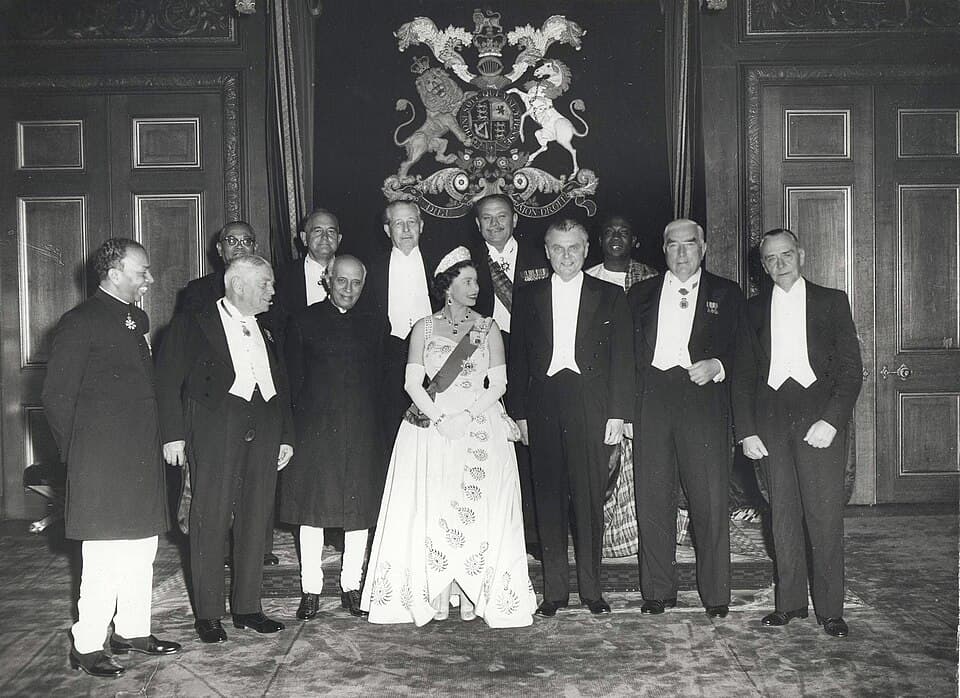
It is in the gardens of Teen Murti Bhavan, one evening in 1963, that the light fades on the rose bushes you tend at dusk. Your daughter Indira, who has managed your household for fifteen years and shares your evening reading sessions, sits beside you while a servant brings tea. She saw you write those letters from Naini Prison when she was a teenager; tonight, she comes seeking the man behind the Prime Minister. A fresh red rose still hangs from your white sherwani.
—Papa, those letters you wrote me from Naini Prison to tell me about the whole world — why did you devote your captivity to me?
Because you were far away, Indira, and because a prison cell strips you of everything except your thoughts. The British had taken my freedom, but not my memory nor my love for your education. I told myself: since I cannot walk by your side, I will walk through the history of mankind with you, from ancient Egypt to modern revolutions. Those Glimpses of World History were not a scholar's duty — they were an extended conversation between a father and his daughter across stone walls. I wrote from memory, without a library, and sometimes I made mistakes. But I wanted you to understand that our Indian struggle was only one thread in a vast human tapestry.
Since I cannot walk by your side, I will walk through the history of mankind with you.
—And The Discovery of India, those five thousand years of history written at Ahmadnagar Fort between 1942 and 1945 — how did you endure, imprisoned for so long?
You endure because you have no choice, and because thought becomes an escape that no jailer can forbid. We were there, the Congress leaders, cut off from the world while war engulfed the planet. I asked a simple question: what is India? Not the map drawn by London, but that millennial civilization, that bundle of contradictions held together by invisible threads. I wrote from memory, on makeshift notebooks, over five hundred pages. It was my way of resisting: they imprisoned my body, I set out to discover my homeland. Nine years behind bars in total, and yet that is where my truest books grew.
They imprisoned my body, I set out to discover my homeland.
—That night of August 14, 1947, at Parliament, when you spoke of our tryst with destiny — what did you truly feel, at midnight precisely?
A vertigo, Indira, mixed with a joy that generations had awaited. At the moment the clock struck midnight, while the world slept, India awoke to life and freedom. Those words, Tryst with Destiny, I weighed them for a long time, for they had to carry the weight of decades of suffering and hope. All India Radio carried them into millions of homes. And yet, my heart was heavy: at the same time, Punjab and Bengal were bleeding, Partition was tearing apart entire families. I spoke of a secular and democratic India knowing that joy and mourning were born in the same night. A people was born free while another wept its dead.
I spoke of a secular India knowing that joy and mourning were born in the same night.
—You still carry the memory of that Partition. Do you ever regret having accepted division rather than holding unity at all costs?
Regret is a companion a statesman learns never to entirely shake off. We wanted a united India, you know that better than anyone, you who saw my exhaustion in those months. But the forces pushing for separation had become uncontrollable, and delaying independence would have meant an even larger civil war. I chose immediate freedom at the cost of a wound. Hundreds of thousands died, millions walked the roads. I never believed that religion should found a state — that is why I wanted a Republic where Hindu, Muslim, and Sikh would live as equals. Partition was the scar; secularism was the vow I made to myself not to reopen it.
Partition was the scar; secularism was the vow not to reopen it.
—Bapu dreamed of an India of villages and the spinning wheel. You build dams and institutes. Did you not betray his dream a little?
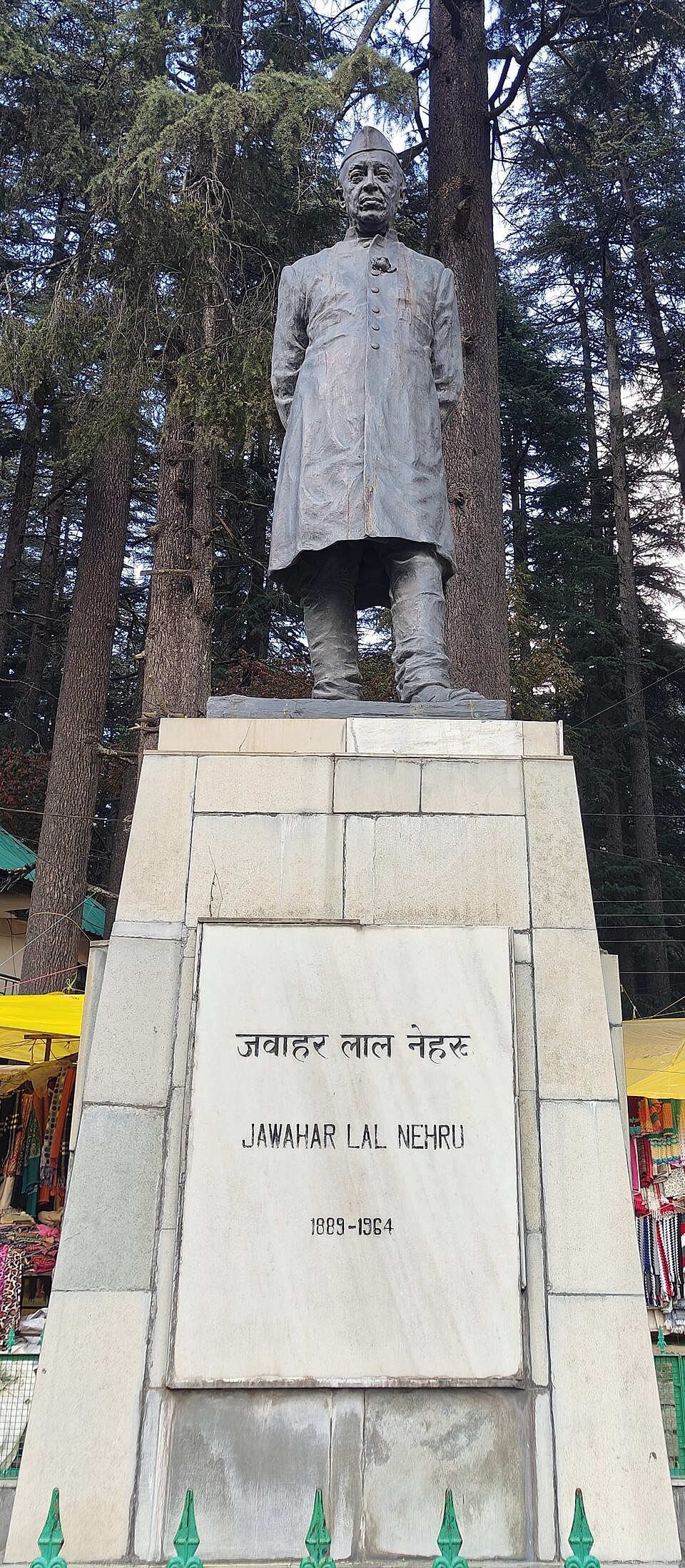
Betray, no — extended it differently. Gandhiji taught me everything about dignity and courage, and I loved him as a spiritual father. But where he saw salvation in the charkha and handicrafts, I saw millions of hungry people whom only science and industry could feed. A country that masters neither steel nor knowledge remains at the mercy of others. I created the IITs to train our engineers, launched the five-year plans, raised great dams that I called the temples of modern India. It is not to despise the village to bring it electricity and schools. Bapu and I were walking toward the same free India; we simply did not take the same path.
I raised great dams that I called the temples of modern India.
—Those socialist-inspired five-year plans, that vast public sector — where does your conviction that the state must plan everything come from?
From Cambridge, no doubt, where I encountered Fabian socialism, the idea that you transform a society through law and reason rather than blood. I saw the misery of our countryside and could not believe that the market alone would heal it. A people emerging from two centuries of colonial plunder had no bourgeoisie capable of building everything; the state had to take charge of steel, energy, and large factories. I wanted a mixed economy: neither wild capitalism nor the dictatorship of the proletariat. Democracy and planning were to walk together — that was my gamble, perhaps my naivety. But I preferred the error of a free man to the success of a tyrant.
I preferred the error of a free man to the success of a tyrant.
—At Bandung, in 1955, with Nasser and Sukarno, you refused to choose between Washington and Moscow. Is that not an untenable position?
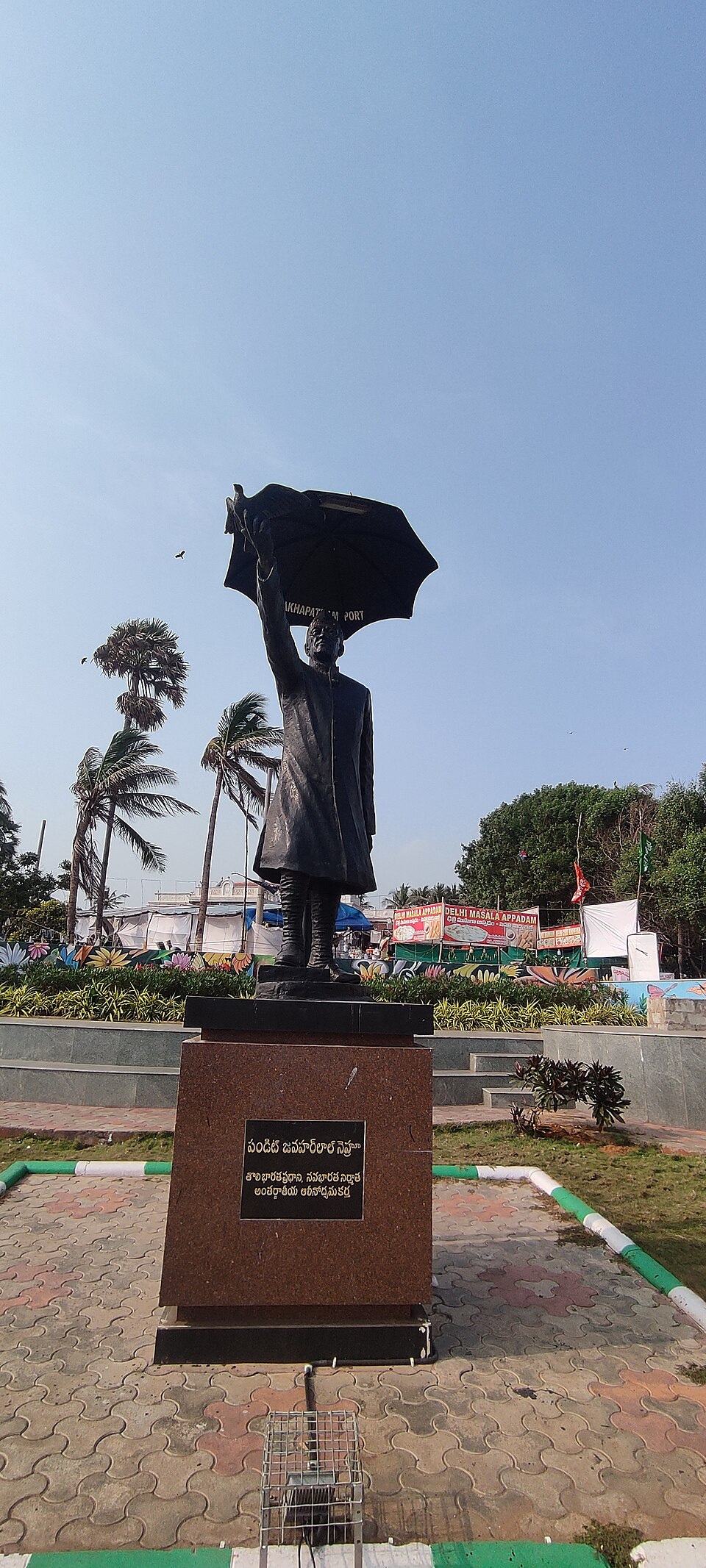
I have been reproached enough for it, and yet I believe it the most dignified. Two blocs were dividing the world and summoning every new nation to kneel right or left. Why should India, barely freed from one master, give itself another? Non-alignment is not the neutrality of the coward; it is the refusal to sell our judgment. At Bandung, twenty-nine nations of Asia and Africa discovered they could speak with their own voice. We formulated with China the five principles of Panchsheel — respect for sovereignty, non-aggression, coexistence. The Third World ceased to be an object of history and became an actor. A poor man has the right to an opinion without asking the rich for permission.
Non-alignment is not the neutrality of the coward; it is the refusal to sell our judgment.
—But China, to whom you extended your hand with Panchsheel, attacked us last year in the Himalayas. Did your trust not blind you?
You touch my deepest wound, Indira, and I will not flinch. Yes, I believed that an understanding between two old civilizations was better than distrust of arms. I signed Panchsheel in good faith, and that good faith was betrayed on the icy peaks of the Himalayas. Our poorly equipped soldiers paid for my optimism. A statesman has no right to dream so much as to forget borders. I will carry this wound to the end — it has tarnished what thirty years of struggle built. But would I therefore renounce peaceful coexistence? No. A betrayal does not prove that peace is folly; it proves that peace must be defended with open eyes.
A statesman has no right to dream so much as to forget borders.
—Every morning, in the garden, I see you slip a red rose into your buttonhole, just as grandfather Motilal did. What does this habit hold for you?
A link to your grandfather, first — he wore his with that princely elegance I so admired as a child. The rose is a little piece of him that I carry to every council and conference, from New York to Moscow. But it is also a lesson I give myself: even in the midst of the gravest affairs, one must keep a part of beauty and freshness within. A man who can no longer marvel at a flower in the early morning has already lost something of his humanity. Power dries the soul, Indira; this rose is my way of staying tender. Journalists see it as coquetry — in truth, it is my discipline of the heart.
Power dries the soul; this rose is my way of staying tender.
—And this white sherwani you never take off, whose collar now bears your name — why this uniform-like simplicity all your life?
Because clothing speaks before you even open your mouth. When we were activists, the white topi and the sherwani declared our belonging to the Congress, our refusal of the colonizer's attire. Educated in England, I could have worn the English suit I knew so well — but what message would that send to a people we wanted to uplift? White is simplicity, and that simplicity is a political language as much as a personal taste. A leader must resemble his own people without ever descending to vulgarity. I like that this collar is straight and neat: it keeps a man upright. They tell me it is beginning to bear my name elsewhere in the world; may it above all carry the idea of an India that stands tall, dignified, and unborrowed.
White is simplicity, and that simplicity is a political language.
This imaginary interview was generated by artificial intelligence from sources documented in Jawaharlal Nehru's profile. It dramatises what the figure might have said based on what we know about them, but does not constitute attested historical testimony. For primary sources and factual documentation, refer to the full profile.