Imaginary interview with Jawaharlal Nehru
by Charactorium · Jawaharlal Nehru (1889 — 1964) · Politics · Society · 6 min read
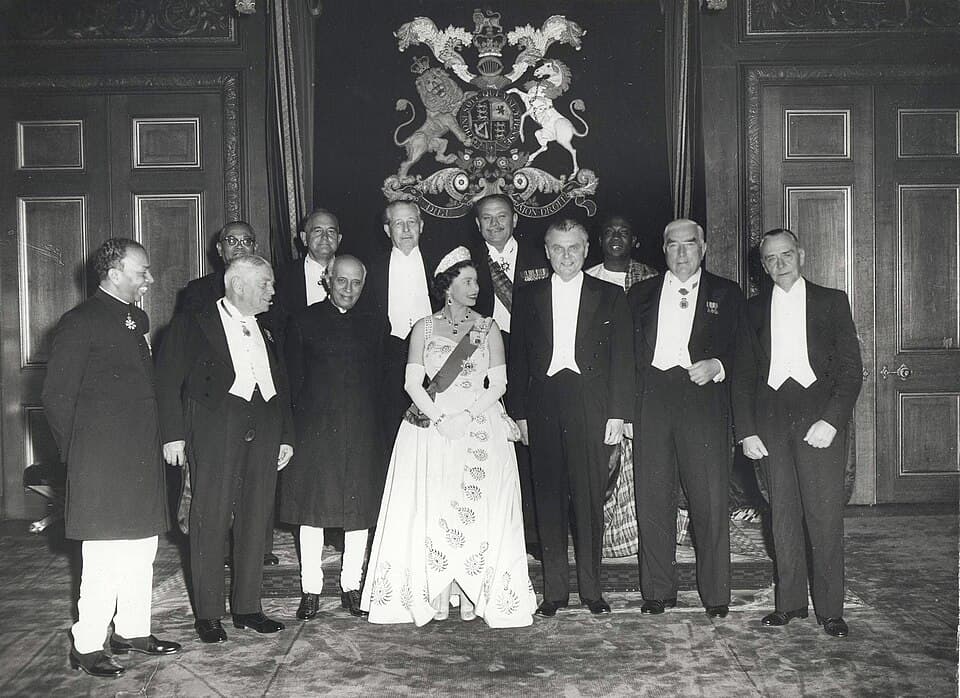
New Delhi, a morning in the late 1950s. In the garden of Teen Murti Bhavan, among the rose bushes he tends himself, the man in the white sherwani agrees to set aside his correspondence and remember aloud. A red rose, always, in his buttonhole; and behind him, seventeen years of carrying India in his arms.
—The night of August 14-15, 1947, remains in everyone's memory. What was going through your mind at the moment you began to speak at midnight?
It was the night of August 14-15, 1947. At Parliament, precisely at midnight, I felt that silence itself held its breath. I said what I had carried for years in prison: 'At the stroke of the midnight hour, when the world sleeps, India will awake to life and freedom.' On All India Radio, millions of ears were glued to sets, in villages without electricity and in palaces. We had made a tryst with destiny many years earlier, and the hour had come to keep our pledge. But I harbored no illusions: freedom is not an end, it is a door. Beyond it, everything had to be built, and already, at the borders, blood flowed while we celebrated.
Freedom is not an end, it is a door.
—How did this night of celebration coexist with the tragedy of Partition?
One imagines that night as pure joy. It was, and yet I have never known such a mourned happiness. While the crowd danced before Parliament, trains laden with the dead crossed the Punjab in both directions; hundreds of thousands of people — Hindus, Muslims, Sikhs — perished on the roads of exodus. Gandhi, for his part, was not in Delhi: he was fasting in Bengal to stop the killings, refusing to celebrate an independence born of a rift. That night I understood what governing would mean: holding together a country that everything threatened to break. A secular India, where temple and mosque would have their place under the same sky — that was the silent vow I made to myself, deeper even than the words spoken at midnight.
—How does one write a complete history of India without a library, from the depths of a cell?
At Ahmadnagar Fort, between 1942 and 1945. The British had thrown us there, the entire Congress committee, after the call to quit India. Nine times they imprisoned me — nearly nine years of my life behind bars. But a cell, you see, is a curious schoolmaster: deprived of any book, I had to write The Discovery of India from memory, questioning five thousand years of civilization as one questions an old friend. I sought that invisible thread that holds together so many languages, gods, castes. India, I noted in my makeshift notebooks, is 'a bundle of contradictions held together by strong but invisible threads.' Those pages blackened by hand were my true escape.
—Before that great book, there were letters. Why tell the whole world to your daughter from prison?
Long before The Discovery of India, there was the ink and paper of Naini prison, between 1930 and 1933. I wrote to my daughter Indira, then a child, not to tell her about India alone, but the history of the whole world: Egypt, Greece, China, the revolutions of mankind. One hundred and ninety-six letters that became Glimpses of World History. A locked-up father has only his words to hold his child's hand from afar. I wanted her to understand that our struggle was not a local accident, but a chapter in an immense human adventure. I did not know, as I traced those pages, that I was perhaps shaping the one who would one day in turn bear the burden of governing.
—You spoke of dams as 'the temples of modern India.' Why this sacred vocabulary for engineering works?
When I inaugurated our first great dams, I dared to call them the temples of modern India. I was reproached for it, almost as if it were blasphemy. But a people hungry for bread and light does not feed on prayers alone. I wanted to endow India with a scientific brain: between 1951 and 1959, we founded the IITs, those institutes of technology where the engineers of a nation that would no longer beg for its steel or its knowledge would be trained. My Five-Year Plans, inspired by a Fabian socialism breathed at Cambridge, aimed at a mixed economy, with a public sector strong enough to build what the market alone would never have built. To industrialize, for me, was another way of conquering independence.
A people hungry for bread and light does not feed on prayers alone.
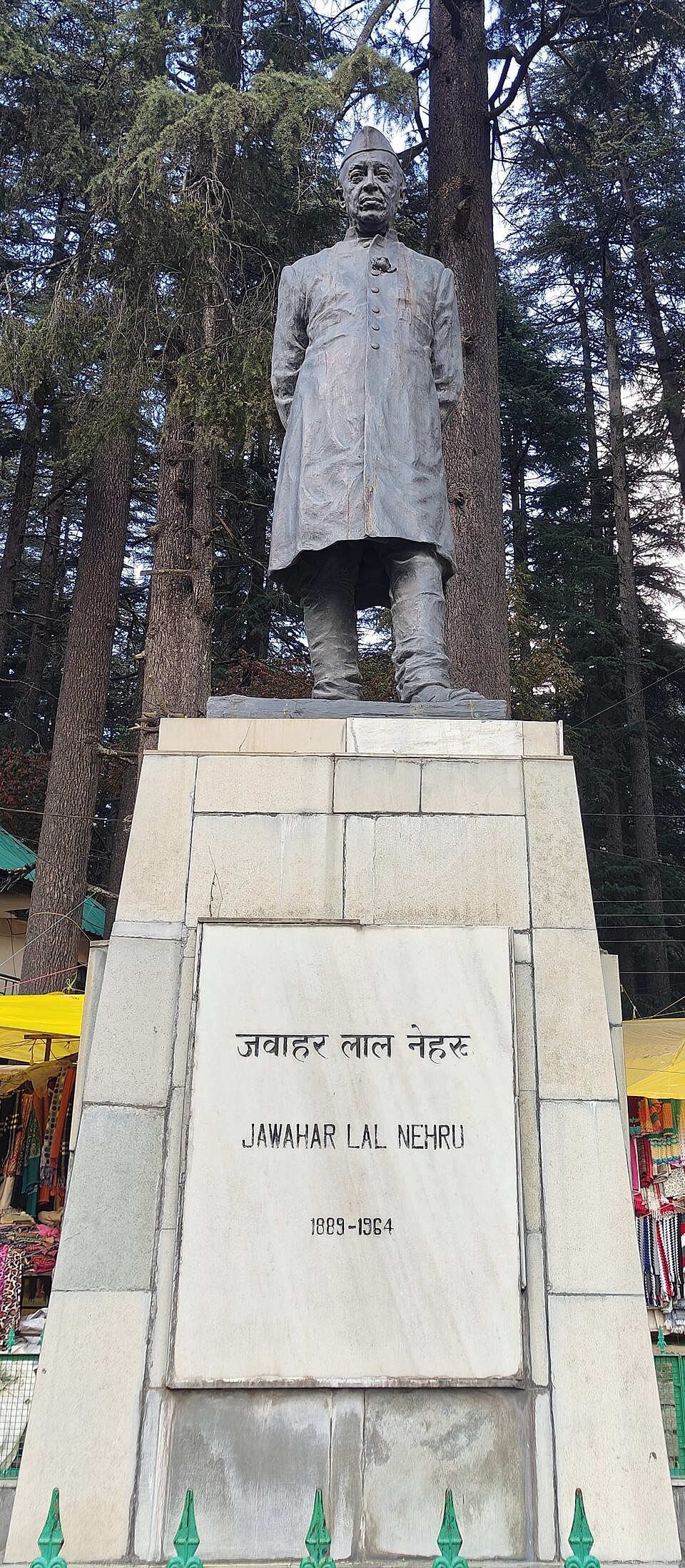
—On what fundamental points did your vision of India diverge from Gandhi's?
I loved Gandhi as a son loves his father, and yet we did not dream of the same India. He saw salvation in the village, in the charkha — the spinning wheel — and handicrafts; he mistrusted the machine as an idol from the West. I, educated in England, could not conceive of lifting three hundred million people out of poverty without factories, without science, without great works. I kept a spinning wheel near me, out of loyalty and affection, but my heart beat for turbines. Our quarrels were never ruptures: it was the dialogue of two loves for India, one bent over its ancient soul, the other reaching toward its future. I believe both are needed to make a nation.
—What did the Bandung Conference of 1955 mean to you?
April 1955, Bandung, Indonesia. Twenty-nine nations of Asia and Africa gathered for the first time — peoples who, the day before, existed on maps only as colors of empires. There were Nasser, Sukarno, Zhou Enlai. We affirmed something simple and immense: the formerly colonized had not broken one chain to immediately put on another. Refusing to choose between Washington and Moscow was not tepid neutrality — it was claiming the right to think for ourselves. That day, what would be called the Third World ceased to be an object of history and became an actor. I returned convinced that an awakened Asia would soon weigh with all its might on the balance of the world.
The formerly colonized had not broken one chain to immediately put on another.
—How did you defend non-alignment against those who saw it as a cop-out?
In 1954, I signed the five principles with China — the Panchsheel: mutual respect for sovereignty, non-aggression, non-interference, equality, peaceful coexistence. I firmly believed that between two ancient civilizations finally free, reason would prevail over force. Non-alignment was nothing like diplomatic cowardice: in a world split into two armed-to-the-teeth blocs, refusing both camps was the most courageous act possible. We even chose to remain in the Commonwealth while becoming a republic, in 1950 — proof that one can keep ties without wearing chains. I will not hide from you that the trust placed in my northern neighbor cost me dearly; the history of nations is harsher than that of principles.
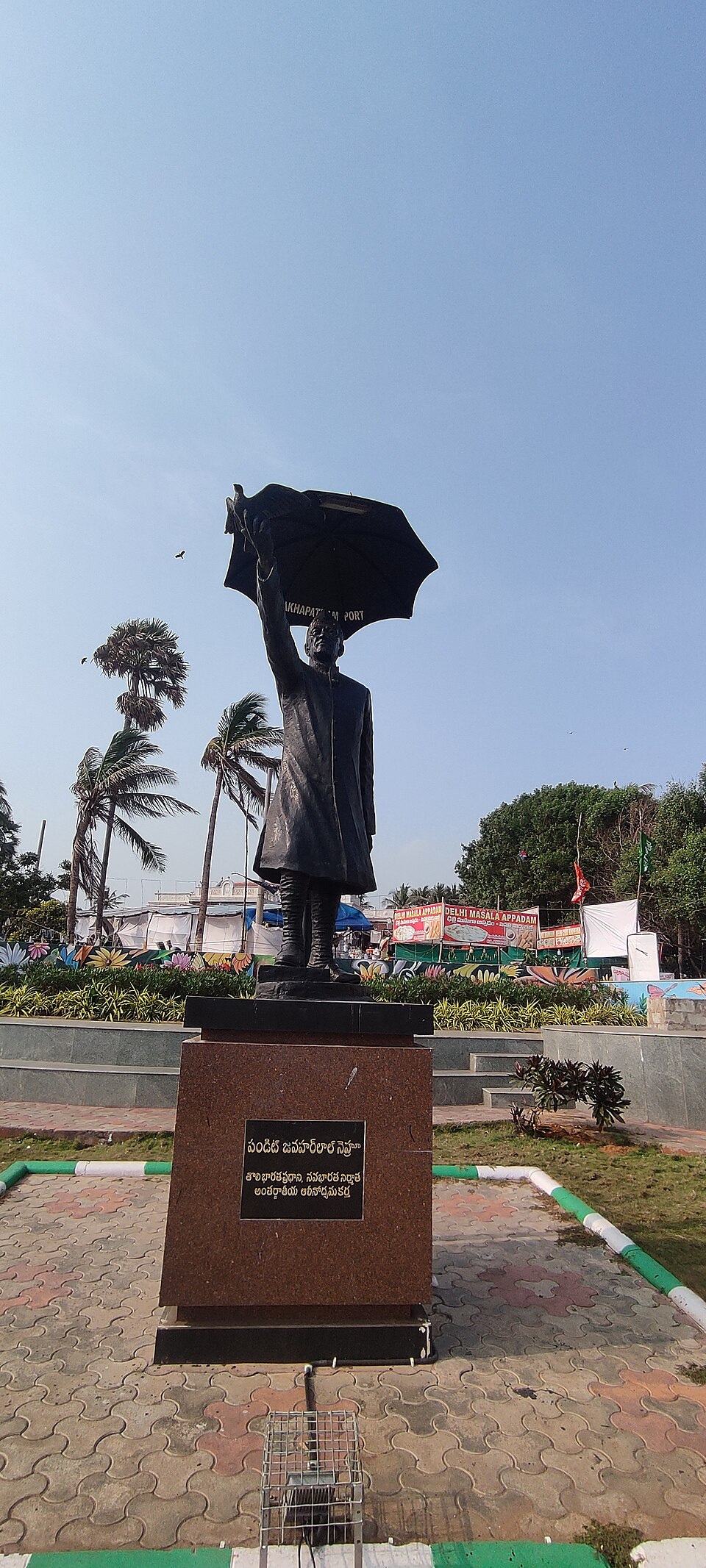
—You have always been seen with a red rose in your buttonhole. What did this daily gesture mean?
Ah, the rose. Every morning, at Teen Murti Bhavan, I slip one, red and fresh, into the buttonhole of my sherwani. It is a habit I inherited from my father, Motilal, a refined man to his fingertips. Children lined along the roads sometimes see it as a magic sign; diplomats, in New York and Moscow, as a coquetry. For me, it is something else: amid Five-Year Plans, telegrams, and border crises, this flower reminds me that one does not govern only with steel and statistics. In the evening, when I tend my rose bushes in the garden at sunset, I seem to find again the part of me that politics will never quite devour.
One does not govern only with steel and statistics.
—Your sherwani and the white Congress cap have become symbols. What message did these clothes carry?
This long white coat buttoned to the collar, my sherwani, and the white topi — the cap we men of the Congress wore like a uniform of disobedience. Under the British, this headgear was a visible challenge: to wear it was already to refuse. I am told that abroad they now call this straight collar the 'Nehru collar,' though it is simply that of my country. It makes me smile: I never sought to start a fashion, only to dress as an Indian among Indians. A garment is never innocent; it tells which world one belongs to. Mine affirmed, without a word, that India no longer had to borrow its clothes from anyone.
—After so many years in power, how would you define the man you have become, between East and West?
People think I am all of a piece; I am a cracked man. I once wrote, in my Autobiography, a sentence I have never disowned: 'I have become a queer mixture of the East and the West, out of place everywhere, at home nowhere.' Cambridge gave me reason, English books, a taste for doubt; India bequeathed me its immemorial soul, its rivers, its crowds. I governed with this division lodged inside me. But perhaps it took precisely such a man, neither entirely from here nor entirely from elsewhere, to build a nation faithful to its five thousand years yet resolutely turned toward science. My contradiction may have been my only virtue as a statesman.
People think I am all of a piece; I am a cracked man.
This imaginary interview was generated by artificial intelligence from sources documented in Jawaharlal Nehru's profile. It dramatises what the figure might have said based on what we know about them, but does not constitute attested historical testimony. For primary sources and factual documentation, refer to the full profile.