Imaginary dialogue between Théodore de Bèze and Jean Calvin
by Charactorium · Jean Calvin (1509 — 1564) · Spirituality · 5 min read
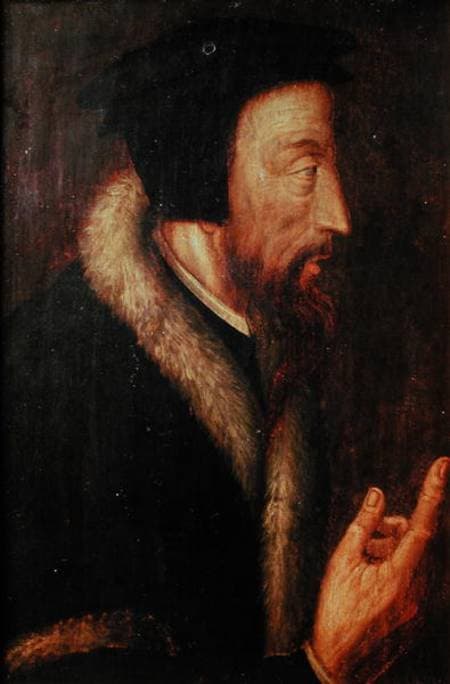
It is in the modest house that the city of Geneva puts at his disposal, near St. Peter's Cathedral, that Théodore de Bèze comes to sit at the bedside of his master in this late winter of 1564. Pale light falls on the worktable cluttered with manuscripts, and outside still echoes the bell that once called the reformer to the pulpit. The two men have known each other since Lausanne and Strasbourg; Bèze knows that Calvin's strength is failing and that he will soon have to take up the torch. He comes with the gravity of the disciple who wants to gather, before it is too late, what his master has never confided to the public.
—Master, before Geneva, before all this, there was the flight. Do you remember that moment when you ceased to be an obedient son of Rome?
Théodore, you touch upon the secret fold of my life. I was first destined for the Church, then my father turned me toward the law, and it was at Orléans and Bourges, among the evangelical humanists, that God began to open my eyes. I cannot tell you the exact day: it was, around 1533, what I have called my sudden conversion. God tamed my heart, too hardened for my age, and made it docile. I was not seeking this rupture; I would even have fled it. But once the right knowledge of His word had seized me, it was no longer possible for me to remain where truth was smothered under the superstitions of men.
I was not seeking this rupture; I would even have fled it.
—It is said that after the Affair of the Placards, in 1534, you had to travel under another name. Was that not a burden on your conscience?
The name I bore then, Charles d'Espeville, was only a veil thrown over the body, not over the soul. When the placards were posted even on the door of King Francis I's chamber, fury fell upon all who were suspected of the Gospel. I saw brothers burned, and I had to flee Paris like a criminal. But know this: hiding from men is not hiding from God. Later, in the preface addressed to the king, I defended those falsely accused of rebellion and sedition. For we were not seditious: we only wanted to serve God according to His word. The false name protected my life; my pen, however, never lied.
Hiding from men is not hiding from God.
—You have often told me how Farel stopped you. In 1536, you were only to spend one night here, on your way to Strasbourg, were you not?
One single night, yes, I swear to you. I was but a passing traveler, young and eager for studious retreat; I dreamed of a hidden life, reading and writing in peace. And then Guillaume Farel pounced on me. When he learned that I wanted to continue my journey, he did not plead with me: he threatened me. He called down God's curse upon me if I preferred my studies to the help of His Church in peril. I was terrified, as if God had seized me by the hand from on high. I stayed. What I considered a detour became the beginning of everything. Man proposes his rest; God assigns him his battlefield.
Man proposes his rest; God assigns him his battlefield.
—Then came the trial: the expulsion of 1538. How did you experience this rejection, you who had given so much to this city?
Driven out, Farel and I, like troublemakers! The city authorities did not want to bend their discipline under that of the Gospel, and I confess I felt almost a guilty relief. I went to Strasbourg, where Martin Bucer did me more good than I can say, and where I led the church of French refugees. Those were three years of maturity: I married Idelette there, I learned to govern a congregation without the fury of my early days. So when Geneva recalled me in 1541, I trembled to return; there is no place in the world I dreaded more. But my will was not my own; I offered it as a sacrifice to the Lord, and I came back.
There is no place in the world I dreaded more.
—Let us speak of your great book. The Institutes of the Christian Religion grew throughout your life. What were you seeking, in constantly revising it?
When I published the first Institutes in Basel, in 1536, it was but a small catechism to instruct the simple and defend the persecuted. But the material grew with me, like a tree with its years. I returned to it, I ordered, I clarified, until the French edition of 1560 where everything finally holds together. My aim was never to produce a work of eloquence, though I loved our language; it was to lead the reader to the pure knowledge of God and of himself. For all right knowledge of God is drowned and stifled in us by our ingratitude. My book is but a lamp held before Scripture, so that no one may stumble in the darkness that Rome has fostered.
My book is but a lamp held before Scripture.
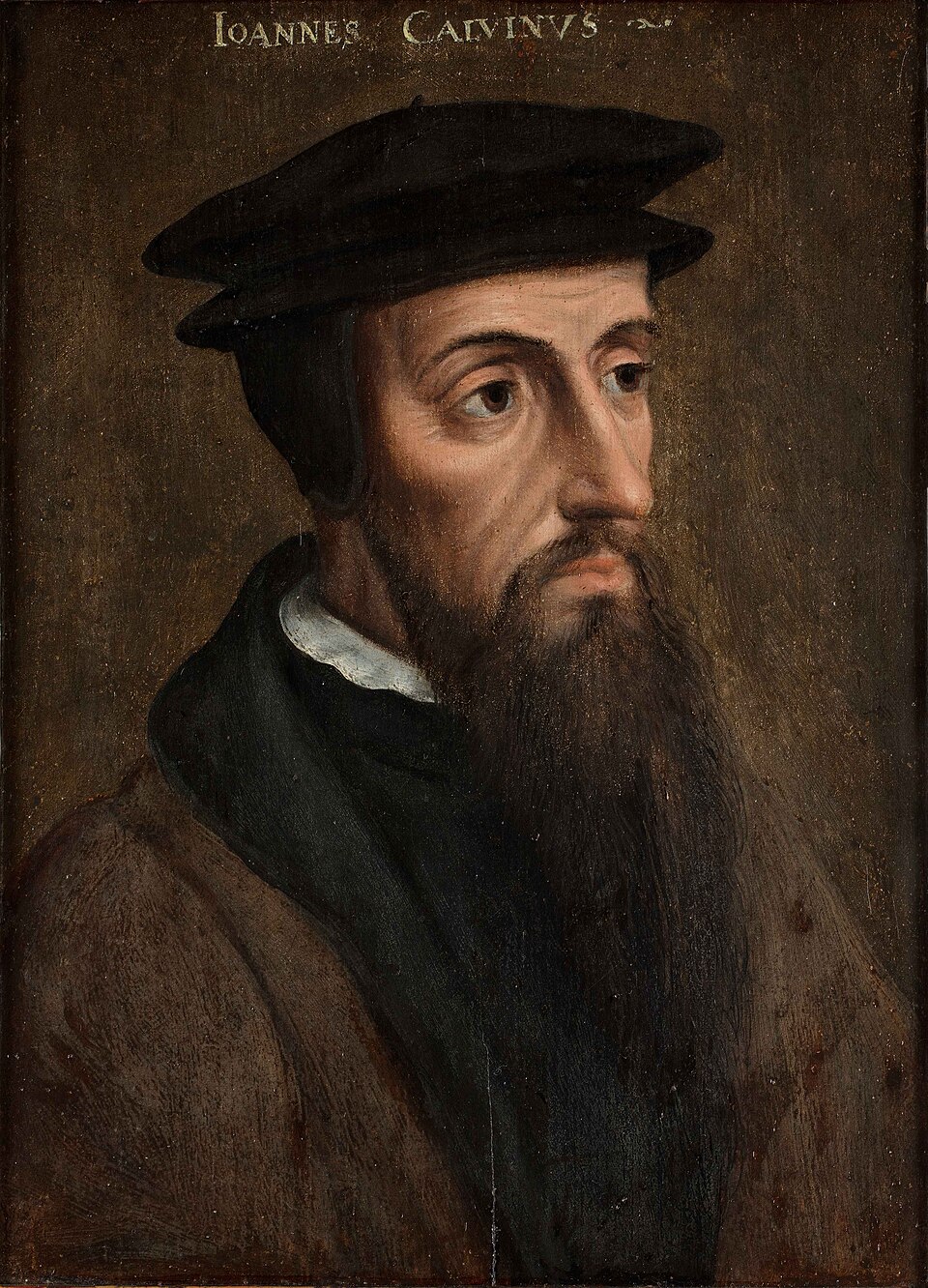
—You mounted the pulpit almost every day. You, whose body was so ill — where did this obstinacy to preach without respite come from?
You who have seen me climb the pulpit of St. Peter's short of breath, you know what it cost me. Migraines, fevers, gout, these ailments that still gnaw at me today: nothing was to interrupt preaching. I followed the lectio continua, explaining the Scriptures book after book, verse after verse, without choosing passages according to a calendar. Thus my sermons on Job, one hundred and fifty-nine in all, where I sought to make God's providence heard even in affliction. For the people do not need the preacher's inventions; they hunger for the whole word. As long as God lent me breath, I had no right to withhold it from them.
The people do not hunger for the preacher's inventions; they hunger for the whole word.
—Upon your return, in 1541, you imposed the Ecclesiastical Ordinances and the consistory. Many saw it as excessive rigor. Do you regret it?
Regret it? No, Théodore, never. A church without discipline is a body without nerves. In the Ordinances, I established the four offices that our Lord instituted: pastors, doctors, elders, deacons. And the consistory, made up of pastors and elders, watches over morals not to tyrannize, but to preserve the flock from corruption. I have been accused of wanting to rule; I only wanted to subject Geneva to God's rule, myself first. The dark robe we wear sufficiently expresses our rejection of pomp. Believe me: the freedom my adversaries claimed was merely the license to sin without restraint. A city that fears God is better than a city that amuses itself.
A church without discipline is a body without nerves.
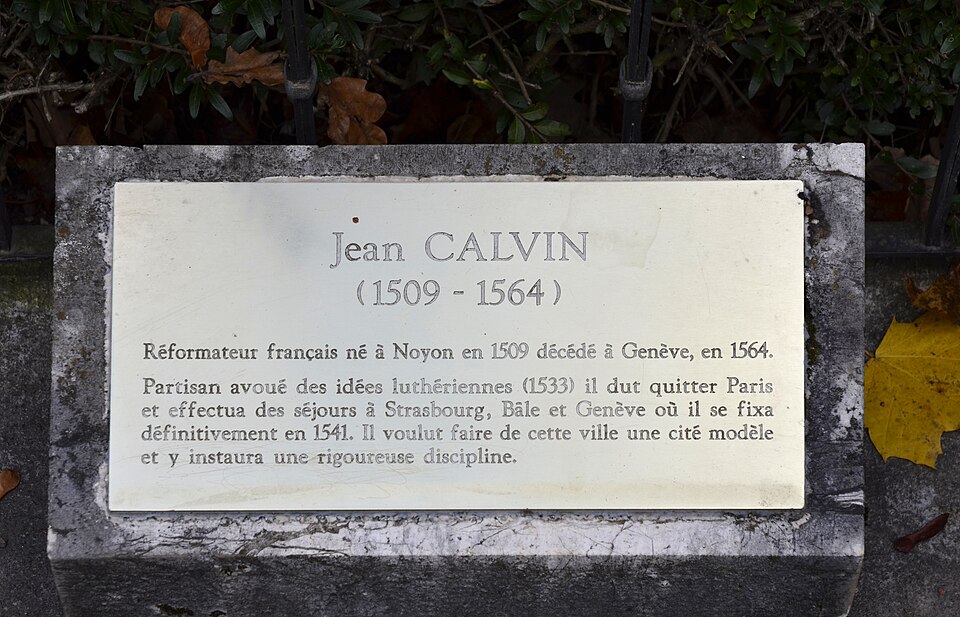
—The Libertines fought you for years. When they were defeated in 1555, did you feel triumph, or weariness?
Neither, to tell the truth — rather the relief of a long struggle. These men invoked the old liberties of the city to reject the yoke of discipline, and for years they disputed even my right to admit or exclude believers from the Lord's Supper. It was not my person they targeted, but the authority of the Church over consciences. When their party collapsed, I did not gloat: a Christian does not triumph over the fall of his enemies, he gives thanks that truth remains. From then on I was able, without hindrance, to found the Academy in 1559 and send pastors as far as France. Rest is never more than a respite God grants to work further.
A Christian does not triumph over the fall of his enemies.
—Master, I must ask you: Servetus, in 1553. His death still divides our people. Would you do what you did again?
You pose the question that many whisper, and I will not flee it. Michael Servetus denied not a minor point: he rejected the Trinity itself, and he spread his poison throughout Europe. When he came to Geneva, the magistrate judged him according to the city's laws and condemned him. I approved that he be cut off; I would only have wished a less cruel death than the stake. Understand this well: it was not about avenging a personal offense, but about defending God's honor against an obstinate blasphemer. He who poisons souls is more dangerous than he who kills bodies. Those who plead for heresy to be left unchecked do not know the price of truth.
He who poisons souls is more dangerous than he who kills bodies.
—One last thing, Master. You are at the evening of life. What do you want to leave to those who, like me, will continue your task in Geneva?
Théodore, it is to you especially that I speak, for I know on whose shoulders this burden will fall. I confess that I have lived in many miseries, and that all my vices have always displeased God; but by His grace He has forgiven me, and I have faithfully taught His word. Let nothing bend the doctrine; keep the Academy, keep the discipline, keep above all humility before Scripture. Let me be buried without cross or epitaph, in an anonymous grave: I do not want my remains to be venerated as Rome venerates its relics. My name is nothing; the word remains. Stand firm, my friend, the rest belongs to God alone.
My name is nothing; the word remains.
This imaginary interview was generated by artificial intelligence from sources documented in Jean Calvin's profile. It dramatises what the figure might have said based on what we know about them, but does not constitute attested historical testimony. For primary sources and factual documentation, refer to the full profile.