Imaginary interview with Jean Calvin
by Charactorium · Jean Calvin (1509 — 1564) · Spirituality · 5 min read
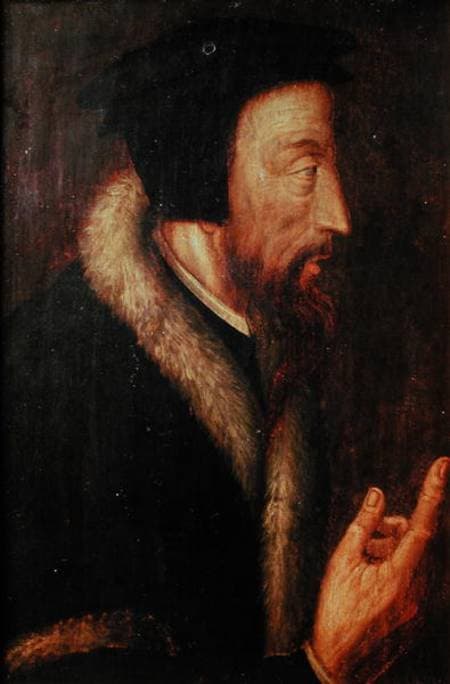
Geneva, autumn 1563. In a modest house in the upper town, a stone's throw from St. Peter's Cathedral, a man exhausted by fever receives his visitor without ceremony, a pile of manuscripts still damp with ink on his work table. He coughs, apologizes for his weak voice, and agrees to look back on a life that was never supposed to linger in this city.
—How did a young man destined for the law end up a fugitive from the kingdom of France?
My father first intended me for the Church, then, calculating better, sent me to study law at Orléans and Bourges. It was there, among the evangelical humanists, that what I call my sudden conversion occurred, around 1533 — God subdued my too-hardened heart at once. Then came October 1534: those placards against the Mass posted up to the door of King Francis. The repression was such that I had to flee Paris in haste. I traveled under the name of Charles d'Espeville, like a man who no longer has a name of his own. When I and mine were accused of sedition and rebellion, I replied not with arms but with a letter to the king, at the head of my Institution: many good people are falsely accused of enormous crimes.
I traveled under the name of Charles d'Espeville, like a man who no longer has a name of his own.
—Do you remember that famous night when you were only supposed to pass through Geneva?
I was heading for Strasbourg, in 1536, and Geneva was only a one-night stop. But Guillaume Farel learned of it. That man came to me and, seeing that I pleaded my studies and my desire for rest, he did not beg me: he almost threatened me, crying out that God would curse my tranquility if I refused to lend a hand to his Church in peril. I was so terrified that I dared not continue on my way. I had not chosen this city; I felt that a hand stronger than mine was nailing me here. I thought I would stay one night; I am still here, twenty-seven years later, and it is here that I will die.
I thought I would stay one night; I am still here, twenty-seven years later.
—Yet this city drove you out once. What did those years of exile bring you?
In 1538, Farel and I were expelled: the city could not yet bear to have its liberties and its communion tables touched. I left for Strasbourg, and there I knew three of the happiest years of my life. I led a congregation of French refugees, I learned a great deal from Martin Bucer, and it was there that I married Idelette de Bure, widow of an Anabaptist I had brought back to the true faith. When Geneva recalled me in 1541, I did not return in triumph, but as one returns to a burden one had thought oneself permitted to set down. I brought in my baggage the Ecclesiastical Ordinances, so that this time the Church might be built on solid foundations.
—You preached almost every day. How would you describe this labor of the pulpit?
In our temples, I had the altar removed to put the pulpit at the center: it is no longer the sacrifice that is looked upon, it is the Word that is heard. I went up to St. Peter's several times a week, and I did not choose my texts according to the feasts of the Roman calendar. I practice lectio continua: we take a book of Scripture and explain it verse by verse, in order, to the end. Thus my one hundred fifty-nine sermons on the book of Job, where I sought, Sunday after Sunday, to make heard how the Providence of God governs even our miseries. Preaching is not seducing; it is opening the text and effacing oneself behind it.
It is no longer the sacrifice that is looked upon, it is the Word that is heard.
—Your Institutes of the Christian Religion keeps growing from edition to edition. What are you trying to do in it?
I published the first Institutes of the Christian Religion at Basel, in 1536, a small book at first, then I revised it, expanded it, translated it into French, up to the edition of 1560. I wanted to order the whole doctrine — the knowledge of God, grace, predestination, the sacraments — so that a simple man might find a sure path therein. For I affirm one thing: no one is so coarse and brutish as not to be touched by some sense of divinity; but this knowledge, our ingratitude stifles in us. With my pen and my inkwell, I have never ceased writing — letters, commentaries on almost all the books of the Bible — so that this buried seed might be revived.
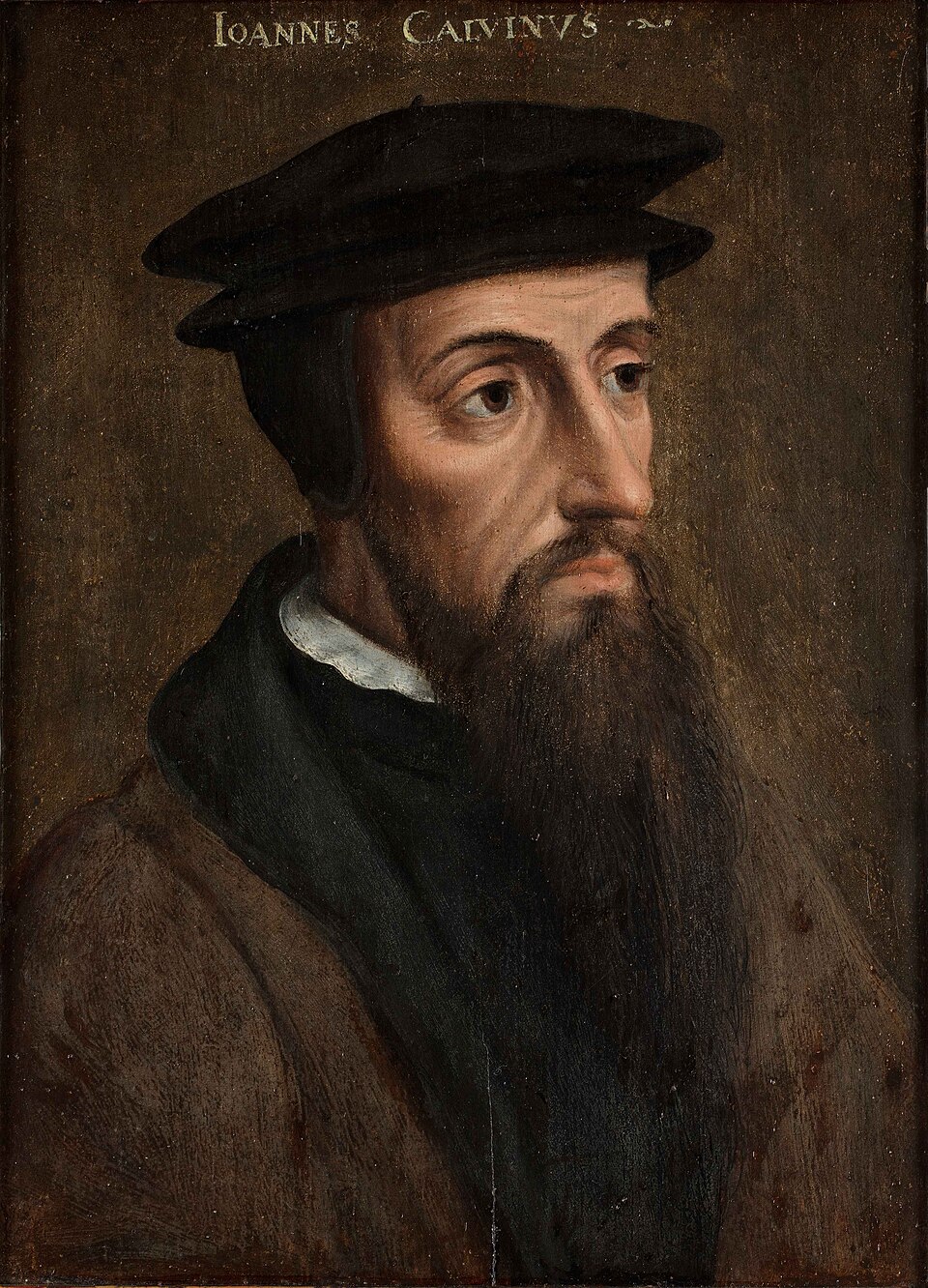
—The consistory you founded monitored even the morals of the inhabitants. Why such discipline?
When I returned in 1541, I imposed the Ecclesiastical Ordinances and instituted the consistory: pastors and lay elders charged with watching over the life of the city. I have been reproached for this rigor. But a Church without discipline is a body without nerves. I distinguished four orders that our Lord instituted for the government of His Church: pastors, teachers, elders, deacons. Card games, dances, drunkenness — I combated them not out of hatred of joy, but because a community that calls itself reformed and wallows in disorder lies to its profession. Holiness is not an ornament; it is the mark of the elect.
—The execution of Michael Servetus, in 1553, still weighs on your reputation. How do you justify it?
Michael Servetus came to Geneva in 1553, he who denied the Holy Trinity and infant baptism, he whom even the Catholics wanted to burn. He was judged by the City Council, not by me alone, and condemned for heresy. I gave my consent to his condemnation — I would have wished a death less cruel than the stake, and I say so. I know I am blamed for it, and that some are beginning to speak of toleration as a virtue. But to let a man poison the souls of an entire people, is that not an even greater cruelty? In those years, I also had to combat the Libertines of the city, who were not defeated until 1555. The city hung by a thread.
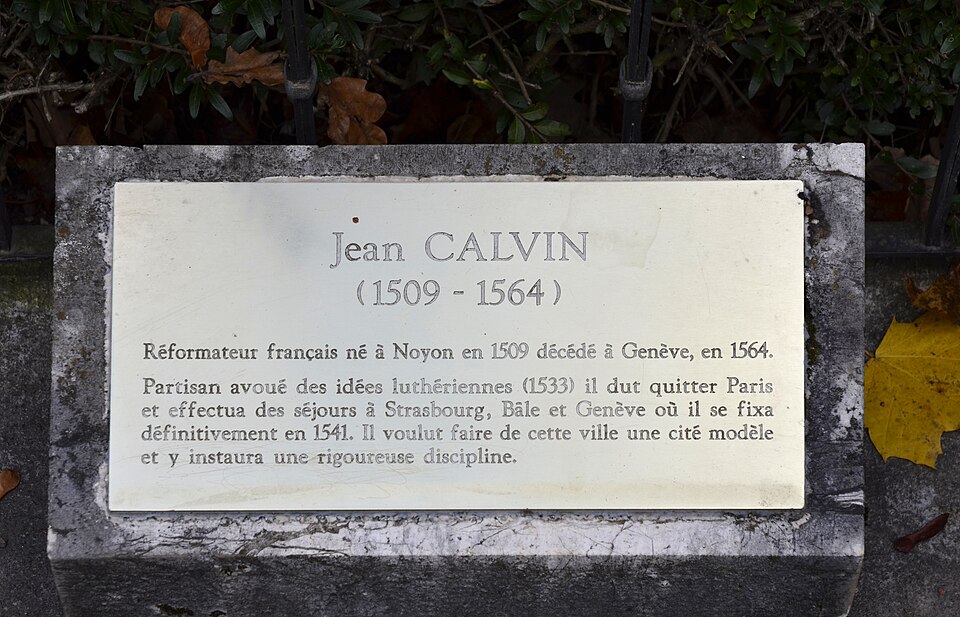
—You are described as a man of great austerity. What did you put on your plate, how did you live?
I live in a modest house that the city has lent me: a few pieces of furniture, a work table, and above all books. I wear the black robe of the pastor, without embroidery or pomp — this darkness is not sadness, it is a refusal of the ostentation in which the clergy of Rome delights. My table is frugal: bread, vegetables, sometimes a little fish. In these last years, my ruined stomach often tolerates only one meal a day. This is not only virtue; it is necessity. I do not partake of the amusements that the consistory condemns, and my evenings are spent rereading my manuscripts with Théodore de Bèze. A retired life, in accord with what I preach.
—Your health has long tormented you. How did you bear such a burden in such a sick body?
My body is a battlefield: migraines that never leave me, gout, stomach ailments, and this cough that now brings up blood. I am fifty-four years old and I look much older. And yet I have never written, preached, or answered letters coming from all over Europe so much. How? Because it is not my strength that works. I confess that I have lived in many miseries, and that all my vices have always displeased God; but by His grace He has forgiven me, and I have faithfully taught His Word. When I am laid in the earth, I want an anonymous grave, without cross or epitaph. Let no one worship the man: that would be falling back into the cult of relics that I denounced.
Let no one worship the man: that would be falling back into the cult of relics that I denounced.
—What do you wish to leave to those who come after you, in this Academy you founded?
In 1559, I founded the Academy of Geneva, to train the pastors who are then sent throughout France and beyond. That is, perhaps, my most lasting work: not a book, but men. The Catechism I wrote in 1542, in the form of questions and answers, already instructs children in all our churches; the psalter sung by the faithful puts the Word in their mouths. If I could imagine being read in a century, I would not want my name to be remembered, but the doctrine: that Scripture alone be authoritative, and that the glory go to God, not to the poor servant of Noyon that I am.
This imaginary interview was generated by artificial intelligence from sources documented in Jean Calvin's profile. It dramatises what the figure might have said based on what we know about them, but does not constitute attested historical testimony. For primary sources and factual documentation, refer to the full profile.