Imaginary dialogue between Nicolas Boileau and Jean de La Fontaine
by Charactorium · Jean de La Fontaine (1621 — 1695) · Literature · 5 min read
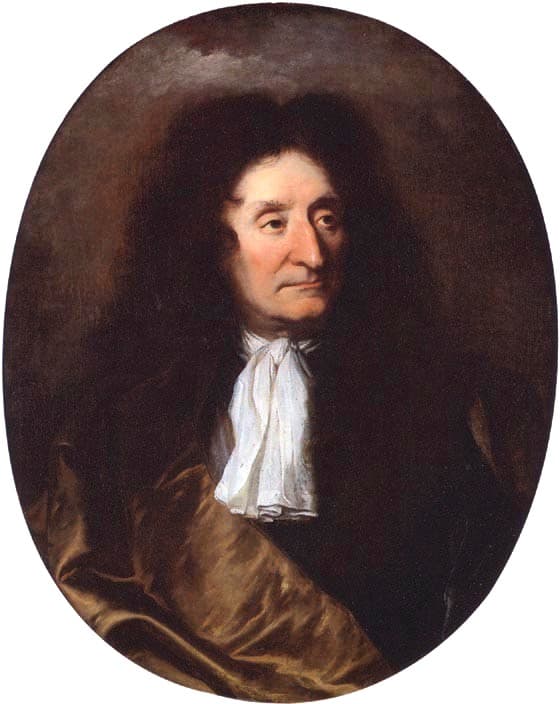
It is in a room cluttered with books at Madame de La Sablière's townhouse, rue Neuve-des-Petits-Champs, on a winter evening in 1685 that I find my old companion Jean de La Fontaine. A candle flickers on a desk where a half-crossed-out sheet lies, and he daydreams, half-absent, as is his habit. We have known each other since our dinners with Molière and Racine, and I come this evening to press him a little, as a friend who has always doubted that one could write so well without revising.
—My dear Jean, you write in your dedication to the Dauphin that you use animals to instruct men. Why on earth this childish wrapping?
You who craft your verses like a goldsmith, Nicolas, you know the difficulty: man hates to be lectured to his face. Put a wolf, a lamb, a fox on stage, and there he is, laughing, softening, recognizing himself without knowing it. The appearance is childish, I confess; but these childish things serve as a wrapping for important truths. Aesop and Phaedrus understood this before me; I merely embroidered their cloth in my own way. When the reader closes the book, the fable is forgotten and the moral remains, lodged in him like a gentle thorn. That is my whole art: to make the remedy go down with honey.
The appearance is childish; but these childish things serve as a wrapping for important truths.
—In your preface to the sixth book, you distinguish the body and soul of the apologue. Explain this anatomy to me, who weighs every word.
It is the simplest thing in the world, and the most delicate at the same time. The apologue is composed of two parts: the body is the fable, the little story, the cicada who sings and the ant who refuses; the soul is the moral, what one draws from it for one's own conduct. A body without a soul is but a children's tale; a soul without a body is but a sermon no one listens to. The whole secret is to marry them so well that the seam is invisible. You, Nicolas, preach art in your austere verses; I prefer that the lesson enter through the door of pleasure. Each of us serves the same mistress in his own way.
The body is the fable; the soul, the moral.
—Remember 1661, Jean. Fouquet fallen, you composed that Elegy to the Nymphs of Vaux. Were you not afraid for yourself, defying the king like that?
I was afraid, yes, but I would have been more ashamed to remain silent. Fouquet had extended his hand to me when I was nothing, had commissioned The Dream of Vaux, had seated me at his table under the shades of Vaux-le-Vicomte. To see him struck down in one blow, thrown into a dungeon, and to turn my back at once like so many others? That, I could not do. I begged the nymphs to soften Louis's courage, to gentle him if he passed along those banks. The king did not soften; he remembered my loyalty as an offense. I paid dearly for that elegy, for years. But loyalty is not a thing to be bargained over.
I would have been more ashamed to remain silent than to displease the king.
—You know that many at court judged you imprudent. Was this fallen patron really worth compromising your fortune and your years?
Imprudent, I am in everything, you know that better than anyone — I forget my appointments, I lose my way, I sometimes confuse faces. But on this point I was very clear with myself. Fouquet had taste, magnificence, a love of beautiful things; under his roof, at Vaux, I knew my freest years as a writer. A protector is not a garment you take off as soon as it rains. Those who thought me imprudent were calculating their favor; I never knew how to calculate, neither my verses nor my friendships. If it cost me Versailles and the king's coolness, well, I gained the ability to look at myself without blushing. That is a currency that never depreciates.
A protector is not a garment you take off as soon as it rains.
—Confess to me, who have seen you so often elsewhere: is it true that you attended the funeral of a friend without recognizing the deceased?
It is told, and I will not entirely deny it, for I know myself. My mind is forever escaping, Nicolas; while someone speaks to me, I am already with the crow and the fox, or counting the feet of a verse that torments me. The outside world reaches me only in flashes. At the funeral you speak of, I was no doubt occupied with an apologue rather than the deceased, and would have gone home pleased with my day. That passes for foolishness; I call it rather a presence elsewhere. My best fables I found in those absences, walking aimlessly through the streets of Paris, my eye distracted and my ear open nonetheless.
My mind is forever escaping; the world reaches me only in flashes.
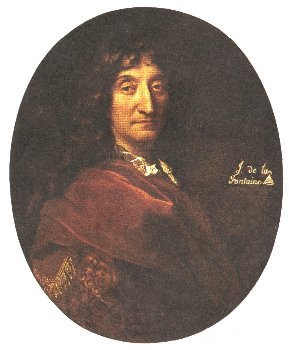
—The King delayed your election to the Academy in 1683, preferring another. How did you bear this royal disdain?
Badly and well at the same time. Badly, because a man does not like to be refused like that, and the wait was long before a seat became free and the king finally consented, last year. Well, because I understood that this coldness dated from Vaux and my Fouquet: Louis forgets nothing, and he was making me pay for an old loyalty. What could I do? I am no courtier; I know neither how to flatter nor how to watch for the right moment. You, who already sit among us, saw me arrive with more relief than triumph. I took the seat as one takes a warm room after a storm, without crying victory. The rancor of kings is patient; mine, fortunately, does not exist.
Louis forgets nothing, and he was making me pay for an old loyalty.
—It has been nearly twenty years that you have lodged with Madame de La Sablière. Tell me, what has this woman given you that the great lords could not offer?
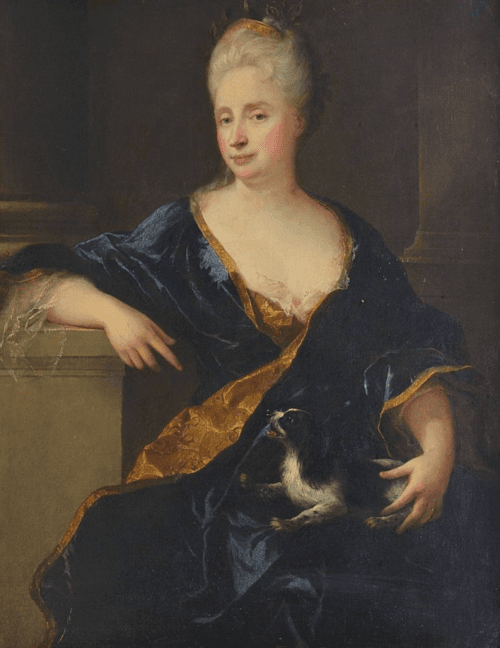
She gave me peace, Nicolas, that rare good for a man who has spent his life depending on others. With Marguerite, I am neither a piece of furniture nor an entertainer: I am at home, in a benevolent disorder of books and manuscripts that she endures without ever tidying up. Her salon brings together the best minds; we talk about Gassendi, about beasts and their souls, about a thousand things that nourish my verses. I dedicated my Discourse to her last year, a weak gift for so many kindnesses refused with modesty. The patronage of the great made me bow my back all my life; hers leaves me straight. It is my most enduring home, and the only one I have never wanted to leave.
The patronage of the great made me bow my back; hers leaves me straight.
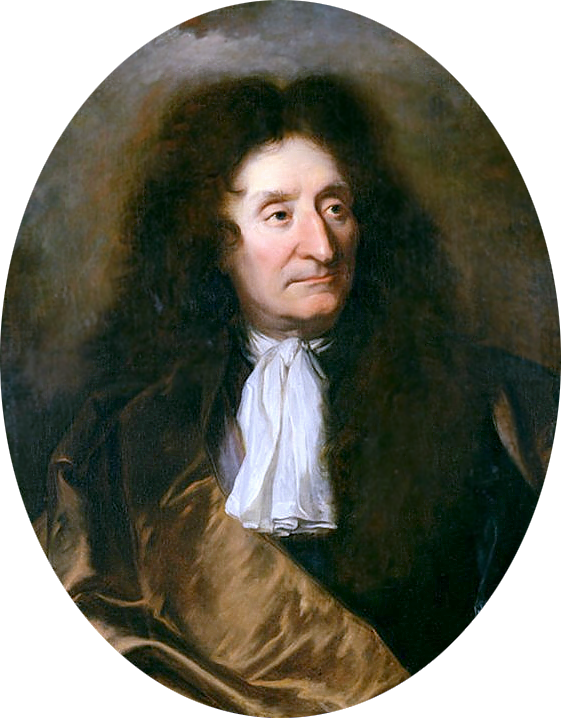
—It is whispered that you live there without a care for tomorrow, even forgetting to eat. Is this the nature of a poet or the wisdom of an Epicurean?
A bit of both, and much happy laziness, I grant you. I rise without haste, I read my Ancients — Horace, Phaedrus — before a frugal meal; a little bread, some cheese, a glass of good wine from my Champagne, and I am content. I understand nothing of fortune, and it is Marguerite who sees to it that I neither ruin myself nor let myself die of hunger in the middle of a verse. The Epicureans I love seek not debauchery, but tranquility of soul and contentment with little. I made this philosophy my way of living long before I made it my fables. Happiness, you see, fits in a room, a few books, and a faithful friendship.
Happiness fits in a room, a few books, and a faithful friendship.
—Let us speak frankly, as poets. Your Tales inspired by Boccaccio scandalized the Church. Do you regret them, or do you still stand by them?
That is a question only a friend dares ask me point-blank. I will not lie to you: while writing them, I amused myself like a schoolboy, taking from Ariosto, from Boccaccio, from our old Rabelais the liveliest gallantry. The laughter seemed innocent to me, libertinism a matter of wit more than morals. But the Church condemned them, and I feel, as age comes, that these follies weigh more than they please. Today I still half-defend them, out of loyalty to the man I was. Tomorrow, perhaps, I will no longer be so proud of them. A poet is not always of the same opinion as the sinner who inhabits him.
A poet is not always of the same opinion as the sinner who inhabits him.
—You speak of age and the weight of things. Do you fear, Jean, that one day devotion will make you renounce what your pen has written most freely?
I do not know, and that is what troubles me. I have already been through a severe illness, and I felt how the outbursts of youth turn into remorse on the pillow of sleepless nights. If the hour came when I had to choose between my Tales and the repose of my soul, I think I would choose the soul. That surprises you, who have known me so little devout, so quick to laugh at bigots. But the libertine spirit is only a fine summer garment; when winter comes, one seeks a safer coat. Do not judge me too quickly, Nicolas: I am still wholly in my verses and my pleasures. Only I am beginning to hear, from afar, a voice that asks me for an accounting.
The libertine spirit is only a fine summer garment; when winter comes, one seeks a safer coat.
Read further
This imaginary interview was generated by artificial intelligence from sources documented in Jean de La Fontaine's profile. It dramatises what the figure might have said based on what we know about them, but does not constitute attested historical testimony. For primary sources and factual documentation, refer to the full profile.