Kids interview Jean de La Fontaine
by Charactorium · Jean de La Fontaine (1621 — 1695) · Literature · 5 min read
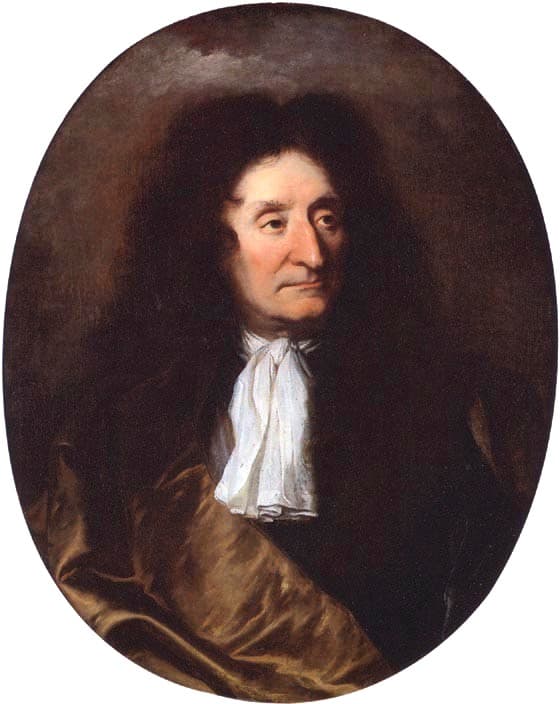
Two twelve-year-old visitors push open the door of an old house in Château-Thierry. Amid a clutter of books and manuscripts, an absent-minded old gentleman looks up. It's Jean de La Fontaine, and he smiles: he hasn't been disturbed in a long time.
—Why do you make animals talk in your stories instead of people?
You know, my child, it's a little bit of magic. If I tell you 'this minister is vain,' you yawn. But if I show you a crow that opens its beak to sing and drops its cheese, then you laugh! And after laughter, you think. I wrote it in my Fables of 1668: I use animals to instruct men. An apologue is that learned word for 'a little story with a lesson': it has a body, the story, and a soul, the moral. The story makes the lesson go down. It's like hiding medicine in jam.
The story is the body, the moral is the soul.
—How did you find all your ideas for fables?
I didn't invent them all, I confess! On my table, I always kept an old collection of Aesop and Phaedrus, two storytellers from Antiquity, Greek and Roman. They had the first ideas long ago. I rewrote them in my own way, with lines of different lengths — that's called free verse, it gives a lively rhythm, like someone speaking. Imagine a musician who takes an old song and makes it brand new. The rest, I found by strolling through the streets, watching passersby argue like frogs.
I took the old stories and made them new.
—What was it like being the friend of a man the king had arrested?
Ah, that cost me dearly. My first patron was Nicolas Fouquet, the Superintendent of Finances. He was rich, generous, he loved poets. I went to his magnificent château of Vaux-le-Vicomte. Then one day in 1661, King Louis XIV had him thrown in prison. Everyone turned their back on Fouquet. Not me. I wrote an elegy, a sad poem, to beg that he be spared. The king never forgot it. Stay loyal to a fallen man, and the powerful make you pay for it for a long time. But I regret nothing.
You know a friend when the other has fallen.
—Were you afraid the king would take revenge on you after that?
A little, yes. In my time, a king could erase you with a single word. Imagine living in a world where one man decides who eats at his table and who stays out in the cold. Louis XIV kept me at a distance for years. His court at Versailles, I barely attended; it was too cold for me there, and I'm not talking about the weather! But you see, I had my verses. A king can chase you from his castle, but he cannot tear away your poems.
A king can close his door, but not erase a poem.
—Did you really want to enter the Académie française, was it important?
It was the great honor for men of letters, yes. The Académie française is the assembly that watches over our language. My friends elected me in 1683. And then, surprise: the king refused to validate it! He preferred someone else. Can you imagine the slap? I had to wait, patient like an old heron by the water, for another seat to open up. In 1684, I finally entered for good. A king's grudge, my child, is long as winter. But water always ends up wearing away the stone.
A king's grudge is long as winter.
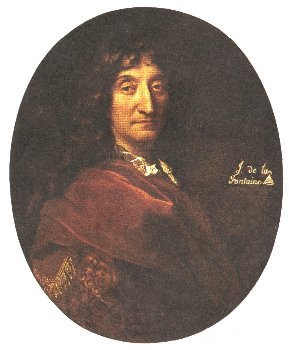
—What was that big quarrel between the Ancients and the Moderns?
A battle of words, but serious! On one side, those who said: 'The best writers are the Ancients, the Greeks and Romans.' On the other, those who replied: 'No! We Moderns today do better.' This quarrel stirred all the salons. I was on the side of the Ancients — naturally, I owed everything to Aesop and the old masters! Imagine two teams squabbling over whether the past was better than the present. I think we learn from both. We stand on the shoulders of those before us.
We always stand on the shoulders of those before us.
—Is it true you lived for twenty years at a lady's house?
Absolutely! A remarkable woman, Madame de La Sablière. She had a townhouse in Paris, rue Neuve-des-Petits-Champs, and she offered me a room for nearly twenty years. It was my true home. In my time, a poet had no money; he lived under the protection of a rich person, in exchange for poems in their honor — that was called patronage. She was more than that: a friend, a witty lady. I dedicated a Discourse to her in 1674 to thank her. My room? A joyful mess of books and papers!
A poet without fortune lives on the roof lent to him.
—What did you eat and how did you live day to day?
Simply, very simply. Bread, cheese, some fruit, and a good wine from Champagne, my region — I insisted on that! I got up without hurrying, read the Ancients in my room, muttered my verses while pacing back and forth. Sometimes, lost in thought, I'd completely forget to eat! Imagine a man talking to himself in the hallway and not noticing he's being called to dinner. That was me. Glory doesn't fill the plate, my child; a good friend, on the other hand, keeps you a place at his table.
Glory doesn't fill the plate; a friend does.
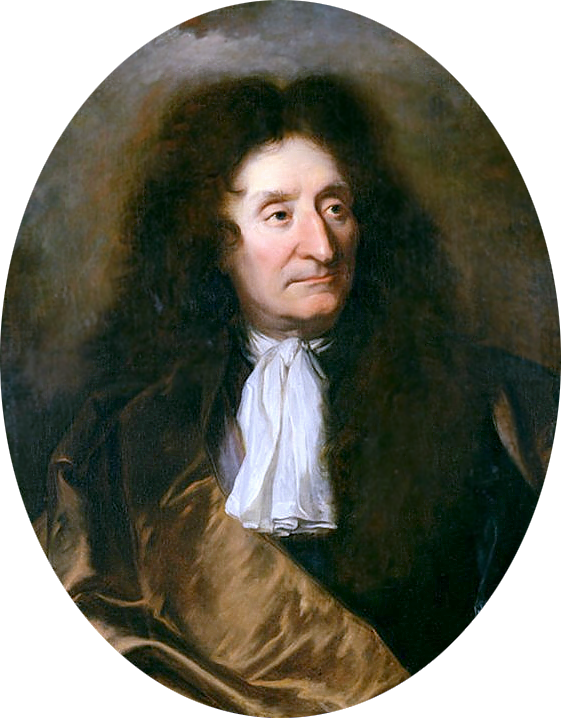
—They say you were super absent-minded, is that true or exaggerated?
Alas, it's true! My head was always elsewhere, in my verses. They say that one day I went to a friend's funeral without even recognizing that it was him, the deceased. And I came back saying I'd had a lovely afternoon! You laugh? You're right. But you see, this absent-mindedness was the price of my craft. While my body walked in the street, my mind was making wolves and lambs talk. You can't be everywhere at once.
My body was in the street, my mind with the wolves.
—Why at the end of your life did you renounce some of your books?
That's the most delicate question, and I'll answer you honestly. I had written Tales and Novels in Verse, funny but naughty stories, a bit too risqué. All my life I had loved laughter and freedom of thought. Then, in 1693, I fell gravely ill. Facing death, I was afraid, I thought, and I renounced those tales. I received the sacraments of the Church. Some friends were very surprised by the change. But look: you have the right to change your mind, even old. That's what becoming wise is.
You have the right to change your mind, even very old.
—If you're still read in schools today, how does that make you feel?
My child, you can't know how it touches me. I dedicated my first Fables to the young Dauphin, the king's son, a child like you. And my last book, in 1694, to the Duke of Burgundy, another child. I always wrote thinking of the young. I said that these animal stories seem puerile — a word meaning 'good for little ones' — but that they hide important truths. So if centuries later two children still come to ask me questions, it means the jam has kept its medicine well.
Under the childish story hides an adult truth.
Read further

This imaginary interview was generated by artificial intelligence from sources documented in Jean de La Fontaine's profile. It dramatises what the figure might have said based on what we know about them, but does not constitute attested historical testimony. For primary sources and factual documentation, refer to the full profile.