Imaginary interview with Jean de La Fontaine
by Charactorium · Jean de La Fontaine (1621 — 1695) · Literature · 5 min read
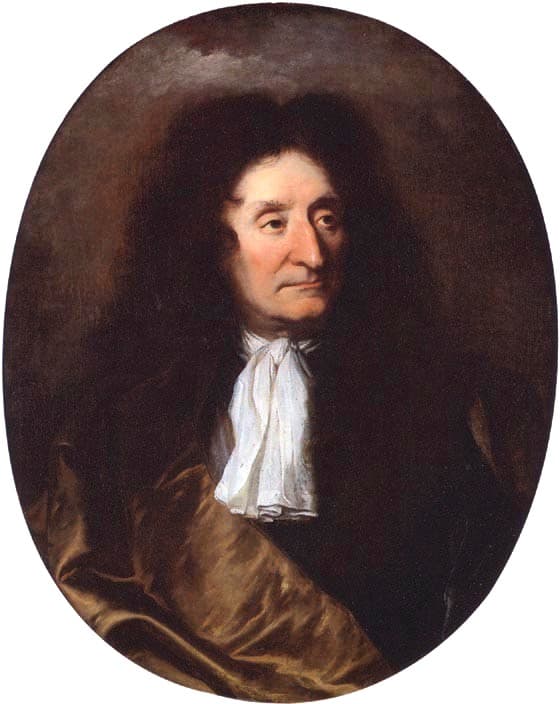
One spring morning, on Rue Neuve-des-Petits-Champs, at Madame de La Sablière's townhouse. The poet receives us amidst a benevolent disorder of books and manuscripts, an Aesop collection open on the table. He speaks slowly, his eye often elsewhere, as if following in the air the flight of an invisible titmouse.
—How did you come to serve Nicolas Fouquet, and what remains today of that time?
I had found in Fouquet the most magnificent of protectors. At Vaux-le-Vicomte, the gardens had not yet finished growing when already verses were being recited there; I had begun for him Le Songe de Vaux, a poem in praise of that new château, and I never finished it. The arrest of 1661 swept everything away, the patron and the dream. You see, I had been given a pension in exchange for dedications, as is given to all rhymesters; but him, I loved him. The unfinished poem remained on my table like a house whose construction had been halted in mid-course.
The unfinished poem remained like a house whose construction had been halted in mid-course.
—Why did you risk defending a man the king had just struck down?
Because one does not keep silent when one has loved. All Paris flattered the king and forgot the superintendent in chains; I took my quill and wrote the Élégie aux nymphes de Vaux, begging the waters of the château to soften Louis's courage when he came to stroll there. "Try to soften him, bend his courage" — that is what I asked of stone nymphs, for lack of being able to ask it of men. That loyalty cost me dearly: the king's disfavor kept me from the Académie française for a long time. But a poet who renounces his friendships for a pension writes nothing but compliments, and the compliment fades before the ink.
A poet who renounces his friendships for a pension writes nothing but compliments.
—Why did you choose to stage beasts to speak to men?
Because man recognizes himself better in the mirror of a fox than in that of his neighbor. When I dedicated my first Fables to the young Dauphin, in 1668, I said it bluntly: I use animals to instruct men. The appearance is childish, I confess, but these childish things serve as a wrapping for important truths. A wolf, a lamb, a cicada — these are masters who lecture no one and yet teach everyone. The reader laughs at the frog, then realizes along the way that the frog is him. It is the sweetest way I know to tell the powerful their truths without angering them.
The reader laughs at the frog, then realizes along the way that the frog is him.
—You distinguish the body and the soul of a fable. What should be understood by that?
The apologue is composed of two parts, one of which can be called the body, the other the soul. The body is the fable: the donkey carrying relics, the rat retiring from the world, all that little comedy of animals. The soul is the morality, the naked truth hidden beneath. My masters Aesop and Phaedrus, whose collections I always keep at hand, bequeathed me the bodies; it is up to me to breathe a French soul into them, in free verse, where the story runs and twists according to its mood. A story without a moral is a body without a spirit, but a moral without a story is nothing but a sermon: both are needed for the thing to breathe and walk on its own.
The body is the fable; the soul, the morality.
—Your absent-mindedness is legendary. What truth lies behind it?
They say I followed a friend's funeral procession without recognizing him in the deceased, and that I came home declaring I had spent a very pleasant afternoon. I don't swear to the detail, but the spirit is there. It's that my head is always ahead or behind the present moment; I compose as I walk, half-aloud, and the world around me becomes a set whose actors I forget. In salons I may sink, in the middle of the company, into long silent reveries. I am forgiven, out of kindness; and I, absent-minded in the present, am all the more attentive to what endures: the ant, the heron, the vanity of hurried men.
My head is always ahead or behind the present moment.
—What would you say about the friendship that bound you to Molière, Racine, and Boileau?
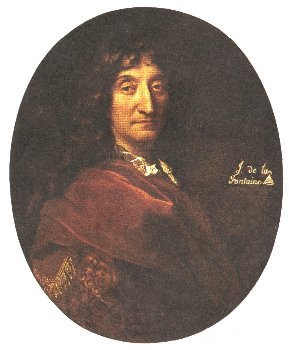
We were four, and we were seen together often enough that it was called a clique. Molière had the genius of the stage, Racine that of tears, Boileau that of rules — and I strolled among them like a walker between three great trees. Boileau was amused that I was the only one who never crossed out my verses, who threw them down in one stroke on paper. He was wrong to be surprised and right to tease me: what is thought ease is often only a long reverie that has finally ripened on its own. A verse comes like a fruit falls — when it is ripe, not when one shakes it.
A verse comes like a fruit falls — when it is ripe, not when one shakes it.
—You have long lived under Madame de La Sablière's roof. What does this house represent for you?
Twenty years soon that Marguerite de La Sablière gave me a room, here on Rue Neuve-des-Petits-Champs. It is the most lasting home of a life that had few. She is a woman of wit, curious about philosophy as well as poetry, and they say she sent away all her animals to keep only me — that is her joke, and I gladly accept it, for I am a very convenient boarder who eats almost nothing. I dedicated a Discours to her in which I begged her to stop refusing my incense. In this disorder of books and manuscripts, I am finally at home, which, for a man who has always lodged with others, is a rare fortune.
For a man who has always lodged with others, having a home is a rare fortune.
—Your whole life seems to have depended on protectors. How did you experience that?
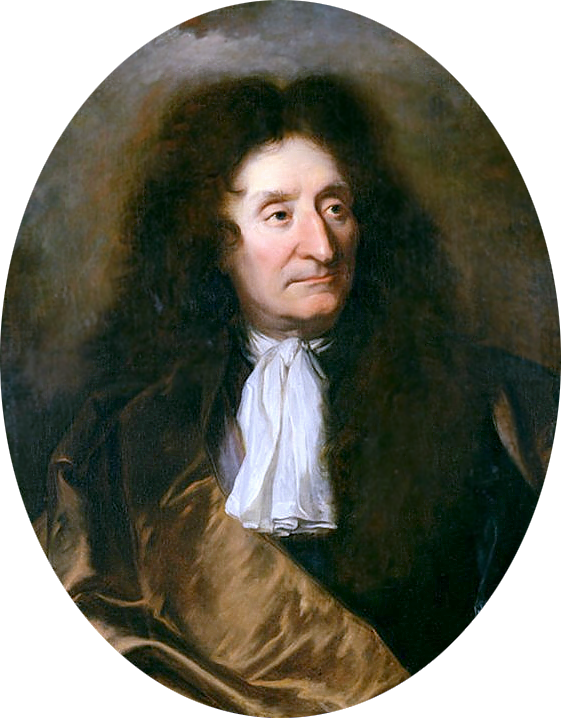
It is the poet's condition under this reign: one does not live from one's verses, one lives from those who love them. Patronage, I knew it in all its forms — the table of a superintendent, the salon of a witty woman, the pension in exchange for a dedication. It obliges one to bows that my absent-minded character bears badly; more than once I had to reluctantly put on the embroidered coat of the gentleman of letters to appear where I needed to appear. But let us not complain too much: this system that bent my back also left me the leisure to write. I traded a bit of freedom for a lot of time, and time, for one who wants to write Fables, is worth more than gold.
I traded a bit of freedom for a lot of time.
—You wrote Contes that the Church condemned. Did you regard them as a mistake?
My Contes et nouvelles en vers, I took them from Boccaccio, Ariosto, and Rabelais, those old masters of gaiety who did not fear the flesh. They were found risqué, licentious; the Church condemned them. I did not blush at it then: there is in laughter a bit of that freedom of spirit that my century called erudite libertinism, which is not the impiety one imagines, but the taste for thinking without a leash. I put into them the same language, the same care for verse as in my fables — for a well-turned naughtiness requires as much art as a moral. The gentleman of the 17th century knows that wit has two faces, and I never wanted to show only one.
Erudite libertinism is not the impiety one imagines, but the taste for thinking without a leash.
—What happened within you during that great illness of 1693?
In 1693, the body reminded me that it was mortal, and the soul followed. I received a visit from a young clergyman who urged me to look my Contes in the face. I renounced them. It was not, as some whisper, the terror of an old man; it was a sincere weariness of the flesh and a need for something else. I began to translate psalms, to rhyme hymns, I who had rhymed trifles. My libertine friends were surprised, they who thought me incorrigible. But the man who spent his life drawing morals from beasts had to, one day, apply the lesson to himself. The cicada sang all summer; in the end, she learns to pray.
The man who drew morals from beasts had to, one day, apply it to himself.
Read further
This imaginary interview was generated by artificial intelligence from sources documented in Jean de La Fontaine's profile. It dramatises what the figure might have said based on what we know about them, but does not constitute attested historical testimony. For primary sources and factual documentation, refer to the full profile.