Imaginary dialogue between Louis XVI and Jean-François de La Pérouse
by Charactorium · Jean-François de La Pérouse (1741 — 1788) · Exploration · 6 min read
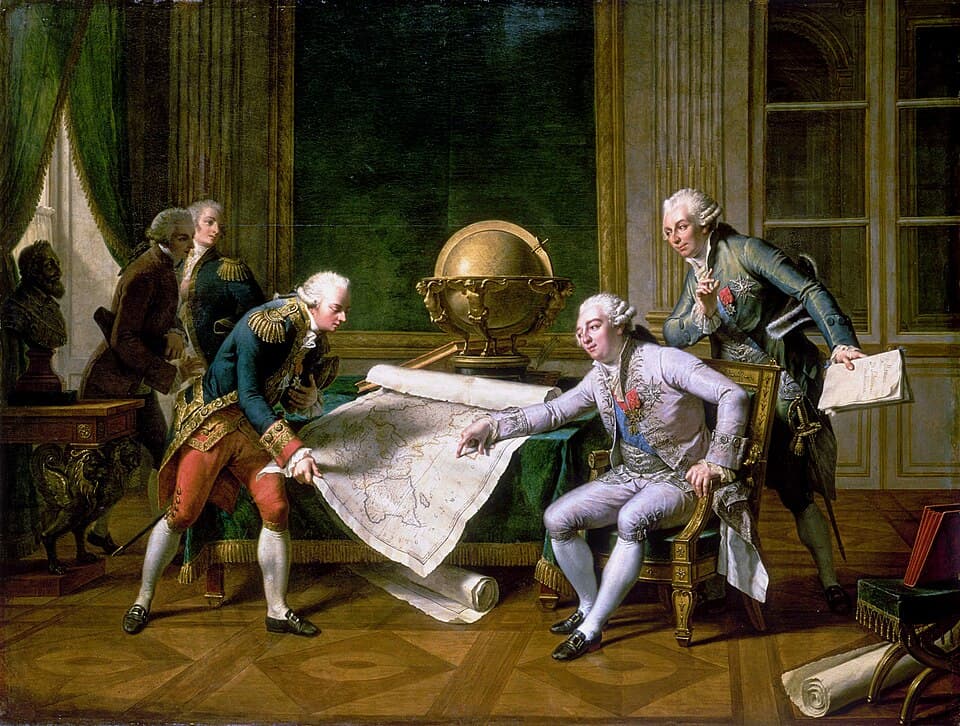
It is in the geography cabinet of Versailles, on an autumn evening in 1788, that Louis XVI unfolds one last time the journals and maps that young Lesseps has just brought back from Siberia. By candlelight, the terrestrial globe casts its shadow over the charts of the Boussole and the Astrolabe. The geographer king and his explorer have known each other since they together chose the routes of the voyage; and it is as a friend as much as a sovereign that Louis XVI, leaning over these pages, questions in his mind La Pérouse, as if he were still there, returned from a distant anchorage.
—Monsieur de La Pérouse, do you remember our evenings bent over the maps of Cook? What did you hope to accomplish by setting sail from Brest?
Sire, how could I forget? When you received me in your cabinet, you yourself had spread out Captain Cook's maps, and with your own hand you had corrected some of my instructions. You, who love geography as much as a scholar, pointed out the blanks that needed to be filled in the great Pacific. Leaving Brest on August 1, 1785 with the Boussole and the Astrolabe, I carried not only the orders of a king: I carried the curiosity of a friend. My ambition was to extend Cook's work without war, through science alone — to chart the coasts that no European had fixed, and to bring you back enough to enrich our maps and our trade. I wanted France to speak to the world with the compass and the pen, not the cannon.
I wanted France to speak to the world with the compass and the pen, not the cannon.
—Tell me how your embarked scientists worked. Did the sextant and chronometer fulfill their promises on such distant seas?
Sire, I had about ten scientists on board — astronomers, botanists, naturalists — who hardly knew rest. Every day, at dawn, my officers took our position with the sextant, while the chronometer gave us longitude with an accuracy that would have astounded our fathers. You know how much this measurement tormented sailors: navigating by dead reckoning was like running onto reefs blind. In the afternoon, we took soundings, hugged the coasts, and the naturalists collected plants at every anchorage. In the evening, in my cabin, I recorded everything by candlelight — the winds, the peoples, the errors of our maps. This journal, Sire, is the true treasure of the voyage, more precious than all the gold of the Indies.
—Before this great design, you served me in Hudson Bay, in 1782. It is said you left provisions for your English prisoners?
Your Majesty remembers that campaign. In 1782, in Hudson Bay, I took three English trading posts with only two ships, and this action earned me the honor of being made captain of a ship of the line. But victory does not dispense with humanity. The English I left on that frozen land would have died of hunger and cold without aid; so I left them provisions, weapons for hunting, and enough to await their ships. War pits crowns against each other, Sire, not men. I have always thought that a French officer distinguishes himself as much by his generosity as by his courage. I was told that even my enemies spoke of it with esteem — that is a glory I prefer to many trophies.
—In your journals, you portray gentle and hospitable islanders. Did these encounters resemble what we imagined here at court?
Not quite, Sire. At court, one imagines savages or noble savages; I found men. On several islands, the natives came to us without distrust, bringing us fruits, roots, and fresh water, with an eagerness that touched us deeply. Elsewhere, distrust was great, and some encounters nearly turned bloody. I learned that no nation is entirely gentle or entirely fierce, and that one must judge each people by what they show us, not by our fables. Your Majesty had ordered me patience and respect: I adhered to that, even when my men burned to respond to insults. Understanding is better than punishing — that is what these distant coasts taught me.
—I had inscribed in your instructions the respect due to the peoples encountered. Did these gifts — fabrics, mirrors, iron tools — suffice to establish peace?
They greatly helped, Sire. You had wanted my instructions to prescribe fairness toward the peoples encountered, and I had embarked for that purpose fabrics, mirrors, iron tools, a thousand trinkets. These gifts open hearts where words fail: a simple piece of iron is worth more to these islanders than all the silver of Europe. But the gift is not enough if it is not carried by respect. I forbade my crews to take anything by force, never to cheat in exchanges. Peace, Sire, is not bought: it is earned through constancy. Where we dealt with righteousness, we were always able to replenish water and provisions without shedding a drop of blood.
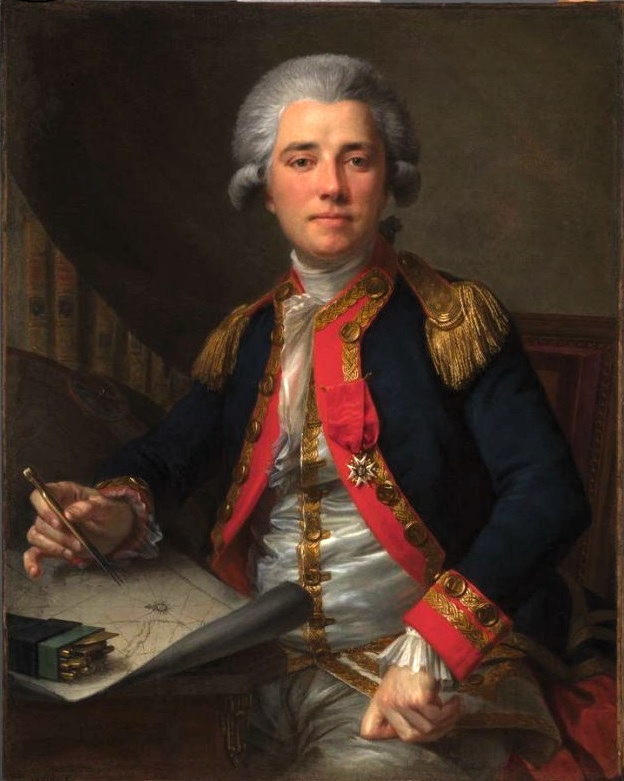
—I read, with a lump in my throat, your pages from Alaska. That bay that swallowed your men in 1786 — what happened?
Sire, it is the wound I will always carry. In July 1786, off the coast of Alaska, I had sent three longboats to sound the entrance of a bay that seemed calm. But currents of incredible violence, meeting the tide, engulfed them in an instant. Twenty-one of my men — officers I loved, young sailors — disappeared before my eyes without my being able to do anything. No storm, no battle struck me like that silence after the roar of the waters. I had their bodies searched for days, in vain. A commander can face the ocean; he never forgives himself for having survived his men.
A commander can face the ocean; he never forgives himself for having survived his men.
—You named that place 'Port des Français'. How does a commander recover from such a loss, far from any help?
One does not recover, Sire: one continues, which is not the same thing. I named that fatal place 'Port des Français', so that their memory would be attached to that land forever. Then I devoted many pages of my journal to mourning them — a commander has no right to weep before his crew, but the pen, in the evening, gathers what the face must hide. The next day, however, we had to weigh anchor: two hundred living men awaited my orders, and the science you had entrusted to me could not stop at a mourning. I learned there, far from any help, that to command is to bear alone what one cannot share with anyone.
The pen, in the evening, gathers what the face must hide.
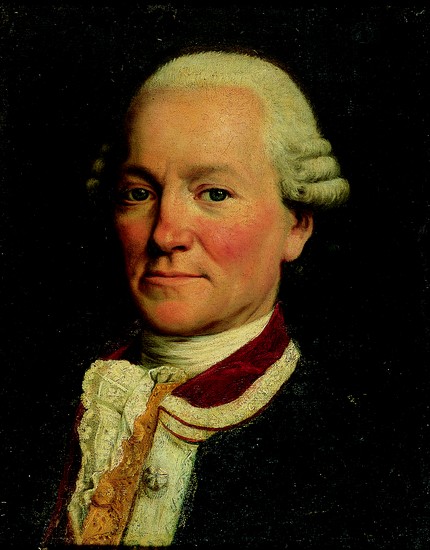
—Your charts of the coasts of Sakhalin and Japan fill gaps that our maps left wide open. Do you take some pride in it?
I take pride in it, Sire, but soberly. In 1787, I surveyed the coasts of Korea, Japan, then went up to that great island of Sakhalin, and found the strait that separates it from the land of the Ainu. Our maps of East Asia were nothing but conjectures and blank spaces; we put real contours, soundings, assured positions. It is obscure labor, made of patience and cold, without the glory of battle. But when I think that a captain, in a hundred years, will avoid a reef thanks to a chart drawn by my hand, I tell myself that those frozen nights were not in vain. To serve knowledge, Sire, is to serve all future sailors, of whatever nation they may be.
—You entrusted your journals to young Lesseps at Petropavlovsk. Why send them back via Siberia rather than keep them on board?
Out of prudence, Sire, and out of duty to you. The sea had already taken twenty-one of my men; it could also take my papers, and with them three years of work. At Petropavlovsk, young Barthélemy de Lesseps understood the northern languages; I entrusted him with my journals and maps to carry them to Your Majesty by land, across all of Siberia. It was better to risk a single man on the roads than to lose everything in a shipwreck. If he has delivered these sheets to you, then, whatever becomes of me, the voyage will not have been lost. An explorer may perish, Sire; his work must return to port.
—Your last letter came to me from Botany Bay. Where do you now steer the Boussole and the Astrolabe, my friend?
From Botany Bay, Sire, where I saw the English founding their colony at the antipodes of the world, already far advanced in their works. From there, I intend to reach the Friendly Islands, New Caledonia, perhaps the still unknown coasts of New Holland, before setting course back to France. If God and the winds permit, I will return to present you our maps myself and lay at your feet the fruit of this voyage. I long to find your cabinet again, Sire, and to review with you those routes we traced with our fingers, to show you where reality contradicted our suppositions. Keep your friendship for me until then: it is that, more than orders, which has carried me from one end of the ocean to the other.

This imaginary interview was generated by artificial intelligence from sources documented in Jean-François de La Pérouse's profile. It dramatises what the figure might have said based on what we know about them, but does not constitute attested historical testimony. For primary sources and factual documentation, refer to the full profile.