Kids interview Jean-François de La Pérouse
by Charactorium · Jean-François de La Pérouse (1741 — 1788) · Exploration · 5 min read
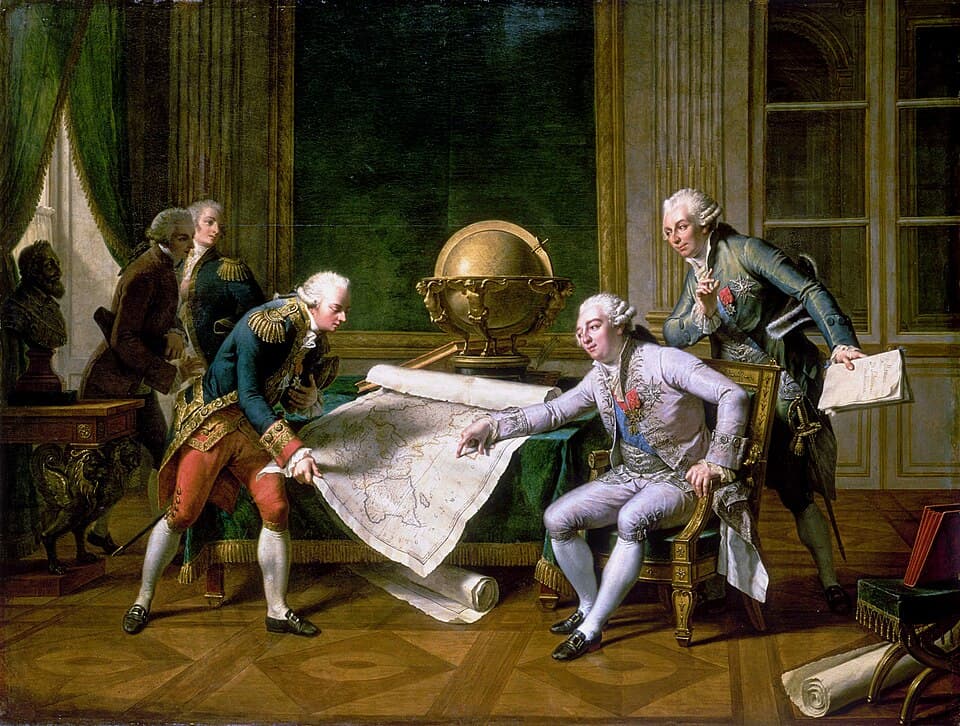
That morning, a field trip class was visiting a naval museum. Two young visitors, about twelve years old, stopped in front of the portrait of an officer whose gaze was turned toward the open sea. And then Jean-François de La Pérouse, as if stepping down from the canvas, sat down beside them to answer all their questions.
—Was it the king who chose you to go so far away?
You know, my child, it was an honor that frightened me a little. King Louis XVI loved geography. He studied the maps with me, leaning over the large table, and even corrected the instructions for my voyage with his own hand. Imagine a king pointing his finger at an empty patch of sea and telling you: go see there. In August 1785, I left Brest with two ships, the Boussole and the Astrolabe. The harbor smelled of tar and salt. I was afraid, yes. But when a king entrusts you with the end of the world, you don't say no. You weigh anchor.
—Is it true that you fought in a war before exploring?
Yes, before the great maps, I knew war. In 1782, during the struggle between France and England, I was sent far north, to Hudson Bay, where the sea freezes. With only two ships, I captured three English forts. But listen to what happened next. Winter was coming, and my English prisoners risked dying of cold and hunger. So I left them provisions, enough to hold out until help arrived. Even my enemies spoke of me with respect. Imagine that: being feared and esteemed by the men you have just defeated. A sailor can be brave and still remain human.
—Why be kind to enemies? They would have hurt you.
A good question, and a difficult one. Yes, in war, the enemy might kill you. But let me tell you something: a man who repays evil with evil ends up resembling the one he fights. In Hudson Bay, those English soldiers were disarmed, far from home, facing winter. Abandoning them without supplies would have condemned them to a slow death. My honor would not allow that. I grew up in Albi, in a family where I was taught that a name is tarnished more quickly by cowardice than by defeat. After that campaign, the king made me a ship captain. But my true pride was having kept my hands clean.
—Did you take scientists with you on the ship?
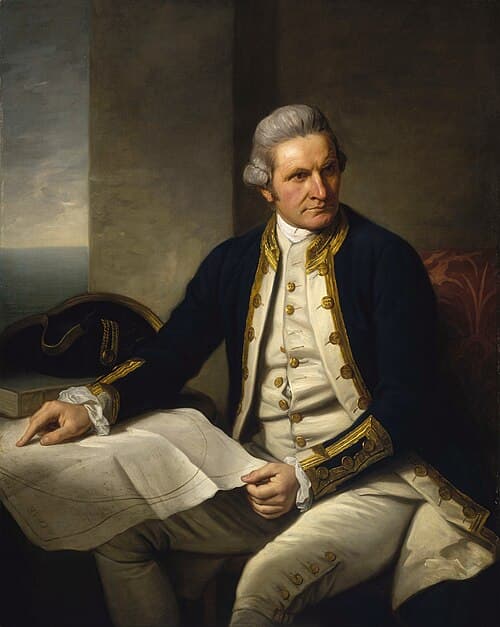
Yes! And that was quite new. I had on board about ten embarked scientists: astronomers, botanists, draftsmen. An embarked scientist is a man of science who travels just to observe and record the world. Imagine your ship filled with people measuring the stars and picking plants no one has ever seen! The great English captain Cook had died in 1779, and there remained entire seas that no one had charted. My mission was not to conquer lands. It was to understand, to measure, to bring back. The king wanted knowledge, not stolen treasures.
—What was it like drawing coasts that nobody knew?
Patient, my child, very patient. Every morning, at dawn, I would go up on deck with my sextant. It's an instrument that measures the height of the sun to know where you are at sea. Next to it, a chronometer, a very precise clock, gave us the longitude, that is, our position east or west. Without it, you are lost on the water, like a night without stars. We would approach an unknown land, and slowly, stroke by stroke, its coast would appear on paper. You know, drawing a land that no European had ever seen is like putting a name on silence.
Drawing an unknown land is like putting a name on silence.
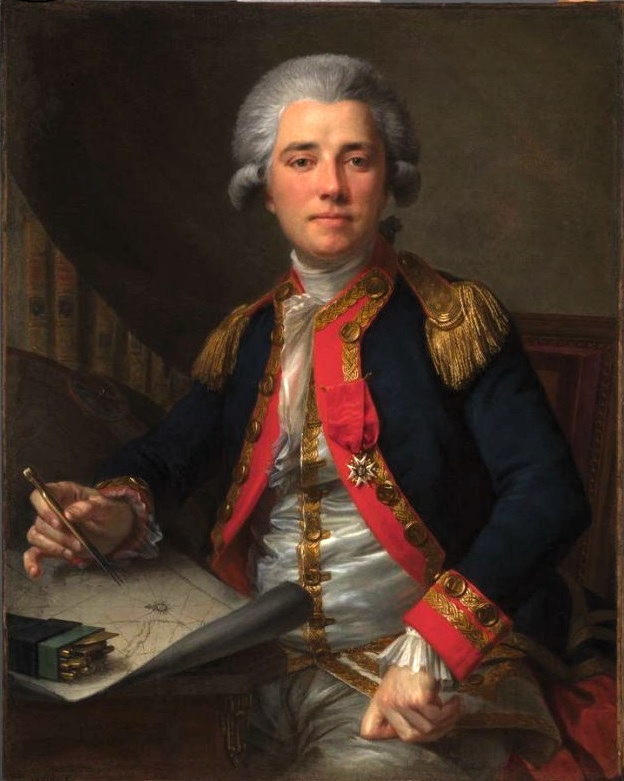
—Is it true there's a place that bears your name?
It's true, and it still touches me. In 1787, I sailed between the island of Sakhalin and Japan, through a narrow passage that European maps left completely blank. We advanced cautiously, dropping the lead — a weighted line that we plunged into the water to measure depth and avoid smashing into hidden rocks. Meter by meter, we charted this passage. Today it is called the La Pérouse Strait. Imagine: a corner of the sea so distant bears the name of the little boy from Albi that I once was. It is not gold that made me proud. It was filling a blank on a map.
—Did terrible things happen to you during the voyage?
Yes... and that one, I will never forget. In July 1786, we were in Alaska, in a beautiful bay called Lituya. The water seemed calm, deceptive. I sent three longboats to measure the entrance. Suddenly, currents of terrible force seized them and swallowed them. Twenty-one of my men disappeared in an instant, before my eyes, without my being able to do anything. Imagine losing twenty-one friends in a single morning. I named the place Port des Français, so that they would never be forgotten. The sea gives us beautiful maps. But sometimes it demands a price that nothing can repay.
The sea gives us beautiful maps, but sometimes demands a price that nothing can repay.
—How sad were you after that?
Devastated, my child. In the evening, in my cabin, by candlelight, I wrote in my logbook. Usually I noted winds, coasts, the peoples we met. But that evening, I filled several pages just to mourn my sailors. A captain, you know, must stand straight before his crew. He does not show his tears on deck. So I saved them for the night, for the paper. Each of those boys had a mother waiting for him in France. How could I return without them? Commanding is not just giving orders. It is carrying in your heart every life you lose.
—How did people find out what you had discovered, if you disappeared?
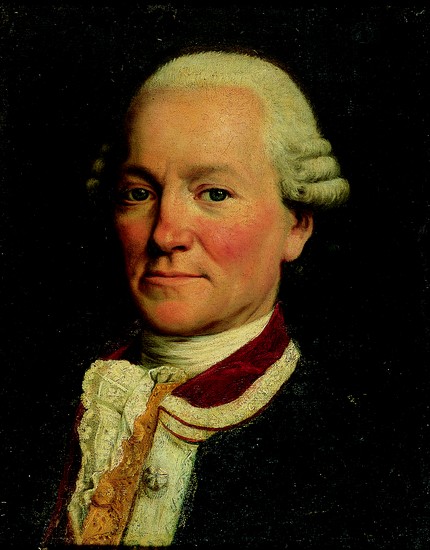
Ah, here is a fine story of prudence and courage! In 1787, we stopped at Petropavlovsk, a Russian port lost at the far end of Kamchatka. There I entrusted my journals and maps to a brave young man, Barthélemy de Lesseps. His mission: to return to France by land, while I continued by sea. Imagine crossing all of Siberia on foot, by sleigh, on horseback, through endless snows. It took him over a year. He arrived at Versailles in 1788. Without that boy, all my work would have sunk with me.
—But why did you give your notebooks to someone else?
Because the sea is unforgiving, my child, and I knew that. A ship can sink in a single night of storm. But what we had learned — the coasts, the depths, the peoples we met — must not disappear with the wood and sails. My logbook was years of observations, written by hand, day after day. The king had paid for all of it for the nation's knowledge, not for the ocean floor. So I put a part of it safe on dry land, in Lesseps' hands. I was right to be wary. The rest sank with me.
—If people remember you one day, what would you like them to remember?
You know, I am writing these thoughts from Botany Bay, in 1788, at the very edge of the known world. Before me stretches a vast ocean that I must cross, and I do not know if I will return. If I am remembered, I do not want them to say: he conquered. I prefer they say: he looked, he measured, he respected the peoples he met. I always ordered that they be treated with kindness. My name on a strait is nice. But the most beautiful thing would be if a child like you felt the urge, in turn, to go see what lies beyond the horizon.
The most beautiful thing would be if a child felt the urge to go see beyond the horizon.

This imaginary interview was generated by artificial intelligence from sources documented in Jean-François de La Pérouse's profile. It dramatises what the figure might have said based on what we know about them, but does not constitute attested historical testimony. For primary sources and factual documentation, refer to the full profile.