Imaginary interview with Jean-François de La Pérouse
by Charactorium · Jean-François de La Pérouse (1741 — 1788) · Exploration · 6 min read
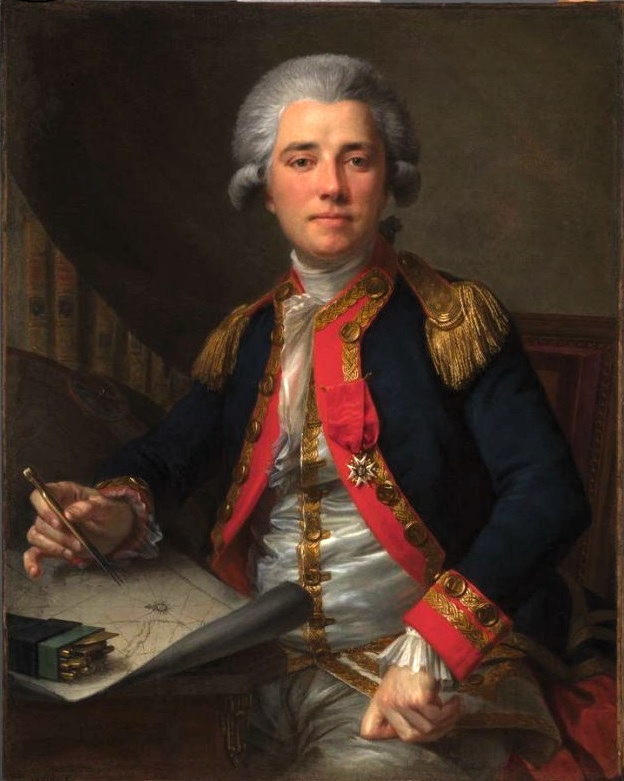
We met him aboard the Boussole, somewhere in the warm seas of the South Pacific, in this year 1788 when no one yet knew he was living on borrowed time. The great aft cabin smells of salt, candle wax, and old chart paper; on the desk, a sextant rests near an open journal. The comte de La Pérouse, his face marked by three years at sea, agrees to put down his pen for a moment to answer our questions.
—Before the Pacific, you were a man of war. What happened in Hudson Bay?
It was the summer of 1782; the American War had taken us as far as the ice. With only two ships, I appeared before the British trading posts of Hudson Bay — those stone forts that the Company thought impregnable at the end of the world. They fell almost without a shot fired: the garrisons were thin, surprised to see a French flag so far north. I was made capitaine de vaisseau for that affair, and I admit the rank pleased me less than the cleanness of the operation. You see, a sailor is measured not by the blood he spills but by the reefs he avoids; I have always believed one could serve the king without becoming a butcher. Those stores and furs were better taken intact than given to the flames.
—It is said you left provisions for your English prisoners. Why such a gesture in the midst of war?
Taking a fort is a matter of hours; answering for it before your conscience lasts much longer. I had English prisoners in my hands, and all around, a desert of ice where no help would come for months. To abandon them with nothing would have been to condemn them to starve — a victory I could not bear. So I left them enough supplies to hold out until their countrymen arrived. People marveled at it, in France and in London; mercy between enemies is not common. But the sea teaches us a brotherhood that the land ignores: any sailor, even under an enemy flag, may one day drown like any other. I wanted to treat those men as I would have wished my own to be treated.
The sea teaches us a brotherhood that the land ignores.
—How was this expedition conceived? It is said the king was personally involved.
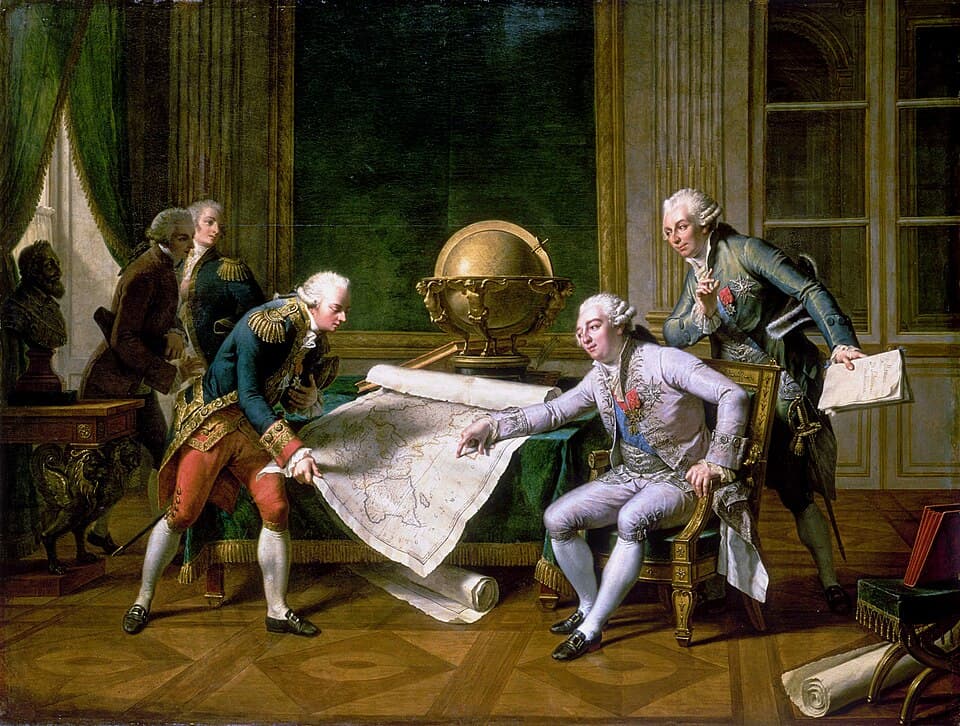
People imagine a king distractedly signing orders: it was not so. Louis XVI, who loved geography as others love hunting, unfolded the maps with me himself and revised the instructions in his own hand. He had destinations in mind, gaps he wanted to see filled. The text he gave me in June 1785 stated that His Majesty desires that the astronomers, geographers, botanists, naturalists, and other scholars accompanying the expedition employ all their zeal to gather observations most useful to the progress of the sciences and the commerce of the nation. That was a mission not of conquest but of knowledge — to complete what the unfortunate Cook had left unfinished. I set out feeling I was leading less a fleet than a floating library.
—Do you remember the day of departure?
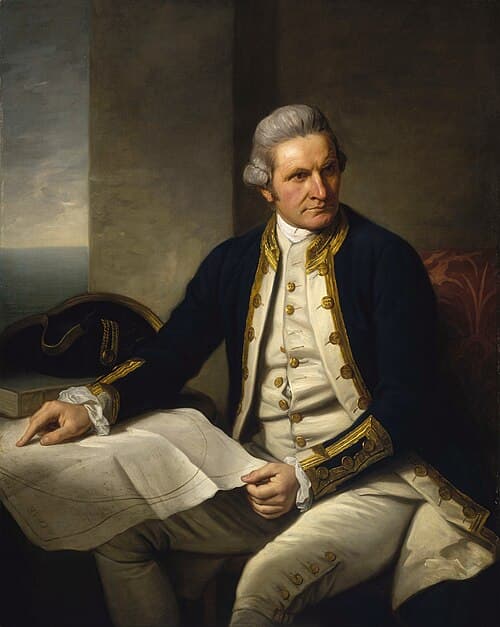
On August 1, 1785, the Boussole and the Astrolabe cast off from the port of Brest, the great arsenal of the kingdom. Two stout frigates, transformed into scholars' cabinets: a dozen astronomers, botanists, and naturalists were packed among the crates of instruments. People looked at me as the heir of Cook, killed six years earlier in the Sandwich Islands, and the comparison weighed on me as much as it honored me. He had opened the Pacific; it fell to me to fill in the blanks, those coasts no European pen had yet traced. I had loaded citrus and sauerkraut against scurvy, taught by his voyages, for a captain who loses his men to disease has already lost his campaign. We set course south, toward the Horn, our hearts full of a calm ambition.
—What was your daily work as a cartographer like, on deck?
My day began before dawn. I would go up to inspect the deck, consult the watch officers, then came the sacred hour of measurements: the sextant aimed at the sun for latitude, the chronometer consulted for longitude. That stubborn clock, which kept Paris time in the middle of the ocean, was our true treasure — without it, no reliable map. All day, my scholars took soundings, traced the coasts in pen, corrected the erroneous portolans we had from our predecessors. For the glory of this campaign would not be in the gold brought back, but in those sheets covered with lines: the coasts as they are, not as they were dreamed. A coast misplaced on a chart is a shipwreck promised to those who come after.
A coast misplaced on a chart is a shipwreck promised to those who come after.
—Among all your surveys, which one gave you the most pride?
In 1787, we sailed up the seas of Korea and Japan, toward those latitudes that no European map could draw. Between the island of Sakhalin and the land of Yeso — which some call Hokkaido — I sought a passage that geographers denied or placed at random. We found it, that strait, and I surveyed it foot by foot, by soundings and alignments, filling one of the greatest blanks on the maps of East Asia. Whether my name or another's is attached to it one day matters little to me; what counts is that the passage now exists on paper for those who follow me. Tracing that strait was worth more to me than a battle won: a battle changes nothing on the face of the world, a map reveals it.
—You sometimes mention a day you call the darkest of your life as a sailor. What happened in Alaska?
On July 13, 1786, on the coast of Alaska, I experienced the darkest day of my life as a sailor. We were anchored in a seemingly peaceful bay — Lituya Bay — and I had sent three longboats to sound the passage. Currents of incredible violence, where the tide rushes against the open sea, snatched them in an instant. Twenty-one men swallowed before my eyes, among them officers I loved like sons. I could do nothing, nothing but watch the water close over them. We searched the coast for days, without recovering a single body. I have commanded under enemy fire without trembling; but before that bay that had taken my men in silence, I stood helpless as a child.
Before that bay that had taken my men in silence, I stood helpless as a child.
—How did you wish to preserve the memory of those lost sailors?
Before weighing anchor from that cursed place, I wanted it to keep the memory of my men. I named it Port des Français — not for the glory of the kingdom, but so that no one would ever forget those who rested there without a grave. In the evening, in my cabin, by candlelight, I filled several pages of my logbook with their memory: their names, their faces, the cruelty of a sea that takes without even giving battle. Keeping this record was my duty as an officer, but that night it was something else, a way of watching over my dead. A commander answers for every soul on board; how could I tell their mothers that the sea had taken them for nothing, on water that seemed to sleep? The ink, that night, cost me more than the salt of storms.
—You seem to take unusual precautions to preserve your work. Why this prudence?
A wise sailor does not entrust everything to his ship — the sea too often reclaims what it lends. At Petropavlovsk, on Kamchatka, in 1787, I handed over my journals and maps to Barthélemy de Lesseps, the youngest of our crew. I ordered him to reach France overland: to cross all of Siberia, the Russian Empire, all of Europe, on horseback, by sled, on foot if necessary. A madness, no doubt, but a reasoned madness — if the expedition should perish, at least its knowledge would survive. From Botany Bay, last January, I wrote again to the Minister: the English are founding a colony there, I saw it with my own eyes. Let my letters arrive, and they will always know where we were and what we sought, whatever becomes of our hulls.
—Do you ever think that you might never return — and that you might be read a century from now?
What sailor does not fear it? We are now sailing toward seas strewn with islands that no chart shows, and I feel that luck, like the wind, can turn without warning. But see: I have placed my journals in safety in the hands of Lesseps, I have written from Botany Bay, I have left traces behind me. If I should disappear, body and goods, on some reef of the South Pacific, and if I am still read a hundred years from now, I would want this to be remembered: not the mystery of my end, but the patience of my work. Let others take up the pen where the sea has broken mine — a man is lost, a map remains; that is all the eternity an explorer can hope for.
A man is lost, a map remains; that is all the eternity an explorer can hope for.

This imaginary interview was generated by artificial intelligence from sources documented in Jean-François de La Pérouse's profile. It dramatises what the figure might have said based on what we know about them, but does not constitute attested historical testimony. For primary sources and factual documentation, refer to the full profile.