Kids interview Jean Yanne
by Charactorium · Jean Yanne (1933 — 2003) · Performing Arts · Visual Arts · 5 min read

Two 12-year-old students, on a school trip, push open the door of a dusty studio full of old microphones. A man with a mocking voice awaits them, a half-smile on his lips. "So, you want to know how to laugh at everything?"
—How old were you when you first spoke into a microphone?
I was very young, my child, in the 1960s. I hosted shows on the radio, on Europe 1. Do you know what radio was like in my day? Imagine a big box in the living room, and entire families glued to it listening to voices, without any images. I spoke into that mic as if it were nothing, and I said insolent things. It made people laugh, but not the bosses at all! I was always in trouble with management. A free voice, at that time, was rare and it bothered people.
A microphone is a mouth that speaks to an entire country at once.
—Why did what you say upset your bosses so much?
Because in my day, my child, you didn't mess with the airwaves. The state watched everything, through a big thing called the ORTF: the Office that controlled radio and television. So I went through a pirate radio station that broadcast from abroad to escape that control. But even there, as soon as I made fun a bit too much, I got my ears pulled. You see, saying what you think seems simple. But back then, it could cost you your job. I'd rather lose my job than lose my tongue.
I'd rather lose my job than lose my tongue.
—What was it like to win a big prize at Cannes?
Ah, that! In 1972, I received the Best Actor award at the Cannes Festival. It was for a sad film, Nous ne vieillirons pas ensemble, where I played a harsh man. Imagine a big hall full of elegant people applauding. Well, I was sulking a bit. That may seem strange to you, my child. They gave me the greatest reward, and I sulked! But I was wary of all those official honors. I was afraid that a medal would make me wise and kind. But me, my job was to sting, not to purr.
I was afraid that a medal would make me wise and kind.
—Were you happy deep down, despite everything, to have that prize?
A little, yes, I won't lie to you, my child. It proved that I could do more than make people laugh. In that film by Maurice Pialat, I played a serious role, almost mean. People only knew me for my jokes, and there they discovered a real actor. But you know, when they applaud you too loudly, a little voice tells you: "Careful, you're becoming fashionable." And being fashionable, for a mocker like me, is almost an insult. So I took the prize and kept my scowl. That way, no one could buy me.
When they applaud you too loudly, it means you're becoming fashionable.
—Why did you start making your own films?
Because acting was fine, but I wanted to be in charge, my child! In 1972, I picked up a camera and directed Tout le monde il est beau, tout le monde il est gentil. A funny title, right? It was a mockery of radio and advertising, all that honeyed blather that promises you happiness to sell you soap. Behind the camera, I could show exactly what I thought. Imagine you hold a brush and paint France as it annoys you. That's what I did. The public loved it, and that made me very happy.
Behind the camera, I painted France as it annoyed me.

—Weren't you afraid of angering people with your films?
Angering people? That was kind of my job, my child! In 1974, I made Les Chinois à Paris. I imagined France invaded, and I showed how some, instead of resisting, groveled to get along with the invader. It caused a scandal! Many cried out, feeling targeted. But that was the point: I wanted to scratch where it stings. You know, a satire is a work that mocks people's flaws to show them to themselves. I mocked cowards and opportunists. And they were everywhere, believe me.
My job was to scratch right where it stings.
—Why did you love mocking ancient times so much?
Because the past is a fantastic playground, my child! In 1982, I made Deux heures moins le quart avant Jésus-Christ. A parody — that's an exaggerated and comic imitation — of Roman antiquity, with Romans who talked like people today. Imagine soldiers in togas grumbling like your neighbor on the stairs! The audience roared with laughter; it was a huge success. Later, I did it again with the French Revolution in Liberté, Égalité, Choucroute. You see, by disguising people of the past, I said things about us, about now.
By laughing at the past, I spoke out loud about the present.
—Did a film like that require a lot of work?
Oh yes, my child, more than you'd think! In the morning, I read the newspapers and wrote my dialogues on a typed script, typed on a machine, page after page. In the afternoon, I was on set, watching the actors, the music, every joke. You rehearse a silly line ten times so it makes people laugh just once! People think a joke falls from the sky. In truth, it's worked like a carpenter works his wood. A well-made farce is seriousness hiding behind a great burst of laughter.
A joke is worked like a carpenter works his wood.

—Is it true you collected lots of old cars?
Ah, that was my great passion, my child! I loved vintage cars and everything mechanical. I kept several, stored in places near my home in the Paris area. I liked to look at them, touch them, smell the old leather and oil. Imagine a boy in front of a toy chest who never grew up: that was me! And the funniest thing is that I even used them as material for my shows. My life and my work were always mixed together. What amused me in life always ended up on stage.
What amused me in life always ended up on stage.
—If someone came to your home, what would they notice first?
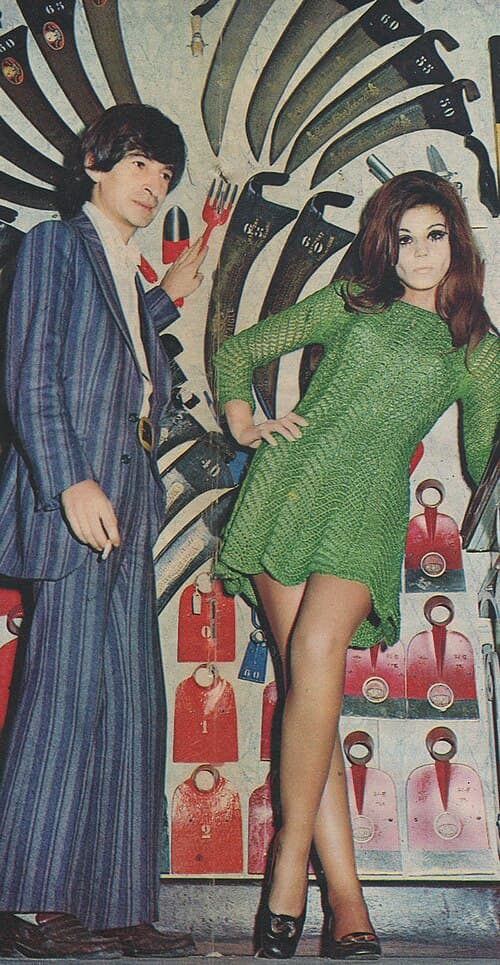
The joyful mess, my child! At my place in the Paris area, you'd see vintage cars parked like treasures, curious objects collected everywhere, and script pages lying around. I dressed without fuss, a casual jacket, deliberately a bit scruffy. It matched my character: I hated acting important. In the evening, I liked to host showbiz people, talk loudly, throw barbs. Lively conversation, quick wit, that was my real pleasure. You see, I never separated work from fun. My whole house was like a huge workshop of serious silliness.
I never separated work from fun.
—If you are remembered today, what would you like to be remembered for?
That I laughed at everything, my child, but never stupidly. What I call nonconformism is refusing to think like the herd, just because everyone does. As soon as an idea became too tame, too mainstream, I wanted to tickle it. I spent my life mocking the powerful, the cowards, the flatterers. Not to be mean, but to wake people up. So, if one day you hear a phrase that everyone repeats without thinking, remember old Yanne. Ask yourself a simple question: "What if it's false?" That's my finest legacy.
When everyone repeats the same phrase, ask yourself: what if it's false?

This imaginary interview was generated by artificial intelligence from sources documented in Jean Yanne's profile. It dramatises what the figure might have said based on what we know about them, but does not constitute attested historical testimony. For primary sources and factual documentation, refer to the full profile.