Imaginary interview with John F. Kennedy
by Charactorium · John F. Kennedy (1917 — 1963) · Politics · 6 min read
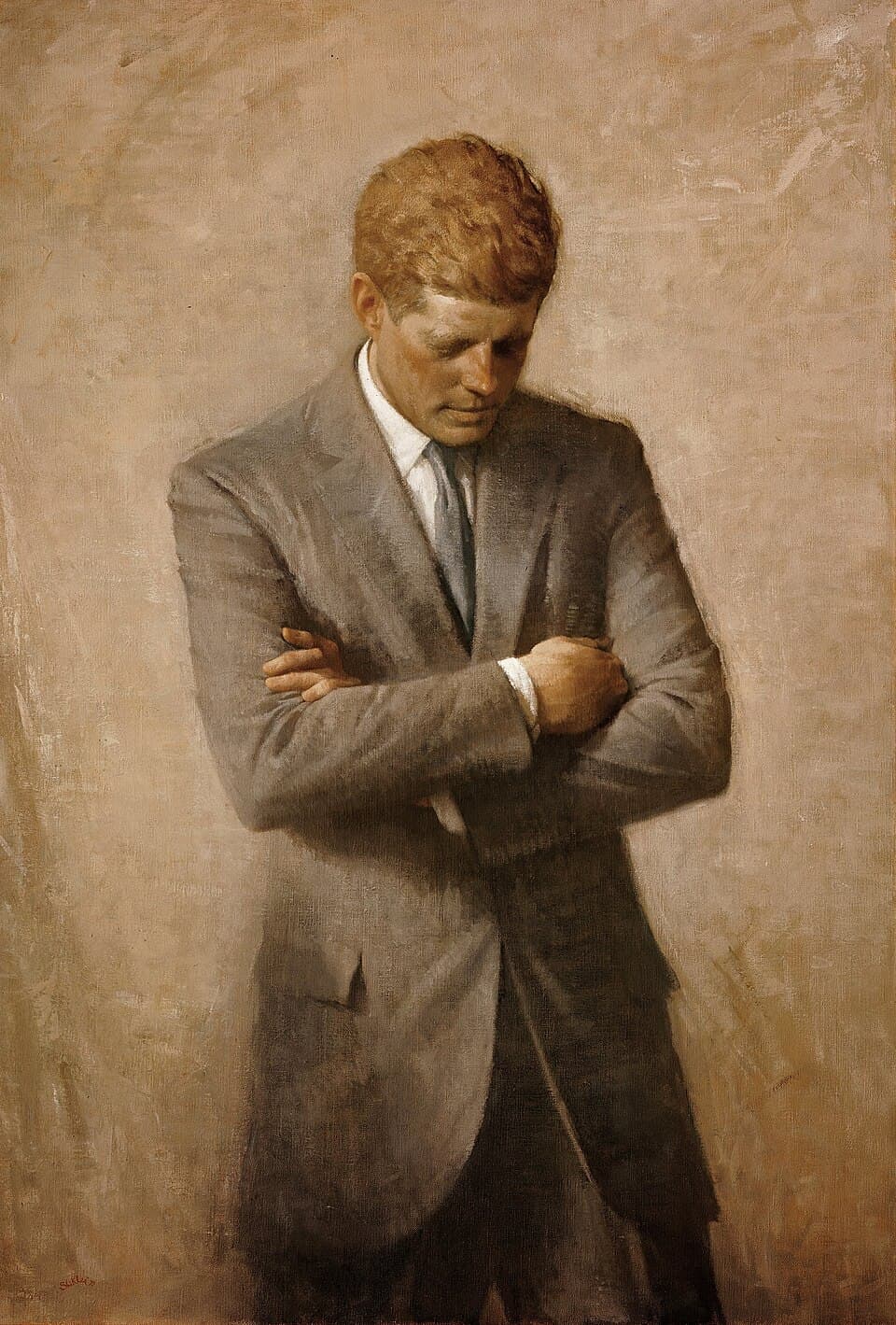
Washington, autumn 1963. The light is fading over the Oval Office as the president receives, between two files, in a light wooden rocking chair placed near the fireplace. He speaks softly, his voice still marked by New England, and behind the ease of his smile one senses a man who has brushed against the end of the world.
—Do you remember the morning you were shown the photographs of Cuba?
It was a morning in October 1962. They placed before me pictures taken at very high altitude, gray, almost illegible to an untrained eye — and there, those ramps, those silhouettes of Soviet missiles barely ninety miles from Florida. For thirteen days, I hardly slept. My generals demanded an air strike, to raze those installations before they could be armed. But bombing would have killed Russian technicians for sure, and then Khrushchev would have had no choice but to retaliate. I chose the naval blockade — we called it a quarantine, to avoid saying the word war. Surround the island, stop the cargo ships, and still leave an exit for the adversary. People forget: on the brink, courage is not firing first.
On the brink, courage is not firing first.
—Why did you choose to speak to the Americans on television that evening?
Because a people kept in ignorance does not behave like a free people. On the evening of October 22, I spoke before the cameras, and I said things bluntly: “It is undeniable that offensive medium-range missiles are now present in Cuba. The purpose of these bases can be none other than to provide a nuclear strike capability against the Western Hemisphere.” Every family, from Boston to Texas, had to measure the stakes without giving in to panic. That is what governing under the balance of terror means: holding an entire nation on a razor's edge, telling it the truth, and keeping it from falling. A lie reassures for one night; it costs you the country by morning.
A people kept in ignorance does not behave like a free people.
—What do you take away from those thirteen days, once the crisis passed?
That two men, in two capitals, had nearly destroyed the world for lack of being able to simply talk to each other. During the crisis, my messages to Moscow took hours to go through chanceries, distorted, delayed — a deadly delay when every moment counts. That is why we later established that direct line between the White House and the Kremlin, what the press calls the hotline. A simple line, but it says it all: nuclear deterrence protects no one if it is not paired with a wire through which reason can still pass. We learned to step back together, which is, believe me, the most difficult political art there is.
—They say your Berlin speech electrified the crowd. What did you feel standing before them?
On June 26, 1963, in front of the Rathaus Schöneberg, there were hundreds of thousands of faces, and behind them that shameful wall the Soviets had built to imprison their own citizens. I felt something almost physical rise from that crowd, a swell. So I said: “There are many people in the world who really don’t understand, or say they don’t, what is the great issue between the free world and the communist world. Let them come to Berlin.” And I added those four German words I had repeated like a schoolboy: Ich bin ein Berliner. The roar that answered, I still hear it. That day, I was no longer just the president of the United States; I was one of them.
That day, I was no longer just the president of the United States; I was one of them.
—How did you experience the building of the Wall, two years earlier?
As a wound, but also, I must admit, as a bitter relief. In 1961, East Germans were fleeing by the thousands to the West, and the tension in Berlin had become such that a spark could set everything ablaze. When the GDR raised its wall of concrete and barbed wire, I told my close associates that a wall was always better than a war. It was ugly, it was inhuman — but it froze the line, and as long as a line holds, no one shoots at each other. That is the cruelty of the Cold War: you learn to prefer a scar of stone to a field of ruins. West Berlin remained an island of freedom, and I had sworn never to abandon it.
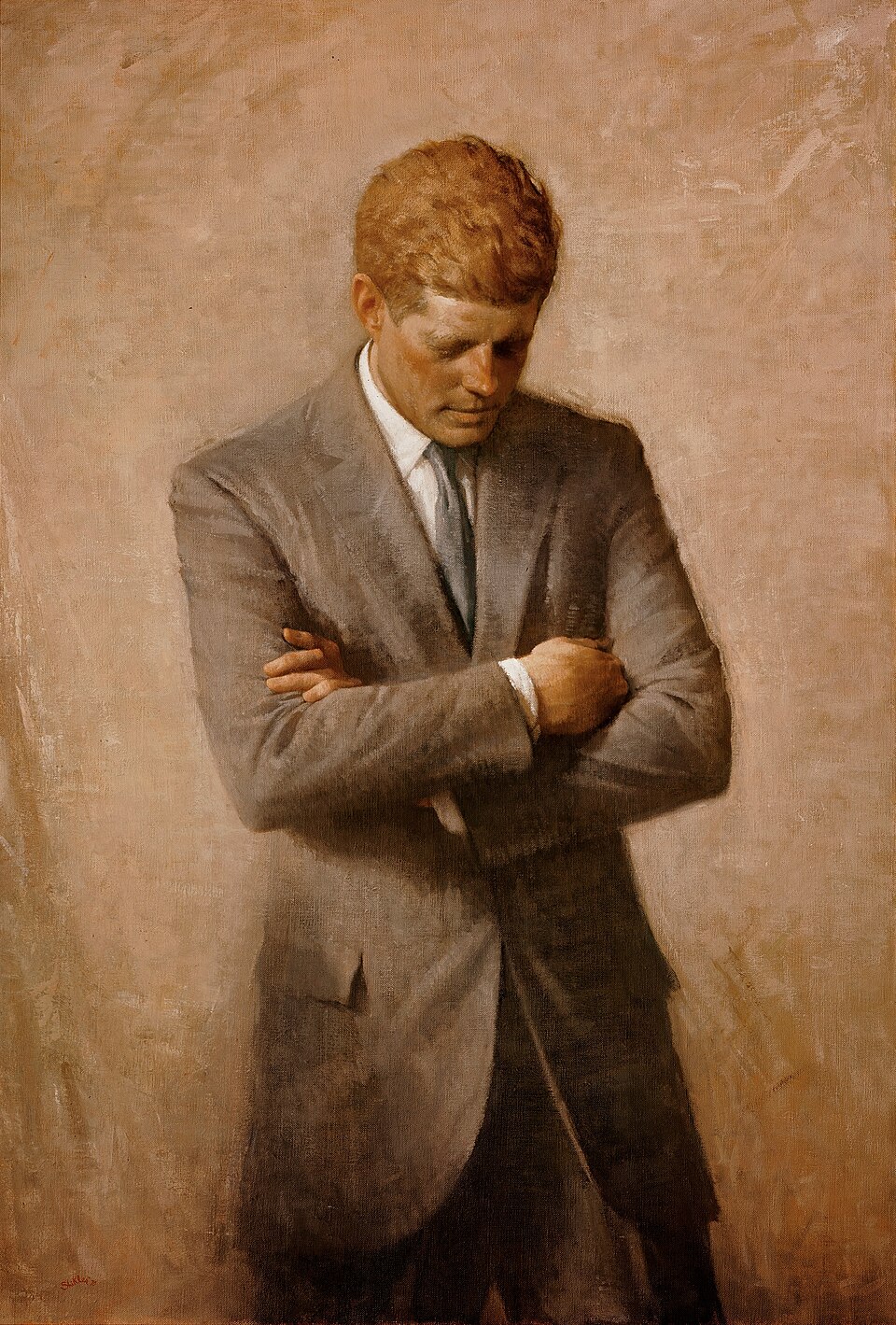
—The country sees you as a young and vigorous man. What does that image conceal?
A lot of pain, and a certain art of the mask. I live with Addison's disease, an adrenal gland failure long kept secret, and a broken back that hurts me every hour of the day. This rocking chair we are sitting in is not a whim: it is a prescription, one of the few seats that relieve my spine. In the morning, before coming to this office, I start with a long hot bath, and in the afternoon I take a nap that my doctors require. Americans think I am built for tennis; in truth I wear an orthopedic belt under my navy blue suits. Vitality, you see, is sometimes the most demanding discipline.
Vitality is sometimes the most demanding discipline.
—Where does this habit of never showing pain come from, in your opinion?
From the war, no doubt. In 1943, in the Pacific, I commanded a small torpedo boat, the PT-109, when a Japanese destroyer cut it in two during the night. I swam for hours towing one of my wounded men, the strap of his life jacket clenched between my teeth, my back already on fire. They turned it into a heroic story; I mainly learned from it that a leader has no right to groan as long as a single one of his men is watching him. That night shaped me more than any speech. Since then, whether it is my vertebrae or the nights of the Cuban missile crisis, I have learned that command consists first of bearing what you do not show.
—Why did you commit America to such an enormous adventure as the Moon?
Because a nation is defined by the heights it dares to aim for. When the USSR launched Sputnik in 1957, that little satellite beeping over our heads, America realized it could lose the space race — and with it, the prestige of the free world. So I set the course: send a man to the Moon before the decade is out, and bring him back alive. Not because it is easy, but precisely because it is hard. An easy goal never measures a people; only the impossible forces it to surpass itself entirely — its scientists, its workers, its schools. The Moon, in the end, is only a magnificent pretext for discovering what we are capable of here on Earth.
An easy goal never measures a people; only the impossible forces it to surpass itself.
—Do you sometimes imagine the day a man will actually set foot up there?
Often, and I already know that it will not be my work that will be hailed that day, but that of the thousands of engineers who made it possible. The Apollo program is a river: I only opened its source. The president who will see an American walk in the lunar dust may no longer be me, and that is in the nature of things; politics sows trees whose fruit others will eat. What matters to me is that we dared to decree the impossible and devote the public treasury to it without flinching. When that moment comes, I hope they will remember that it all began with a decision made here, in this office, against the advice of the cautious.
—Last June, you submitted a civil rights bill to Congress. What decided you?
Moral evidence, become too glaring to be circumvented any longer. In the Southern states, racial segregation prohibits a black child from the same school, the same counter, the same voting booth as his white neighbor — and this, in a nation that claims to be the beacon of freedom. On June 19, 1963, I delivered a blunt message to Congress: “Race has no place on a starting line, nor in a classroom, nor in a voting booth.” We cannot preach freedom in Berlin and deny it to our own citizens at home. This bill will face fierce resistance, I know. But a Republic that indefinitely defers justice ends up having it torn from it.
We cannot preach freedom in Berlin and deny it to our own citizens at home.
—This summer, hundreds of thousands of people marched on Washington. What did you think of that crowd?
That a country was looking itself in the face. The March on Washington, in the summer of 1963, gathered a peaceful multitude come simply to claim what is due to them by the Constitution. I had feared disorder; I saw dignity. That pressure — the pressure of the street held by conscience — is precisely what makes my bill possible: a president only advances a nation when the nation, already, is pushing behind him. I do not know if I will see this legislation passed; Congress is slow, and passions are high. But what set in motion this summer will no longer be stopped, by me or by another. History, from now on, has chosen its direction.

This imaginary interview was generated by artificial intelligence from sources documented in John F. Kennedy's profile. It dramatises what the figure might have said based on what we know about them, but does not constitute attested historical testimony. For primary sources and factual documentation, refer to the full profile.