Kids interview John F. Kennedy
by Charactorium · John F. Kennedy (1917 — 1963) · Politics · 5 min read
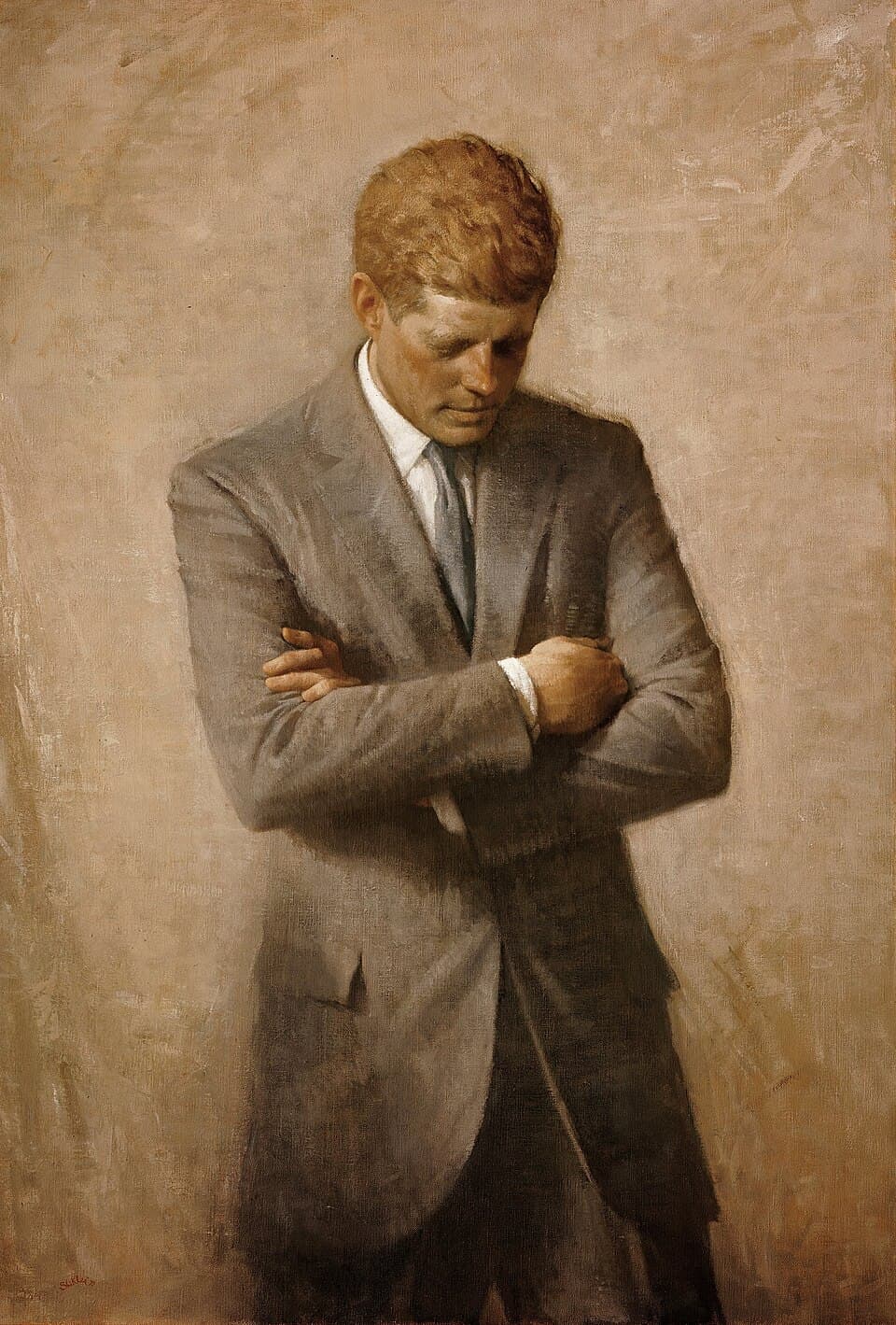
Two twelve-year-old visitors, on a school field trip, push open the door of a large oval office. Before them, a young man rocks gently in a wooden chair. He smiles at them and invites them to sit down: today, the President of the United States answers children's questions.
—Why do you have a rocking chair in your presidential office?
You noticed it, this rocking chair? Come closer, sit for a moment. You know, my back has been hurting me for years. I have pain in my spine, and a hidden disease called Addison's disease — my glands no longer produce enough of what the body needs. So this rocking chair is my secret ally. It eases my back while I work. In the morning, before coming here, I take a long hot bath, just to be able to stand up. But in front of people, I smile. I walk straight. No one must see that I'm in pain.
In front of people, I smile; no one must see that I'm in pain.
—What was a normal morning like for you?
Imagine: it's seven-thirty, the sun is barely coming in. Even before I fully get up, they bring me the newspapers. I read up to nine of them at once, I devour the pages like drinking water. I read very fast, it's a lifelong habit. Meanwhile, my hot bath relaxes my back for the day. Then I come here, to this Oval Office, around nine o'clock, and the meetings begin. In the afternoon, I allow myself a short one-hour nap — it's not laziness, my child, it's my doctor's orders to spare my body.
—On the day you became president, what did you say to Americans?
That day, January 20, 1961, it was bitterly cold. I spoke to my entire country. And I said a phrase I want to share with you: 'Ask not what your country can do for you, ask what you can do for your country.' Do you understand? I didn't want people to wait for everything with folded arms. I wanted them to give a little of themselves. You too, in your class, you can help others instead of only receiving. That's what I asked of an entire nation: roll up your sleeves, be useful.
Ask not what your country can do for you, ask what you can do for your country.
—And how could young people really help, in practice?
Good question! For that, I created the Peace Corps, the Peace Corps, in 1961. Imagine young Americans going to distant, poor countries — what we called in my time the Third World, countries that were neither on our side nor the Soviet side. These volunteers dig wells, provide medical care, teach children to read. Not with weapons — with their hands and their hearts. I also launched the Alliance for Progress to help Latin America. You see, you can serve your country by helping other countries. That's my way of believing in youth.
—You went to Berlin, where the big wall was?
Yes, June 26, 1963. You need to know: two years earlier, in 1961, a wall had been built right through the middle of the city of Berlin. On one side free people, on the other families cut off from their loved ones, guarded like prisoners. I stood in front of the city hall, the Rathaus Schöneberg, before hundreds of thousands of people. And I shouted, in German: 'Ich bin ein Berliner' — 'I am a Berliner.' The crowd erupted. I was telling them: you are not alone, the free world is with you.
I am a Berliner: you are not alone.
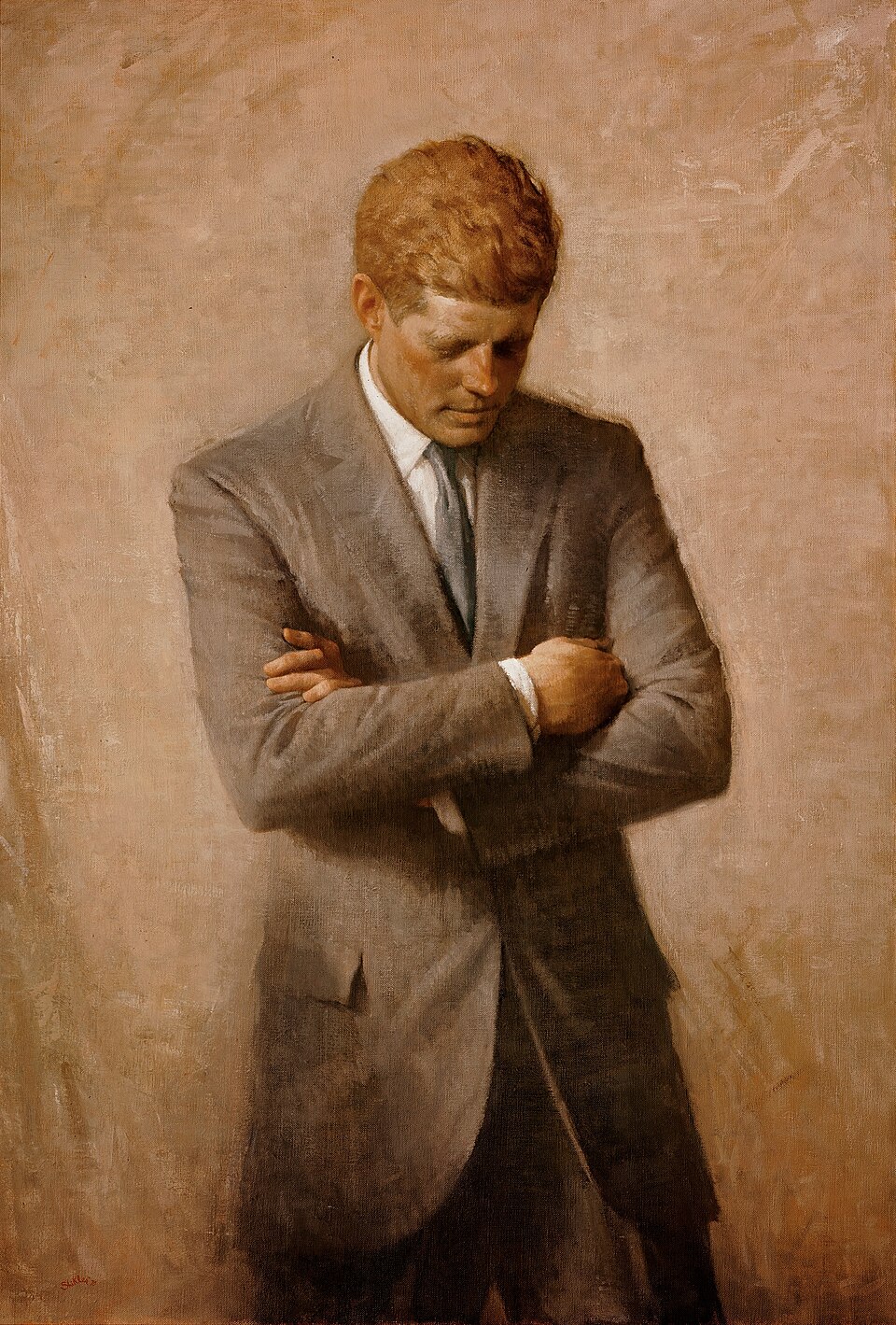
—Why did you say you were a Berliner when you were American?
Ah, you're right, I was born far from Germany! But listen. When people are locked behind a wall, separated from their grandparents, their friends, just because of a border drawn by fear — you cannot remain cold. Some in the world said they didn't understand the difference between the free world and the communist world. I answered them: 'Let them come to Berlin.' Let them see this wall with their own eyes. By saying 'I am a Berliner,' I made their pain my own. Sometimes, my child, you choose your side with your heart.
—Is it true that once the world almost had a terrible war because of you?
Thirteen days I will never forget, in October 1962. One morning, photographs taken from the sky were placed on my desk. They showed, on the island of Cuba, Soviet missiles — rockets capable of carrying an atomic bomb, barely 90 miles from our shores. Imagine a match placed right next to a barrel of gunpowder. For thirteen days, the whole world held its breath. A single mistake, and it would be nuclear war, the one that leaves nothing standing. I hardly slept. The weight of millions of lives rested on my decisions.
A single mistake, and it would be the war that leaves nothing standing.
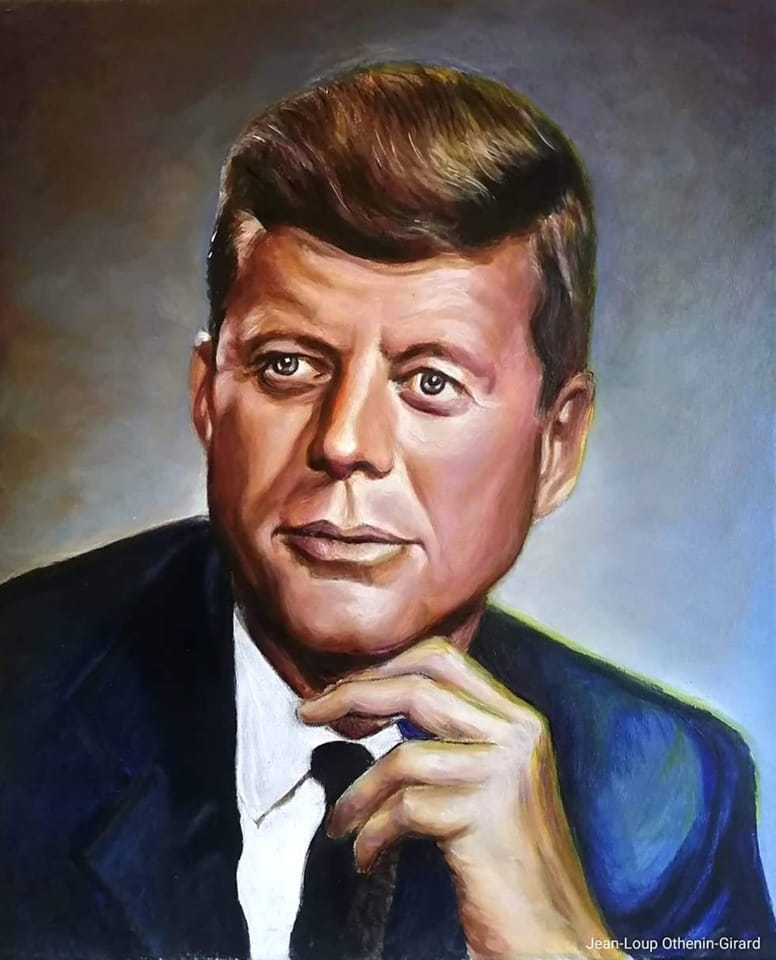
—And what did you do to stop it from exploding?
My generals wanted to strike, to bomb Cuba immediately. But think: if I struck, the Soviets would strike back, and no one could stop it anymore. So I chose something else. I set up a naval blockade around the island — we called it a 'quarantine.' My ships prevented Soviet ships from bringing new missiles, but without firing. It left a door open for negotiation. And it worked: they backed down. After that, we installed a hotline, a direct line between Washington and Moscow, so we could talk quickly and never again come close to disaster through misunderstanding.
Striking closes all doors; a blockade leaves one open for talk.
—In your time, is it true that Black and White people didn't have the same rights?
Yes, and it outraged me. In some states, there was racial segregation: Black children couldn't go to the same schools as white children, nor drink from the same fountain, nor sit where they wanted on the bus. Imagine being told: 'You are not allowed, because of the color of your skin.' It's unjust, deeply unjust. In June 1963, I spoke to Congress and said that race has no place on a starting line, nor in a classroom. All citizens should be treated equally. It was my duty to say it loud and clear.
—And your great law for equality, did it work in the end?
That's a moving thing, my child. I had introduced a bill to ban segregation in public places and injustices at work. But I didn't live long enough to see it passed. My life ended in Dallas, in November 1963. Yet my fight continued without me. The following year, in 1964, the Civil Rights Act was passed. This historic law broke segregation. You see, sometimes you plant a seed that you will never see become a tree. But the tree grows anyway. That's what passing on is: laying a stone that others will build upon.
Sometimes you plant a seed that you will never see become a tree; but the tree grows anyway.
This imaginary interview was generated by artificial intelligence from sources documented in John F. Kennedy's profile. It dramatises what the figure might have said based on what we know about them, but does not constitute attested historical testimony. For primary sources and factual documentation, refer to the full profile.