Imaginary dialogue between Jacqueline « Jackie » Kennedy and John F. Kennedy
by Charactorium · John F. Kennedy (1917 — 1963) · Politics · 4 min read
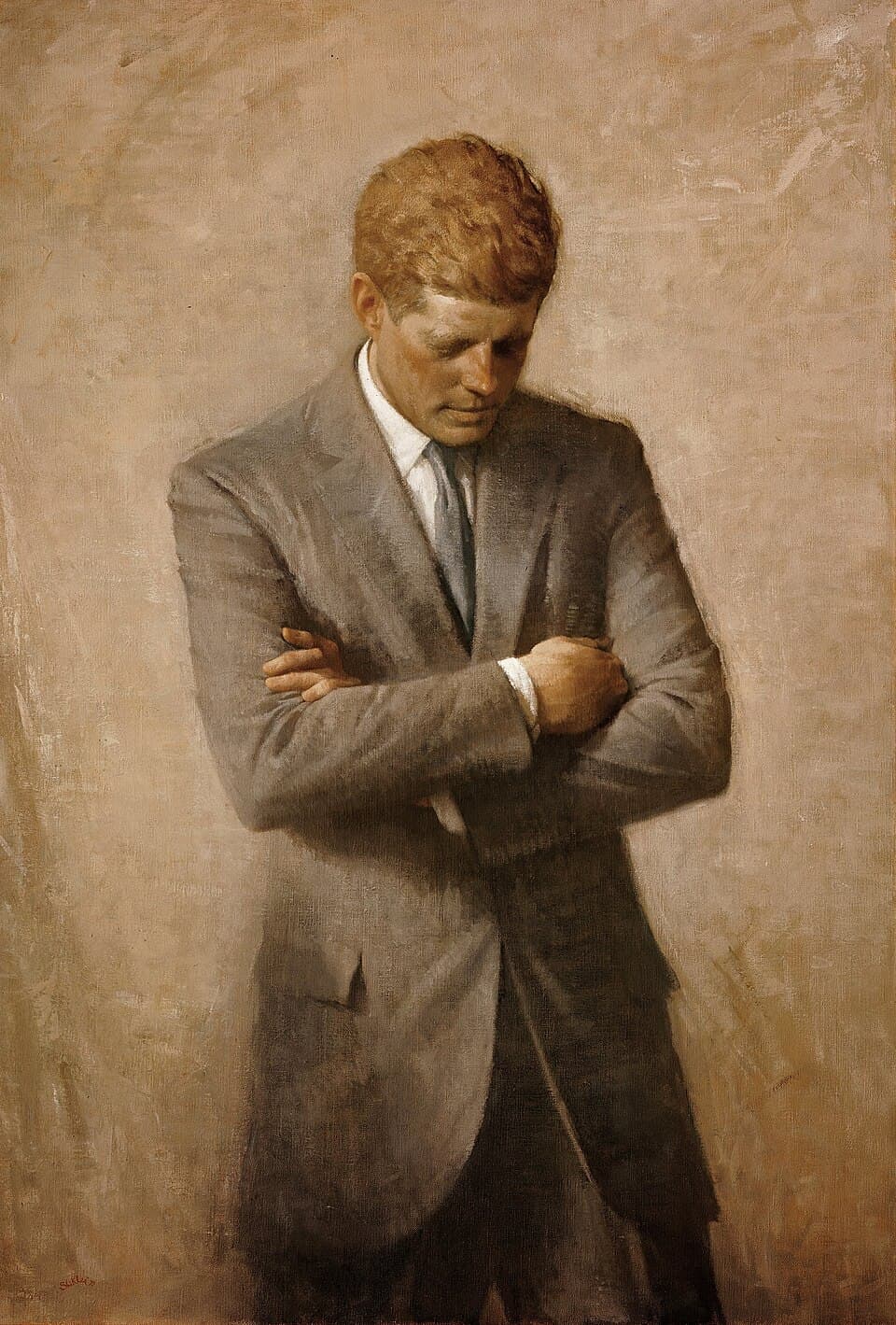
It is in the solarium on the second floor of the White House, in this fall of 1963, that Jackie joins John after the children's dinner. The light falls on the rocking chair he had brought up there to ease his back, and the scent of a Cuban cigar still lingers. They have known each other for ten years, since Hyannis Port and the summers on Cape Cod, and tonight she comes with the questions only a wife can ask — those that touch the man hidden behind the president.
—John, in October 1962, you came home in the evening with a closed face and told me nothing. For thirteen days, what held you back from striking Cuba?
You remember, Jackie, I asked you to keep the girls close — I wanted you within reach. My generals demanded airstrikes from the very first morning. But an air strike meant open war, and no one knew where it would end. I chose the naval blockade, what we called a quarantine, to give Khrushchev a way out without humiliation. The balance of terror, you see, does not forgive pride. Every hour, I thought of those missiles ninety miles from Florida, and what I risked — not my life, but yours, and that of millions of children like ours.
I gave Khrushchev a way out: the balance of terror does not forgive pride.
—After that crisis, you wanted that direct line to Moscow. Why were you so insistent on that famous hotline?
Because during those thirteen days, Jackie, we came close to disaster not by will but by slowness. A message took hours to pass through chanceries, distorted, delayed. A misunderstanding could have plunged us into the abyss. The direct line between the White House and the Kremlin is the simple idea that before unleashing fire, two men must be able to speak in minutes. It is not trust — I do not trust Moscow. It is prudence. You do not gamble the fate of the world on a mislaid telegram.
You do not gamble the fate of the world on a mislaid telegram.
—I alone, or nearly, see you grimace in the morning as you get out of the bath. How do you bear hiding all that behind the smile the crowd envies?
You who hand me my orthopedic belt before every ceremony, you know the price of that smile. My back has betrayed me since the war, since the PT-109, and the rest — that adrenal weakness — I learned to live with as a state secret. The hot morning bath, the nap the doctors impose, this rocking chair taken for a whim: they are my crutches. But a president who suffers in public has already lost. The country wants vigor, youth. So I give them the image, and I keep the man for you. That is our arrangement, and it exhausts me as much as it saves me.
I give them the image, and I keep the man for you.
—You read nine newspapers before I am even up. Where does this hunger to devour everything come from, despite the fatigue?
It is stronger than fatigue, Jackie — it is my way of holding the world at arm's length to better grasp it. I read quickly, and history especially nourishes me. Barbara Tuchman's book on the summer of 1914 never leaves me: it tells how intelligent men slid into war through an accumulation of errors, none truly wanting it. During Cuba, I had that lesson in mind at every meeting. My military advisers see maps; I look in books for the precedents they forget. A leader who does not read history is doomed to repeat it, and I do not have the right to repeat it.
My advisers see maps; I look in books for the precedents they forget.
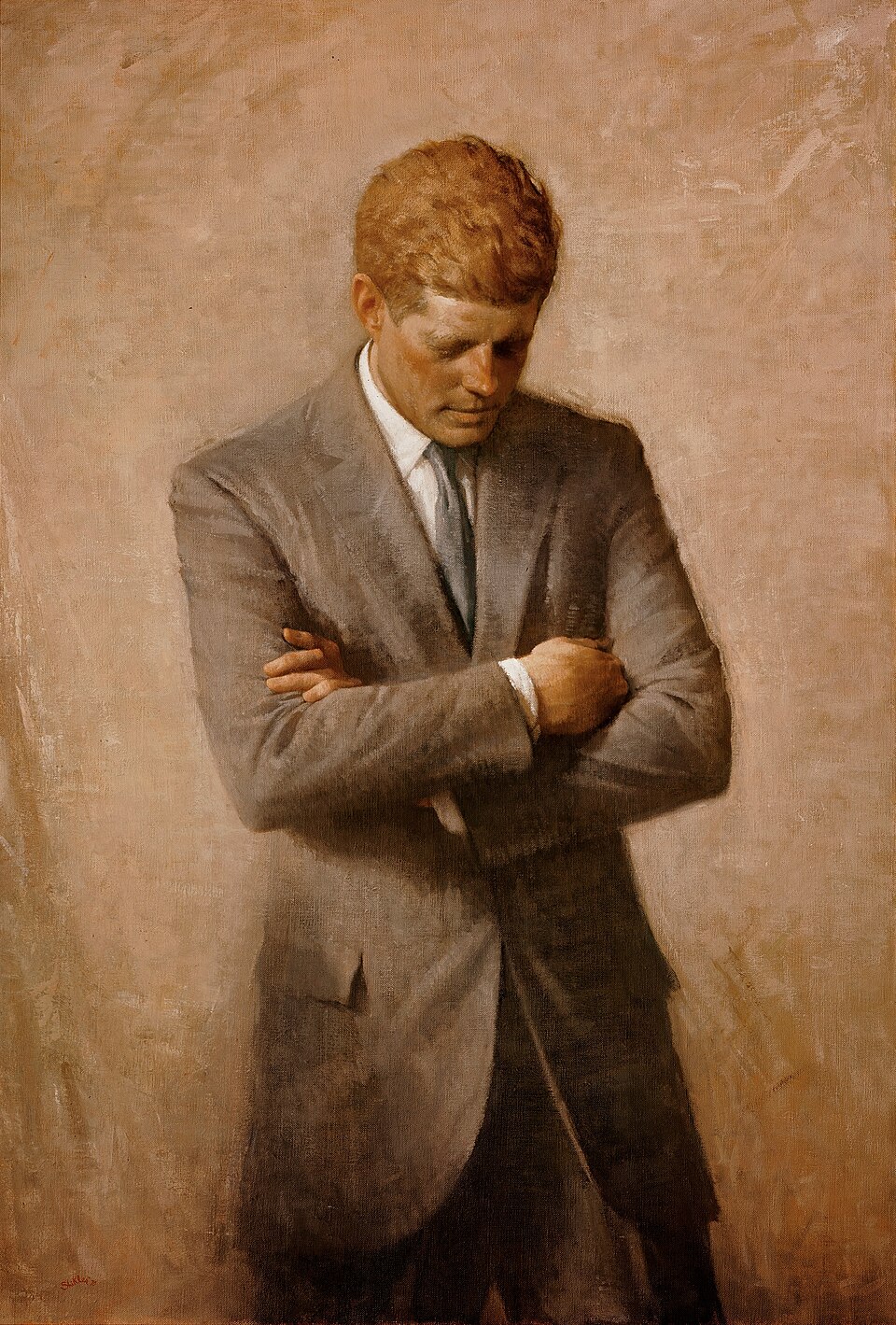
—In Berlin, on June 26, I felt the crowd tremble when you spoke your German phrase. What happened inside you at that moment?
You were not with me that time, and I regretted it, for no words can convey that human swell. Hundreds of thousands of faces, encircled by that wall, hanging on a man who came from the other shore of freedom. I had scribbled the words on my note at the last moment, Ich bin ein Berliner — I am a Berliner. I wanted to tell them that their isolation was ours, that their courage bound us. When the phrase fell, it was like an electric current. An orator does not make the crowd: he reveals what it already carries. That day, I merely named their dignity.
An orator does not make the crowd: he reveals what it already carries.
—In the evening, I often find you pencil in hand over Sorensen's drafts. Why can you never leave a phrase alone?
Because a misplaced word can cost a war, Jackie, and a right word can disarm a nation. Ted brings me the framework; I work the stone. Remember Inauguration Day, January 1961, in that terrible cold: ask not what your country can do for you. I weighed every syllable of that inversion for weeks. A sentence must fit in memory like a medal in the palm. I cross out, tighten, listen to the rhythm under my breath — you have caught me often enough. Power passes; phrases, sometimes, remain.
A sentence must fit in memory like a medal in the palm.
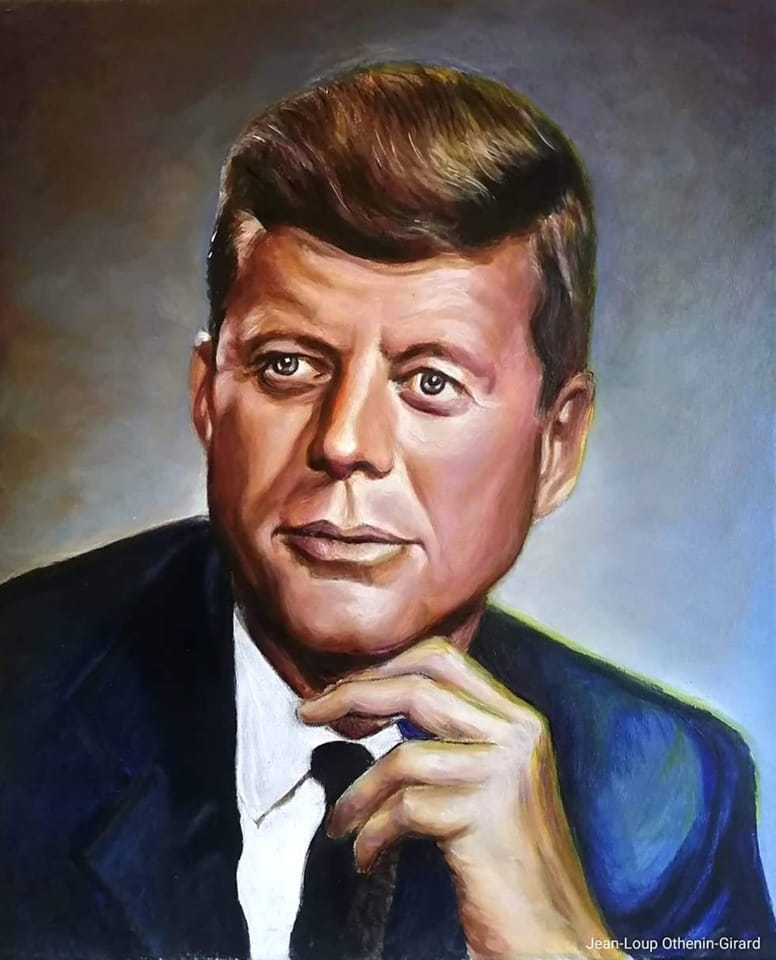
—In June, you sent that civil rights bill to Congress knowing the political risk. What made you decide to confront segregation head-on?
I moved cautiously for a long time, you know, too cautiously for some. But you cannot ask a young Black man to wait another generation for his share of freedom. In my message to Congress, I said that race has no place in a classroom, at a polling booth, or before a court. It is a moral issue, as old as the Scriptures and as clear as the Constitution. I know I lose the South, perhaps my re-election. But a president who calculates in the face of injustice is no more than an accountant. If the law passes one day, even after me, I will have done what my office required.
A president who calculates in the face of injustice is no more than an accountant.
—This summer, hundreds of thousands marched on Washington for those rights. Did you fear the street would outrun your law?
I feared disorder, I admit, and my advisers dreaded violence under our windows. But what rose that day was not a riot — it was immense, orderly, irresistible dignity. Martin Luther King and his people were not asking for charity, but for America's kept promise. The street does not outrun my law, Jackie: it gives it force and urgency. Without that tide of peaceful men and women, Congress would sleep on my texts. I prefer a people standing to demand their due to a resigned people. That too is governing: hearing what the country summons you to become.
The street does not outrun my law: it gives it force and urgency.
—You promised the Moon to a whole people before the decade was out. Were you not afraid, privately, of having promised the impossible?
Of course I was afraid, and to you I can say it. When the Soviets launched Sputnik, then sent a man into orbit before us, America felt overtaken, even humiliated. I understood that we needed a goal so vast it would force the nation to exceed itself. We choose to go to the Moon not because it is easy, but precisely because it is hard. This race is not just about rockets: it is a demonstration of what a free society can accomplish when it dares. I may not see the moon landing. But I will have given my country a mountain to climb, and that is how a people remembers it is great.
I will have given my country a mountain to climb: that is how a people remembers it is great.
This imaginary interview was generated by artificial intelligence from sources documented in John F. Kennedy's profile. It dramatises what the figure might have said based on what we know about them, but does not constitute attested historical testimony. For primary sources and factual documentation, refer to the full profile.