Imaginary interview with Kiya
by Charactorium · Kiya (1400 av. J.-C. — 1400 av. J.-C.) · Politics · Spirituality · Visual Arts · 6 min read
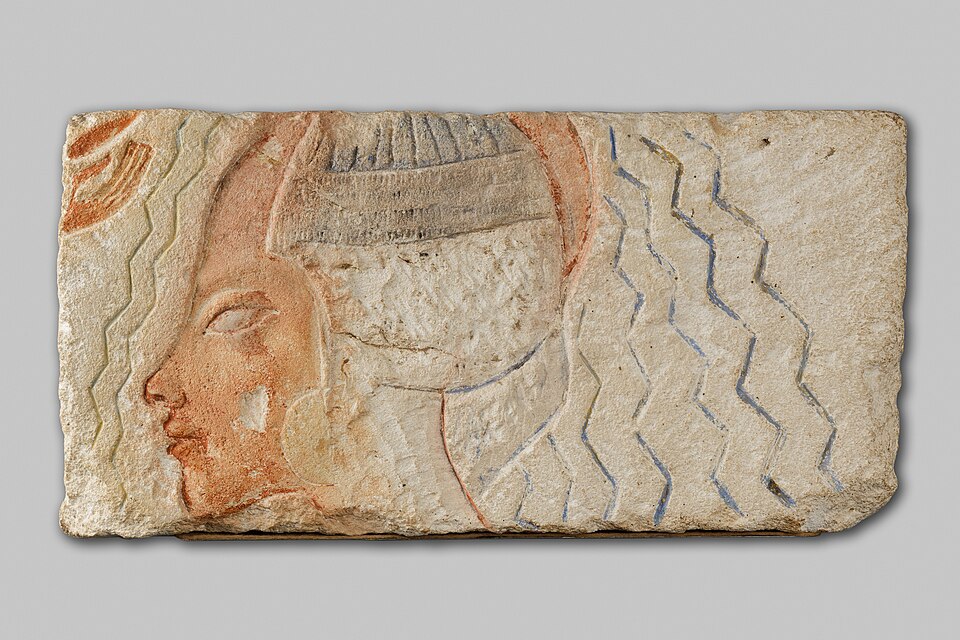
We met her at Akhetaten, in the cool shade of her solar chapel, at the hour when the rays of the Aten lengthen across the painted tiles of the Great Palace. She wears her wig of long Nubian curls and a broad usekh collar that catches the light. Kiya agrees to speak of herself — which, for a woman whose very name will soon be erased, is no small thing.
—You are known by a title that no one else has ever borne. What does it mean to you?
I am called wrt hswt, the Greatly Beloved. The scribes carve it into the limestone blocks of my walls, and each time I see them hesitate for a moment: the formula hmt nsw wrt hswt existed for no woman before me. I am not hmt nsw wrt, the Great Royal Wife — that rank belongs to Nefertiti, whose name fills Akhetaten as the wind fills sails. I am something else. A rank cut to measure, neither the chief wife nor a mere woman of the harem. Akhenaten wanted my favor inscribed in stone, with a word that almost had to be invented. I wear this title as one wears a jewel that no one can borrow, because it was cast for only one neck.
A rank cut to measure, a word that almost had to be invented to say what I was.
—Describe what one of your mornings here in Akhetaten is like.
Even before the disk crosses the line of the cliffs, my maids slip the pleated linen dress over me and fasten the usekh collar of faience strands around my chest. Then I walk to my chapel. For I have my own — my sun-shade house, what the scribes call bit-shades. Understand the strangeness of it: a personal sun temple is the privilege of the Great Royal Wife, and yet Akhenaten gave me one. I stand alone before Aten as it rises, its rays ending in little hands offering the ankh, the sign of life, to whom it loves. There, between the incense and the first gold of the day, I am no longer a secondary wife. I am the one the sun looks upon first.
Between the incense and the first gold of the day, I am the one the sun looks upon first.
—Why does this personal sanctuary matter so much to you?
Because a chapel dedicated to Aten is not an ornament; it is a declaration carved in limestone. At Akhetaten, nothing is built by chance: the entire city was born from a virgin site to honor the disk, and every wall says who counts and who does not. That my name appears on the talatat of my own temple, beside Akhenaten under the beneficent rays, means that my place is not in the shadow of the harem but in the official light of the cult. The craftsmen are still decorating my bit-shades while I walk in the gardens cooled by the canals of the Nile. Every block they set is proof that I exist. One day, I know, this proof may also become the target of those who will want to forget me.
—How are you recognized among all the women depicted on these walls?
By my wig. The others wear the smooth hairstyle of princesses or the tall blue crown of Nefertiti; I, my long Nubian curls cascade down, and it is by them that I am guessed before my cartouche is read. On the talatat, those standardized blocks that the sculptors align by the thousands, a trained eye finds me by this sole hair. I am also seen in the reliefs of the royal tomb, holding a royal child — a maternal role that the engravers do not grant to just anyone. This consoles me a little: even if my name is hammered out, the shape of my wig will remain. The stone keeps the drawing of a woman when it has forgotten what she was called. It is an immortality of silhouette, but it is one.
The stone keeps the drawing of a woman when it has forgotten what she was called.
—It is said that you were not born on the banks of the Nile. What do you say to that?
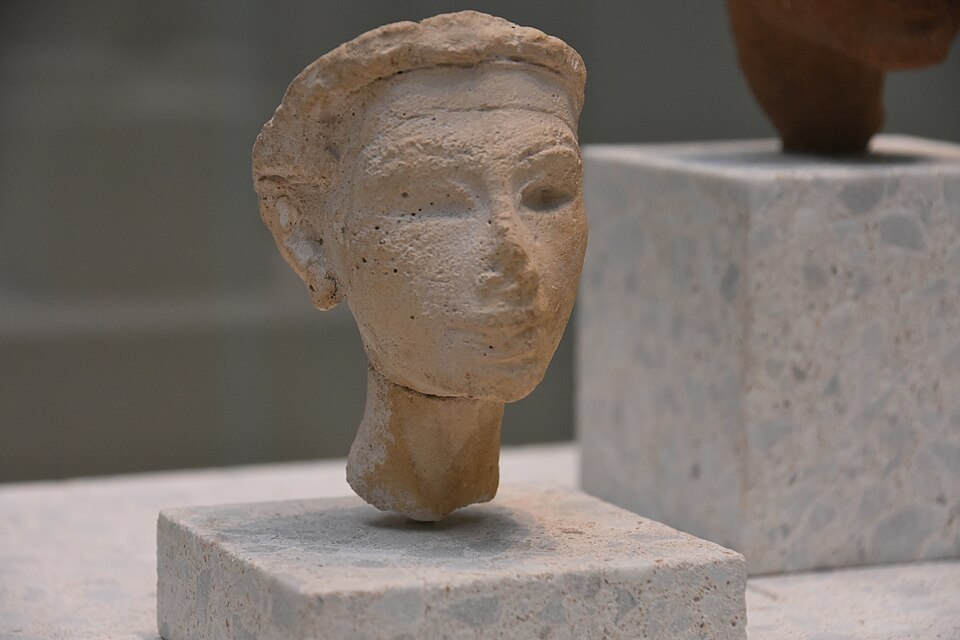
Some whisper that Kiya is not my true name, but the Egyptian echo of another, from far away. They call me Tadukhipa, daughter of Tushratta, king of Mitanni, sent from Washukkanni to the court of Pharaoh to seal the alliance between our two kingdoms. The letters exchanged between the courts speak of this promised daughter, of the golden statues demanded, of the chariots crossing the desert. Was it me? The names of foreign princesses are always adapted so that Egyptian mouths can pronounce them; perhaps I lost my original name on that journey, as one leaves a garment at the border. I will neither confirm nor deny it. A woman whose origins are debated for centuries is a woman who has not quite been filed away.
Perhaps I lost my original name on that journey, as one leaves a garment at the border.
—What did these alliances between Egypt and a kingdom as distant as Mitanni represent?
Mitanni was not a fairy-tale land, but a Near Eastern power with which Pharaoh exchanged gifts, oaths, and daughters. A princess sent there was not merely a wife: she was a living treaty, a clause of peace that breathed and ate at the king's table. If I am indeed the one Tushratta wrote to Akhenaten about, then I crossed the desert not for love but for the balance between two thrones. And yet, once inside Akhetaten, I was given that title of wrt hswt that no diplomat had ever merited. The clause of peace perhaps became something else. That is the Amarna court: a place where a foreigner could end up having her own temple facing the sun.
—You often speak of Nefertiti. How do you see your place alongside hers?
Nefertiti is the name that the walls of Akhetaten shout, the Great Royal Wife whose beauty serves as the face of the reign. I do not seek to take her rank — it is not made for me, and mine is not made for her. But between us, there is me: hmt nsw wrt hswt, king's wife, Greatly Beloved. Two words, wrt and hswt, that no archive of Egypt had sewn together before Akhenaten had them carved for me. One can be loved without being first; one can have one's own chapel without wearing the crown. My singularity is not that I replaced anyone, but that I existed in a space that the court had to create on purpose. Scribes hate what has no box. I was precisely that: a woman without a box.
One can be loved without being first; one can have one's own chapel without wearing the crown.
—You mentioned the fear of being forgotten. What do you mean by that?
I know how certain favors end. The chisels that carve my name can, on another day, hammer it out. I have seen how the memory of kings works: they erase a face, recarve a cartouche, give my images to another — to Meritaten, the princess, whose name would come to cover mine like a new layer of plaster. What I was would remain beneath the surface, illegible but present. The scribes need only change a few signs for the Greatly Beloved to become daughter of the king. This practice has a cold scent of sentence: to deny that one ever officially existed. And yet I continue to stand in my chapel each morning, for as long as the sun rises, it also shines on those they would cast into shadow.
They erase a face, recarve a cartouche — what I was would remain beneath the surface, illegible but present.
—What do you think will become of the objects that now bear your name?
I have had my canopic jars prepared, those four vessels where my embalmed organs will one day rest, and my name and titles have been inscribed on them with care. But I have no illusions about their fate. Funerary equipment gets reused. I already guess that my cartouches will be half-erased, that my jars will be carried to another tomb, for another royal mouth, and that my bit-shades itself will end up dismantled, its blocks hauled off to some nearby construction site like common stones. Hermopolis, perhaps, where the talatat of Amarna are already piled up. Such is the irony of a court that builds quickly: what it raises in haste, it dismantles even faster. My jars will speak for me long after my name has ceased to be spoken.
My jars will speak for me long after my name has ceased to be spoken.
—What role do you play with the children of the royal house?
On the reliefs of the royal tomb at Akhetaten, I am depicted holding a royal child — and this is not a decorative detail. In a court where succession is decided among a few cradles, to be shown as a mother beside the disk is to weigh on the future of the dynasty. In the afternoon, when the heat weighs on the gardens, I supervise the education of the palace youngsters, I watch over the gestures they learn before Aten. The engravers know this, who grant these maternal scenes only to those whose child matters. I will not say what destiny awaits mine — the cliffs of Akhetaten keep their secrets better than the scribes. But if a son from my chambers should one day wear the double crown, then my Nubian wig will have defeated all the chisels in the world.
If a son from my chambers should one day wear the crown, my wig would have defeated all the chisels.
Read further

This imaginary interview was generated by artificial intelligence from sources documented in Kiya's profile. It dramatises what the figure might have said based on what we know about them, but does not constitute attested historical testimony. For primary sources and factual documentation, refer to the full profile.