Imaginary interview with Koken
by Charactorium · Koken (718 — 770) · Politics · Spirituality · 6 min read
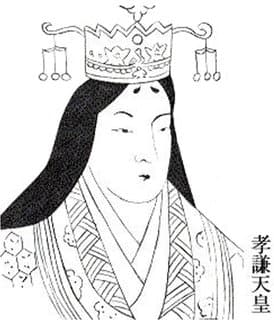
Nara, at dusk on a day in the Jingo-keiun era. In a room of the Heijō-kyō palace where incense still burns, Empress Shōtoku — whom the world first knew as Kōken — receives visitors by lamplight, a prayer still on her lips. She speaks slowly, like a sovereign who has reigned twice and buried an emperor.
—Let us go back to your youth: what was, for the princess Abe that you were, the first great tremor of faith?
It was the statue. My father, Emperor Shōmu, had cast in bronze a Buddha so vast that it seemed like a seated mountain. In the year 752, at Tōdai-ji, I attended the kaigen ceremony — the opening of the eyes. A monk from across the seas painted the pupils of the Great Buddha, and at that moment divine life entered the metal. I was surrounded by monks who had arrived from China, India, and Korea; never had I seen so many saffron robes gathered under one roof. My father had exhausted the treasury and the copper of the empire for this work, and many reproached him for it. As for me, that day I understood that governing and praying were not two separate gestures, but one.
A monk painted the pupils of the Great Buddha, and divine life entered the metal.
—When you ascended the throne in 749, what promise did you make to your people?
I proclaimed, as the scribes of the Shoku Nihongi record, that 'we will govern the kingdom relying on the Law of Buddha and the law of men, so that all may live in peace.' This was no empty word. The ritsuryo system had given us codes from China, registers, thousands of wooden tablets; but an empire is not held together by penal laws alone. I continued my father's great design: in each of the sixty-six provinces, a temple, a kokubunji, where sutras would be copied and prayers offered for the prosperity of the people. The official holds the brush, the monk holds the incense; it is from their two joined hands that the order of the world is born.
—Many sovereigns are content to build palaces. Why devote such wealth to copying sacred texts?
Because a palace protects one man, a sutra protects a nation. I had countless scrolls copied and distributed throughout the country, especially the Lotus Sutra. Every character traced by the brush of a pious scribe is an invisible brick in the rampart that guards Japan from epidemics and revolts. You did not know the year 737, when smallpox cut down half of our greatest families like a scythe in a rice field — I, as a child, saw the court empty. Against such a scourge, neither spears nor granaries suffice. The kokubunji and the nunneries of Hokke-ji that my mother supported form a net of prayers stretched from one end of the empire to the other.
A palace protects one man, a sutra protects a nation.
—In 758, you did something rare for a sovereign: you abdicated. How does one make such a decision?
One does not leave the throne; one steps back. I ceded the imperial seat to Junnin and took the title of Jōkō, the sovereign who has abdicated but still keeps a hand on affairs. I drew closer to the monastery, to morning devotions, to incense and sutras recited before dawn. Many thought I was setting like the sun. They were mistaken: from my retreat, I saw the court better than from the dais. Power is not the seat one occupies; it is the word that is obeyed. And Junnin would soon learn, to his cost, that I was listening to everything.
One does not leave the throne; one steps back.
—You returned to power in 764, an almost unheard-of thing. What really happened between you and Emperor Junnin?
Junnin dared to lecture me in public about my life and my religious associations. An emperor I myself had seated! That same year, General Fujiwara no Nakamaro took up arms against me. I crushed his rebellion, exiled Junnin, and reascended the throne under the name Shōtoku. To reign twice — how many sovereigns in this world can say that? I did not seek it out of appetite for the seat. But when one has received from the gods the guardianship of the sacred mirror and the insignia of the lineage of Amaterasu, one does not let an ungrateful man tear apart the celestial order. I took back what was mine, as one rights an overturned lamp.
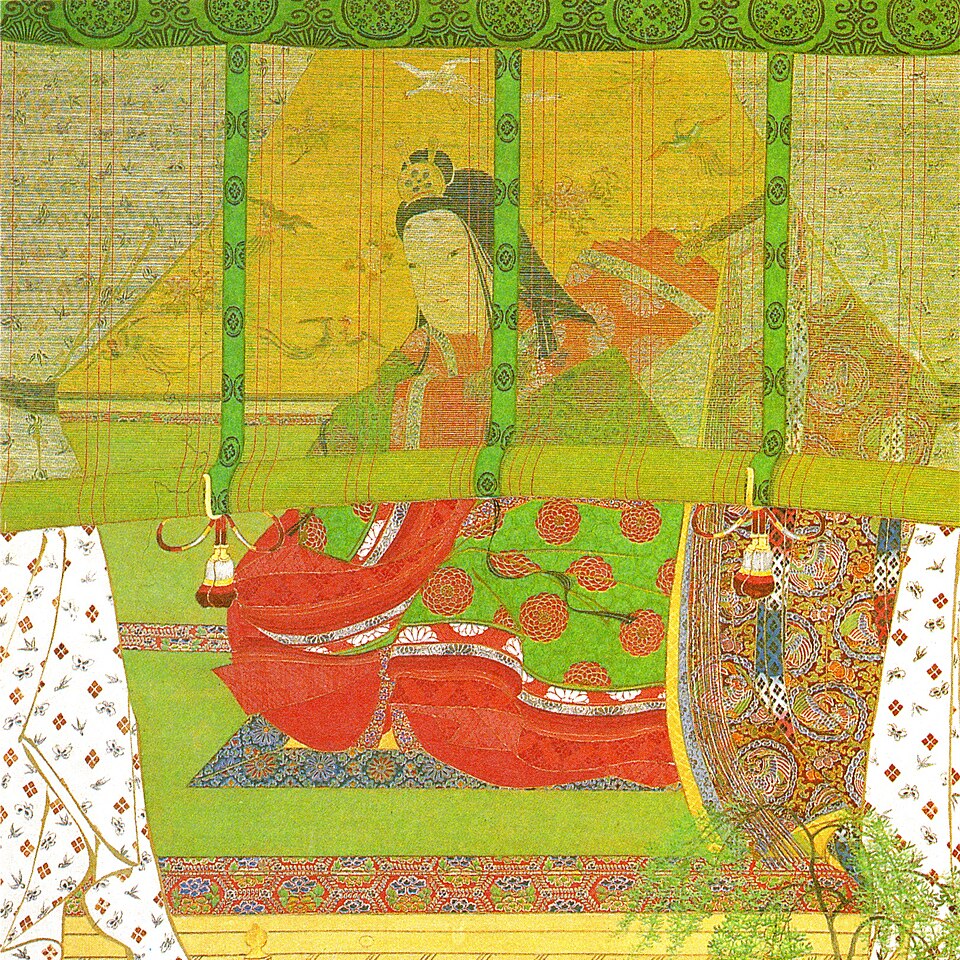
—After that victory in 764, you launched a project of dizzying scope. Tell us about the pagodas.
The Buddha had given me victory; I owed him my gratitude, and I had to purify the faults of all living beings, including those shed in the blood of the revolt. I ordered the making of one million small wooden pagodas, barely twenty centimeters high, each containing a prayer — a darani — printed on a strip of paper. One million! Hundreds of artisans labored for years, turning wood, pressing engraved boards onto paper. These pagodas are called the Hyakumantō. I did not know, when giving this order, that I was giving birth to one of the greatest printing works the earth had ever seen. I was thinking of the souls of the dead, not the glory of the living.
I was thinking of the souls of the dead, not the glory of the living.
—Why print the same prayer a million times, rather than have your monks recite it?
Because a monk's voice dies with his breath, but the engraved character remains. Each darani enclosed in its wooden pagoda is a prayer that continues to pray on its own, without fatigue, day and night, in the silence of the temples where they are placed. Multiply that murmur by a million, and you get a blanket of merit spread over the entire empire. We already had the mokkan, those wooden tablets on which my officials record harvests and orders; I wanted the same patience of wood and ink to serve not for grain, but for salvation. It is the ritsuryo of the soul: an accounting of grace, kept in a million writings.
—One name recurs in all the rumors of your court: that of the monk Dōkyō. What did he represent for you?
A healer first, then a guide. When illness seized me, it was Dōkyō who treated me with his prayers, and I never forgot a hand extended in suffering. I raised him rank after rank, up to the title of Hōō — Dharma King — which no monk had ever held before. I was reproached for confusing fervor with favor. But tell me: when a man brings you back from the threshold of death by the sole power of the Dharma, is that not a sign that the Buddha speaks through his mouth? The court trembled, murmured, counted my gestures. I saw a saint where the Fujiwara wanted to see only an intruder.
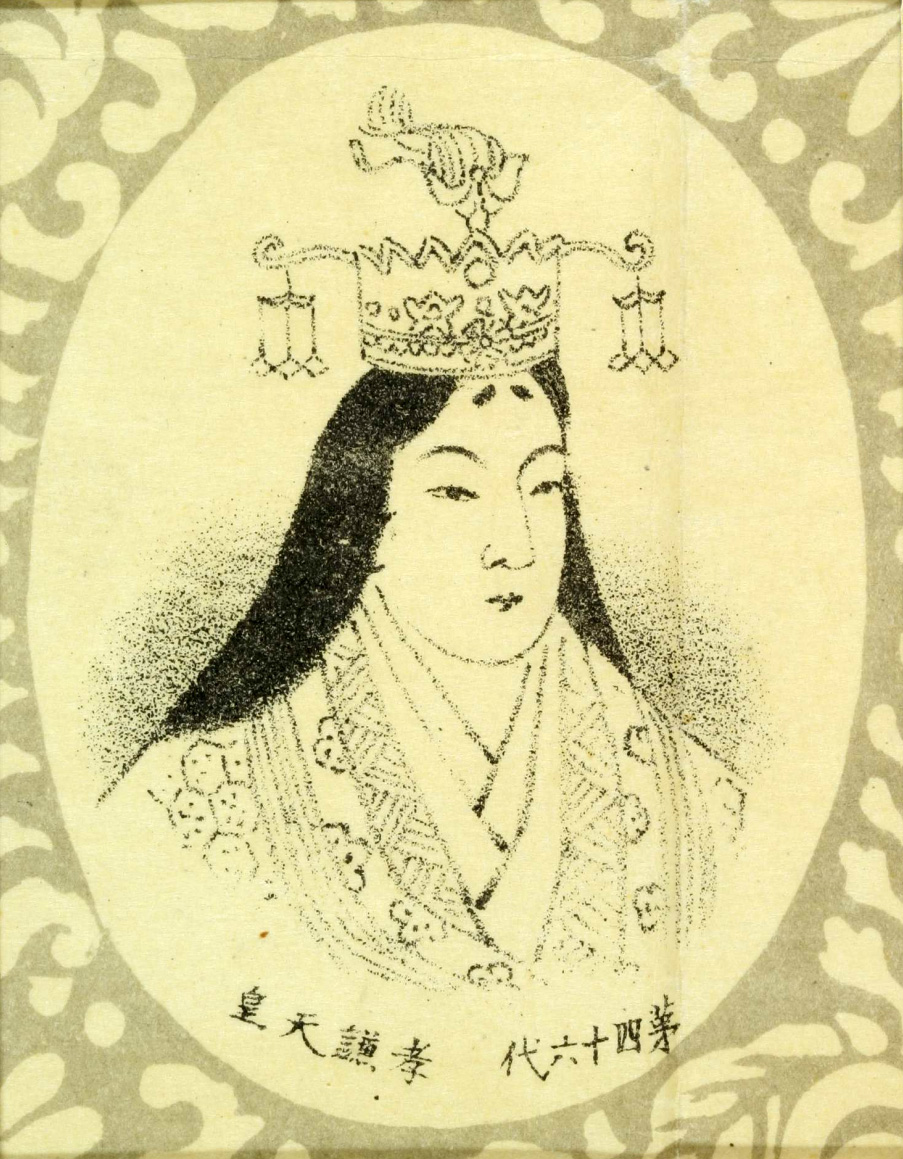
—It was claimed that you wanted to pass the throne to him. How did that affair end?
The rumor swelled like a monsoon river: Kōken wants to make her monk an emperor. To settle it, the oracle of the great shrine of Usa Hachiman in Kyushu was consulted, where the god delivers his judgments. The answer came, cutting: no one not of imperial blood may ascend the celestial seat. The throne of Japan is not given like land or a title; it descends from the sun goddess, and even an empress cannot undo that. I bowed before the oracle — for who am I to contradict the gods of my own lineage? What became of Dōkyō after me, I no longer had to see.
The throne of Japan is not given like land; it descends from the sun goddess.
—You mingled with monks from distant lands. What did these travelers of faith bring you?
The wind from the open sea and the light of the continent. In 754 arrived Ganjin — Jianzhen, the Chinese master who had attempted the crossing six times and lost his sight in storms before reaching our shores. A blind man who crossed the sea to transmit the rules of ordination: what a lesson in constancy! We supported the founding of his temple, Tōshōdai-ji, in Nara. These monks brought us sutras, the kaigen rites, the melodies of gagaku that resounded at our evening banquets. Our capital of Heijō-kyō was built in the image of Chang'an, but it was these men, and not the walls alone, that made Nara a true daughter of the Dharma.
—No woman will reign over Japan after you for a very long time. If you could imagine being read in a distant future, what face would you want to be remembered by?
I do not know what the centuries will say; the chroniclers of the Shoku Nihongi will write as they please, and the victors hold the brush. Perhaps all that will be remembered of me is the scandal of a monk and the stubbornness of a woman twice ascended the throne. But I remember the dawns spent reciting sutras before my ministers crossed the gate, the smell of incense in the red-lacquered palace, the million little pagodas laid like so many grains of rice sown for the harvest of salvation. Whether they call me Kōken or Shōtoku, what does the name matter: I governed by the Law of Buddha and the law of men. The rest belongs to the gods of Usa and Amaterasu.
The chroniclers will write as they please, and the victors hold the brush.

This imaginary interview was generated by artificial intelligence from sources documented in Koken's profile. It dramatises what the figure might have said based on what we know about them, but does not constitute attested historical testimony. For primary sources and factual documentation, refer to the full profile.