Imaginary interview with Lady Montagu
by Charactorium · Lady Montagu · Literature · Sciences · 6 min read
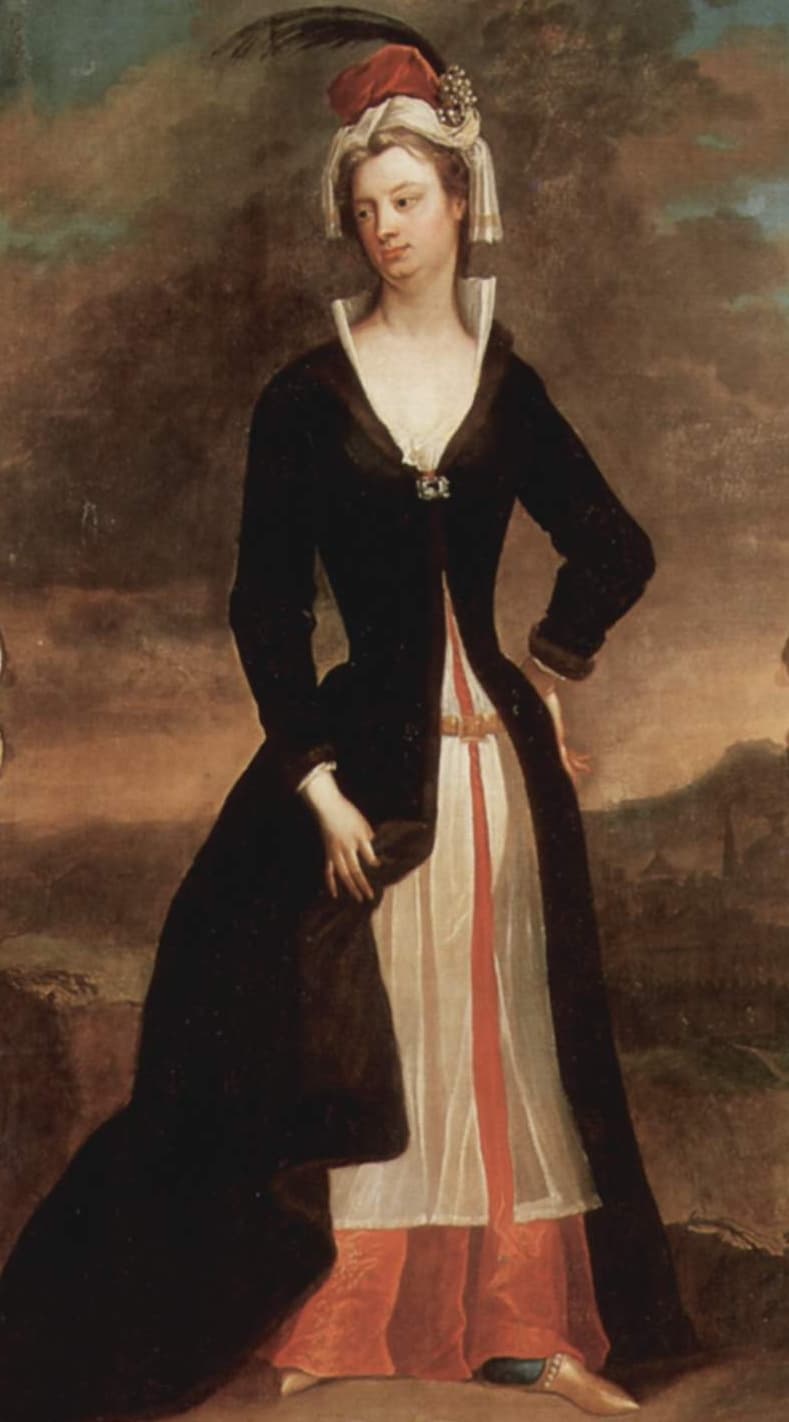
Constantinople, a spring morning in 1718. On a terrace of the British embassy in Pera, overlooking the Bosphorus, Lady Mary Wortley Montagu receives us in a long embroidered robe in the Ottoman fashion, a half-closed letter resting on her lap. The light skims the marble; she speaks in a clear voice, where the worldly irony of London mingles with something more serious.
—Before the Orient, there was illness. What do you keep from the year 1715?
In 1715, smallpox entered my home like a thief. I came out alive, which many cannot say — my own brother, he did not have that grace. But it took what London called my complexion, and even my eyelashes. I was called beautiful; I became something else. For a long time I avoided Venetian mirrors, those silent judges that forgive nothing. Believe me, when you have seen smallpox disfigure the rich as well as the poor, you never again consider an illness a mere matter for doctors. It was this wound, I think, that made me so attentive, two years later, to what the women here were doing.
I was called beautiful; I became something else.
—Do you remember the day you saw, with your own eyes, inoculation being practiced?
It was near Adrianople, in the spring of 1717. Old women came, a nutshell full of matter taken from a patient with mild smallpox, and a long needle. They opened a vein — almost nothing, a prick — and inserted the disease like sowing a seed. I wrote to my friend Sarah Chiswell that “they make a small incision in the vein and introduce as much virus as can lie on the head of a pin.” No solemnity, no wigged surgeon: matrons, a little blood, and eight days of mild fever. The children were running again the following week. I understood then that the Orient possessed, without scholars or College, a remedy that all our Europe ignored.
No solemnity, no wigged surgeon: matrons, a little blood, and eight days of mild fever.
—How does one find the courage to inoculate one's own child?
One does not find it, madam; one steals it from one's fear. Here, in Constantinople, I begged the embassy surgeon, Charles Maitland, to perform the operation on my son, who was only five. No European had dared it before me. The previous night, I admit, I weighed the mild fever of inoculation against the coffin that natural smallpox prepares for so many children. I had seen what the disease does; that is what decided me. The little one had a few pocks, a bit of heat, then nothing more. A mother who has survived the disease cannot resign herself to letting it stalk her son in the shadows. I chose to take that risk myself, rather than wait for chance.
One does not find courage; one steals it from one's fear.
—Back in London, why a public demonstration, and not simply a discreet word to the doctors?
Because a discreet word dies in a drawing-room, and I wanted it to live. In 1721, smallpox was ravaging London; I had my four-year-old daughter inoculated, and this time before witnesses, doctors from the Royal College of Surgeons invited to see with their own eyes. What could they object to a child who was doing well? I had written to my sister, the Countess of Mar, that “I am patriot enough to take pains to bring this useful invention into fashion in England.” They called me mad, spoke of a lady's whim returned from the Turks. But when Princess Caroline of Ansbach in turn had her children inoculated, the mockers fell silent. A woman, sometimes, must make a spectacle of herself to be believed.
A discreet word dies in a drawing-room; I wanted it to live.
—Did the doctors of Europe take your word for it?
Good heavens, no. A woman, an aristocrat without a degree, reporting a practice of Turkish peasant women — imagine their faces! They considered variolation an Oriental superstition, at best a traveler's curiosity. I had to let my letters circulate hand to hand among them, like a clandestine gazette, until the facts spoke louder than my person. I kept repeating what I had verified on the spot: “I am very well satisfied that it is perfectly safe as it is performed.” What bothered them, deep down, was not the danger of the operation, but that it came from elsewhere, and by a woman's hand. Truth, I have learned, takes longer to cross a prejudice than a sea.
Truth takes longer to cross a prejudice than a sea.
—Let us talk about the Orient as you saw it. What did you find at the baths that your compatriots did not imagine?
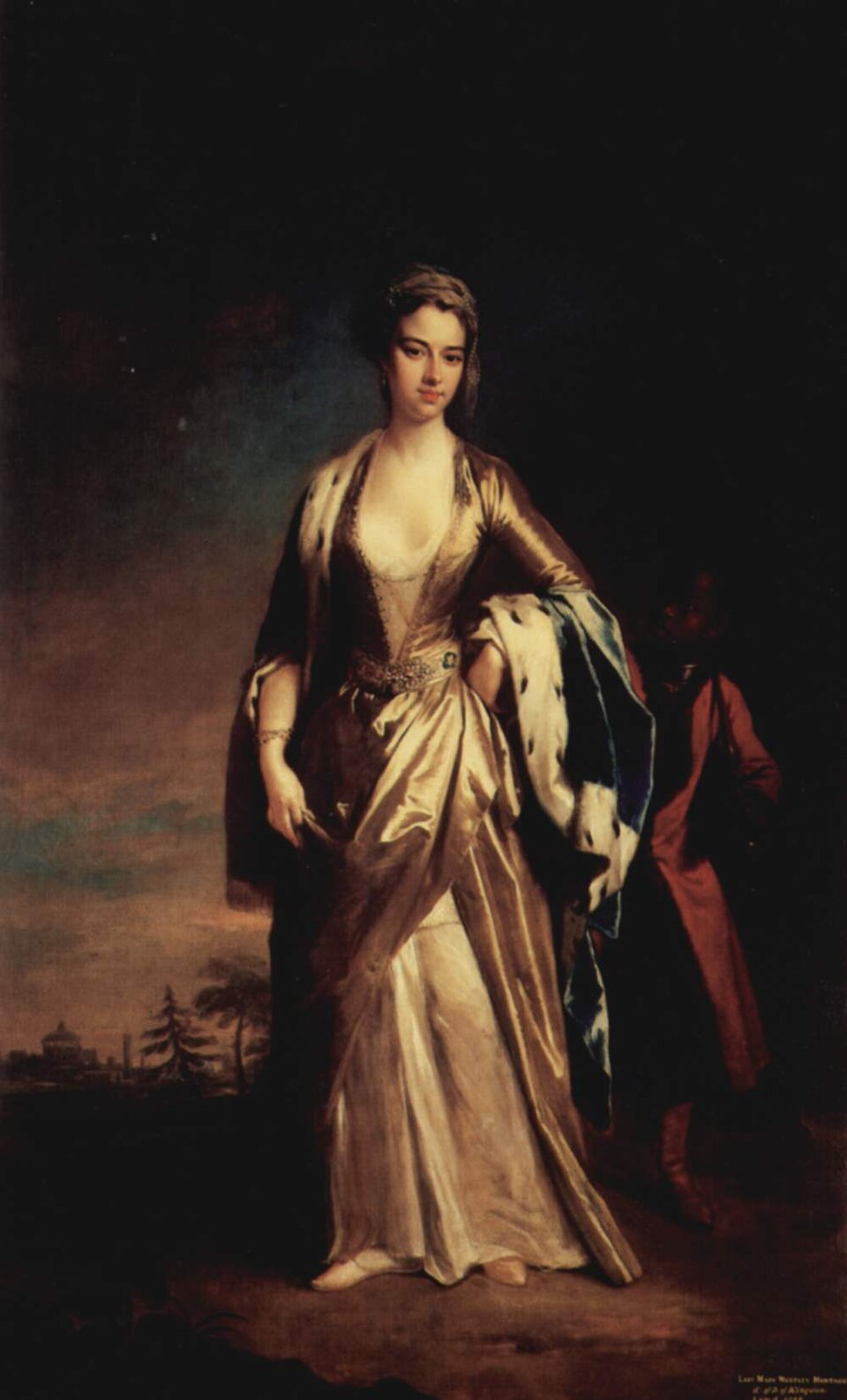
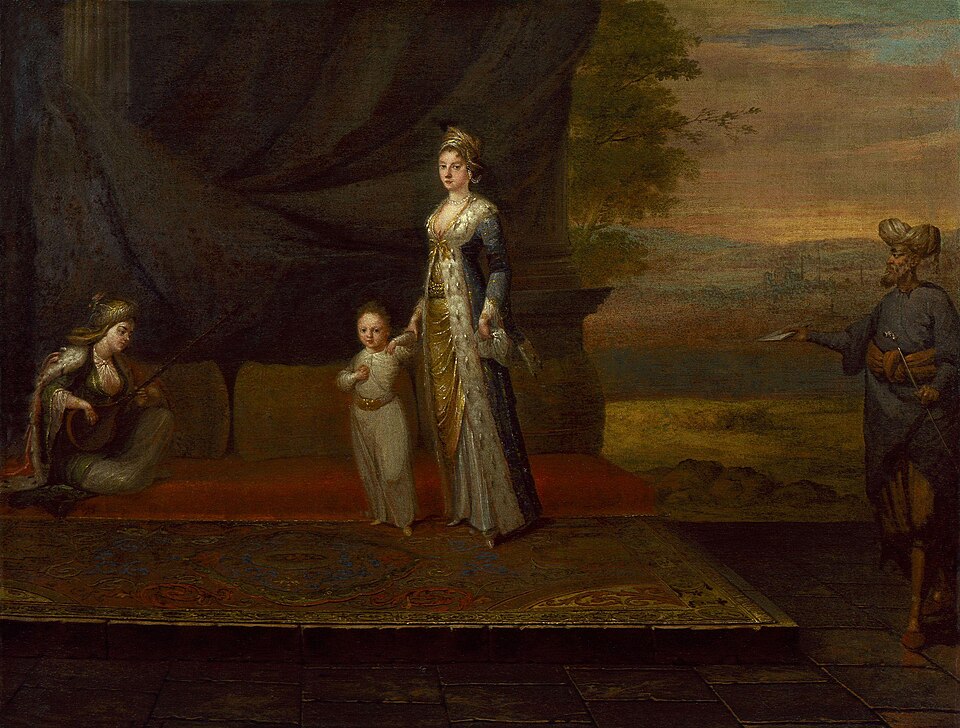
I found the opposite of what I had been promised. Our travelers painted languishing prisoners; I saw, in the hammam, women laughing, chatting, drinking coffee among themselves, freer in that enclosed place than many London ladies in their drawing-rooms. To enter, I had to shed my hoop skirts and don the local costume — long embroidered robe, light veil. Strange lesson: this veil, which we take for a chain, lets them walk the streets unrecognized. I recorded all this in the letters that would become my Embassy Letters. I took as much care describing a steam room as an ambassador does reporting a treaty — for it is there, not in audiences, that a society is read.
This veil, which we take for a chain, lets them walk the streets unrecognized.
—You write in the morning, they say. What are your days like in Pera?
I rise early, when the Bosphorus is still gray, and I give my first hours to pen and ink — it is the only time the embassy is quiet. Mornings, sometimes, take me to the women's baths, where I observe and listen more than I speak. Afternoons belong to visits, receptions, the endless politeness of the Ottoman Porte. When evening comes, I often prefer my library to yet another dinner, a candle and a book to a diplomat's conversation. I discovered Turkish coffee here, that black, bitter drink that keeps the mind awake better than any wine — I fear I have acquired a taste for it for life. People think an ambassador is busy with great affairs; his wife, meanwhile, has the leisure to see everything.
People think an ambassador is busy with great affairs; his wife, meanwhile, has the leisure to see everything.
—Before the Orient, you already wielded a pen in London circles. How did you enter them?
Through laughter, first. In 1716 I composed Town Eclogues with Alexander Pope and John Gay, gently mocking the social comedy of the city — the loves, the vanities, the backstage intrigues of a capital that takes itself seriously. A woman who wants to write, in London, must be cunning: they tolerate her shining in a letter, they are alarmed if she publishes. So I made both my domain. Later, I ran an entire journal, The Nonsense of Common-Sense, under the cloak of anonymity, to defend the ministry against its detractors. Wielding irony was my only armor and sometimes my only sword: it is the weapon of witty people to whom no other power is granted.
They tolerate a woman shining in a letter; they are alarmed if she publishes.
—You eventually left England and your husband. What did you go looking for on the continent?
Air, simply. In 1736, I closed the door on a marriage that had become a polite convention and left, alone, which a woman of my rank was not supposed to do. I lived for years in Italy, in Brescia and elsewhere, corresponding with Enlightenment minds, reading Locke and Newton at my table as others read their missal. People imagined me exiled; I felt delivered. I had long maintained a correspondence with strong-minded women, such as Madame de Tencin in Paris. What was I seeking? The right to think without a husband, a father, or a drawing-room asking my permission. I only returned to London in 1761, widowed at last of all those constraints as much as of my spouse.
People imagined me exiled; I felt delivered.
—At your age, what would you say to a young woman about what remains when beauty fades?
I would tell her what I wrote to my daughter, the Countess of Bute: “the only solid consolations of old age are a mind exercised in all its powers and a conscience that has nothing to reproach itself with.” Smallpox had taken my face from me by the time I was twenty-six; I had ample leisure to learn that the mirror is a poor counselor. What remains are the letters one has written, the ideas one has defended, the children one has saved from a fever. Cultivate your understanding like a garden: features wither, the mind strengthens. I lost my complexion and gained a life worth telling — I am not sure I would have traded.
Features wither, the mind strengthens.
Read further
This imaginary interview was generated by artificial intelligence from sources documented in Lady Montagu's profile. It dramatises what the figure might have said based on what we know about them, but does not constitute attested historical testimony. For primary sources and factual documentation, refer to the full profile.