Imaginary interview with Laskarina Bouboulina
by Charactorium · Laskarina Bouboulina (1771 — 1825) · Military · 6 min read
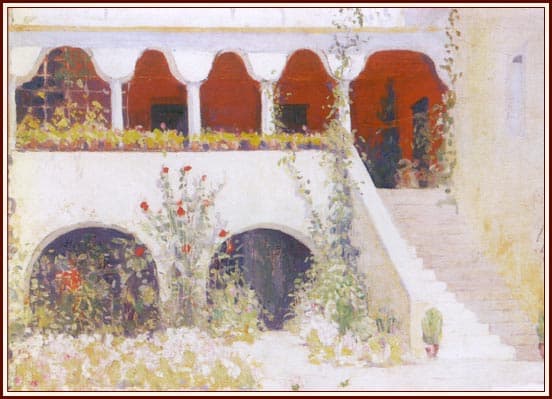
Spetses, an autumn evening in 1824. In the stone archontiko overlooking the port, a hard-eyed woman receives us, her pistols still lying on the table among sea charts and sealed letters. In the distance, her fleet sways on the waters of the Saronic Gulf; she agrees to speak, in a low voice, as one confides a war secret.
—They say your life began under extraordinary circumstances. Where were you born?
In a prison in Constantinople, in 1771. My mother had come to visit my father, a Greek captain held by the Ottomans, and it was between those damp walls that I let out my first cry. I have been told the story so many times that I sometimes think I remember it: the smell of cold stone, the bolts, the voices of the Turkish guards. When you are born behind bars that another people have erected over your own, you do not learn hatred — you already have it in your blood from birth. I never needed anyone to explain to me why the Greeks had to rise. I knew it before I knew how to walk. That prison was my first cradle and my first enemy.
When you are born behind bars that another people have erected over your own, you already have hatred in your blood.
—How did you raise the money to arm a warship?
My husbands left me two fortunes and a fleet; the Ottomans wanted to strip me of the rest; I chose to burn it all in the same flame. In 1820, I had the Agamemnon built, the most powerful corvette Spetses had ever seen, and to pay for it I sold my jewels — those inherited golds, those necklaces of a rich widow that women keep to appear. What good is it to shine at a ball when you can arm cannons? I preferred to see my gold melted into cannonballs rather than around my neck. The island's notables thought I was mad to throw my fortune into the sea. But that corvette never betrayed me. She bore my war name better than my rings would have borne my vanity.
I preferred to see my gold melted into cannonballs rather than around my neck.
—What did that corvette, the Agamemnon, represent for you beyond a mere ship?
It was my castle and my fist. From the deck of the Agamemnon, spyglass in hand, I saw everything: the Ottoman sails appearing on the horizon, the maneuvers of my own squadron, the port of Spetses shrinking behind me. A shipowner who does not board his ships is only a merchant; I commanded in person, and my captains knew it. I had wanted this ship larger, more armed, faster than all the others on the island, because a revolution is not won with fishing boats. When I placed my hand on its wood, I felt the money from my two widowhoods, the sweat of the family shipyard, and my own stubbornness. The Agamemnon did not belong to me. I belonged to it.
A shipowner who does not board his ships is only a merchant.
—Do you remember the day you raised the flag of revolt?
March 13, 1821. The uprising had not yet been declared — the cautious waited, the wise calculated, the diplomats weighed words — and I, on my ships at Spetses, raised the insurrectionary flag. Several weeks before Greece dared to say aloud that it was rising. I could have been hanged for less. But at my age, after a birth in prison and two husbands buried at sea, I feared little except a life spent bowing my head. Raising that flag was not a calculation; it was a cry. I wanted my islands to see, before anyone else, that a woman had not waited for men's permission to call her people to arms.
I feared little except a life spent bowing my head.
—How, concretely, did one lead a naval blockade against Ottoman fortresses?
You strangle, slowly. At the head of my squadron, in 1821, I closed the coasts of the Peloponnese like tightening a rope around a neck: nothing enters, nothing leaves, neither supplies, nor reinforcements, nor hope. The Turks locked in their strongholds saw our sails circling offshore, day after day, unable to drive them away. It is a battle of patience as much as of powder. At Nafplion, I held the blockade with the other captains, knowing that a starved fortress falls more surely than a bombarded one. The sailors called me kapetánissa, the woman-captain, and I wore that word with more pride than any title. For it had to be coined especially for me: the language itself had not foreseen that a woman would command warships.
A word had to be coined especially for me: the language had not foreseen that a woman would command warships.
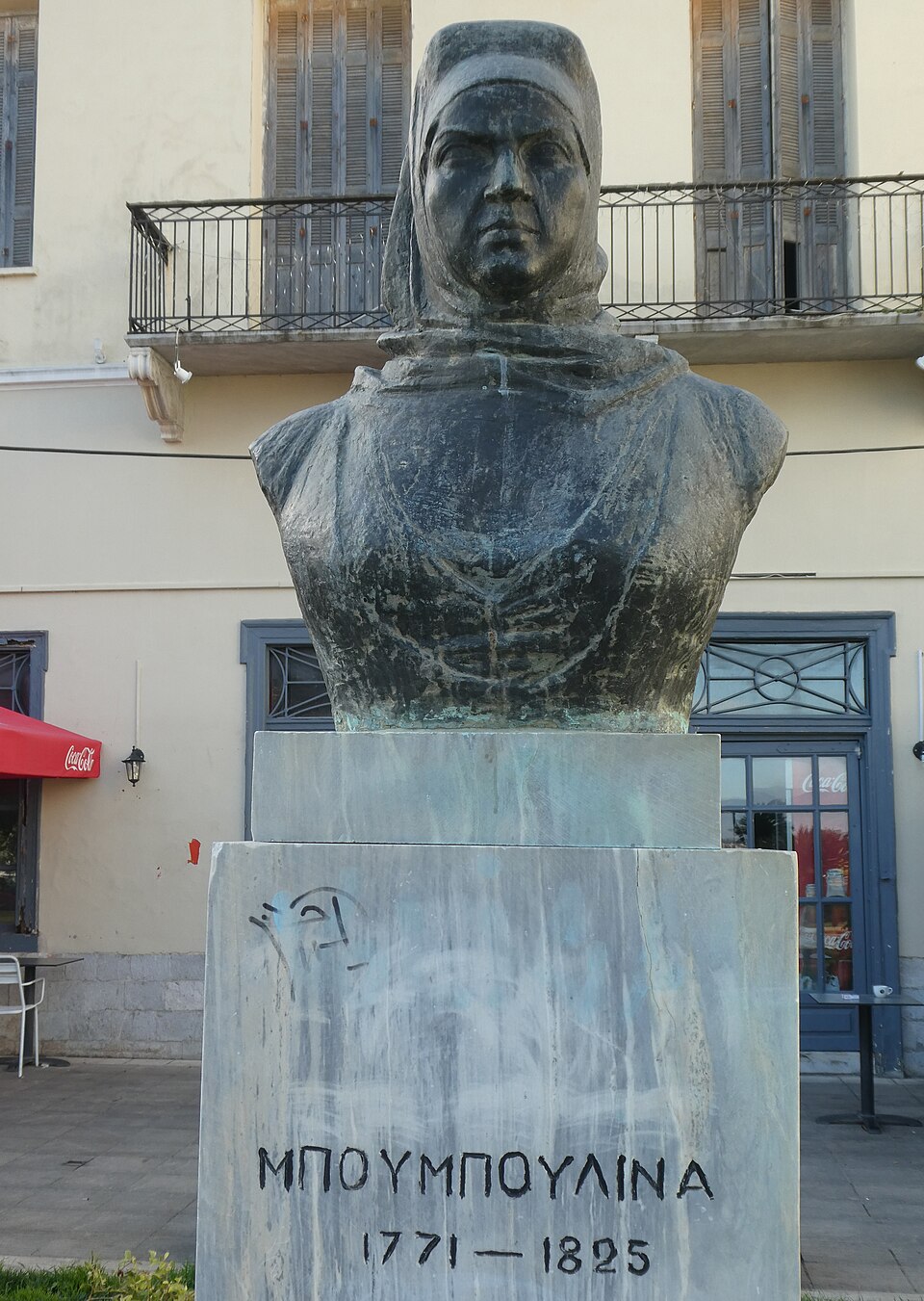
—They say you fought yourself, weapons in hand. How much truth is there in those stories?
The stories embroider, I know, and I let them — a little legend never harms a cause. But yes, I wore my flintlock pistols at my belt, and not for ornament. Before Nafplion, I was seen landing, going down among my men, shouting at them to hold firm when their courage faltered. A commander who stays safe while his sailors die deserves neither their obedience nor their love. So I walked with them. If the storytellers exaggerate, if they paint me with pistol in hand leading the assault, so be it: if that image raises other Greeks, it is worth more than tepid truth. A revolution needs stories as much as cannonballs. I gave both.
A revolution needs stories as much as cannonballs. I gave both.
—You were admitted into the Filiki Eteria. What did that mean for a woman of your time?
The Filiki Eteria, the Society of Friends, was the shadow in which the revolution was prepared. A brotherhood of men, of oaths, of secret signs — and I was admitted, the only woman to cross that door. They did not open it out of gallantry, believe me: they opened it because I had ships, gold, and networks from one end of the Aegean to the other. In the evenings, in this house at Spetses, I received captains and initiates; beneath trivial discussions hid plans for insurrection. I put my fortune and my fleet at the service of that clandestine cause before it dared to appear in broad daylight. Men accept a woman into their secrets when she brings them what they themselves do not have.
They did not open their secrets to me out of gallantry: they opened them because I had ships and gold.
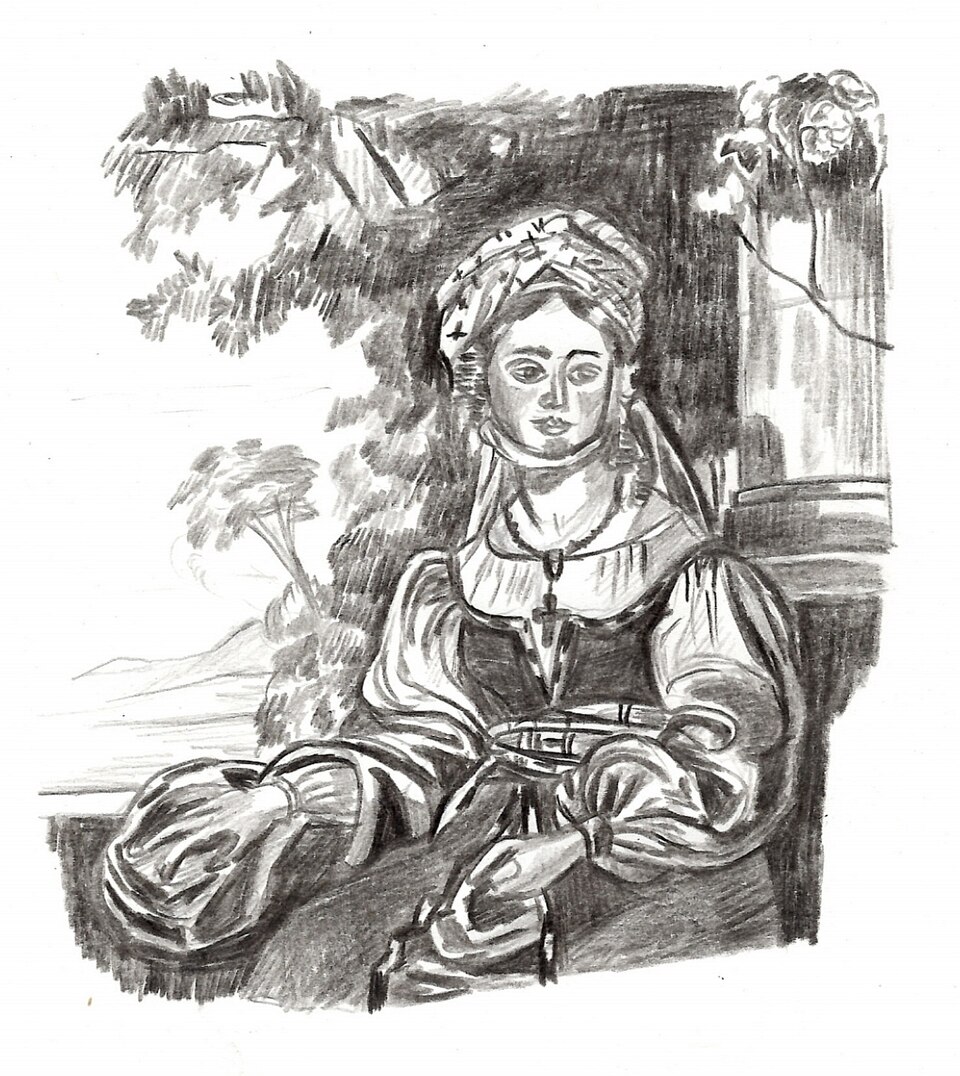
—Why commit your entire fortune to such an uncertain venture?
Because gold kept in an armorer's chest only serves to enrich one's heirs, and I wanted to enrich my people with something else: freedom. Between 1821 and 1822, I paid for armament, sailors' wages, troop supplies — I was one of the largest donors to this war, and I say it without modesty, for modesty never armed a single ship. Many notables kept their purses closed, waiting to see which way the wind would blow. I preferred to risk everything now than regret everything later. A fortune without a cause is dead weight. I could have died rich and submissive; I chose to ruin myself free. That is the only investment I have never doubted.
I could have died rich and submissive; I chose to ruin myself free.
—At the capture of Tripolitsa, they say you protected enemy civilians. What happened?
Tripolitsa, October 1821. The city taken, blood calling for blood, our men drunk with vengeance after centuries of humiliation. And in the midst of that fury, the women and children of the governor's harem, trembling, condemned to massacre for the sole crime of being born on the wrong side. I intervened. I placed my body and my name between them and the sabers. They looked at me as if I were mad: why save the enemy? But I had sworn to fight oppression, not to copy it by reversing it. Slaughtering children does not make a nation free; it sullies it. I hated the Ottomans all my life; that did not authorize me to become what I reproached them for. That day, I defended my cause better than in any battle.
I had sworn to fight oppression, not to copy it by reversing it.
—Did your comrades-in-arms understand that compassion toward the enemy?
Few, at the time. For many, a raïa who has been silent for three centuries has the right to burn everything the day he rises. I understand that fury — I was born in prison because of those people, do not forget. But to command is not only to lead ships; it is to hold a line within oneself when everything pushes to cross it. At Tripolitsa, I saw men I respected lose their souls in the sack of the city. I could not stop them all; I saved those my two hands could cover. Perhaps they will remember my blockades and my Agamemnon, but if anything of me deserves to last, it is those women and children I snatched from the knife.
To command is not to lead ships; it is to hold a line within oneself when everything pushes to cross it.
This imaginary interview was generated by artificial intelligence from sources documented in Laskarina Bouboulina's profile. It dramatises what the figure might have said based on what we know about them, but does not constitute attested historical testimony. For primary sources and factual documentation, refer to the full profile.