Kids interview Laskarina Bouboulina
by Charactorium · Laskarina Bouboulina (1771 — 1825) · Military · 5 min read
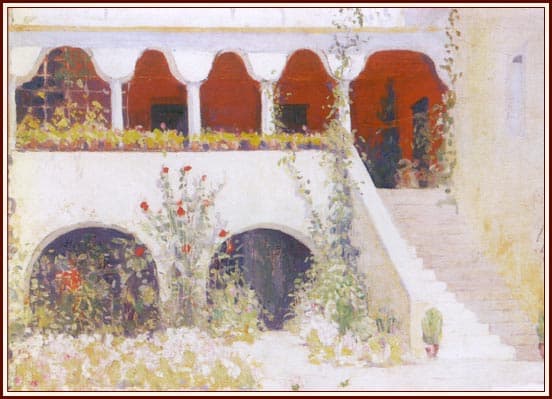
Two young visitors, on a field trip on a Greek island, push open the door of an old mansion overlooking the port. A sharp-eyed woman, dressed in a long embroidered dress, waits for them near the window. She motions for them to sit down: today, she is the one telling the story.
—Is it true you were born in a prison? That's a scary story!
Yes, my child, it's quite true. I was born in 1771 in a dungeon in Istanbul, the capital of the Ottoman Empire. Imagine cold walls, a heavy door, and my mother visiting my father, a Greek captain who had been thrown in there. I came into the world in that cell. Many later told me it shaped my character. Perhaps. When you begin your life behind bars placed by an occupier, you grow up with an idea planted in your heart: one day, you must be free. I never forgot that idea.
When you are born behind bars, you grow up with an idea in your heart: to be free.
—And how did you become so rich, with your own ships?
You know, I married twice, and twice I became a widow. My first husband was a captain; the second, Dimitrios Bouboulis, a wealthy shipowner from this island, Spetses. A shipowner is someone who owns vessels, equips them, and pays the sailors. When he died around 1811 fighting pirates, I inherited his ships and fortune. Many women would have entrusted it all to a man. Not me. I learned to read accounts, to oversee shipyards, to command. My misfortune — losing two husbands — became my strength.
My misfortune — losing two husbands — became my strength.
—They say you sold your jewels for a warship. Isn't that crazy?
Crazy, perhaps. Necessary, certainly! In 1820, I had my finest corvette built, the Agamemnon. A corvette is a sailing warship bristling with cannons. Mine was the most powerful in the entire fleet of Spetses. But such a ship costs a mountain of gold. So I sold my jewels, those my husbands had given me, and part of my fortune. My servants looked at me as if I had lost my mind. But I saw further: earrings do not liberate a people. An armed ship does.
Earrings do not liberate a people. An armed ship does.
—Were you sad to give away all your money? What did you keep for yourself?
Sad? No, my child. I had everything I needed: my stone house overlooking the port, my children, and the sound of hammers on the hulls of my ships. In the morning, I rose early to inspect my vessels with my captains. That was my true wealth. Money, I kept in my large shipowner's chest, a wooden chest bound with metal where I stored contracts and coins. But that money did not sleep long: it served to pay the sailors, the powder, the bread. What use is a locked treasure, tell me, when your country calls?
What use is a locked treasure, tell me, when your country calls?
—What is that secret society where you were the only woman?
Ah, the Filiki Eteria! In Greek, it means 'Society of Friends.' It was a secret organization that secretly prepared the Greek uprising against the Ottoman occupier. One entered by oath and recognized each other by signs. And imagine, I was admitted in 1820 — the only woman, ever. Can you picture it? Men accustomed to deciding among themselves accepted that a widow from Spetses sit among them. Not out of gallantry: because I had ships, gold, and a will that could not be ignored. They didn't make room for me. I took it.
They didn't make room for me. I took it.
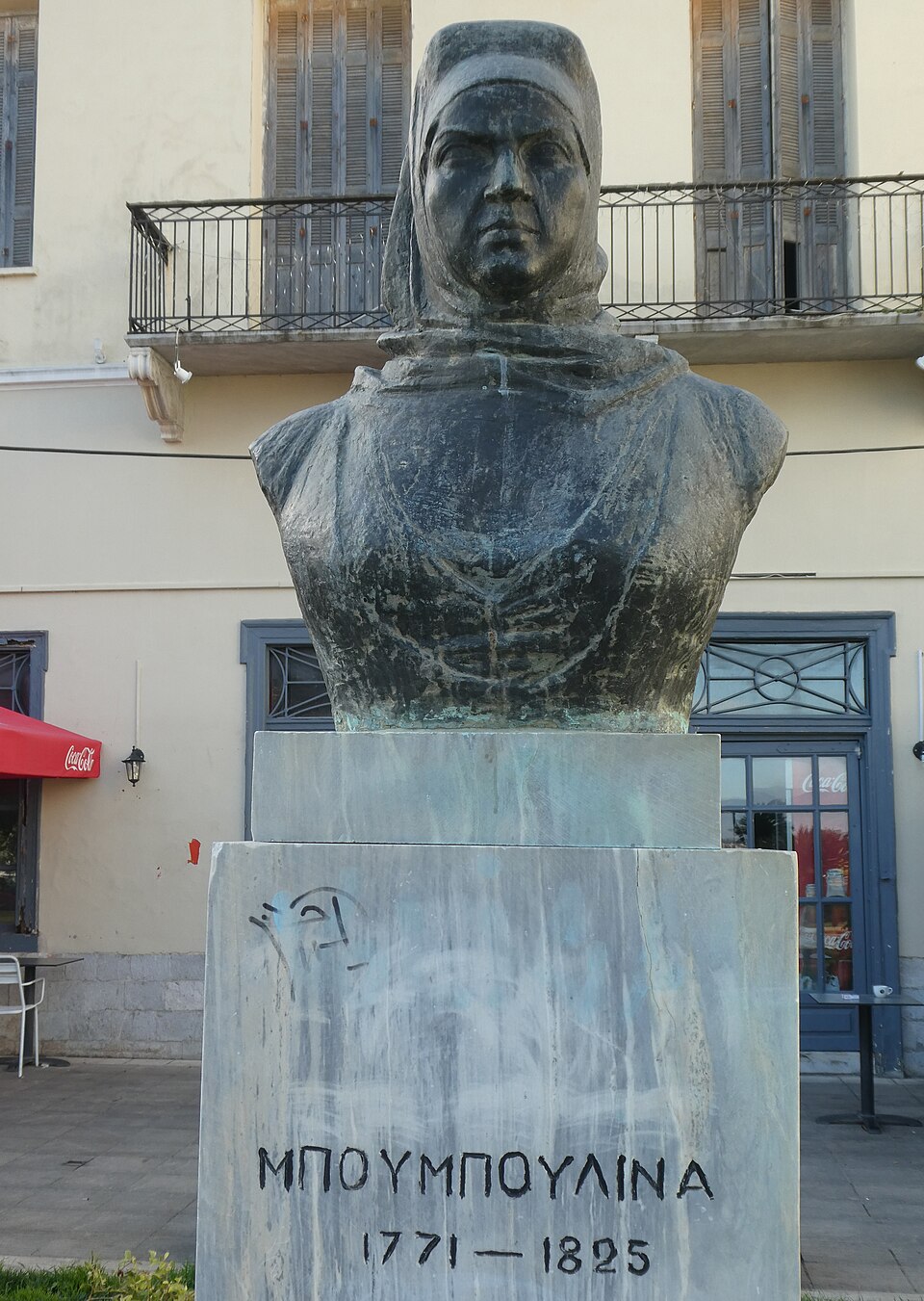
—Were you afraid when you raised your flag before everyone else?
On March 13, 1821, yes, my heart was pounding. The revolution had not yet officially begun — that was March 25. But I, several weeks earlier, had the flag of the insurrection raised on my ships here in Spetses. Picture the scene: the fabric snapping in the morning wind, my sailors holding their breath, and in the distance the Ottoman threat. If we failed, it meant death, perhaps for my children too. But someone had to dare the first move. I preferred to tremble while acting than to stay silent safely.
I preferred to tremble while acting than to stay silent safely.
—What was it like commanding sailors as a woman?
Not easy, I won't lie! On the deck of the Agamemnon, I wore my flintlock pistols at my belt — these were weapons loaded through the muzzle, a spark igniting the powder. It wasn't for show: a captain must show he is not afraid. I took my spyglass to spot Ottoman ships in the distance, then gave my orders. Some sailors first sneered: a woman giving orders! But at sea, judgments are quick. When you know how to read the wind and keep your cool under cannon fire, no one laughs anymore.
When you know how to read the wind and keep your cool under cannon fire, no one laughs anymore.
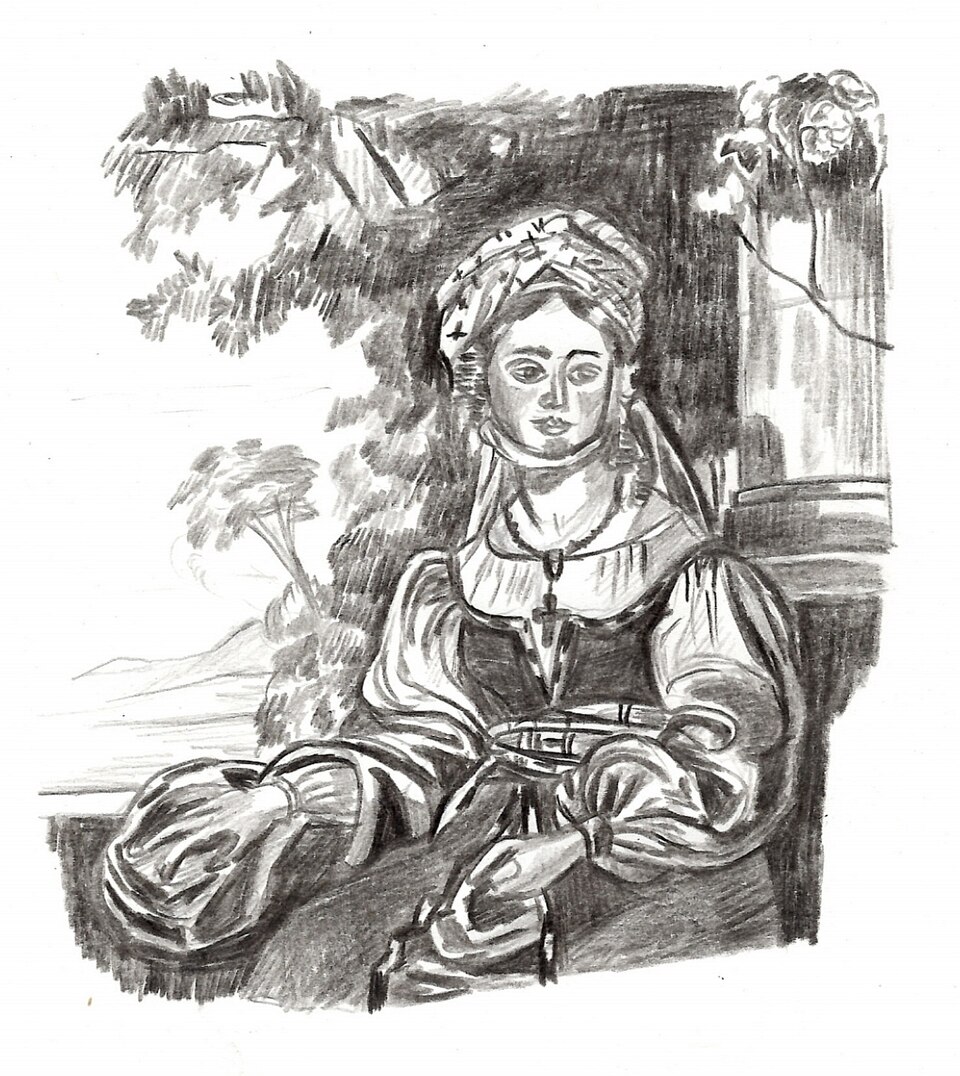
—What was a blockade? And is it true you attacked on land, pistol in hand?
A blockade, my child, is surrounding a port with your ships so that no enemy vessel can enter or leave. No more bread, no more soldiers, no more powder for those trapped inside. From 1821, I led this blockade against the Ottoman fortresses of the Peloponnese, then before Nafplion. That is true and proven. Now, they also say I landed pistol in hand to lead the assault on land. I'll tell you honestly: that story is surely embellished. Beware of beautiful legends, even when they speak of you. The truth stands well enough on its own.
Beware of beautiful legends, even when they speak of you.
—During the capture of Tripolitsa, why did you protect your enemies?
When the city of Tripolitsa fell, in October 1821, it was terrible. A city taken by force means screams, fire, soldiers out of control. In the palace of the Ottoman governor lived women and children, his harem — that is, the part of the house reserved for women. They say I intervened to protect them. Why? Because a child crying in fear is not my enemy, even if her father was. I had fought oppression all my life. I was not going to become, in turn, one who crushes the weak.
A child crying in fear is not my enemy, even if her father was.
—And after all these wars, what would you like to be remembered for?
I died in 1825, here on Spetses, killed by a bullet during a family quarrel. What a strange end, isn't it, for someone who had survived Ottoman cannons! But I don't want you to remember my death. Remember this instead: a woman, in my time, could own a fleet, join a secret society of men, and fight for her people's freedom. I was even named honorary admiral. If you remember one thing, remember that you don't need permission to be brave.
You don't need permission to be brave.
This imaginary interview was generated by artificial intelligence from sources documented in Laskarina Bouboulina's profile. It dramatises what the figure might have said based on what we know about them, but does not constitute attested historical testimony. For primary sources and factual documentation, refer to the full profile.