Imaginary dialogue between Jean Jaurès and Léon Blum
by Charactorium · Léon Blum (1872 — 1950) · Politics · 5 min read
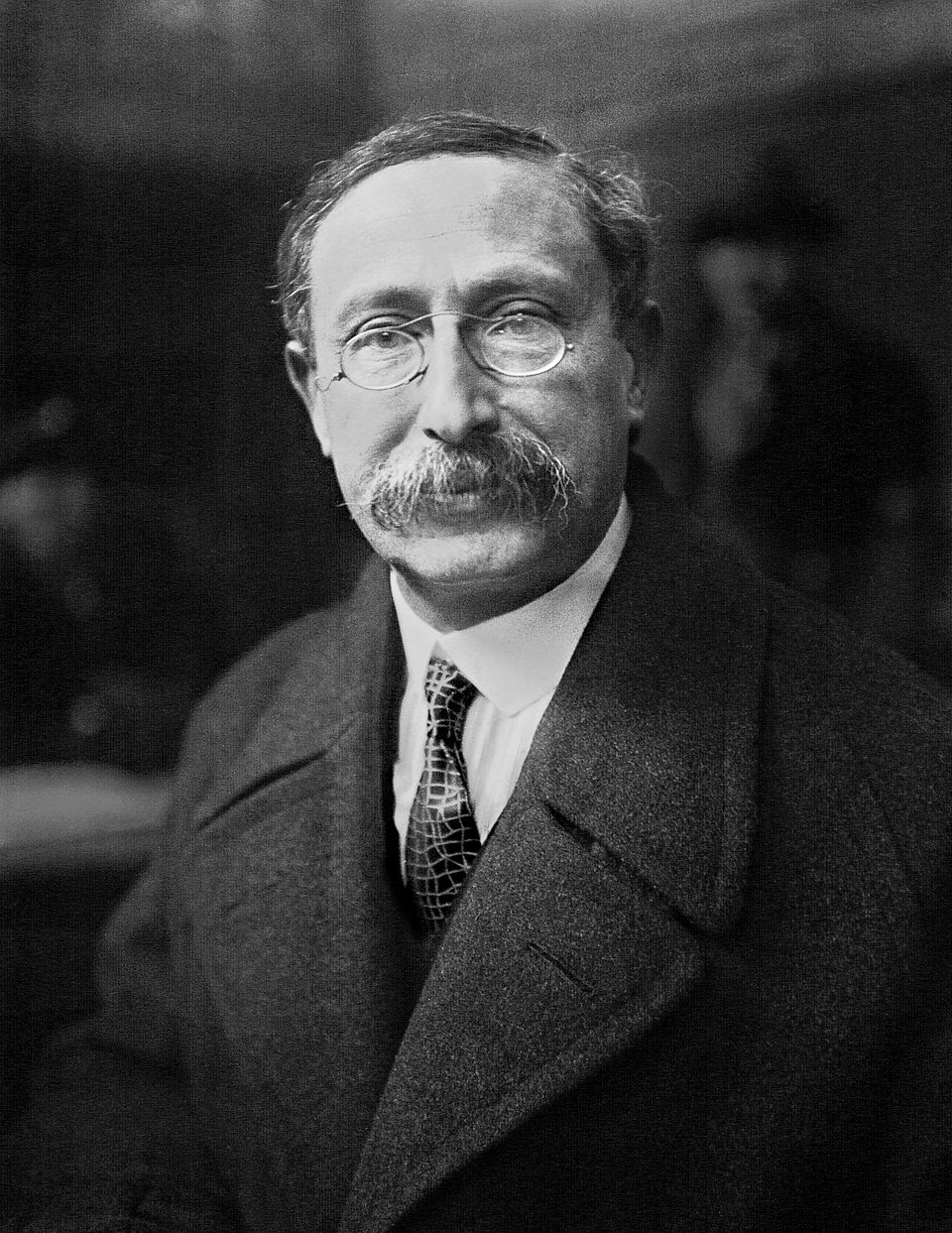
It is in the garden of Jouy-en-Josas, one spring morning when the light filters through the linden trees, that Jean Jaurès comes to meet the man he knew as a young man of letters during the burning days of the Dreyfus Affair. On the iron table, Le Populaire folded, a pair of fine spectacles, and the typewriter still warm from the last pages. The master and the disciple have not spoken since 1914; between them, nearly forty years of History that one did not live through and the other carried alone. Jaurès has come to ask for an accounting — not harsh, but affectionate: what have you done, Léon, with the house we were building?
—Léon, after I was torn from you all in 1914, the party we wanted united was torn apart at Tours. Why did you refuse Moscow?
You ask me the only question that cost me many sleepless nights, master. In December 1920, before a hall that was almost booing me, I understood that the majority was leaving to found another party, bound in advance to a discipline from Moscow. I did not want to follow. I loved too much what you had taught me: that one does not sacrifice freedom of thought for effective action. So I said that we were staying in the old house, and that everyone should prepare to defend it. I was called a cemetery keeper. But it is in this abandoned house, the SFIO, that I kept alive the flame you entrusted to me — that of a socialism that never renounces democracy.
We are staying in the old house, and let everyone prepare to defend it.
—You speak of fidelity, Léon. But this democratic socialism you saved, did it ever allow you to govern, or only to resist?
You hit the mark, as always. For fifteen years, we were the party of the purest opposition — and the most sterile, I was reproached. Le Populaire, which I edited every morning, preached in a desert. Then came the riots of February 6, 1934, the far right within reach of the Chamber, and suddenly the left understood that isolated it would die. Socialists, Communists, Radicals: we formed the Popular Front. The old house was no longer a tomb; it became a home. I then realized how right you were to preach unity above all. Resisting had kept me pure; but it was unity that finally allowed me to act.
Resisting had kept me pure; but it was unity that finally allowed me to act.
—I am told that in June 1936 you signed, at Matignon, agreements that workers still talk about. Tell me what you dared.
I would have so wished you were there, by my side, in that drawing room of the Hôtel Matignon. France was paralyzed by strikes; the occupied factories were singing. In one night, on June 7, employers and unions signed under my aegis: wage increases, union freedom, collective bargaining. Then came the laws — the forty-hour week, and above all two weeks of paid holidays for everyone. I trembled as I enacted them, for I knew I was transforming not laws, but lives. You had dreamed of emancipating the worker; I had the joy, for a few months, of giving him back his time and dignity.
I knew I was transforming not laws, but lives.
—Two weeks of rest for a worker! In my time, that was a utopia. What did you see with your own eyes that summer?
The most beautiful sight of my political life, master. Special trains were chartered at reduced fares, and the stations filled with families who had never left their suburbs. The beaches of Normandy and Brittany, until then reserved for the bourgeoisie like me, were covered with workers in shirtsleeves, children discovering the sea for the first time. Some wept at the sight of the ocean. People mocked these awkward holidaymakers; I saw the Republic finally keeping its promise. You spoke of moving toward the light: that summer, thousands of men crushed by toil went, literally, toward the sun.
Some wept at the sight of the ocean; I saw the Republic finally keeping its promise.
—Before politics, Léon, I knew you with a pen in hand. It was whispered that your book Du mariage scandalized all of Paris. Was that really you?
It was indeed I, and I am not ashamed of it. In 1907, in Du mariage, I argued for equality within the couple and freedom before commitment — the bourgeoisie from which I came trembled with indignation. I was thought frivolous, even immoral. But you see, master, it was already socialism: refusing to let social convention crush the individual. For a long time I led two lives side by side, literary critic by day, activist by night, reading Stendhal in the salons of the Latin Quarter. Those who were surprised to see an aesthete lead the SFIO did not understand that it was the same demand — beauty, justice — that led me from beylisme to the social barricades.
Refusing to let social convention crush the individual: that was already socialism.
—So you never left your books? Even as head of government, did the man of letters survive beneath the statesman?
He survived until the last day, and probably saved me. My old Remington never left me: I wrote my speeches, editorials, and studies myself. Stendhal et le beylisme, in 1914, had taught me to scrutinize the human soul — and politics is only that, deep down, reading men. In the evening, despite ministerial councils and the fury of the Chamber, I returned to my books, to music, to theater. That part of me that some deemed frivolous was my reserve of strength. When everything collapsed, master, I would always have a blank page and the desire to fill it.
Politics is only that, deep down: reading men.
—I am told that a regime of defeat wanted to judge you, as the guilty one. How do you defend yourself when the court is rigged from the start?
You do not defend yourself, master: you attack. At Riom, in 1942, Vichy claimed to hold me responsible for the defeat of 1940. I turned the accusation around: it was not I who was in the dock, but the Republic itself, and I told them that it had not collapsed — it had been murdered by those sitting in the prosecution. My pleas became so embarrassing that Pétain himself ordered the suspension of the hearings. I had turned their courtroom into a platform. You had taught me that in the days of Dreyfus: that a just word, spoken in a firm voice, can turn an entire hall. I simply remembered that.
It was not I who was in the dock, but the Republic itself.
—And after that trial, Léon? What becomes of a man when his own jailers take him beyond borders, into the night?
He writes, master. Deported to Buchenwald then to Dachau, I lived two years suspended between life and death, knowing I could be shot at any setback of Hitler's. And yet, in that captivity, I wrote À l'échelle humaine — my reflection on democracy, socialism, the future of Europe. I did not write to console myself, but because I refused to let barbarism have the last word. I affirmed that a democracy dies if economic inequality empties freedom of all meaning. It was my testament, written where even my humanity was denied. As long as I thought and formulated, they had not defeated me.
I did not write to console myself, but because I refused to let barbarism have the last word.
—You were hated for what you were, Léon — I saw it already in my lifetime. How did you endure, under insult and behind barbed wire?
Through love, more than courage. From 1936, at my appointment, Je suis partout and Xavier Vallat had insulted me from the rostrum for my Jewish origins; I responded with a dignified silence, the only contempt that honored me. But it was in captivity that I found my true answer to hatred: in 1943, I married Jeanne in the camp itself, with the strange authorization of my guards. A poor ceremony, yet the highest of my life. Faced with men who wanted to erase me, I chose to love, to commit, to continue. You taught me, master, that dignity is not begged for; in deportation, I learned that it is lived, even in hell.
Faced with men who wanted to erase me, I chose to love.
—One last thing, my friend. If I am to leave reassured, tell me: what did you pass on, in your turn, of this house that I bequeathed to you?
I passed on the essentials, I believe, and I return it to you at peace. The old house still stands; French socialism has not renounced freedom for power, nor thought for discipline. I left the workers their holidays, their forty hours, their pride as free men. I showed that one can govern without betraying, and resist without hating. Above all, I kept alive that idea which was yours: that socialism is not merely an economic doctrine, but a way of looking at people, founded on fraternity. You entrusted me with a flame, master; I carried it through the night, and I pass it on to other hands. The rest belongs to those who will come.
One can govern without betraying, and resist without hating.
This imaginary interview was generated by artificial intelligence from sources documented in Léon Blum's profile. It dramatises what the figure might have said based on what we know about them, but does not constitute attested historical testimony. For primary sources and factual documentation, refer to the full profile.