Imaginary interview with Léopold Sédar Senghor
by Charactorium · Léopold Sédar Senghor (1906 — 2001) · Literature · Politics · 6 min read
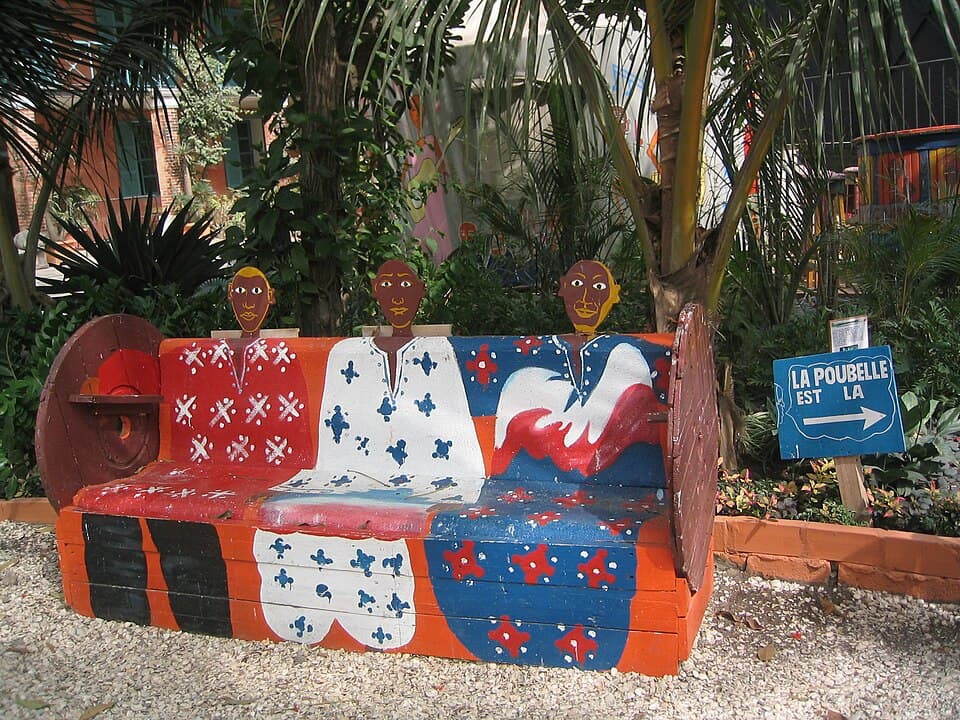
Verson, Normandy, one autumn evening. In a low house whose walls are studded with Serer masks and bookshelves rising to the ceiling, an old man with a gentle voice receives guests, a cup of tea in hand. Léopold Sédar Senghor — poet turned president, then poet again — agrees to look back, unhurriedly, on the paradoxes of a life stretched between two shores.
—How did you experience passing the agrégation in grammar in 1935?
In 1935, after years of bending over Latin and Greek in the lycées of the mainland, I passed the agrégation in grammar. The first African to pass this exam. They told me it was a feat; I saw it only as a quiet revenge. I was that little Serer from Joal, born on the edge of the Petite Côte, and now the Republic was entrusting me with its own children to teach in its Parisian lycées. But what irony: France crowned me master of its language at the very moment she refused dignity to my brothers back there. That day I understood that I would always carry this double burden, honored and humiliated by the same hand.
Honored and humiliated by the same hand.
—What remains in you of your captivity in German camps from 1940?
1940. Captured, thrown into one of those camps where they herded soldiers of color. The memory that still tightens my chest is this: they offered to release me before my African comrades, because I had the agrégation, because I was almost white in their eyes. I refused. How could I have walked through the gate leaving behind those men who had neither my diplomas nor my words to defend themselves? It was there, on scraps of paper, that the poems of Hosties noires were born. I weep there for the Senegalese tirailleurs, those dead for a France who was already forgetting them at the very moment they fell for her.
—Do you remember your first meetings with Césaire and Damas in 1930s Paris?
It was in the Latin Quarter of the 1930s. Three young men from three shores — me from Senegal, Aimé Césaire from Martinique, Léon-Gontran Damas from French Guiana — who recognized each other around a café, between two lectures at the Sorbonne. We were Black, we were ordered to be French, and together we discovered we could be both without denying ourselves. Much later, I wrote to Aimé: “We had dreamed together, you and I, of a new poetry that would be ours: rooted in the black earth, open to the four winds of the spirit.” That is what our youth was: a fraternity seeking its words, and in finding them, finding itself.
—How would you define, for those who distort it, this Négritude you forged?
So much has been said about this word. Let me say it as I have always said it: “Négritude is the sum of the cultural values of the black world, as they are expressed in the life, institutions, and works of Black people. It is not a racism; it is an awakening, a solidarity.” In 1948, I gathered our voices in the Anthologie de la nouvelle poésie nègre et malgache, and Sartre prefaced it under the title “Black Orpheus.” He, the philosopher, saw in it an antiracist racism, a step toward the human. I preferred to see in it the dawn of a Civilization of the Universal, where each people brings its song to the great concert of the world, without any drowning out the voice of another.
—Why were you so insistent that your poems be read with music?
Poetry, for me, was never that mute thing one reads with lowered eyes. It is rhythmic speech, it is song. That is why, in the margins of my poems, I indicated the instrument: here the kora with its twenty-one strings, there the balafon, elsewhere the tam-tam. I am a Serer; among us, the poet and the griot are one. In Chants d'ombre, when I write “Naked woman, black woman / Clothed in your color which is life, in your form which is beauty,” these words call for a plucked string beneath them, a deep pulse. A poem without music, you see, is for me a body deprived of its breath.
Among us, the poet and the griot are one.

—What does Éthiopiques mean to you, especially the poem devoted to Chaka?
Éthiopiques, in 1956, is perhaps where I went the furthest. There I blend the rhythms of my childhood, the images of the Bible that the missionaries had transmitted to me, and the breath of the surrealists I had read in Paris. The poem “Chaka” is dear to me: I take up the figure of the great Zulu chief, not as a bloodthirsty tyrant, but as a man who sacrifices his love for his people. It is a dramatic poem, made for voice and tam-tam. The métissage I speak of so much is there, in the very form: a French syntax borne by an African cadence.
—What would you say about that June day in 1960 when Senegal became independent and you its president?
On June 20, 1960, Senegal became free, and I was made its first president. That day, I spoke in French and in Wolof, not out of calculation, but out of fidelity to what I am. I said: “Senegal is free and independent. But independence is not an end in itself; it is the means to build together, in dignity and fraternity, a modern nation.” For what is a flag worth if the belly remains empty and the mind colonized? I did not want to chase away France only to marry misery. I wanted an independence that was construction, patient and lucid, not blind revenge.
—You left the presidency in 1980 of your own free will: what decided you?
In 1980, I did what no head of state in Black Africa had done before me: I left of my own free will. I handed over power to Abdou Diouf, calmly, without a drop of blood being shed. Yet I had been tested: the 1962 crisis with Mamadou Dia had shown me how power can become a trap that devours men. But a poet knows that everything has its rhythm, and that seasons must follow one another. I never believed that a man should cling to a chair until he is torn from it. Leaving in time is still governing.
Leaving in time is still governing.

—Why, in the midst of building the state, did you want to organize the World Festival of Black Arts?
In 1966, I wanted Dakar to become, for a month, the capital of the black world. The First World Festival of Black Arts brought together artists from all over Africa, the Americas, the Caribbean — Duke Ellington at the piano, Josephine Baker on stage, masks, dances, poems. I always thought that a state is built not only with roads and budgets, but also with beauty. For me, culture was not the ornament of power: it was its beating heart. A people that stops celebrating its art ends up forgetting who it is, and a people that forgets itself lets itself be governed again by others.
—You were often seen alternating between the boubou and the dark suit: what did this double attire say?
In 1983, I donned the green habit and the sword of the immortals: first African to enter the Académie française, in seat sixteen, received by Marguerite Yourcenar. What a strange and beautiful irony for the little Serer from Joal! But you see, I have always worn two garments. For the festivities of my country, the great white boubou, ample as the wind from the sea; for the salons of Europe, the dark suit and its decorations. Not out of hesitation, but out of conviction: I am fully African and fully nourished by the West. What my clothes said without a word, my ideas theorized under the name of cultural métissage.
—If you were still read a century from now, what would you want to be remembered from your thought?
If I were to imagine being read still in a century, I would want these lines from Liberté I to be remembered: “Our vocation is to resurrect the values of Négritude, to integrate them into the current of human universalism. It is not a withdrawal into oneself, it is a contribution to the civilization of the Universal.” I have been reproached for my fidelity to French, my Négritude has been mocked — a colleague spoke of tigritude, saying that the tiger does not proclaim that it is a tiger, but pounces. I still smile at that. The tiger does not know it will die; man does. And that is why man sings.
And that is why man sings.
This imaginary interview was generated by artificial intelligence from sources documented in Léopold Sédar Senghor's profile. It dramatises what the figure might have said based on what we know about them, but does not constitute attested historical testimony. For primary sources and factual documentation, refer to the full profile.