Imaginary dialogue between Marie-Antoinette and Louis XVI
by Charactorium · Louis XVI (1754 — 1793) · Politics · 5 min read
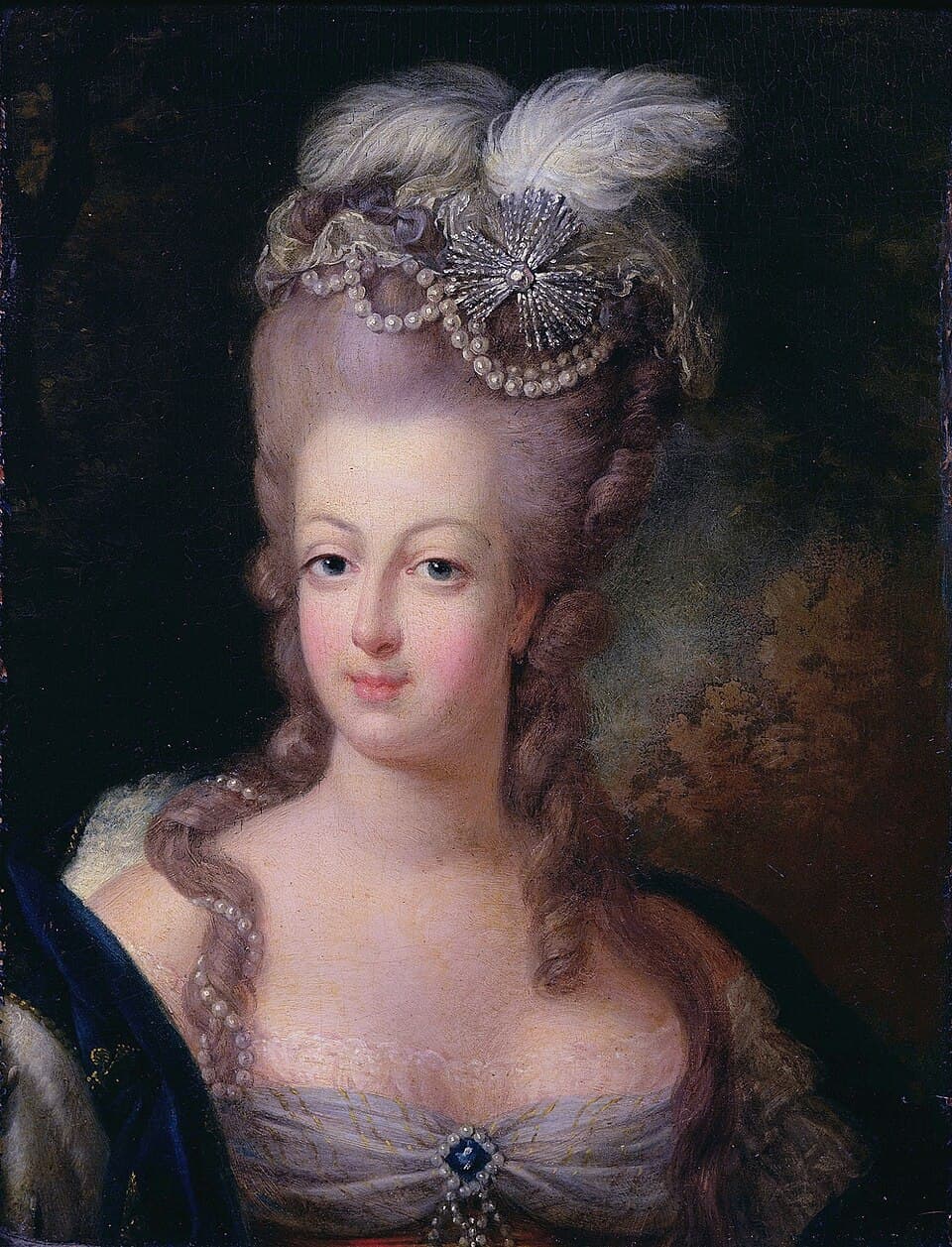
It is in the damp twilight of the Temple Tower, in this winter of December 1792, that Marie-Antoinette briefly rejoins the one now called Louis Capet. A candle flickers on the table where his prayer books and a few geography maps are piled. They have been husband and wife since 1770, since that Austrian marriage arranged for them as children, and she comes this evening not as the queen, but as the wife: to question the man behind the crown, before the Convention decides his fate.
—My friend, do you remember your workshop, up there at Versailles? When you disappeared for hours with that Gamain, I never knew whether to laugh or worry.
You could laugh, I think. You know how awkward I felt in the salons you enlivened, amid the games and suppers that stretched until dawn. But before a workbench, a disassembled lock in my hands, I became simply a man working. Gamain taught me the tempering of iron, the fitting of a mechanism — things that obey clear rules, unlike the affairs of the kingdom. My courtiers saw it as the indignity of a king-craftsman, I know. You alone, perhaps, understood that those hours of metal filings were the freest I had. The crown was placed on my head; that workshop I chose.
The crown was placed on my head; that workshop I chose.
—At the start of your reign, in 1774, you surprised me by accepting inoculation. Many at court begged you to renounce it. Why did you brave such fear?
Because my grandfather Louis XV had just died of smallpox, and I could not demand of my people a trust I refused to show myself. The doctors were at odds, public opinion cried recklessness. I bared my arm. It was, I confess, an idea of the philosophers that, according to my advisors, I should have opposed, yet I made it my own. Later, the Edict of Versailles granting civil status to Protestants came from the same spirit: a king can be traditional and still want the true good of his subjects. They will remember me only for indecision, I fear. They will forget that I wanted, in my slow way, to reform what could be reformed.
I could not demand of my people a trust I refused to show myself.
—You spent entire evenings bent over the maps of that sailor, La Pérouse. What were you seeking so far away, you who so rarely left your hunting grounds?
The world, Antoinette, the whole world. I prepared his expedition with my own hands, traced part of his route, chose the scholars who accompanied him. While ministers spoke to me of deficits, I dreamed of unknown islands, coasts no Frenchman had charted. Geography and astronomy rested me like locksmithing: an order of the world vaster than the quarrels of Versailles. If you knew how often I still wonder, in this room, where his ships could have been lost. They will think me frivolous for thinking of it at such a time. But that man, who left for science, betrayed no one.
While they spoke to me of deficits, I dreamed of islands no Frenchman had charted.
—They have mocked so much that line of your journal, that “Nothing” written on the day of the Bastille. Were you so blind to what was rising in Paris?
That word only meant my failed hunt, you know. I had kept this diary since childhood, and “nothing” meant I had not shot an animal that day. They made it proof of my indifference; it was merely the habit of a methodical man. But I will not defend myself entirely: yes, I did not gauge the tide. I had summoned the Estates General to save the finances, thinking to assemble my orders as of old; I unwittingly opened a door that no one could close. The dismissal of Necker, two days earlier, was another spark. I thought I governed subjects; I discovered a nation.
I thought I governed subjects; I discovered a nation.
—That October night, when the women of Paris came up to Versailles to tear us from our apartments — what did you feel leaving the home of your fathers?
The ground gave way beneath us, yet I had to appear calm so as not to frighten you further, nor the children. Leaving Versailles was leaving the very framework of royalty, that protocol inherited from Louis XIV where everyone knew their place. At the Tuileries, we were no longer at home: watched guests, almost hostages in our own capital. I accepted it to avoid bloodshed. You often reproached me for that gentleness, that reluctance to fire. But how does a king make himself feared by his own people without ceasing to be their father? I never solved that riddle. And each concession called for another, greater one.
How does a king make himself feared by his people without ceasing to be their father?
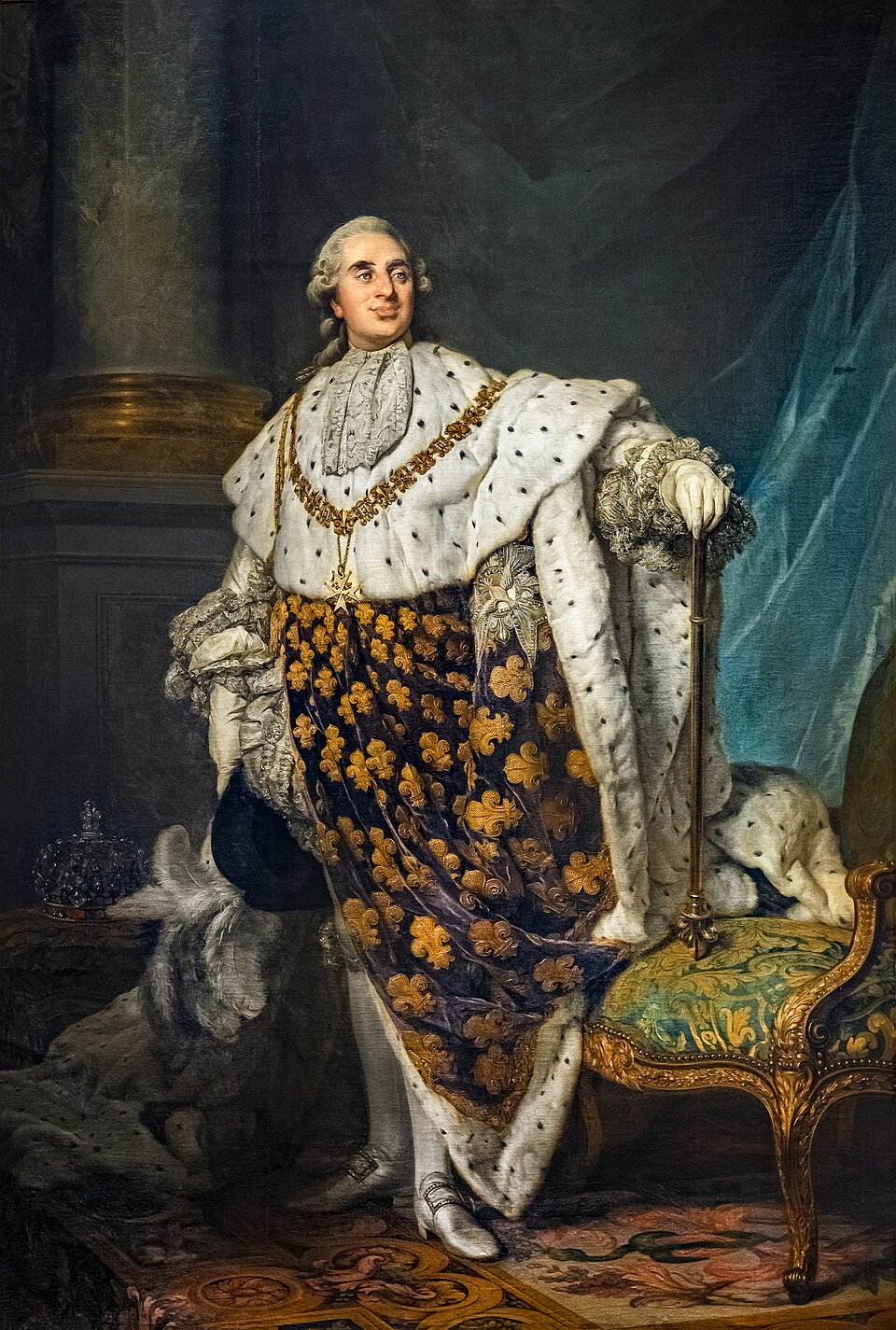
—That night, June 1791, disguised as servants in that heavy coach… Tell me truly, do you still believe: could we have succeeded in passing?
I ask myself every day, here. The carriage was too large, too slow, too fine for servants — I see it clearly now. We had staked everything on secrecy, and it was a detail that undid us: my face, engraved on a wretched assignat, recognized by a postmaster named Drouet at Varennes. Think of it: that paper money born of the Revolution delivered me to it. I wanted to reach a stronghold, negotiate as a free man, not flee cowardly as they said. But from the moment I was brought back under escort, I understood that my word was worth nothing. That day, the king died before the man.
That paper born of the Revolution, engraved with my face, delivered me to it.
—They mocked you so much for your appetite, your slowness, your reserve at our festivities. Those jibes, my friend — did they wound you as much as I feared?
More than I ever showed, Antoinette. I ate heartily when the people were hungry, I know, and they held it against me. I had neither your ease nor your taste for spectacle; I preferred a quiet evening with family to your brilliant suppers, and they took my shyness for stupidity. A silent king in his own salons makes a poor figure. But I was not the man they painted. Behind my awkwardness was a mind that read, that calculated longitudes, that weighed the fate of a Protestant. They preferred the caricature: it engraves faster than truth, like a stroke on a copper plate.
The caricature engraves faster than truth.
—When you committed France to the insurgents of America, many warned you of the cost. Would you do it again, knowing what followed?
That is the cruelest irony. I helped a people give themselves a republic, and that war dug a chasm in my finances — the very chasm that forced me to summon the Estates General. Lafayette returned from America intoxicated with liberty, and with him a thousand others. I struck down a king of England far away and armed, without seeing it, those who were undoing my own at home. Would I do it again? My reason of state said yes: weakening the English was worth the price. But history has a logic that kings do not master. One sows one thing, reaps another. I wanted the greatness of France; I perhaps hastened the end of my own.
I armed far away, without seeing it, those who were undoing my crown at home.
—Tomorrow you will appear alone before the Convention, without me at your side. How do you find the strength to face these men who call you “Capet”?
By holding to what I have always believed right. I will tell them I am innocent of what I am accused, that I have never feared my conduct being examined, that I acted according to the laws as much as a king could. They have stripped me of the inviolability the Constitution guaranteed me; thus they judge me against their own law. I will not plead for my life, Antoinette — I know it is already counted — but for my honor, and for what you will one day read of this trial. That name Capet they throw at me, as one undresses a man, does not touch me. They can strip me of the title; they cannot strip me of my conscience.
They can strip me of the title; they cannot strip me of my conscience.
—I saw the priest, Edgeworth, come to visit you. What do you want, my friend, that I keep of you when all is consummated?
Keep the man, not the martyr they will want to make of me nor the tyrant they invented. I wrote my testament in this room: I die a Christian, and I forgive with all my heart those who have made themselves my enemies, without my having given them cause. Tell my son, if he lives, that he must never seek to avenge my death. I do not leave this world hating this people; I loved them clumsily, that is all. You who shared my silences better than anyone, remember the locksmith, the map reader, the husband — not only the king dragged to the Place de la Révolution. The rest now belongs to other hands than mine.
Keep the man, not the martyr they will want to make of me nor the tyrant they invented.
Read further
This imaginary interview was generated by artificial intelligence from sources documented in Louis XVI's profile. It dramatises what the figure might have said based on what we know about them, but does not constitute attested historical testimony. For primary sources and factual documentation, refer to the full profile.