Kids interview Madame de La Fayette
by Charactorium · Madame de La Fayette (1634 — 1693) · Literature · 5 min read

That morning, two young visitors pushed open the door of a candlelit Parisian salon. A lady in a silk dress invited them to sit by the fireplace. Her name was Madame de La Fayette, and she had written, long ago, a book that all Paris had talked about.
—What was it like at your home in the evening, when everyone came over?
Oh, you know, my child, the evening was my favorite time. At my home on rue de Vaugirard, we lit wax candles everywhere. Imagine a room with no overhead light, just little flickering flames. My friends would arrive: La Rochefoucauld, my friend Madame de Sévigné, poets, abbés. We called it a salon, that is, a gathering where we talked about books and life. We discussed morals, the passions of the heart, sometimes until the middle of the night. It smelled of warm wax and burning wood. And I listened a lot. It's by listening to others that you learn to tell stories.
It's by listening to others that you learn to tell stories.
—How old were you when you arrived at court?
I was very young! In 1651, I was seventeen, and I was presented at the queen's court. Imagine a child entering a vast palace where everyone spoke softly and watched one another. Later, a great lady took me into her friendship: Henriette d'Angleterre, the sister-in-law of King Louis XIV. Thanks to her, I saw up close how the powerful lived. And you know what? I observed everything: false smiles, jealousies, hidden loves. I even wrote her story after her death. The court was beautiful and dangerous at the same time — like a garden full of flowers and traps.
The court was a garden full of flowers and traps.
—What did you write when you watched the people at Versailles?
I noted everything, my child. At Versailles, I saw how everyone sought the king's attention. I made a book of it, the Mémoires de la cour de France, where I recount the years 1688 and 1689. There, you were valued only by the favors you received from the king. Imagine a classroom where a single master decides who matters and who doesn't: everyone smiles at him, everyone fears him. That was the court. I preferred to go home and write in peace. But those intrigues I observed nourished my novels. A writer is a bit of a spy on the human heart.
A writer is a bit of a spy on the human heart.
—Who is that Monsieur La Rochefoucauld everyone keeps talking about?
Ah, him... he was my greatest friend. For nearly twenty years, we saw each other almost every day. He had written a brilliant little book, the Maximes: short sentences that tell a truth about people. A maxime is like a little lesson in a single line. We would read our texts to each other, correct each other, laugh together. When I was writing La Princesse de Clèves, he was there, beside me. Many believe he helped me understand the human heart. When he died, in 1680, I felt I had lost a part of myself. A true friend is worth more than glory.
A true friend is worth more than glory.
—Did you work on your stories alone or with others?
Never alone, you see! I wrote on my paper with a goose quill dipped in ink, then I reread, scratched out, started over. Then I showed my pages to my learned friends. We annotated the manuscripts together, changed a word here, a phrase there. In my time, writing a beautiful text was often the work of trusting friends. Near me, I always had the Maximes by La Rochefoucauld, which I read and reread. His ideas on passions helped me understand my own characters. You see, a book is never the work of a single hand.
A book is never the work of a single hand.
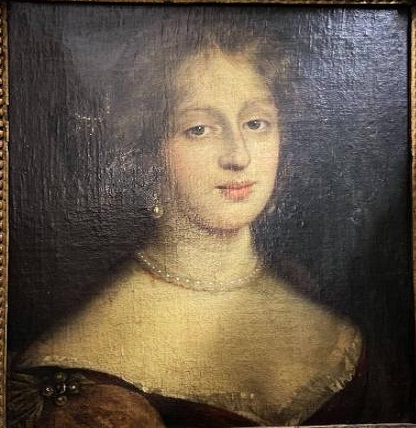
—What was the scandal of your book that everyone talked about?
You'll laugh, my child. In 1678, I published La Princesse de Clèves, without putting my name on it. In the story, a young woman does something incredible: she confesses to her husband that she loves another man. A aveu means speaking a secret of the heart out loud. Well, all of Paris argued about it! A newspaper, the Mercure galant, even asked readers: was she right to tell her husband everything? People talked about it in the streets, in the salons. Never had a novel captivated so many people. I was both proud and a little frightened.
Never had a novel captivated so many people.
—Why does that lady confess her secret to her husband? That's weird, isn't it?
You're right, it's strange, and that's the whole point! My heroine loves another man, but she wants to stay honest. So she chooses the truth, even if it hurts. In my time, people often spoke of vertu: the strength to resist one's passions in order to remain faithful to one's duty. Imagine you have a huge secret burning in your heart, and you decide to tell it in order not to lie. It's both courageous and terrible. That's why people were torn: some found it noble, others completely crazy. I just wanted to show a heart fighting against itself.
I wanted to show a heart fighting against itself.
—But then, did you write that book, yes or no?
Ahhh... that's the big question! I'll tell you a secret. In my lifetime, I never clearly said “This book is mine.” I even wrote a letter to a friend, Monsieur Lescheraine, in 1678, where I said: I do not acknowledge it as mine, I find it too gallant for me. Can you imagine? I was disowning my own masterpiece! Why? In my time, a great lady who published a novel was not very well regarded. So I preferred silence. As a result, for centuries, people wondered if it was really me. Mystery sometimes protects better than a name.
Mystery sometimes protects better than a name.
—Why did you never put your name on your stories?
That's a good question, my child. My very first story, La Princesse de Montpensier, came out in 1662 without my name. My novel Zaïde even bore another man's name, Monsieur Segrais! You see, in my time, a woman of high nobility was not supposed to appear too learned or too ambitious. Bienséance, those rules of good conduct, almost forbade me to be proud of my work. So I published in secret, like slipping a letter under a door. But deep down, I knew what my pages were worth. Sometimes you don't need the whole world to know, in order to be sure of yourself.
You don't need the whole world to know, in order to be sure of yourself.
—What did you eat, and what did you wear during your day?
Like a lady of my rank, my child. In the morning, I wrote long letters to my friend Madame de Sévigné. We ate roasted meats, soups, candied fruits, with a little Burgundy wine. I wore silk and taffeta dresses, fine lace cuffs, but not too extravagant — I didn't like overly flashy outfits. To go to court or to salons, I rode in my carrosse, a large horse-drawn carriage. Imagine the streets of Paris: no engines, just the sound of hooves on cobblestones. An elegant life, but full of work.
An elegant life, but full of work.
—What would you like people to remember about you today?
What a beautiful question to end with. You know, I didn't win any battles or govern a kingdom. I just looked at human hearts and tried to understand them. With La Princesse de Clèves, I showed that we could tell not sword fights, but inner battles. That was new, in my time. If you still read my book in your classes, it's because these torments of the heart haven't changed. We love, we hesitate, we doubt, just like the princess. That's what I'd like to leave you: always look at what people truly feel, behind their beautiful smiles.
I told not sword fights, but inner battles.
Read further

This imaginary interview was generated by artificial intelligence from sources documented in Madame de La Fayette's profile. It dramatises what the figure might have said based on what we know about them, but does not constitute attested historical testimony. For primary sources and factual documentation, refer to the full profile.