Imaginary interview with Magellan
by Charactorium · Magellan (1480 — 1521) · Exploration · 6 min read
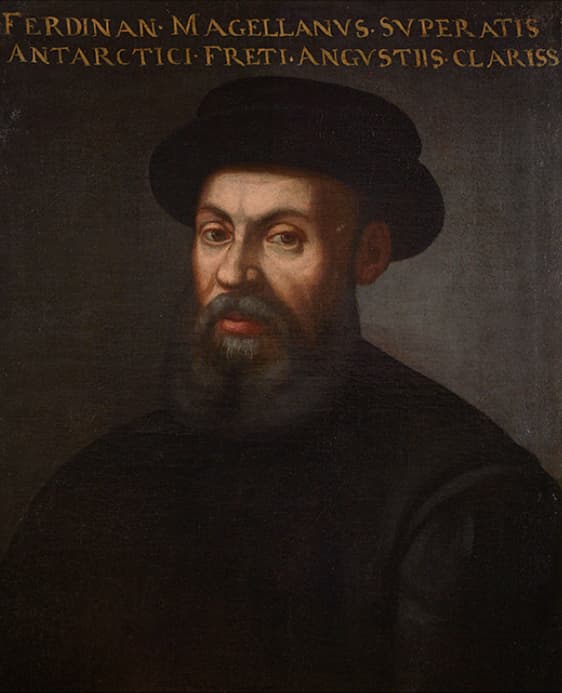
March 1521. On a beach on the island of Cebu, at the edge of the known world, the captain general stands in the shade of a sail stretched between two palm trees. Three of his five ships remain, men emaciated by months at sea, and the certainty of having proved what no one had dared. He agrees to speak, his eye still turned toward the eastern horizon.
—How does a man born in Portugal come to hoist the colors of Spain?
I was broken before I weighed anchor. I had bled for my crown at Malacca and the Indies, seven years long, among spices and gunpowder — and I was accused of having traded in secret with the Moors. A calumny. But for a fidalgo, a calumny that touches honor is as good as a sentence, and King Manuel looked the other way. I understood that day that a man does not belong to the land that bore him, but to the one that consents to believe in his design. So I carried my westward route to the young Charles I, at Valladolid, who sealed it with his hand in 1518. They call me traitor; I answer that a course, once set, does not suffer one to look over one's shoulder.
A man does not belong to the land that bore him, but to the one that consents to believe in his design.
—What exactly did you promise the king of Spain to entrust you with five ships?
I promised him the Moluccas without touching a single sea of Portugal. There is the crux: since Tordesillas, in 1494, the world is split in two by a line drawn from pole to pole, and the entire spice route by the east belongs to Lisbon. But the Earth is round, Majesty, I told him, and whoever walks far enough westward falls upon the east from the other side. A passage exists south of the new lands, I was intimately convinced. Reaching the clove islands by the west was to offer Spain the richest trade in Christendom while bypassing its rival. Once the Capitulación was signed, I had only to prove with my sails what I had advanced with my mouth.
The Earth is round, Majesty, and whoever walks far enough westward falls upon the east from the other side.
—Do you remember that winter in Patagonia, when your captains rose against you?
Port-Saint-Julian. A gray bay where we dropped anchor to wait out the bad season, the cold biting our fingers and doubt gnawing at the men. My Spanish captains could not bear that a Portuguese should command them to sail ever farther south, toward a strait no chart showed. They mutinied, three ships against mine. I answered with steel, without trembling: the leaders executed, another abandoned on the shore. They will judge me harsh. But a fleet has only one head, and a command that hesitates is already a shipwreck. It was there too that we saw those immense men, those Patagons whose stature stunned my sailors. Fear had held them; fear, that day, made them obey.
A fleet has only one head, and a command that hesitates is already a shipwreck.
—How did you find that passage that so many others had sought in vain?
Through obstinacy, and through faith. We were skimming an endless coast, each bay promised an opening and each bay closed on a dead end. Many on board swore the passage did not exist, that I was leading them to death for a chimera. But in October 1520, we bit into a cleft south of the lands, a labyrinth of black waters between icy mountains, where tide and wind played against us. Thirty-eight days of sounding, of fearing the shallows, of losing a ship that deserted to return to Spain. My portolans stopped there: beyond, the parchment was blank. When at last the water opened to the west, I knew that the door of the world had just yielded beneath my keel.
My portolans stopped there: beyond, the parchment was blank.
—They say you yourself christened the ocean you had just discovered. Why that name?
After the storms of the strait, after those waters that wanted to smash us against the rock, we emerged onto an expanse of unreal calm. Not a wave, not a gust, day after day. A man coming out of hell takes the first respite for a grace from Heaven. So I named it mar pacífico, the peaceful sea, and the name stuck. I almost laughed at this gentleness, after so much fury. I did not yet know that this calm was setting a trap more cruel than any squall: the immensity. For three months, the peaceful water stretched without any land, any sail, any bird to break the horizon. The gentlest of oceans was the most pitiless.
The gentlest of oceans was the most pitiless.
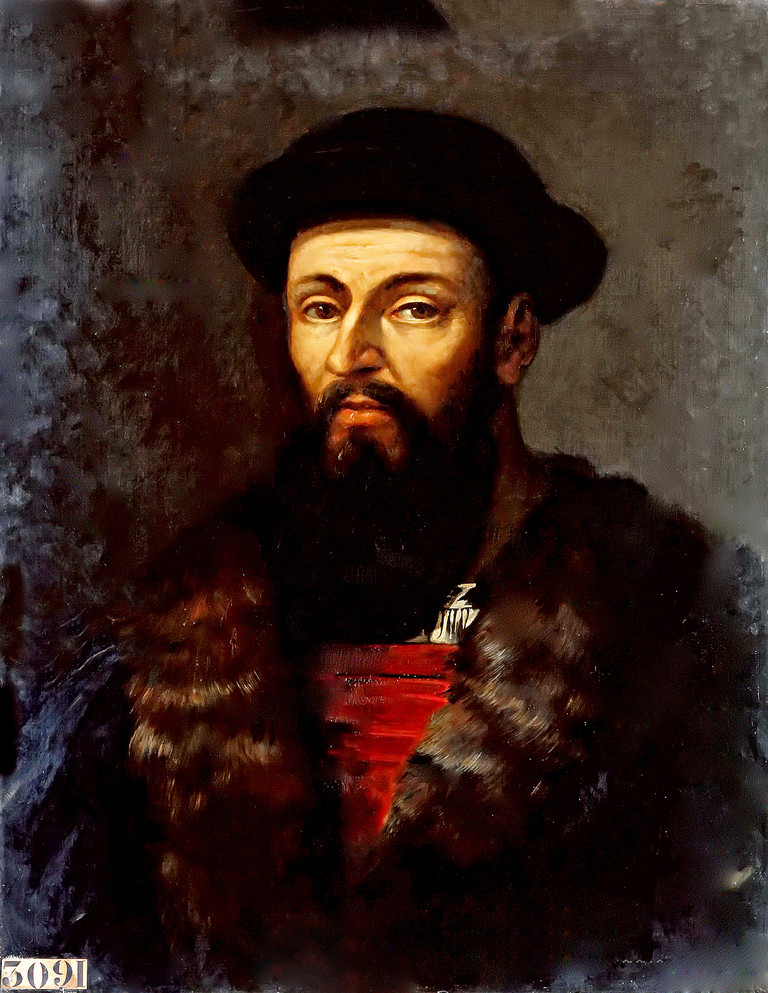
—What remains in your memory of that Pacific crossing?
Hunger. A hunger that has no name in Christian tongues. Nearly four months without a fresh provision, the biscuit reduced to powder and crawling with worms, the water stagnant. My men ended up detaching the leather that sheathed the yards, soaking it in the sea to soften it, then grilling it to chew. We hunted the ship's rats like prized game, we swallowed sawdust. Scurvy made gums swell until one could no longer swallow; men faded one after another, without complaint, emptied. My Italian, Pigafetta, noted everything with a feverish hand. I held the course, because a captain who falters starves his men twice: from the belly and from the heart.
A captain who falters starves his men twice: from the belly and from the heart.
—How do you maintain authority over dying men, in the middle of nowhere?
You turn the hourglass. It is a foolish gesture, perhaps, but essential: as long as the sand runs, as long as a man turns it at the appointed hour and sings the watch, the ship lives by order, and order holds the souls. I have seen sailors ready to throw themselves overboard stop moaning because they were entrusted with the nao, the lead, the night watch. Discipline is not cruelty, contrary to what is whispered about me: it is a rope stretched over the abyss. I prayed much, also. When the body has nothing left to offer, the spirit must cling to something higher than its own carcass. Faith carried me where bread was lacking.
Discipline is not cruelty: it is a rope stretched over the abyss.
—Here you are at Cebu, allied with chief Humabon. What do you expect from these islands?
More than spices: souls and oaths. Rajah Humabon let himself be baptized, he and his people, and I see in it the hand of God as much as that of a good captain. The most troubling thing is my slave Enrique, that Malay I had brought from Malacca years earlier: when he spoke to the people here, they understood him. Think of it. I have led my ships so far west that my own household finally touches the language of the east. This means the loop is almost closed, that these seas communicate with those I once plied for Portugal. I have returned, by the other face of the globe, to the threshold of the world I knew. No man before me has closed this circle.
I have led my ships so far west that my own household finally touches the language of the east.
—Why confront that chief of Mactan, Lapulapu, who refuses your alliance?
Because an ally one does not protect is not an ally, it is a mockery. Humabon submitted to my king and my God; Lapulapu, on the island opposite, defies him and taunts us. If I let this challenge go unanswered, tomorrow the whole archipelago will laugh at the cross and at Spain. I will take only a handful of men, forty-nine perhaps — enough to show the rajahs that our armor and arquebuses are the law, not their bamboo spears. My allies will watch from their boats, and they will see what a Christian is capable of. They call me reckless. But fear, as in Patagonia, is a weapon: you must strike hard and fast so that a single example saves a thousand battles.
An ally one does not protect is not an ally, it is a mockery.
—If people are to remember you in a century, what would you want them to remember?
I do not know if I will be read so far in time — a sailor thinks in days of provisions, not centuries. But if I could imagine it, I would want them to remember this: not the riches of the Moluccas, not the icy strait that will perhaps bear my name, but that a man dared to believe the Earth small enough to be girdled in a single voyage, and vast enough to devour him along the way. I wagered my life on the roundness of the world. Let others complete the circle if I fall; the proof, it will be done. The passage exists, the Pacific exists, the east is reached by the west. All the rest — the lost honor in Lisbon, the hunger, the blood — will have been only the price of a certainty.
I wagered my life on the roundness of the world.
Read further
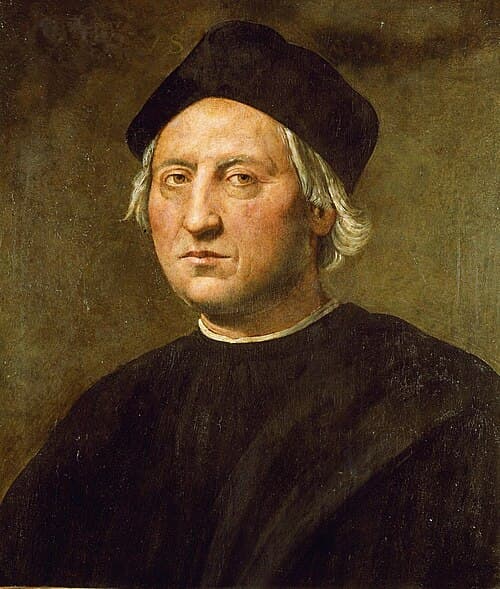
This imaginary interview was generated by artificial intelligence from sources documented in Magellan's profile. It dramatises what the figure might have said based on what we know about them, but does not constitute attested historical testimony. For primary sources and factual documentation, refer to the full profile.