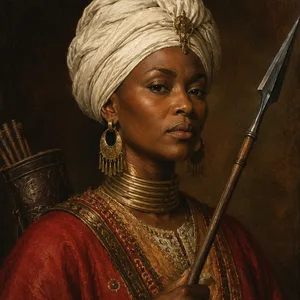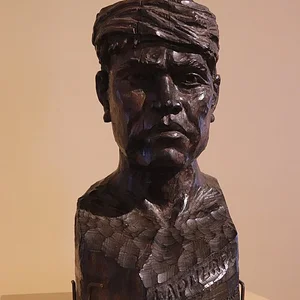

A warrior chieftain from the island of Mactan in the Philippines, Lapulapu is famous for defeating and killing the explorer Ferdinand Magellan on April 27, 1521. He is considered the first national hero of the Philippines for resisting European colonization.
Lapulapu(1492 — 1542)
Lapulapu
île de Mactan
7 min read
Frequently asked questions
Key Facts
- 1521: defeats and kills Ferdinand Magellan at the Battle of Mactan (April 27)
- King (datu) of the island of Mactan, in the present-day Philippine archipelago
- Refuses to submit to the King of Spain, unlike the neighboring chief Humabon
- Considered the first national hero of the Philippines
- His victory ends Magellan's expedition, which was continued by Elcano back to Spain
Works & Achievements
The first documented case of a victorious armed resistance by an Asian leader against a European expedition in the modern era. This event delayed the effective colonization of the Philippines by several decades.
Refusal to pay tribute or recognize Spanish sovereignty, preserving the autonomy of the island of Mactan against colonial claims. This political decision, rare for the time, stands as a founding act of Philippine resistance.
Lapulapu united several warrior chiefs of Mactan to counter the ambitions of Humabon of Cebu, who was using his Spanish alliance to extend his influence. This local military coalition proved decisive in the battle.
Anecdotes
On April 27, 1521, Ferdinand Magellan decided to attack the island of Mactan with only 49 men to support Chief Humabon of Cebu against Lapulapu. He forbade his Filipino allies from taking part, confident in the superiority of his firearms. This fatal miscalculation cost him his life: Lapulapu's warriors, vastly outnumbering them, surrounded him in the shallows and struck him down with spears and swords.
Lapulapu had flatly refused to acknowledge the authority of the King of Spain or to pay tribute, unlike other local chiefs. This resistance was not merely military: it expressed a conception of sovereignty particular to Visayan societies, in which the authority of a datu cannot be delegated to an unknown, distant ruler.
After Magellan's death, the expedition's survivors tried to recover his body to pay him proper honors. Lapulapu refused any restitution, even for a ransom. The chronicler Antonio Pigafetta, an eyewitness to the battle from aboard the ships, noted with respect the determination and bravery of the Mactan warriors.
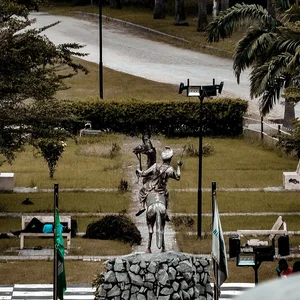
Lapulapu is today the only national hero of the Philippines never to have been colonized by the Spanish. His face appears on Philippine 1,000-peso banknotes, and an immense bronze statue depicts him, spear in hand, on the very site of the Battle of Mactan, which has become a place of national remembrance.
Visayan oral tradition attributes supernatural powers to Lapulapu: he is said to have been an anting-anting, that is, a warrior protected by sacred amulets that made him invulnerable to enemy blades. This legend illustrates the near-mythical status he has acquired in Philippine culture, far beyond mere historical fact.
Primary Sources
The captain-general fell there, facing the enemy, and thus we lost our guide, our light, and our support. The Indians kept striking him until he was dead.
A chief named Cilapulapu stubbornly refused to acknowledge the authority of the King of Spain or to pay the demanded tribute, which provoked the fatal confrontation for Magellan.
The natives of Mactan fought with such fury and in such great numbers that our firearms could not repel them; they attacked the captain on his legs, which were not protected by his armor.
On Saturday, April 27, 1521, at daybreak, we went ashore with forty-nine men; the natives of the island numbered more than fifteen hundred.
Key Places
Island in the Visayas archipelago where Lapulapu held authority as datu. It was here that the decisive battle of April 27, 1521 took place, which cost Magellan his life.
The exact site of the battle, now topped by a monumental statue of Lapulapu and designated a Philippine national historical landmark. Archaeological excavations have confirmed the location of the clash.
The island neighboring Mactan, where chieftain Humabon had allied himself with Magellan and converted to Christianity. The rivalry between Cebu and Mactan was one of the triggering factors behind the battle.
The shallow stretch of water separating Mactan from Cebu, which served as the battlefield. The shallow seabed prevented the Spanish ships from drawing close, denying Magellan the support of his naval artillery.
Liens externes & ressources
Références
Œuvres
Victoire à la bataille de Mactan
27 avril 1521
Défense de l'indépendance de Mactan
1521
Alliance des datus de Mactan contre l'expansionnisme de Cebu
vers 1520-1521