Kids interview Magellan
by Charactorium · Magellan (1480 — 1521) · Exploration · 5 min read
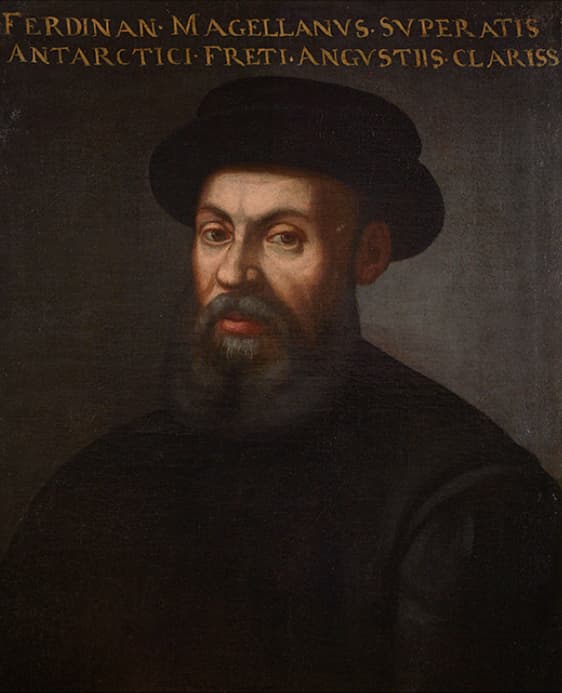
Two young visitors, twelve years old, push open the door of an old room full of sea charts. There, in front of a brass astrolabe, a weary-eyed navigator awaits them. His name is Magellan, and he has agreed to tell them everything.
—You were Portuguese, so why did you go work for the King of Spain?
Ah, you touch a wound, my child. I served the King of Portugal for years, faithfully. And then one day, I was accused of secretly trading with the Moors. It was false. But honor, you see, is as fragile as a mast in a storm: once cracked, no one looks at you the same way anymore. Disgraced, I went to see the young King of Spain, Charles I, in 1518. I offered him a dream: to reach the Spice Islands by the west. He said yes with shining eyes. Imagine that a door is closed to you at home, and a neighbor opens his wide.
Honor is as fragile as a mast in a storm.
—What were these famous spices? Why did everyone want them so badly?
You'll laugh: for cloves and nutmeg, we risked our lives. These spices grew very far away, on islands called the Moluccas. In Europe, they were worth a fortune, almost as much as gold. Imagine a small handful of dried seeds that smell strong and sting the nose, and cost more than a horse. The problem was that in 1494, Spain and Portugal had divided the world in two by a treaty, the Treaty of Tordesillas. A line, like a chalk mark on the sea. My idea? Reach those islands from the other side, from the west, without crossing Portugal's share.
For a handful of dried seeds, we risked our lives.
—Before this great voyage, did you already know the sea?
Oh yes, my child. Long before I was famous, I was a young man on Portuguese ships. Between 1505 and 1512, I sailed all the way to Asia, to Malacca, where the spice-laden ships arrived. I saw the ports, smelled the markets, learned the routes that sailors passed on like secrets. That's where, in those years, my idea sprouted. You know, you don't become an explorer overnight. It's like learning to swim: first you splash near the edge, and one day, without realizing it, you're in deep water and you're no longer afraid.
You don't become an explorer overnight.
—How did you find the secret passage to the other ocean?
No one knew if it existed, that passage. We looked for it by sailing all the way down South America, in the cold, toward the bottom of the world. My Spanish captains no longer believed in it, they even mutinied against me in Patagonia. I had to be very harsh. And then, in November 1520, we found it: a twisted water corridor between mountains, 560 kilometers of icy turns. It took us 38 days to cross, in the howling wind. Imagine walking through a long tunnel without knowing if it has an exit. Today, that passage bears my name: the Strait of Magellan.
Imagine walking through a long tunnel without knowing if it has an exit.
—Why did you call that ocean the Pacific?
Because it tricked me, that rascal! Coming out of the strait, after all that wind that shook us, we emerged onto a vast sea as smooth as a mirror. Not a mean wave, not a storm. Relieved, I said it was a mar pacifico, a peaceful sea. The name stuck. But what a trap, my child! That peaceful sea was so wide we thought we would never see its end. Beauty sometimes hides danger. Calm water can be crueler than a storm, because it lets you enter without warning you of its size.
Calm water can be crueler than a storm.
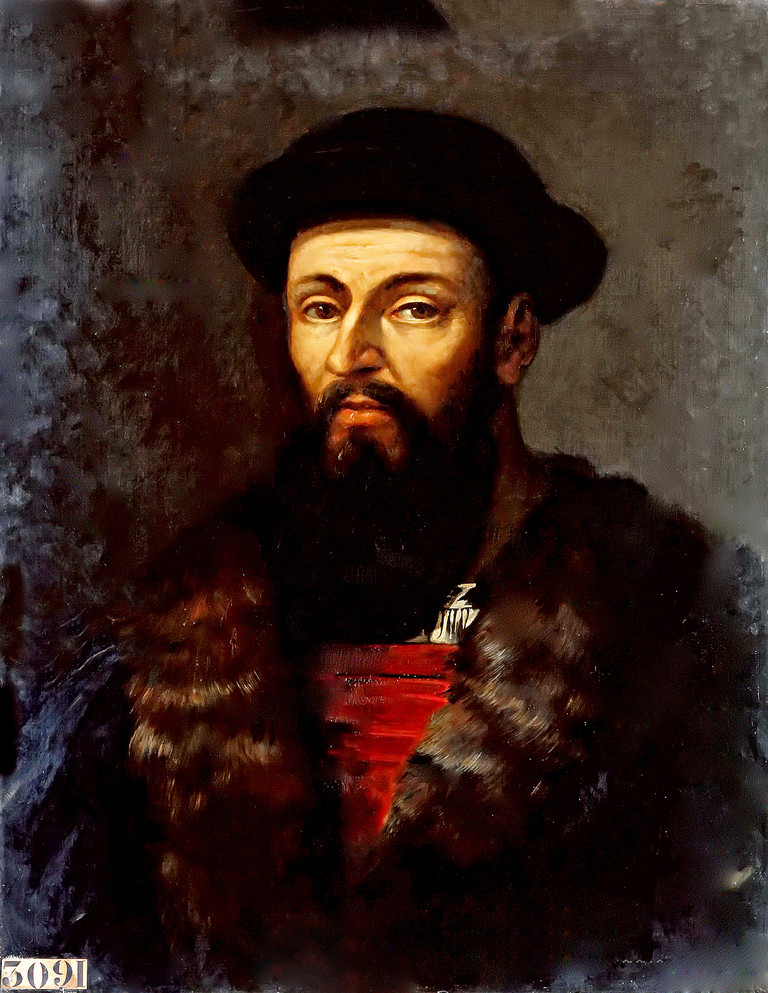
—And so, what was it like crossing that huge ocean?
It is the worst memory of my life, and I will not hide it from you. Nearly four months without touching land, without fresh food. Scurvy, that disease that makes your gums bleed when you lack fruit, took my men one by one. We were so hungry we ate the hard leather of the rigging, softened in seawater. We caught the ship's rats to eat. One of my companions, Pigafetta, wrote that we chewed biscuit reduced to powder, full of worms. Imagine your hunger on a school day, then multiply it by a hundred, for a hundred days.
Imagine your hunger on a school day, multiplied by a hundred, for a hundred days.
—Were you afraid of dying during this voyage?
Every day, my child. But fear, when you are captain, you have no right to show it. If the leader trembles, the whole crew sinks with him. So I kept my face calm and consulted my charts, my astrolabe, that brass disk that measures the sun's height to know where you are. In the morning, I got up before dawn to check the course. At night, in the silence of the ocean, yes, I was afraid. But I told myself one simple thing: a man who moves forward is worth more than a man who doubts. That is what kept me standing.
If the leader trembles, the whole crew sinks with him.
—Is it true that you died very close to the end of the voyage?
Yes, and it is my greatest lesson, even though I paid dearly for it. We had arrived in the Philippines, in 1521. I had befriended a local chief. To impress him, to show him my strength, I wanted to attack another chief named Lapulapu. What a mistake of pride. I set out with only 49 men, sure of myself. The island's warriors were far more numerous. I fell there, on that beach of Mactan, on April 27. My body was never found. You see, my child, pride is a bad captain: it makes you land where you should not.
Pride is a bad captain: it makes you land where you should not.
—But then, who finished the circumnavigation if you were dead?
Ah, that both wrings my heart and makes me proud. I did not see the end of my dream. One of my captains, Elcano, brought the last ship, the Victoria, back to Spain in 1522. Of five ships that left and nearly 270 men, only 18 returned. Eighteen, can you imagine? And there was also Enrique, an interpreter who spoke the language of the islands. Some say that he, the first of all humans, truly completed the circle around the Earth. My dream lived on, even without me. Perhaps that is success.
My dream lived on, even without me. Perhaps that is success.
—What did your voyage change for the people who came after?
We proved one enormous thing: by heading straight in one direction, you end up back home. The Earth is round, and you could sail around it. Before, it was an idea in books. We did it with our swollen feet and empty stomachs. We also discovered that the world was much bigger than we thought, because of that immense Pacific. Imagine drawing a map with a big hole in the middle, and one day you finally fill the hole. That is what we gave to the sailors who came after us.
We proved the roundness of the Earth with our swollen feet and empty stomachs.
Read further
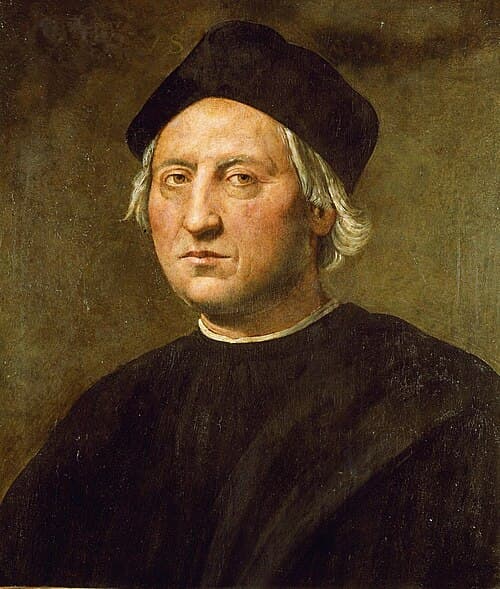
This imaginary interview was generated by artificial intelligence from sources documented in Magellan's profile. It dramatises what the figure might have said based on what we know about them, but does not constitute attested historical testimony. For primary sources and factual documentation, refer to the full profile.