Imaginary interview with Margaret Thatcher
by Charactorium · Margaret Thatcher (1925 — 2013) · Politics · 6 min read
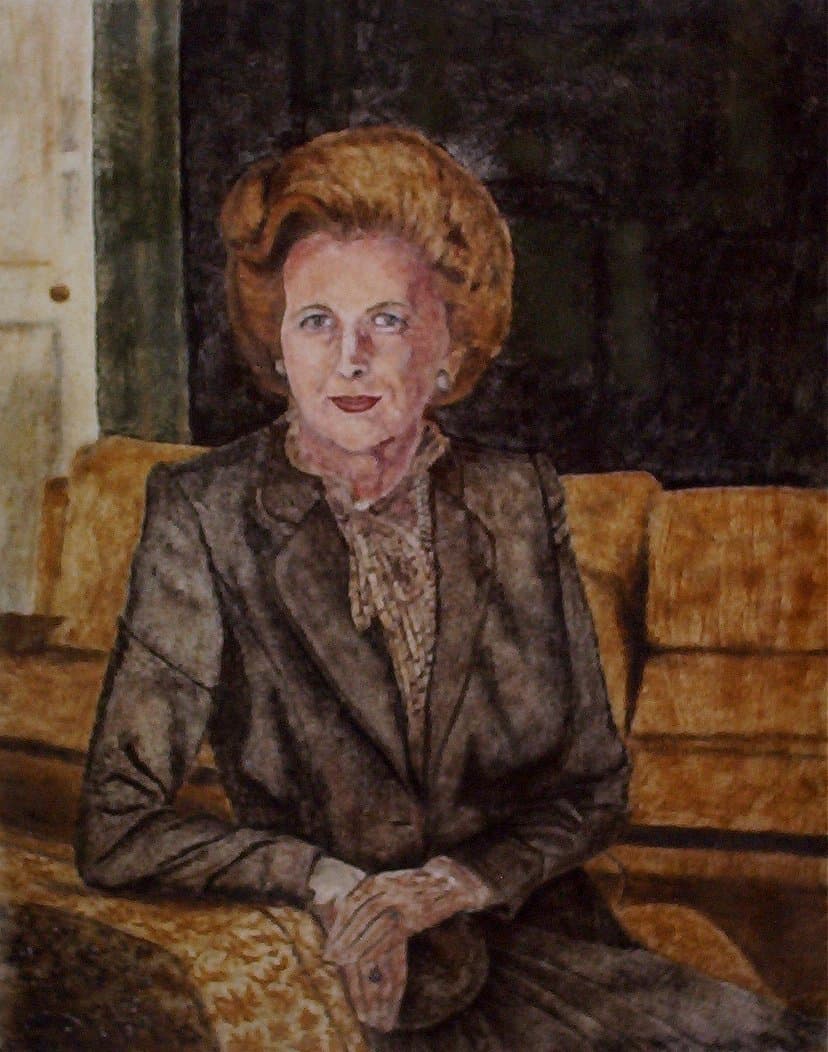
London, a winter evening in the late 1980s. In her first-floor office at Downing Street, a red box half-open on the table, Margaret Thatcher receives visitors at the late hour when she still works while the city has fallen silent. The tea grows cold; she does not.
—They say everything about you started in a grocery store. What did that counter in Grantham teach you?
Above my father Alfred Roberts's shop in Grantham, we were not allowed to spend what we had not earned. That was a law of the house before it was a political conviction. We weighed, we counted, we gave change to the nearest penny, and on Saturday night the till had to balance or we looked for the error. I often compared a state to an ordinary household, and I was criticized for that image as a shopkeeper's naivety. But I never saw why a nation could allow itself what a family in Lincolnshire would have forbidden. Those who despised that common sense belonged to the old post-war consensus, convinced that government money fell from the sky. It falls from people's pockets.
A nation cannot allow itself what a family in Lincolnshire would have forbidden.
—You spoke of the national economy as a household budget. Why insist on such simple language?
Because it is honest. The economists explained to me in equations what a housewife understood by instinct: you cannot live indefinitely on credit. When I held up my imaginary checkbook before the House, it was not to lecture—it was to remind everyone of a truth the powerful hate: you must first produce before you distribute. My father closed his ledger at night by lamplight, and I kept that habit even with the Red Box I reopened past midnight. The country had been living beyond its means since 1945, draped in the fine generosity of others. I wanted to restore to people the feeling that a shilling spent had to be a shilling earned. They called that harshness. I called it decency.
—You kept saying there was no alternative. Wasn't that a way to shut down debate?
No, it was a way to finally open it onto reality. For thirty years, we had pretended we could nationalize everything, subsidize everything, protect everything, without ever paying the bill. Thatcherism simply refused that comfortable lie. When I sold British Telecom, then British Gas, it was not an ideological whim: it was returning to the ordinary citizen companies the state managed poorly in their name. But economics was never my goal. I said it to the Sunday Times in 1981: 'We must change the soul of the people before we change the rules. Economics is the method; the object is to change the heart and soul.' They quote my firmness; they forget that sentence, which was the real one.
Economics is the method; the object is to change the heart and soul.
—How did you intend to transform a people's character through economics alone?
By giving them back responsibility for themselves. A man who owns his home, his shares, his future does not behave like a man who expects everything from the state. Privatization was not just a transfer of titles; it was a school of dignity. When a miner, a postman, a nurse bought for the first time a few shares in the company where they worked, something changed in their eyes. They will tell me that not everyone gained, and that is true. But the post-war consensus had infantilized an entire nation, accustomed it to holding out its hand rather than reaching for effort. I wanted a country of owners, not beggars. There is no alternative said nothing else: there is no alternative to taking charge of oneself.
—The confrontation with the miners remains the toughest of your domestic battles. Why refuse all compromise?
Because on the other side, Arthur Scargill did not want to negotiate wages: he wanted to bring down an elected government. The 1984-1985 strike was not an industrial dispute; it was a test of sovereignty. They set up picket lines—what the English call picketing—to prevent by force free men from going to work. I had already passed the Employment Acts precisely for that: to bring the union under common law, subject it to the secret ballot of its own members. Giving in would have told every future leader that an organized mob was worth more than a ballot. I warned as early as 1980: 'You turn if you want to. The lady's not for turning.' It was not stubbornness. It was knowing where you are going.
It was not an industrial dispute; it was a test of sovereignty.
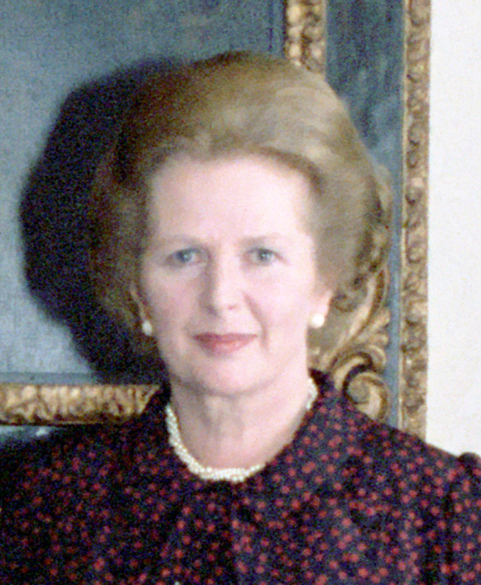
—Many blame you for breaking entire working-class communities. What do you say to that pain?
I never denied it, and I would be a liar to claim the mine closures were painless. But you do not save an industry by paying men to dig coal nobody buys. That would have been lying to them, and lying with their own money. The old post-war pact kept sick giants alive through public subsidy; I unplugged the drip, and it hurt. The Employment Acts from 1980 to 1984 gave power back to union members against their leaders, who had turned them into private armies. Even within my own party, they thought me too dry; the wets would have preferred lukewarmness. But lukewarmness never straightened a country. The courage to displease, sometimes, is the only form of respect.
—Do you remember the moment you decided to send the fleet to the Falklands?
April 1982. The news is brought to me: Argentina has planted its flag on British islands, thirteen thousand kilometers away, and half my cabinet looks at me as if I should bow to the fait accompli. Sending a fleet so far, into the South Atlantic, approaching the austral winter, was madness to the cautious. But you do not bargain away the freedom of your citizens because they live far away. Seventy-four days later, the flag was lowered. Before the Commons on July 3, I said what I truly felt: 'We have ceased to be a nation in retreat.' That was what was at stake in the Falkland Islands: not an austral rock, but the idea that a country can stop retreating.
You do not bargain away the freedom of your citizens because they live far away.
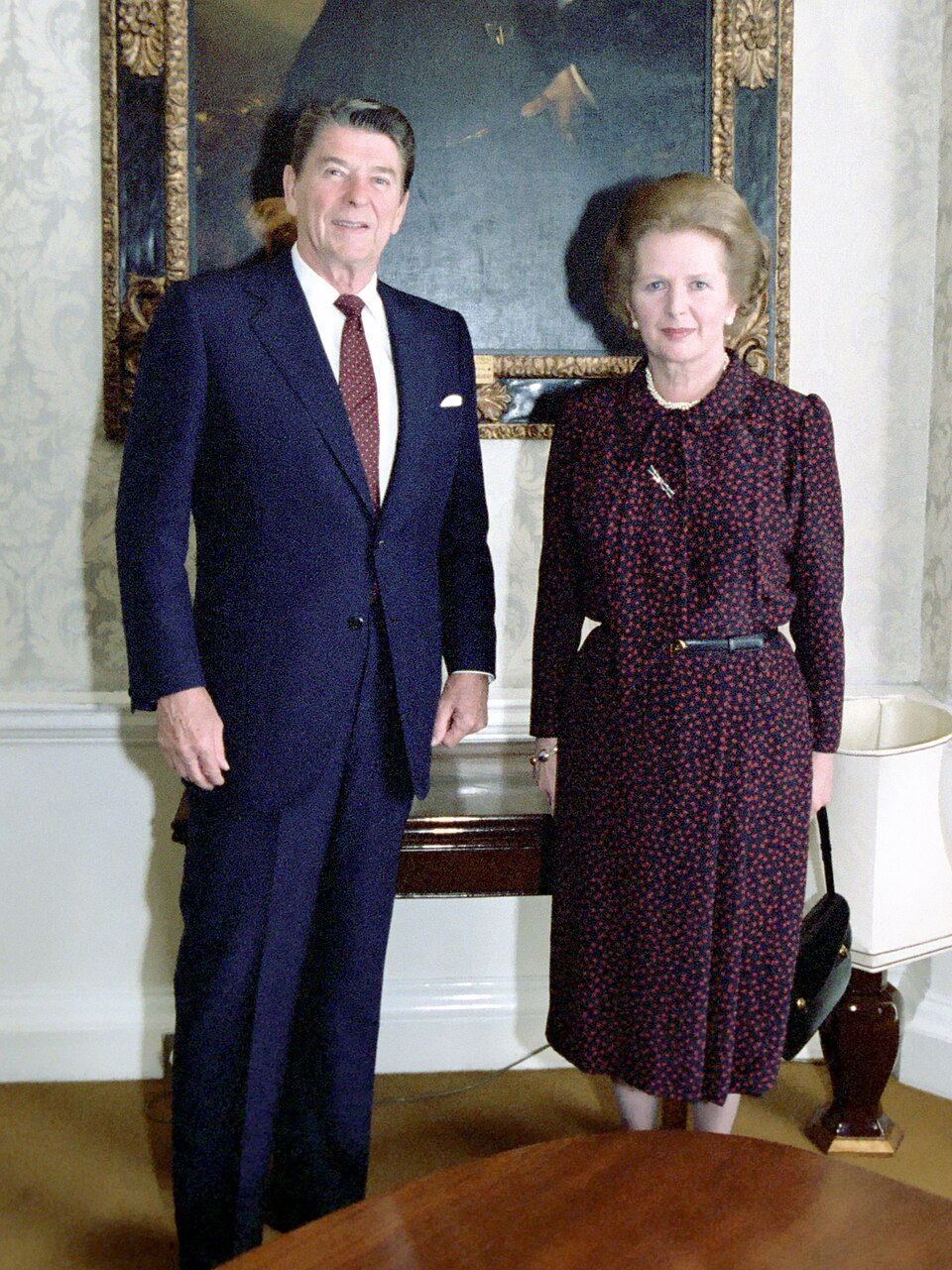
—Did that military victory change something in you, beyond your popularity?
It confirmed me rather than changed me. I always thought a clear will is worth more than a hundred committees. In the Falklands, I saw young Britons accomplish, in the cold of the South Atlantic, what diplomats judged impossible. The country too straightened up: the same confidence I sought to restore through economics, it suddenly experienced through arms. I said to the Commons—that assurance was 'born in the economic battles at home, and tested eight thousand miles away.' The two fights, that of the factories and that of the fleet, were one: to give an old nation the right to stand tall. They thought me hard; I was above all convinced that a people who doubt themselves always end up retreating.
—In Brighton, in 1984, a bomb nearly killed you. How do you find the strength to speak the next morning?
You find it because you have no choice, if you believe in what you defend. That October night at the Grand Hotel in Brighton, the IRA blew up the floor where my party conference was sleeping. Five people died; friends. I could have been among them. At dawn, I reread my speech, pencil in hand as always, and I decided the conference would open at the scheduled time, not a minute later. Canceling would have given them the only thing they wanted. I said that morning: 'We only have to be lucky once; you will have to be lucky always.' Democracy does not let itself be dynamited. It opens its doors at the appointed hour, and continues.
Canceling would have given them the only thing they wanted.
—You slept four hours a night, they say. Was that endurance a choice or a necessity?
A bit of both, and much of habit. From Grantham, I was the student who revised while others slept; one does not change. At Downing Street, my staff went home exhausted around midnight, and I reopened the Red Box, those files no one else would read before dawn. Four hours sufficed; I said, perhaps with a little pride, that successful people hardly have time to sleep. After Brighton especially, sleep seemed an almost indecent luxury when five people would never wake again. Leading is not an office schedule; it is a vigilance that never fully goes out. In the morning, tea, annotated newspapers, radio at dawn: my real night was that silence, where I prepared the country for its day.
This imaginary interview was generated by artificial intelligence from sources documented in Margaret Thatcher's profile. It dramatises what the figure might have said based on what we know about them, but does not constitute attested historical testimony. For primary sources and factual documentation, refer to the full profile.