Kids interview Margaret Thatcher
by Charactorium · Margaret Thatcher (1925 — 2013) · Politics · 4 min read
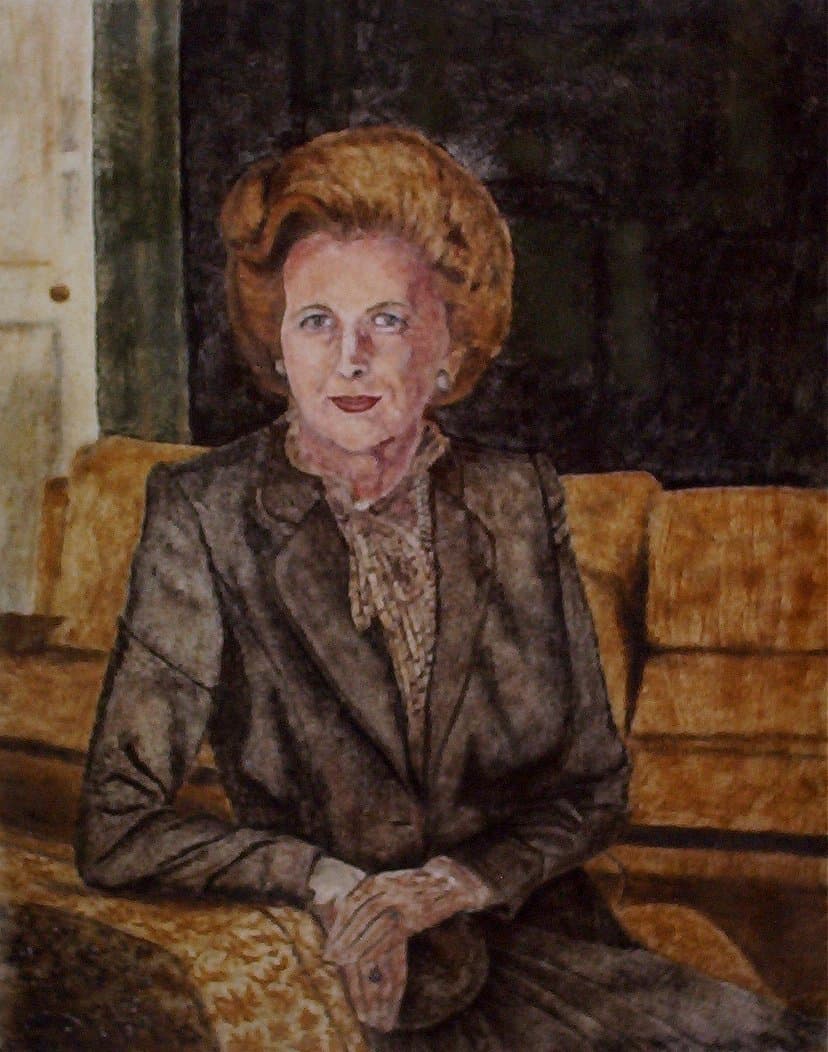
Two twelve-year-old pupils, on a school trip, were received by an elderly lady in a blue suit, a handbag placed beside her. Margaret Thatcher smiled at them. She agreed to answer all their questions, even the simplest ones.
—How old were you when you lived above your father's grocery shop?
All my childhood, my dear! I was born in Grantham, a small town, and our home was just above my father Alfred Roberts's shop. Imagine a grocery where you weigh sugar, where you count every coin. My father used to tell me you never spend more than you earn. I learned to keep an accounts book before I even learned politics. Later, when I ran the country, I thought of that shop. A state is like a home: if you spend money you don't have, one day you'll cry.
You run a country like you run a shop: without spending what you don't have.
—What did it smell like in the shop in the morning?
Ah, what a lovely question! It smelled of roasting coffee, bread, and bar soap stacked on the shelves. In the morning, I got up very early. That habit never left me: later, I slept barely four hours a night. At home, we wasted nothing. An egg, a slice of toast, tea: that was my breakfast, all my life. No luxury. My father said comfort makes you lazy. I think he was right. That smell of an honest shop, I kept it in my heart all the way to Downing Street.
—Why did you want to sell the big state-owned companies?
Because I thought the state was a very bad boss, you know. In my time, the telephone, gas, and steel belonged to the government. It was slow, it was heavy. So between 1979 and 1990, I sold those companies to the people: British Telecom, British Gas, and others. We called it privatisation, meaning moving from public to private. I was convinced there was no other way. My opponents said, 'You're going too far.' I replied that we had no choice.
When everyone owns a little, everyone works better: that's what I wanted.
—One day you said you wanted to change people's souls. That's strange, isn't it?
You're right, it sounds odd! But listen. A journalist once asked me what my real goal was. I replied that economics was only the method, and my aim was to change 'the heart and soul'. What did I mean? That laws alone are not enough. I wanted every Briton to feel responsible for themselves, proud to work, to own their home. Not to wait for the state to give them everything. They called my set of ideas Thatcherism. Some loved me for it, others hated me. I never tried to please everyone.
—Were you afraid to send ships so far, for the Falklands?
Of course I was afraid, my child. He who is not afraid does not measure the danger. In 1982, Argentina had seized by force small British islands, the Falklands, lost in the South Atlantic, thirteen thousand kilometres from home. Imagine a fleet sailing for weeks, to a cold and distant place. Many told me, 'It's too risky, give up.' But you cannot let someone steal a land and its people without doing anything. Our soldiers recaptured the islands in seventy-four days. Every night, I thought of those who would not come back.
Being afraid is not serious: giving in to fear, that is the real danger.
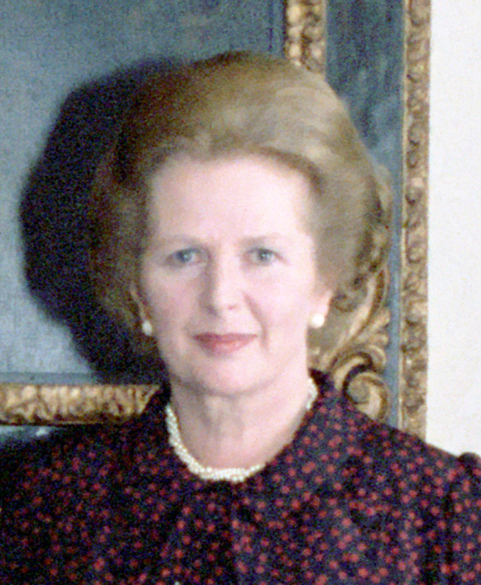
—After the victory, were you proud of your country?
Deeply proud, yes. You know, before that war, many thought my country was tired, slowly retreating. I told the MPs that we had ceased to be 'a nation in retreat'. We had regained confidence, a confidence born first in our economic battles at home, then proven far from our shores. It was not only a soldiers' victory. It was the morale of a whole nation rising again. For me, that moment changed everything. We began to believe in ourselves again, and that no army can force upon you.
—Why didn't you give in to the striking miners?
Ah, that was a hard year, 1984. The miners, led by a man named Arthur Scargill, went on strike to prevent mine closures. A long, painful strike, whole families in distress. I understood their anger, believe me. But I thought those mines cost far too much and had no future. Four years earlier, I had already warned: some expected me to turn back. I replied, playing on words, that 'the lady is not for turning'. I did not give in. It was terribly hard, and I never took it lightly.
Leading sometimes means holding firm even when everyone is shouting at you to give up.
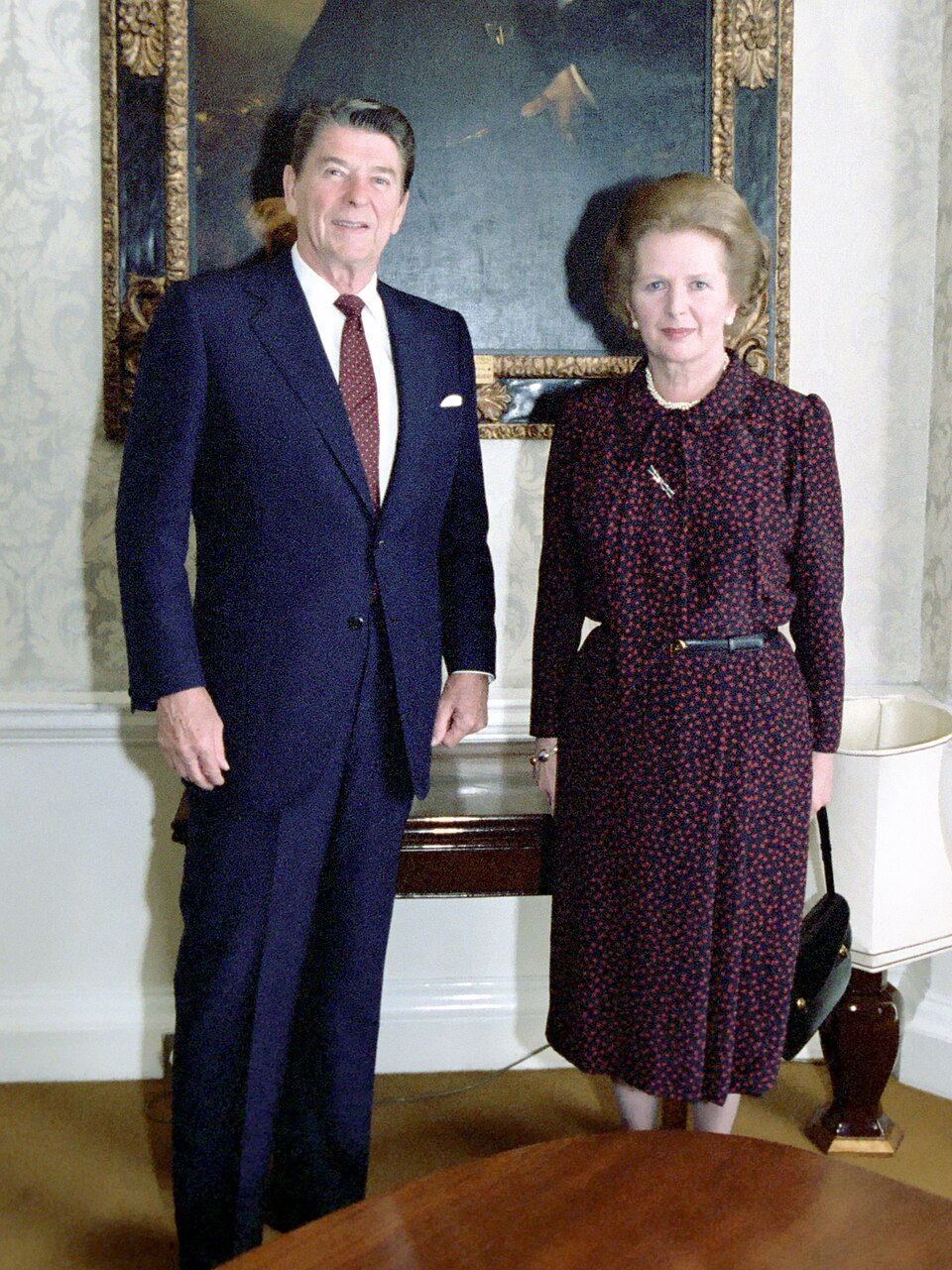
—What were those people stationed outside the mines during the strike?
That was called picketing. Strikers would gather in groups at the entrance of a mine to stop other workers from going to work. Imagine a factory gate blocked by an angry crowd, sometimes hundreds of people. It often turned into confrontation, and it pained me to see Britons pitted against each other. So I passed laws, the Employment Acts, to regulate it very strictly. I wanted people to have the right to strike, yes, but not to forcibly prevent those who wanted to earn their living. It was a matter of freedom, on both sides.
—Were you scared the night a bomb exploded in your hotel?
Yes. In October 1984, I was barely asleep when a bomb tore through the Grand Hotel in Brighton, where my party was holding its conference. Five people died. Men from the IRA wanted to kill us. I could have died that night. But the next morning, at the scheduled time, I went to the podium and delivered my speech. I said that those who attack only need to succeed once, while we have to be lucky always. Showing any weakness would have vindicated them. That I could not do.
The day after a bomb, I spoke at the scheduled time: you do not bow to fear.
—If someone passed you on the street, what would they notice first?
My black handbag, without a doubt! I never left it behind. People even made a joke of it: when I spoke firmly, they said I was 'handbagging' them. You would also see my navy blue suit, always strict, and my string of pearls. In a world of grey-suited politicians, all men, I wanted to be recognised at first glance. They nicknamed me the Iron Lady, at first to mock me. I turned it into a badge of pride. A grocer's daughter can stand up to the whole world: that's what I wanted people to remember.
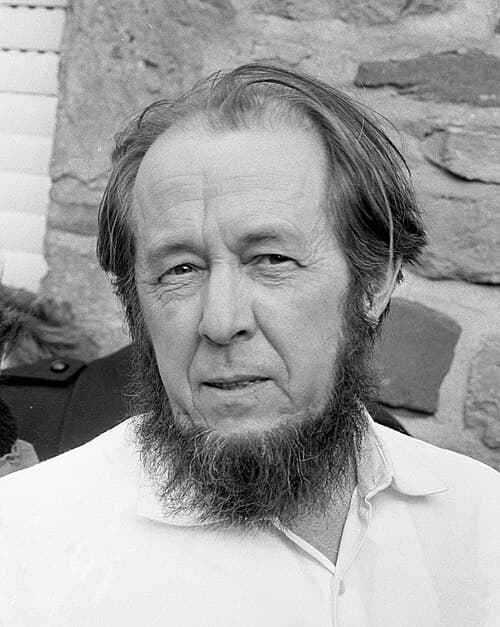
This imaginary interview was generated by artificial intelligence from sources documented in Margaret Thatcher's profile. It dramatises what the figure might have said based on what we know about them, but does not constitute attested historical testimony. For primary sources and factual documentation, refer to the full profile.