Imaginary dialogue between Ronald Reagan and Margaret Thatcher
by Charactorium · Margaret Thatcher (1925 — 2013) · Politics · 5 min read
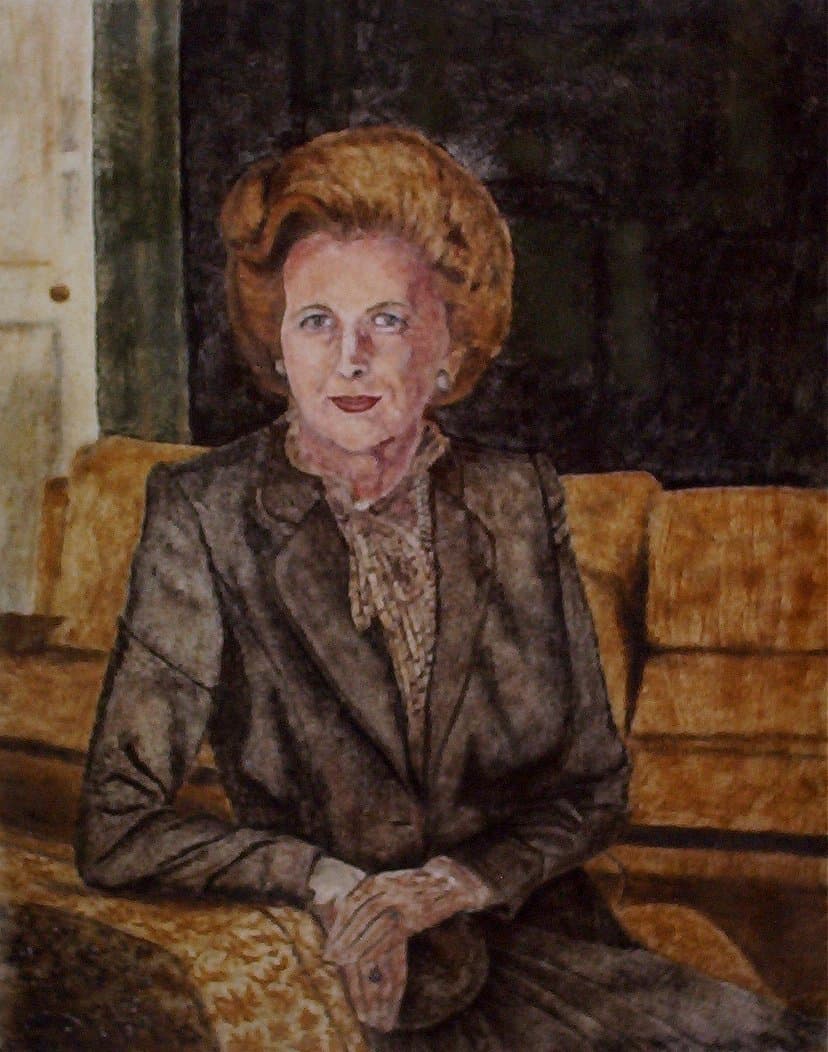
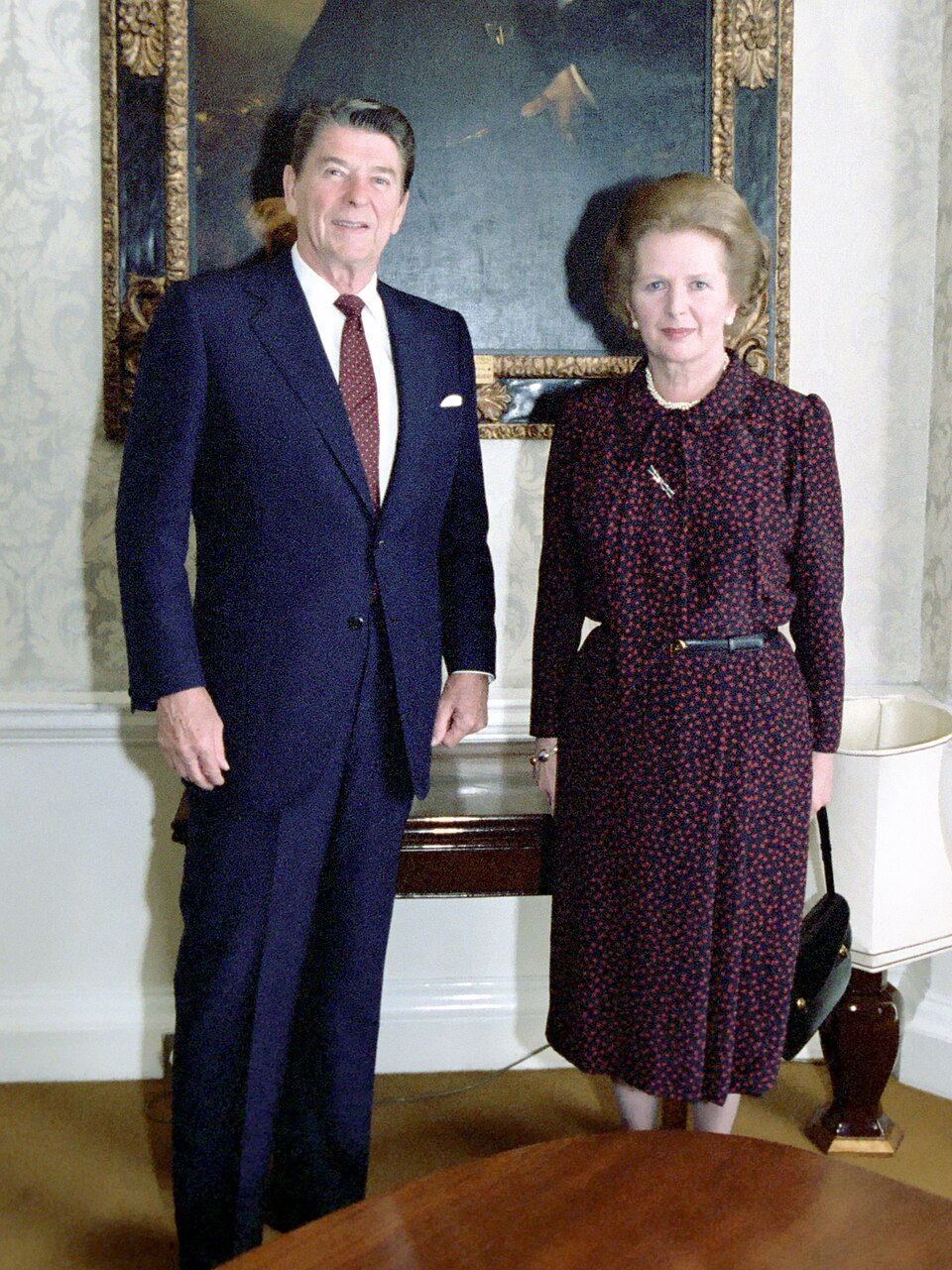
It is in the cozy drawing room of Chester Square, in Belgravia, that Ronald Reagan meets Margaret Thatcher in February 1991. Both have left power — he for two years, she for barely three months, still wounded by the betrayal of her cabinet. On the coffee table, a tea service steams next to a black leather handbag placed upright. They have known each other since 1975, even before coming to power, and Reagan comes that day without a briefcase or camera, only with the desire to hear his friend tell, at last, what lay behind the Iron Lady.
—Maggie, you've often told me about your father's shop in Grantham. What did that grocer really bequeath to you?
Everything, Ron, absolutely everything. My father Alfred Roberts ran his grocery store, and I grew up in the apartment above, without hot water, without anything superfluous. It was there, behind the counter, that I understood something that economists forget: you cannot spend what you have not earned. A nation is like that shop — you must balance your books, or you close. When I arrived at Downing Street, I merely applied to a country what my father had taught me about a family budget. Refined people found that vulgar. I saw it as the only possible honesty. My father never spoke to me about theory; he showed me rigor by living it.
You cannot spend what you have not earned — I learned that behind a counter, not from a textbook.
—In The Path to Power, you constantly compare the state to an ordinary household. Why insist on such simple language?
Because it is the only language everyone understands, Ron. A mother knows you don't pay the butcher with money you don't have. The chancellors, however, had forgotten that. When I explained my policy, I spoke of Britain's checkbook, the household ledger — and workers understood better than Oxford professors. I was criticized for this register, as if economics should remain a mystery reserved for experts. I refused that contempt. My convictions were not abstract ideas; they were practical truths tested in real life. That is why The Path to Power always returns to Grantham: you only govern well what you have first lived humbly.
Workers understood my policy better than Oxford professors — because I spoke the language of the home.
—That nickname, the Iron Lady, which the Soviets stuck on you in 1976 — did it annoy you, or did you use it?
Use it, naturally! Ron, they thought they were insulting me. A Red Army military newspaper dubbed me Iron Lady to mock my firmness against communism — and I immediately realized what a gift they were giving me. Why blush at being iron when dealing with men who only respect strength? I wore that nickname like a decoration. You, who stood up to Moscow with me, know that one must never show the slightest crack. If the West had seemed hesitant, the other side would have taken advantage. My opponents wanted a malleable woman; they got metal. And frankly, better to be feared for your constancy than pitied for your weakness.
They thought they were insulting me by calling me iron. I thanked them and wore the word like a decoration.
—At Brighton, in 1980, your party begged you to reverse course on the economy. How did you hold firm?
By not sleeping, my friend! Four hours a night sufficed — successful people don't have time to sleep, and I had a country to set right. At that 1980 conference, unemployment was rising, the moderates in my own camp, the wets, were pressing me to retreat. I gave them a single sentence: You turn if you want to. The lady's not for turning. Turn if you wish; the lady, she does not turn. Retreating would have been admitting that my entire method was wrong, and it was not. I simply had to hold on until the medicine worked. A captain who changes course with every wave sinks his ship. I preferred to weather the storm.
You turn if you want to. The lady's not for turning.
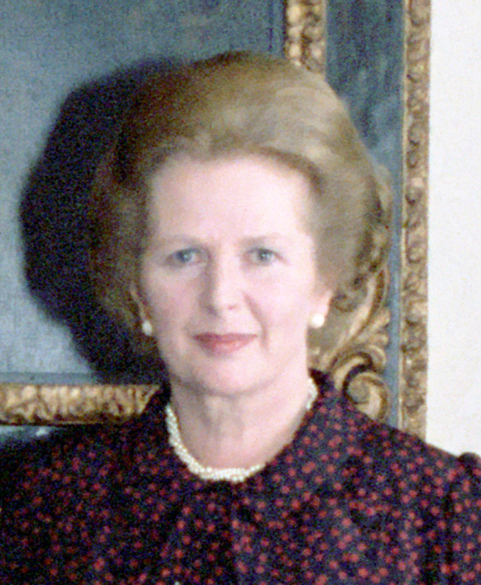
—Your privatizations stunned the world. British Telecom, British Gas... What did you really hope to change, deep down?
Far more than balance sheets, Ron. These companies supposedly belonged to the people, but the people had no power over them — they were state baronies, heavy, deaf to the customer. By returning them to the private sector, I wanted to break the post-war consensus, that tacit pact inherited from 1945 where Conservatives and Labour together accepted nationalizations. I wanted the worker to become a shareholder, an owner, responsible. People said There is no alternative, and it was true: the previous model was leading us to ruin. Economics was never more than a means. The goal, as I told the Sunday Times, was to change the soul of the people — to restore their taste for effort and property, which the welfare state had put to sleep.
Economics are the method; the object is to change the heart and soul of the people.
—The miners' strike of 1984 lasted nearly a year. Why not give in, as many would have?
Because giving in would have been abdicating, Ron. Arthur Scargill did not want to negotiate wages; he wanted to overthrow an elected government by the street, by mass picketing, blocking factories with his pickets. Before me, two prime ministers had bowed to the unions — I had prepared my coal reserves and my laws. The Employment Acts finally curbed that power, which had become tyrannical. A democracy cannot be governed by those who paralyze power plants. I held out for a year, and at the cost of closed mines, painfully, I returned the country to its elected officials. They called me hard. But the real cruelty would have been to let an organized minority take the nation hostage.
A democracy is not governed by those who shut down its power plants.
—The Falklands, in 1982: sending a fleet thirteen thousand kilometers seemed crazy. What decided you?
The obvious, Ron — even if the world thought me reckless. Argentinians had invaded a British territory and raised their flag over subjects of the Crown. What is a nation worth that allows that? I dispatched the fleet eight thousand miles, and for seventy-four days I lived every dispatch with a heavy heart. You supported me, and I will never forget it. When our men retook the islands, I told the Commons that we had ceased to be a nation in retreat. It was not bravado: the country believed itself condemned to decline, and suddenly it stood tall. The military victory was also a moral victory over our own defeatism.
We have ceased to be a nation in retreat.
—And that night at Brighton, in 1984, when the IRA bomb blew up your hotel — how did you find the strength to speak the next morning?
You don't choose these things, Ron; you only choose how to respond. The bomb ripped through the Grand Hotel at three in the morning; five of our people died, friends. I could have canceled, hidden, shown that terror had won. That was precisely what they hoped. So I gave my speech at the scheduled time, that morning, before a shaken hall. I told them that we had been unlucky once, but that they would have to be lucky always — this attack had failed. Giving in for a single moment would have betrayed the dead. Democracy does not bow to dynamite. If it did, there would be no point in being Prime Minister.
Today we were unlucky, but remember — we only have to be lucky once; you will have to be lucky always.
—You and I stood up to Moscow together, over that famous hotline. What did we say to each other on those nights?
The essentials, Ron, and always with one voice. That line between Washington and London was not a gimmick: it defined Western policy toward the USSR. We agreed on the principle — firmness, never naivety — but we discussed the tempo. I told you what I thought of Gorbachev: a man with whom one could deal, provided we gave nothing away on defense. You listened, and sometimes I listened too, I confess. Two convictions rather than one — that was our strength. The other side watched for the slightest rift between us; they never found one. Those nocturnal conversations, my friend, rank among the most precious of my public life.
The other side watched for the slightest rift between us; they never found one.
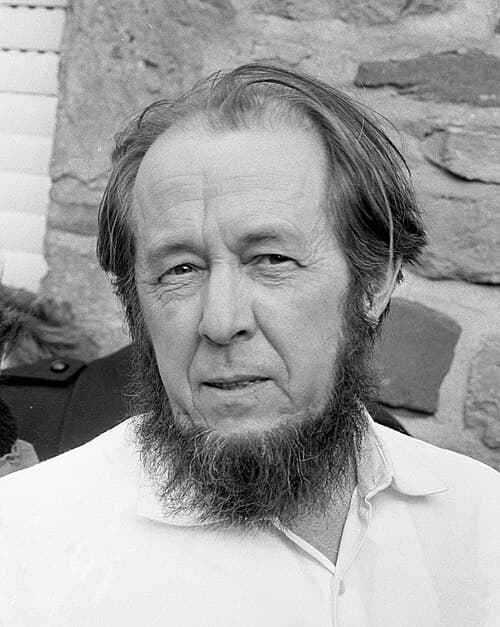
This imaginary interview was generated by artificial intelligence from sources documented in Margaret Thatcher's profile. It dramatises what the figure might have said based on what we know about them, but does not constitute attested historical testimony. For primary sources and factual documentation, refer to the full profile.