Kids interview Marivaux
by Charactorium · Marivaux (1688 — 1763) · Literature · 5 min read
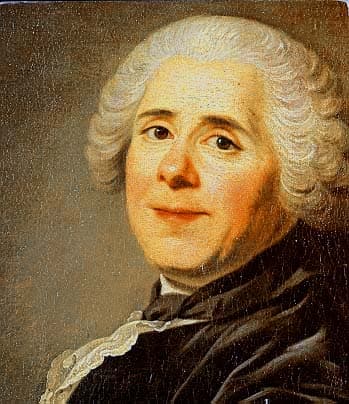
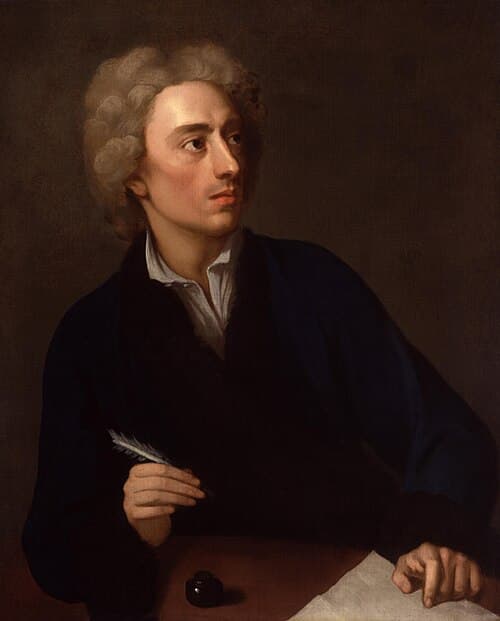
Two twelve-year-old students, on a school trip to Paris, push open the door of a small apartment cluttered with loose papers. An old gentleman in a powdered wig sets down his quill and smiles at them. “You’ve come to talk about theater? Sit down, my young friends.”
—Is it true you were rich before and lost everything overnight?
You know, my child, it’s a sad story. In 1720, a man named John Law had invented a money system where everyone thought they would become rich. Imagine a whole crowd running to buy papers, convinced they’d be millionaires the next day. And then it all collapsed in a few days. I saw my fortune disappear like water through my fingers. From one day to the next, I had nothing. So I took my goose quill and decided to write to eat. My plays, my novels, my little newspapers: all of that was also born from this ruin.
“I saw my fortune disappear like water through my fingers.”
—So did you live in a big house or not at all?
Not at all, believe it or not! After 1720, I lived in small Parisian apartments, very simple. No mansion, no rows of servants. Imagine a single room where you write in peace from morning, surrounded by overflowing manuscripts. In the evening, we lit candles — a little flickering flame, and the smell of warm wax. I wasn’t rich, that’s true. But I went to salons, I met fascinating people, and I had my pen. You know, you can be poor in money and rich in ideas. I chose to be rich on that side.
“You can be poor in money and rich in ideas.”
—Which theater did you write for? The most famous in Paris?
No, and that surprises everyone! The great official theater was called the Comédie-Française. But I preferred another troupe: the Comédiens-Italiens. They were actors from Italy, heirs to a theater where you play lively, where you laugh, where you improvise. Imagine actors who don’t recite like statues, but leap, hide, mock. With them, my characters came alive. At the Comédie-Française, they played a bit stiffly for my taste. With the Italians, it was movement, flexibility. That’s why I entrusted almost all my masterpieces to them.
—Did you have favorite characters you used all the time?
Yes! Two especially. There was Arlequin, a cunning and somewhat clumsy valet, who comes straight from Italian theater. Originally, he wore a mask and a patched costume of a thousand colors. And there was Silvia, a spirited young girl. I found them again from play to play, like meeting old friends. Imagine you know two characters so well that you already guess what they’ll say. The Comédiens-Italiens played them wonderfully. Thanks to them, Arlequin and Silvia became the beating heart of my theater.
“I found them again from play to play, like meeting old friends.”
—What’s your favorite trick to use in your plays?
Ah, my little favorite game: swapping clothes! In Le Jeu de l’amour et du hasard, in 1730, a young lady disguises herself as a maid, and her valet takes the master’s clothes. Imagine two children swapping coats to see if they’re still recognized. Except that, under the disguise, love mocks costumes: the lady falls in love with the valet, and no one knows who is who anymore! This mix-up, where you mistake someone for another, we call it a mistaken identity. And this disguise of status, a disguise. It was my way of asking: does a heart look at the clothes or the person?
“Under the disguise, love mocks costumes.”
—And did you ever imagine a world where servants give orders?
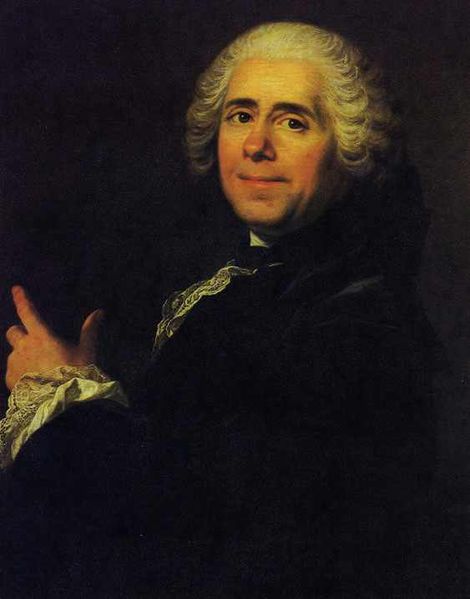
Yes, and that made more than one person smile! In L’Île des esclaves, in 1725, I invented an imaginary island where masters and their servants swap roles. Suddenly, the master obeys, and the servant commands. Imagine that for one day, the adult who scolds you has to listen to you. It wasn’t to mock harshly. I wanted everyone to understand what the other feels. In my time, you were born master or servant, and that was that for life. With a light little comedy, I asked a big question: what if it isn’t fair?
“What if it isn’t fair?”
—Is it true there’s a French word that comes from your name?
It’s true, and it always gives me a strange feeling! My contemporaries found that my characters spoke about love in a very refined, very delicate way, circling around their feelings for a long time before confessing them. So they invented a word from my name: marivaudage. At first, some said it to mock, believe it or not. But the word stuck, and today it’s in all dictionaries. Imagine they took your first name to describe a way of speaking! It’s strange to have become a word. But deep down, I’m a little proud of it.
“It’s strange to have become a word.”
—Why can’t your characters say “I love you” directly?
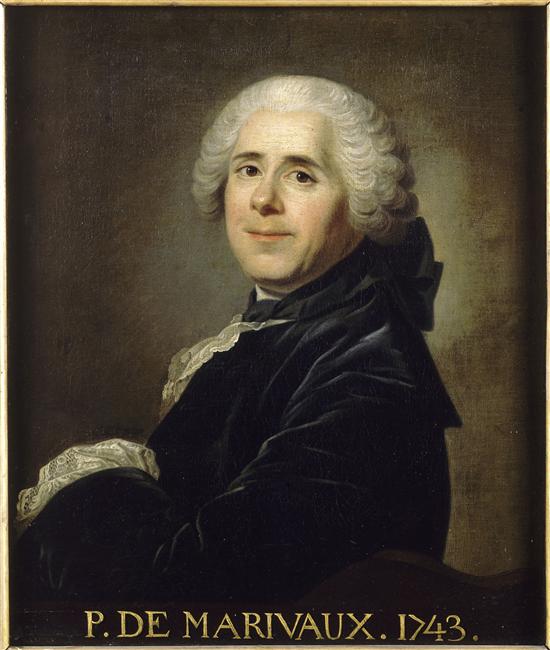
Because the heart, my child, is shy and complicated! My characters feel love, but they are afraid, they doubt, they hide their feelings from themselves. So I don’t have them say it in big words. I show it through small signs. In Les Fausses Confidences, a valet observes his mistress and slips: “I saw her blush, I saw her turn pale.” You see? No need for grand declarations. A blushing cheek already says a lot. I loved this delicate way of saying things without saying them. For me, love is guessed long before it is declared.
“A blushing cheek already says a lot.”
—Were you more famous than Voltaire in your time?
Let’s say I had a nice revenge! In 1742, I entered the Académie française — a very respected assembly that brings together the country’s great writers. And guess who wanted the same seat as me? Voltaire! I was chosen, he wasn’t. Imagine his face… He never forgave me, and often mocked my style, which he found too complicated. But you know, it proved one thing: my peers, the other writers, truly esteemed me. Voltaire was louder than me, that’s for sure. That day, however, the quieter one won.
“That day, the quieter one won.”
—And today, what would you like us to remember about you?
What a lovely question to end with. You know, I wrote a lot: comedies, novels like La Vie de Marianne, little newspapers where I observed people. But what I’d like to keep is simpler. I spent my life watching hearts: how we love, how we hesitate, how we sometimes deceive ourselves. I’ve been told that even today, Le Jeu de l’amour et du hasard is performed in your classrooms. That touches me deeply. If in two or three centuries children like you laugh and think thanks to my words, then I didn’t write for nothing.
“I spent my life watching hearts.”
Read further
This imaginary interview was generated by artificial intelligence from sources documented in Marivaux's profile. It dramatises what the figure might have said based on what we know about them, but does not constitute attested historical testimony. For primary sources and factual documentation, refer to the full profile.