Imaginary interview with Marivaux
by Charactorium · Marivaux (1688 — 1763) · Literature · 6 min read
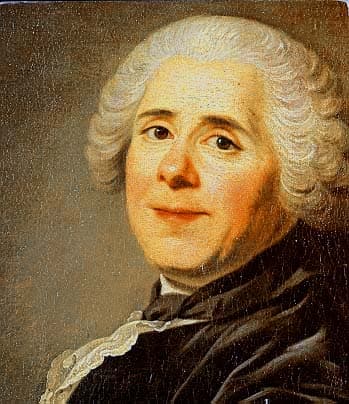
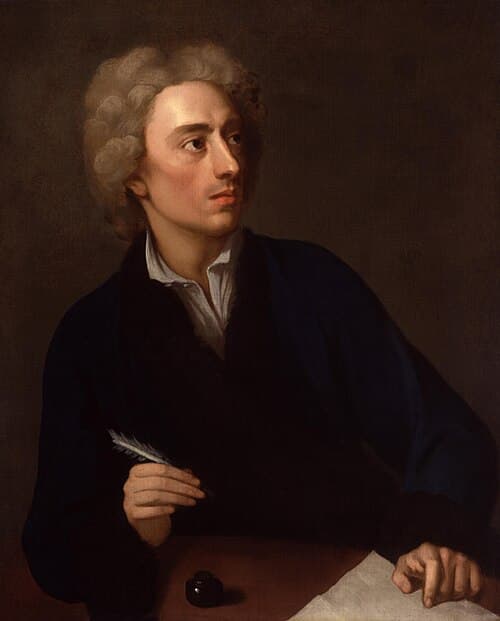
Paris, winter 1758. In a modest apartment cluttered with loose sheets and crossed-out manuscripts, a seventy-year-old man receives us, his wig slightly askew, his eye still lively. Outside, the Comédiens-Italiens rehearse; here, Marivaux speaks of the games of love as others speak of old friends.
—How did you come to make your pen a livelihood rather than a pastime?
People think I chose letters out of pure vocation; the truth lies in one year, 1720. The system of that Scottish financier, Law, had promised mountains of gold to all Paris, and we ran after it like children after a soap bubble. When the bubble burst, my fortune burst with it. I found myself before my writing desk no longer as an amateur amusing himself, but as a man who must eat. Believe me, nothing sharpens one's observation of inequalities like falling down a notch oneself. I looked differently at valets, footmen, those whom one never sees; and perhaps I owe my best comedies to that ruin.
Nothing sharpens one's observation of inequalities like falling down a notch oneself.
—What did the founding of Le Spectateur français in the midst of adversity mean to you?
It was both my laboratory and my lifeline. I had read what was being done in London, those papers where a man observes his fellows without judging them too quickly; the idea pleased me immensely. So, from 1721, I launched my own periodical sheets. I would sit in the morning, in the calm, and note what I had glimpsed the day before: a gesture, a blush, a poorly hidden vanity. I did not claim to reform the world, only to look at it with that blend of irony and benevolence which seems to me the only honest way to speak of men. What I learned to scrutinize there, I later poured entirely into my theater.
—Why did you so love disguising your characters, turning a master into a valet and a maid into a mistress?
Because clothing is the greatest of liars, and by exchanging it one suddenly discovers the truth. In The Game of Love and Chance, Silvia and Dorante each don the livery of their servants to spy on each other better; and then the heart, that fool, mistakes the station and falls in love despite rank. That is my whole pleasure as a playwright: to show that under the costume, feeling no longer knows who is noble and who is not. Travesty is not a farce trick, it is an experiment. We change appearances to see what resists — and what resists is true love, stubborn, indifferent to braid.
Clothing is the greatest of liars, and by exchanging it one suddenly discovers the truth.
—In The Island of Slaves, you overturn the order of conditions even more radically. What did you mean to say?
I imagined an island where the master becomes slave and the slave master, for the duration of a lesson. 1725: people thought it a mere fancy, an amusing utopia. But beneath the lightness, I had a serious intention. I wanted the one who commands to feel, in his flesh, the weight of the humiliations he distributes without thinking. I call for no revolt, mark you; I set nothing ablaze. I only propose that one imagine oneself for a moment in the other's place, and that this imagination corrects the heart. It is the same mechanism as my Harlequin mask: one laughs, thinks oneself at a show, and returns home a little less certain of one's right.
—You preferred the Comédiens-Italiens to the prestigious Comédie-Française. What so attached you to that troupe?
Their flexibility, their naturalness, their genius for improvisation. At the Comédie-Française, they declaimed, they posed, they played for posterity; at the Comédiens-Italiens, they lived. They had inherited from the Commedia dell'arte that art of catching a line mid-flight, coloring it with a gesture. It is with them, at the theater on rue Mauconseil, that I shaped my Harlequins and Silvias — figures that the actors and I invented together, almost gropingly. An actress named Silvia gave her name and grace to my heroines. Go ask that of stiff tragedians! My loyalty was no caprice: it was the harmony of an author and a way of acting.
At the Comédie-Française they played for posterity; at the Italians', they lived.
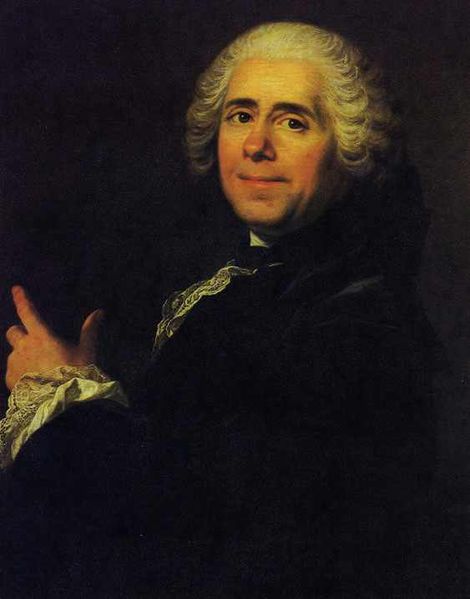
—Did your Parisian salons nourish these characters as much as the stage?
Even more, perhaps. Before writing a love dialogue, one must have overheard a hundred. I frequented Madame de Lambert's salon, then that of Madame de Tencin, those silk-draped rooms where, by candlelight, one played at pleasing and fleeing. I observed a woman hiding her distress behind her fan, a man saying the opposite of what he thought out of pure gallantry. All that delicate fencing of feelings, those confessions that dare not speak their name, I had only to gather them and transport them to the boards. My comedies are, at bottom, only salons a little better lit, where masks fall before the end.
—Your contemporaries coined a word from your name, "marivaudage." How did you receive it?
First as a slap, I admit. My detractors launched it to mock my manner, finding that my lovers circled too long around their confession, that they embroidered, that they précieused. Marivaudage: in their mouths, it was the accusation of splitting feelings into four. But what do they want? That love be declared in one word, brutally, like settling a business? The human heart never goes straight; it hesitates, it corrects itself, it lies to itself before surrendering. If painting that exquisite slowness is a defect, then I claim all its faults. They reproached me for my preciosity; I simply believe I took feelings seriously.
The human heart never goes straight; it hesitates, it corrects itself, it lies to itself before surrendering.
—Monsieur de Voltaire was one of your most constant mockers. What do you make of this enmity?
A weary smile, mostly. Voltaire deems my style convoluted, he thinks I weigh trifles on spider-web scales — the image is his, and I grant it to him, it is pretty. But we do not seek the same thing. He wants to strike the mind, launch the great idea that shakes a century; I, I bend over a quiver, over the precise moment when a woman realizes she loves. They are two trades. Let him reign over philosophy, good for him; I content myself with the small kingdom of the heart, which one enters only by lowering one's voice. Our quarrels have moreover ended up ranking us both among the furniture of the century.
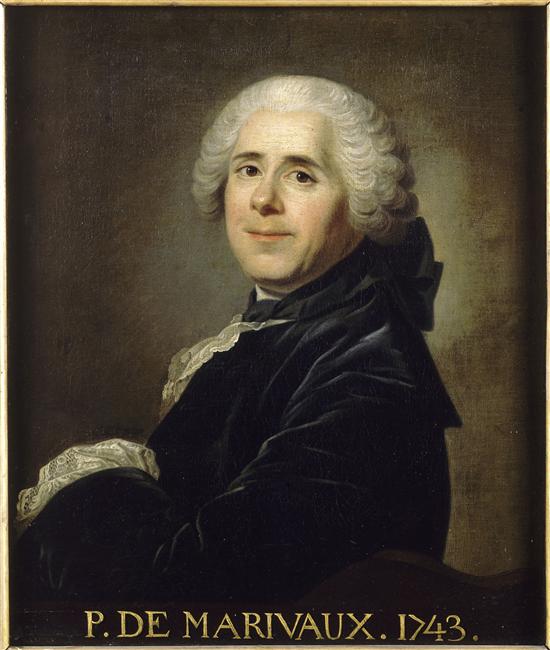
—Do you remember the day of your election to the Académie française, in 1742?
How could I forget? I was received under the Dome of the Académie française right under the nose of Voltaire, who was seeking the same chair. Imagine his mood: the man of all Europe, the great mind of Cirey, set aside in favor of the little painter of marivaudages! He never, I think, quite forgave me. For me, after the ruin of 1720 and so many years chasing fees, this late consecration had a singular taste — that of a sweet revenge on fate. I was not the philosopher the century expected; I was the patient observer of hearts. And lo, my peers, by opening their door to me, had chosen the miniaturist over the frescoist.
My peers, by opening their door to me, had chosen the miniaturist over the frescoist.
—This preference of the academicians for your work — how do you explain it, you who were called minor?
Perhaps because one tires of thunder and always returns to fine things. I gave the theater its comedies, but also to prose those long analytical novels, La Vie de Marianne, where I follow an orphan step by step through the Parisian maze, and Le Paysan parvenu, its male counterpart, the rise of a boy who climbs through wit and charm. I dissect the soul with a patience that wits disdain. My colleagues at the Académie, however, sensed, I believe, that this minuteness was an art in its own right. One can be a great painter without painting battles; it suffices to capture, on a face, the exact passage from pride to tenderness.
—If you could imagine being read still a century hence, what would you wish to be remembered?
What a strange and flattering hypothesis... If by chance I were still read, I would want people to seek there not the moral of a sermon, but the truth of a heartbeat. That young people, perhaps playing The Game of Love and Chance, might find in Silvia and Dorante their own hesitations, their feints, their delicious terror of loving. My salons will have faded, my Comédiens-Italiens will long ago have put away their masks, the word marivaudage will perhaps have settled into dictionaries. But as long as a human being blushes without knowing why before another, my little theater will have something to say. That is all a man of letters can hope for: to survive in the turmoil of a heart not yet born.
As long as a being blushes without knowing why before another, my little theater will have something to say.
Read further
This imaginary interview was generated by artificial intelligence from sources documented in Marivaux's profile. It dramatises what the figure might have said based on what we know about them, but does not constitute attested historical testimony. For primary sources and factual documentation, refer to the full profile.